1
1
1
1
1
1
1
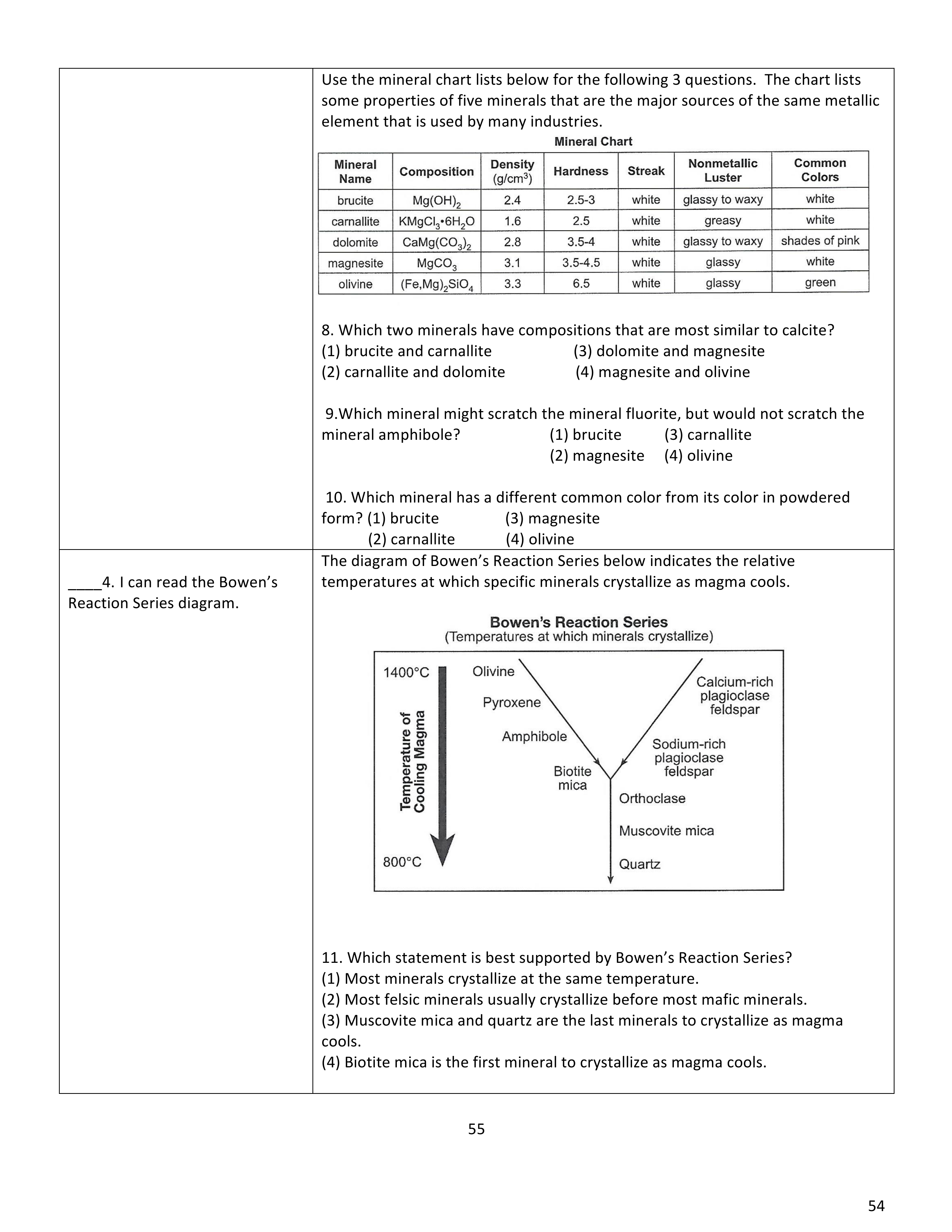
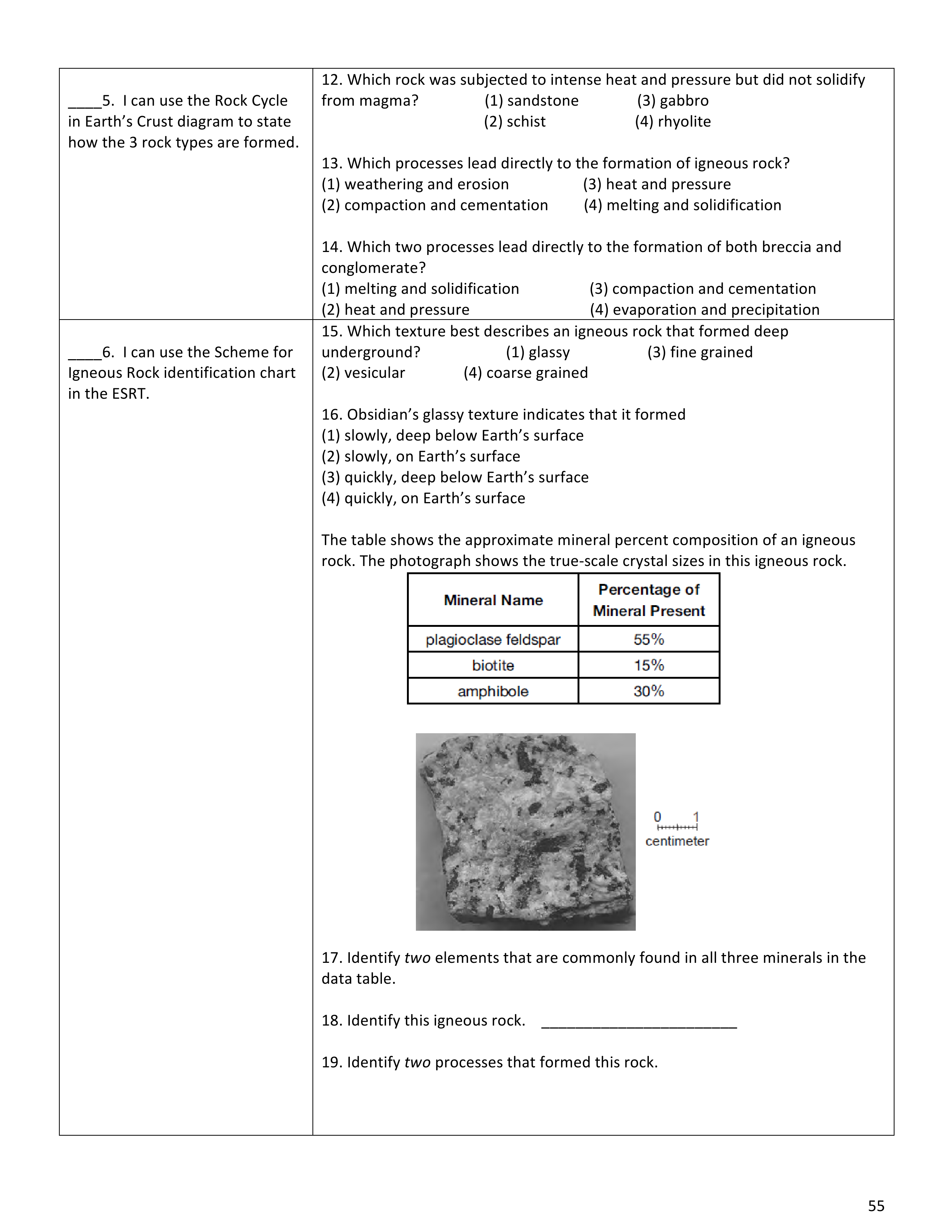
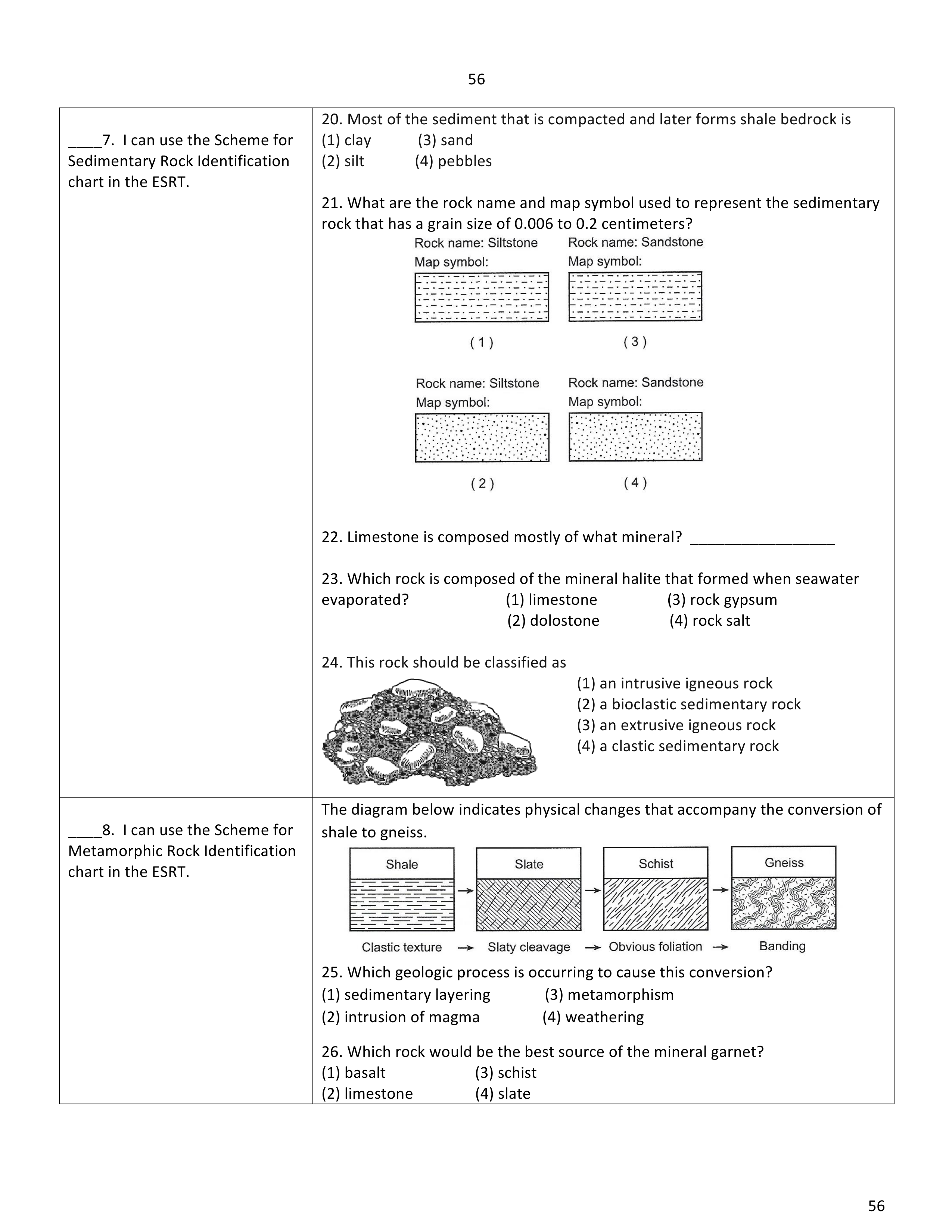
Rocks and minerals are fascinating aspects of Earth science. They can be found all around us, from towering mountains to the pebbles beneath our feet. In this reading, we will delve into the exciting world of rocks and minerals, discovering how they form, what they are made of, and their importance to our planet.
Types of Rocks: Rocks are divided into three main types: igneous, sedimentary, and metamorphic.
Igneous Rocks: Igneous rocks are formed from molten rock material called . When magma cools and , it forms igneous rocks. These rocks can be found both beneath the Earth's surface ( ) and on the surface (). Some common examples of igneous rocks include.
Sedimentary Rocks: Sedimentary rocks are created through the of sediments such as sand, clay, and organic matter. Over time, layers of these sediments compress and harden to form sedimentary rocks. Some well-known sedimentary rocks include .
Metamorphic Rocks: Metamorphic rocks are formed when existing rocks undergo intense within the Earth's crust. These conditions cause the minerals in the rocks to rearrange, resulting in new structures and textures. Examples of metamorphic rocks include .
Minerals: Minerals are the building blocks of and are naturally occurring substances with a specific chemical composition and crystalline structure. There are thousands of different minerals, each with its own unique properties and uses. Some common minerals include .
Properties of Minerals: Minerals can be identified based on several properties:
: Minerals come in a variety of colors, but color alone is not always reliable for identification because some minerals can have different colors.
: Refers to a mineral's resistance to being scratched. The Moh's scale is used to measure hardness, with being the hardest mineral and being the softest.
: Describes how light is reflected off the surface of a mineral. It can be metallic, like the shine of a metal, or non-metallic, like the luster of glass or a pearl.
Cleavage and Fracture: is the tendency of a mineral to break along specific planes, producing flat, smooth surfaces.refers to the way a mineral breaks when it does not have cleavage planes.
Rocks and minerals play a vital role in Earth's geological processes and provide valuable resources for human activities. Understanding their types, properties, and uses helps us appreciate the diverse wonders hidden beneath our feet. Whether it's the sparkling beauty of a gemstone or the solid foundation of a mountain, rocks and minerals are integral to the story of our planet.
Density of Gabbro
Composition of Gabbro