Coordinate Points on the Unit Circle
star
star
star
star
star
Last updated about 3 years ago
30 Nsɛmmisa
1
1
1
1
1
1
1
1
1
1
1
1
1
1
1
1
1
1
1
1
1
1
1
1
1
1
1
1
1
1
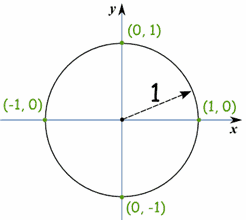
What is the length of the radius of the unit circle?
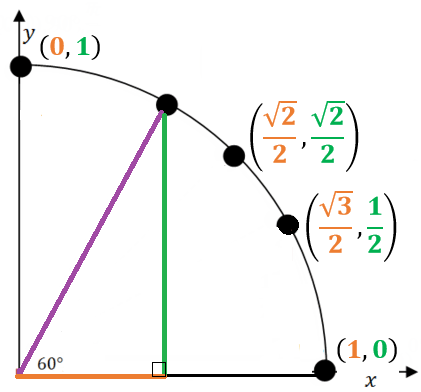
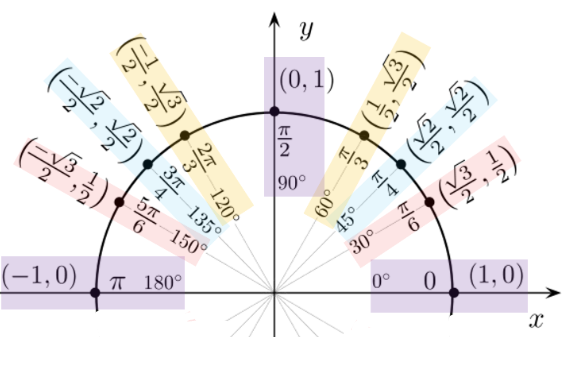
When the unit circle is drawn over an x- and y-axis it has some important coordinate points
What is the coordinate point at 90
Hint: Look at the image above.
Type your answer as an ordered pair
What is the coordinate point at 180° ?
Type your answer as an ordered pair
What is the coordinate point at 270° ?
Type your answer as an ordered pair
What is the coordinate point at 2
Type your answer as an ordered pair
What's the coordinate point at 30
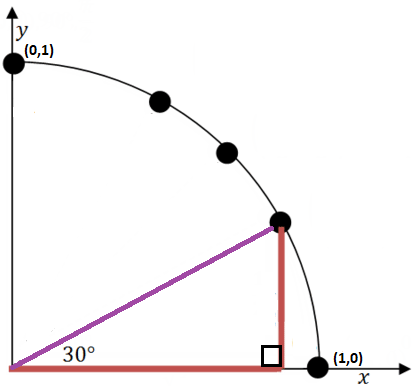
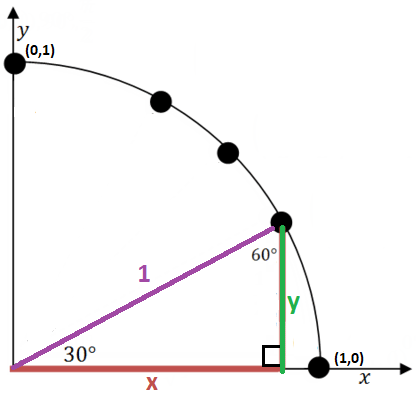
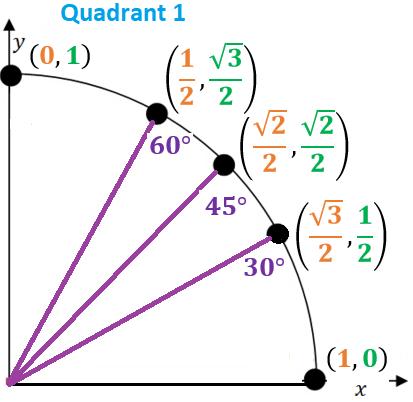
To find the coordinate point at 30° we can create a right triangle with the 30° reference angle.
Keep scrolling to see how!
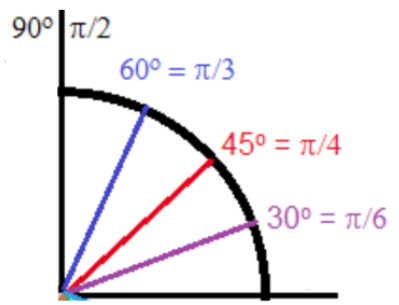
We're going to be drawing triangles inside the unit circle, using the special angles of the unit circle.
These are the special angles of the unit circle:
Where else have you seen these angles?
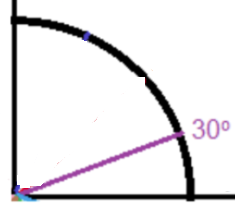
Let's take a closer look at ONLY the 30
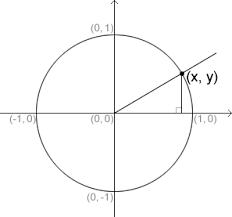
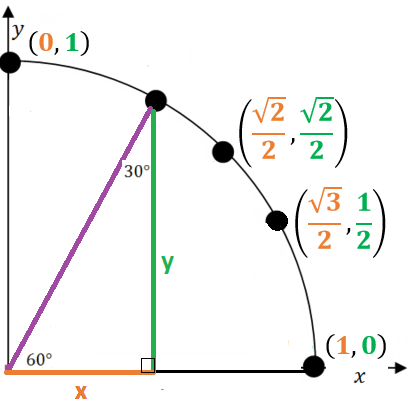
If we draw a vertical line from the edge of the circle down to the x-axis it creates a right triangle:
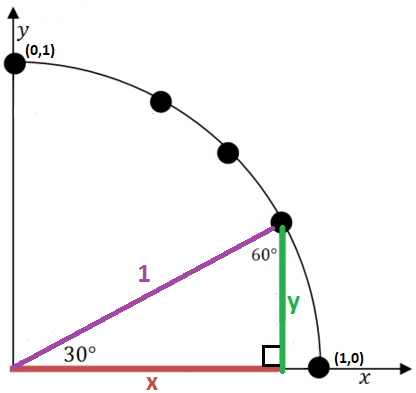
What is the measure of the missing angle at the top of the triangle?
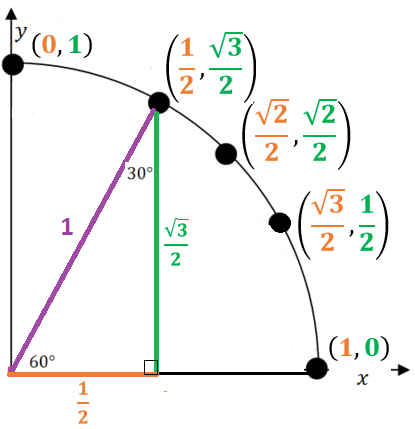
If the radius of the unit circle is 1, what is the length of the hypotenuse of this triangle?
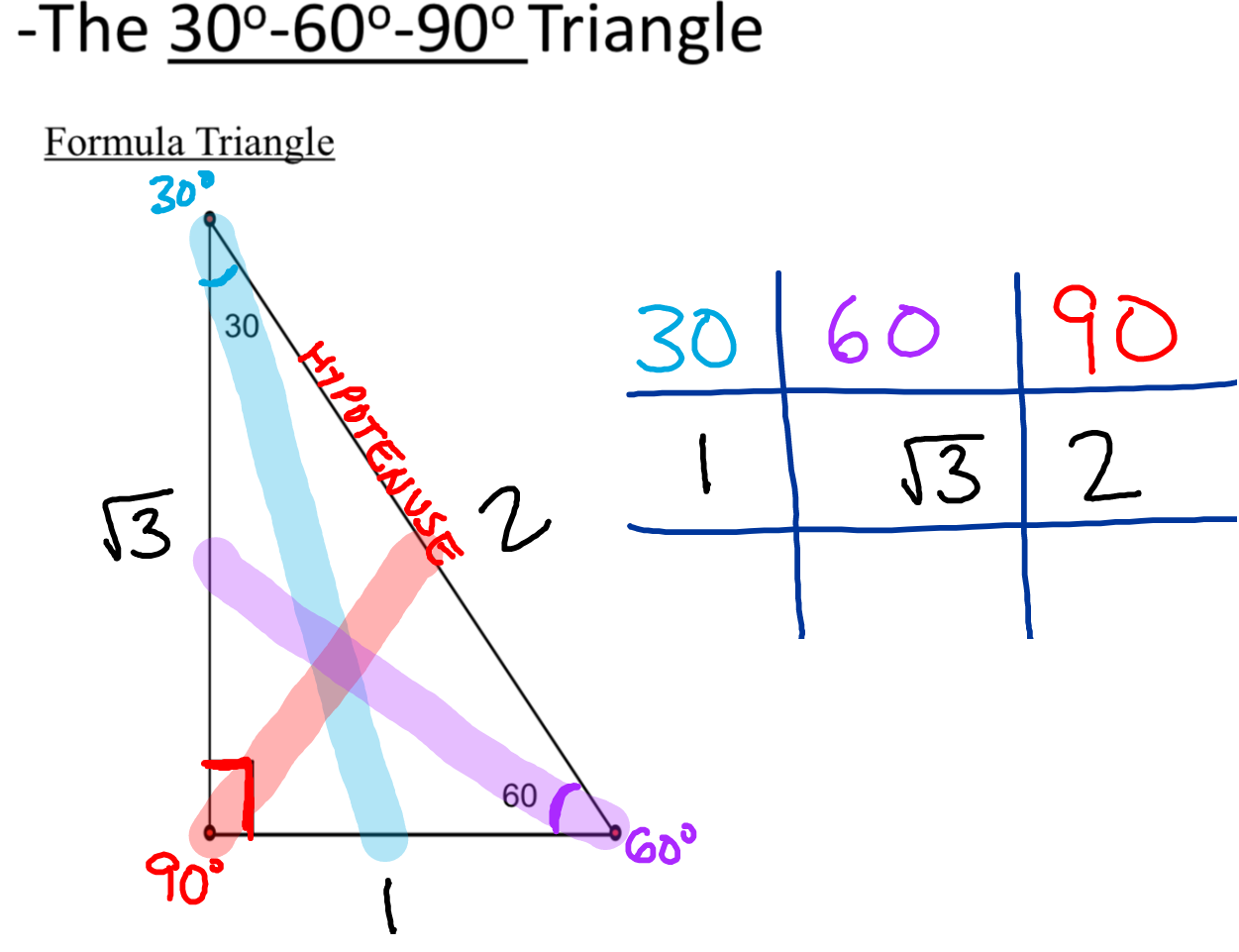
Now we need to find the two missing side lengths x and y using the 30-60-90 special right triangle ratios.
You cannot use sin or cos because we need exact fractions, no decimals!
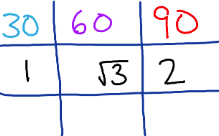
Recall how to set up the table for 30-60-90
What is the exact value of x?
No decimal answers so you must use the table above!
What is the exact value of y?
No decimal answers so you must use the table above!
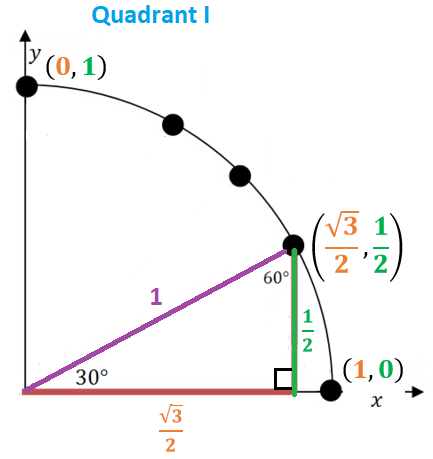
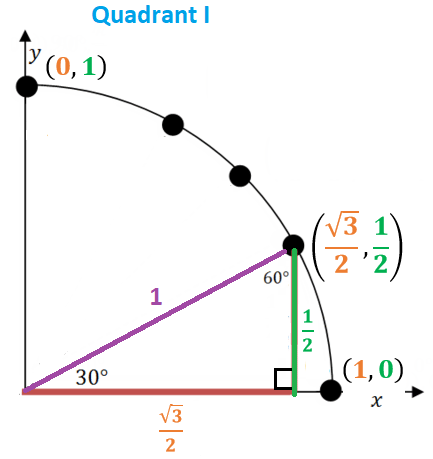
The x-value and y-value you just found make up the coordinate point (x,y) for the 30
Notice how the of the triangle represents the x-value of the point and the of the triangle represents the y-value of the point on the circle.
Since the of the triangle is the radius of the circle, that will always be
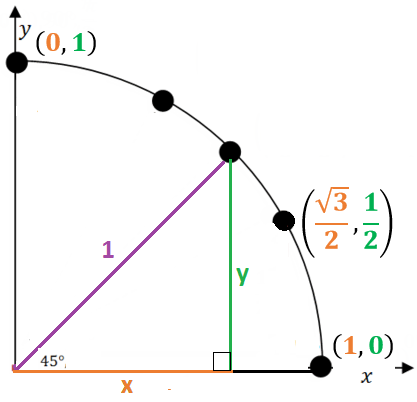
Let's find the other two! Which reference angle does the middle point in Q1 represent?
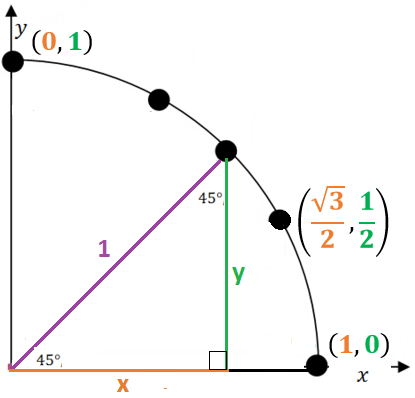
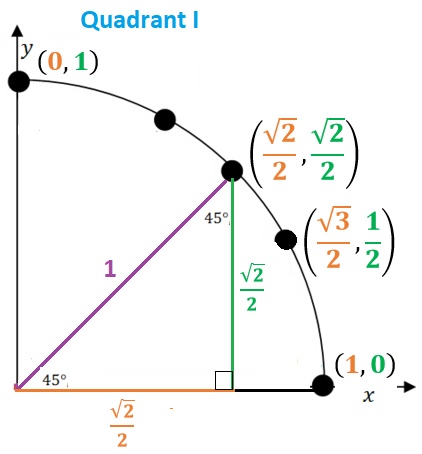
If we create a right triangle with the 45
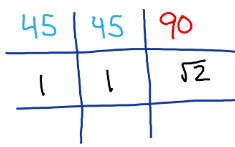
Use the 45-45-90 table to find exact value of x.
No decimals and remember to rationalize the denominator!
Use the same table to find exact value of y.
No decimals and remember to rationalize the denominator!
The x-value and y-value you just found make up the coordinate point (x,y) for the 45
Notice how the of the triangle represents the x-value of the point and the of the triangle represents the y-value of the point on the circle.
Since the of the triangle is the radius of the circle, that will always be
Which reference angle does the last missing point represent?
If we create a right triangle with the 60
Notice that we have another 30-60-90 triangle, except the 30
If you were to find x and y using the 30-60-90 table,
you would find that the values do in fact from the 30
List the values in order from least to greatest.
Start at 0
As the angles in the unit circle increase:
- the x-value starts at 1 and gets until
- the y-value starts a 0 and gets until
For example, the
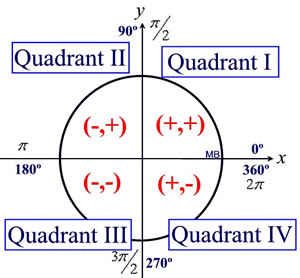
Notice how the coordinate points in Quadrant 2 are the same as Quadrant 1, except now all of the are negative.
The coordinate point for
What is the coordinate point for
When you list out the coordinate points in Quadrant III, what do you think will happen to the signs of the values?
The coordinate point for
What is the coordinate point for
The coordinate point for
What is the coordinate point for
Hint: think about if the x-value or y-value would be negative in Quadrant IV
Match the correct signs of each coordinate point
Quadrant I
Quadrant II
Quadrant III
Quadrant IV
The coordinate point for
What is the coordinate point for