intro to Fiscal Policy cloned 4/15/2022
star
star
star
star
star
Last updated over 4 years ago
22 Nsɛmmisa
1
1
1
1
1
1
1
1
1
1
1
1
1
1
1
1
1
1
1
1
1
1
What is the objective of demand-side policies?
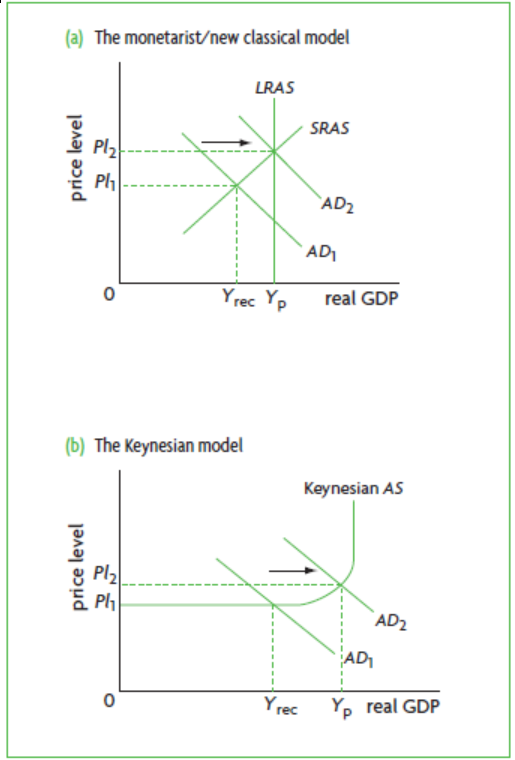
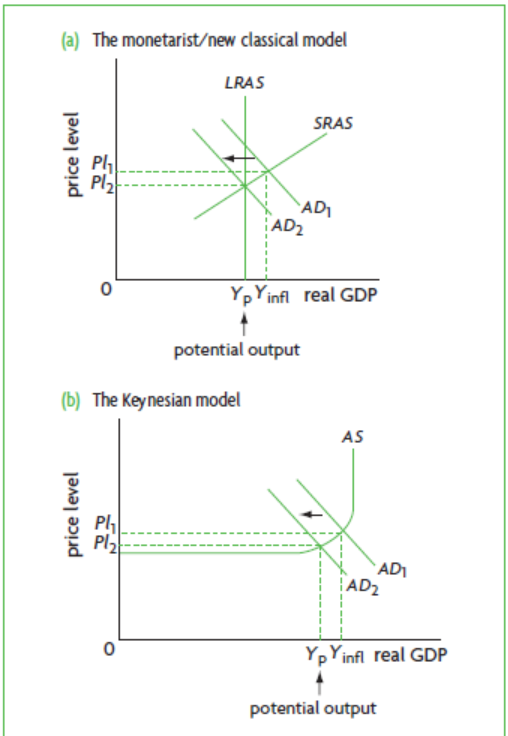
Draw the desired effects of demand-side policies:
Explain: what are automatic stabilisers?
Explain: what is discretionary fiscal policy?
Name two possible sources of government revenue other than taxes.
Give one example of current expenditure of the Polish government:
Give one example of capital expenditure of the Polish government:
Give one example of a transfer payment in Poland:
What types of expenditure count towards GDP under the label of "government spending"?
What is the difference between ‘government budget deficit’ and ‘government debt’?
Do some reasearch. What is the level of budget deficit and public debt in Poland right now?
What sort of fiscal policy was presented on the diagrams above?
What is the goal of this policy?
Give two examples of this policy:
What sort of fiscal policy was presented on the diagrams above?
What is the goal of this policy?
GIve two examples of this policy:
According to Mazzucato, why is the government indispensible for technological progress?
Government can use its revenues to invest in physical capital goods, such as infrastructure (roads and transport systems, telecommunications, harbours, airports, etc.), as well as on R&D, which improves technology, and
therefore improves the quality of capital goods, and improves the productivity of labour.
Give two specific real world examples of such investment.
Government spending can be used to invest in develop human capital, such as training and education programmes that increase the quality of the labour force and improve the productivity of labour.
Give two specific real world examples of such investment.
Government can provide incentives to encourage investment by firms through lower business taxes (as well as other measures to be considered later), thereby contributing to new capital formation and R&D that promotes technological innovations.
Give one specific real world examples of such incentive.
What happens to LRAS, when the government makes a successful investment in R&D?