2. Supply Side: Free market cloned 4/15/2022
star
star
star
star
star
Last updated over 4 years ago
15 Nsɛmmisa
1
1
1
1
1
1
1
1
1
1
1
1
1
1
1
This group of policies aims to open the market to greater competition. They flow from the free market philosophy that greater competition encourages harder work, more innovation, lower prices and better quality in an attempt to earn money and win customers.
A "negative externality" is a cost that is suffered by a third party as a result of an economic transaction. For example, if one person sells radioactive cars and the other person buys them, it's not enough to say that it's fine, because they both agreed to the transaction. Radioactive pollution will affect even people who did not participate in the transaction.
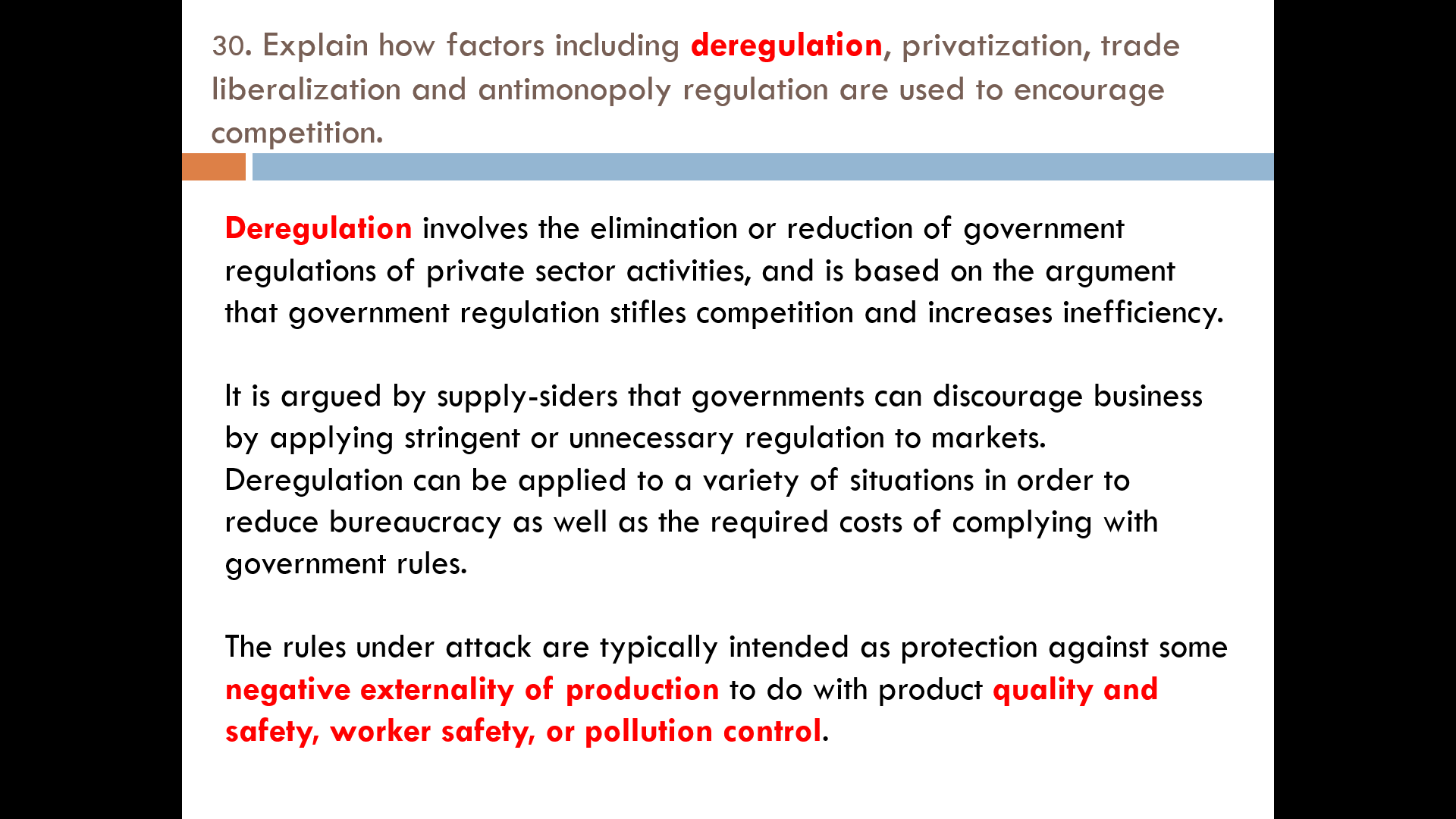
Government is often expected to deal with negative externalities, eg. by imposing regulations on what and how firms can produce. However these regulations often lead to higher costs and curtail freedom of entrepreneurs to do whatever they see profitable.
Explain how weakening EPA's (Environmental Protention Agency) regulations could be seen as supply-side policy.
Show the effects of deregulation on this diagram.
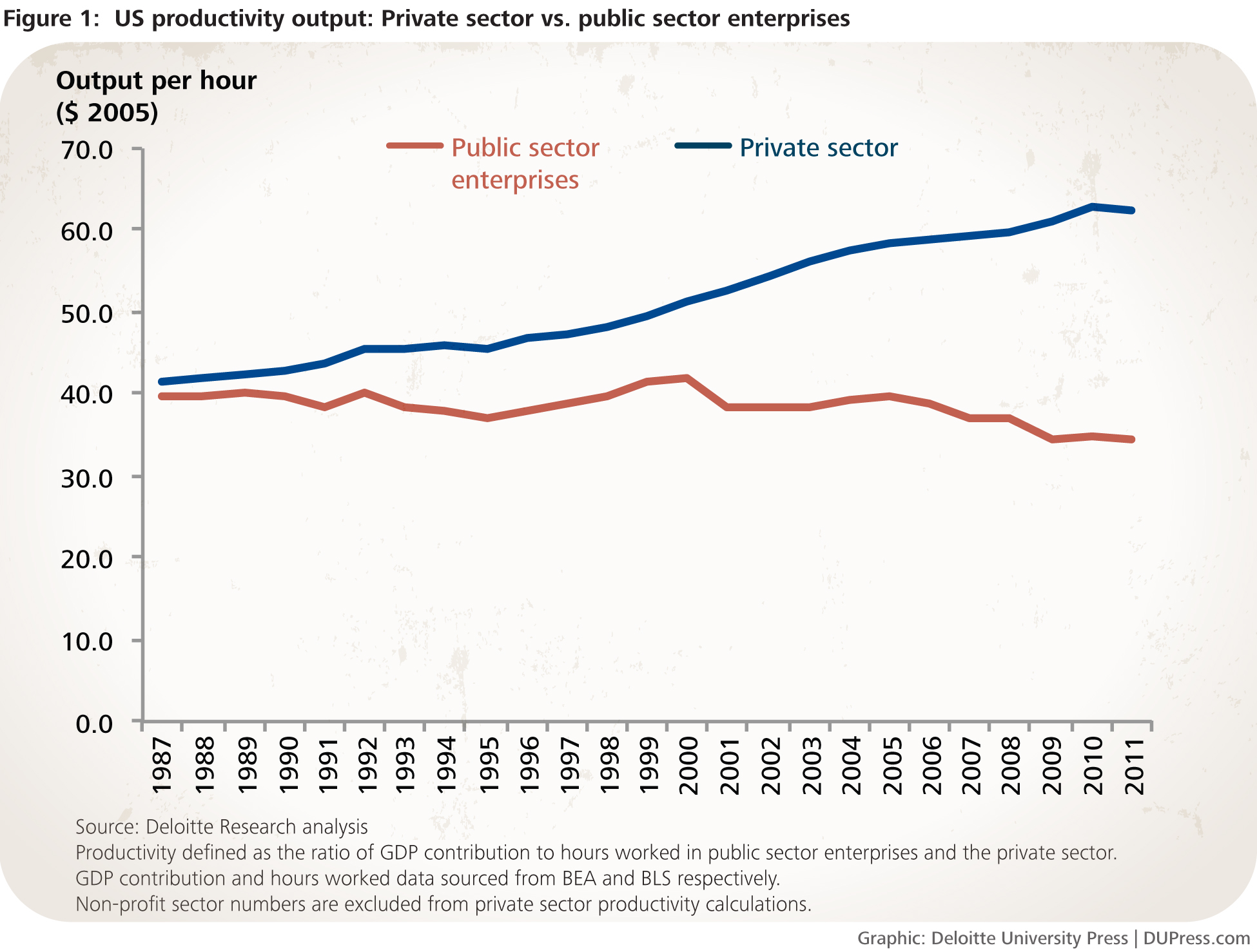
The graph above shows one estimate of productivity in the public sector vs productivity in private sector. Explain two possible reasons for the difference.
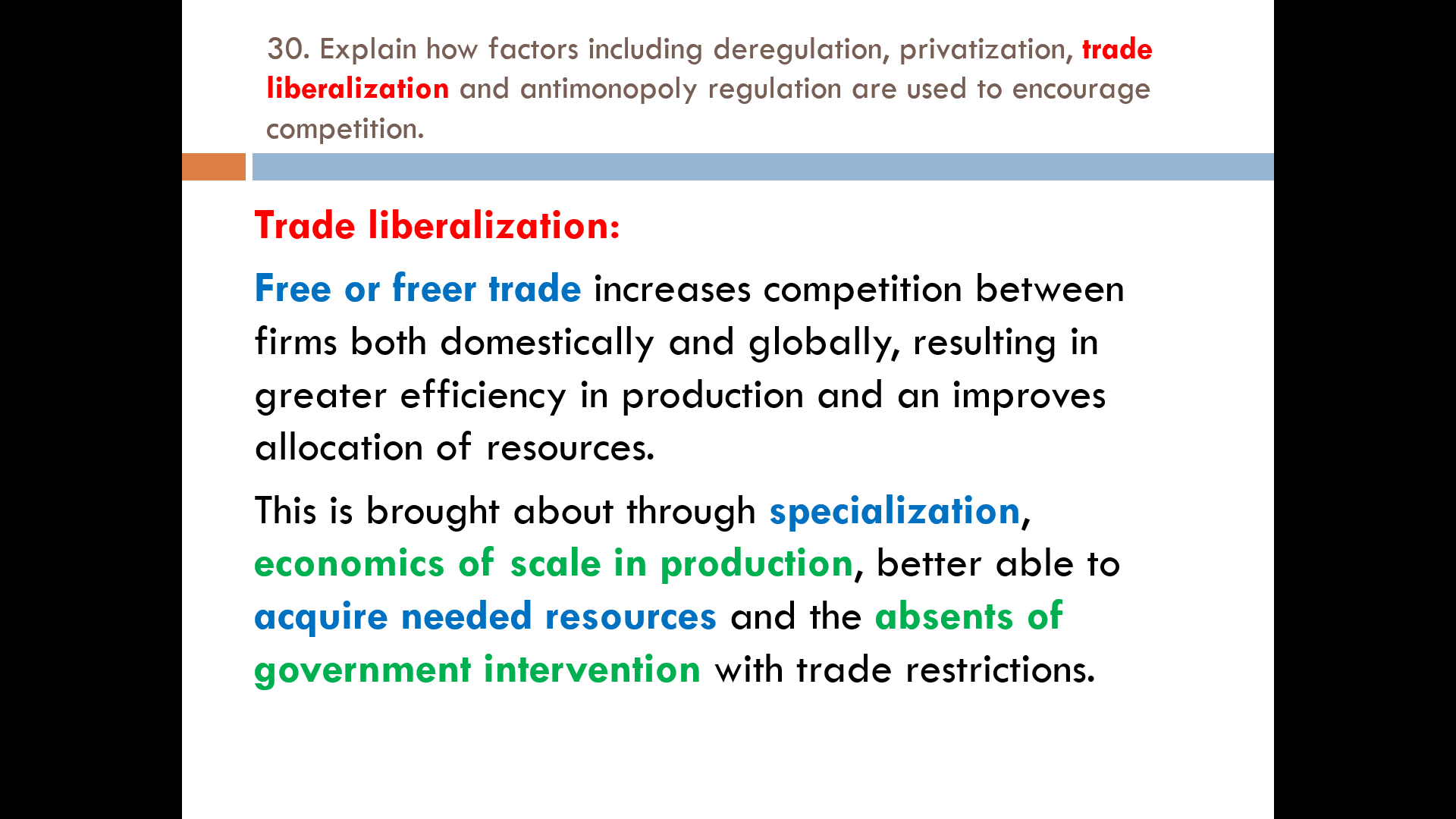
Explain how freer trade between Poland and Germany after the former joined the UE could increase productivity in both countries.
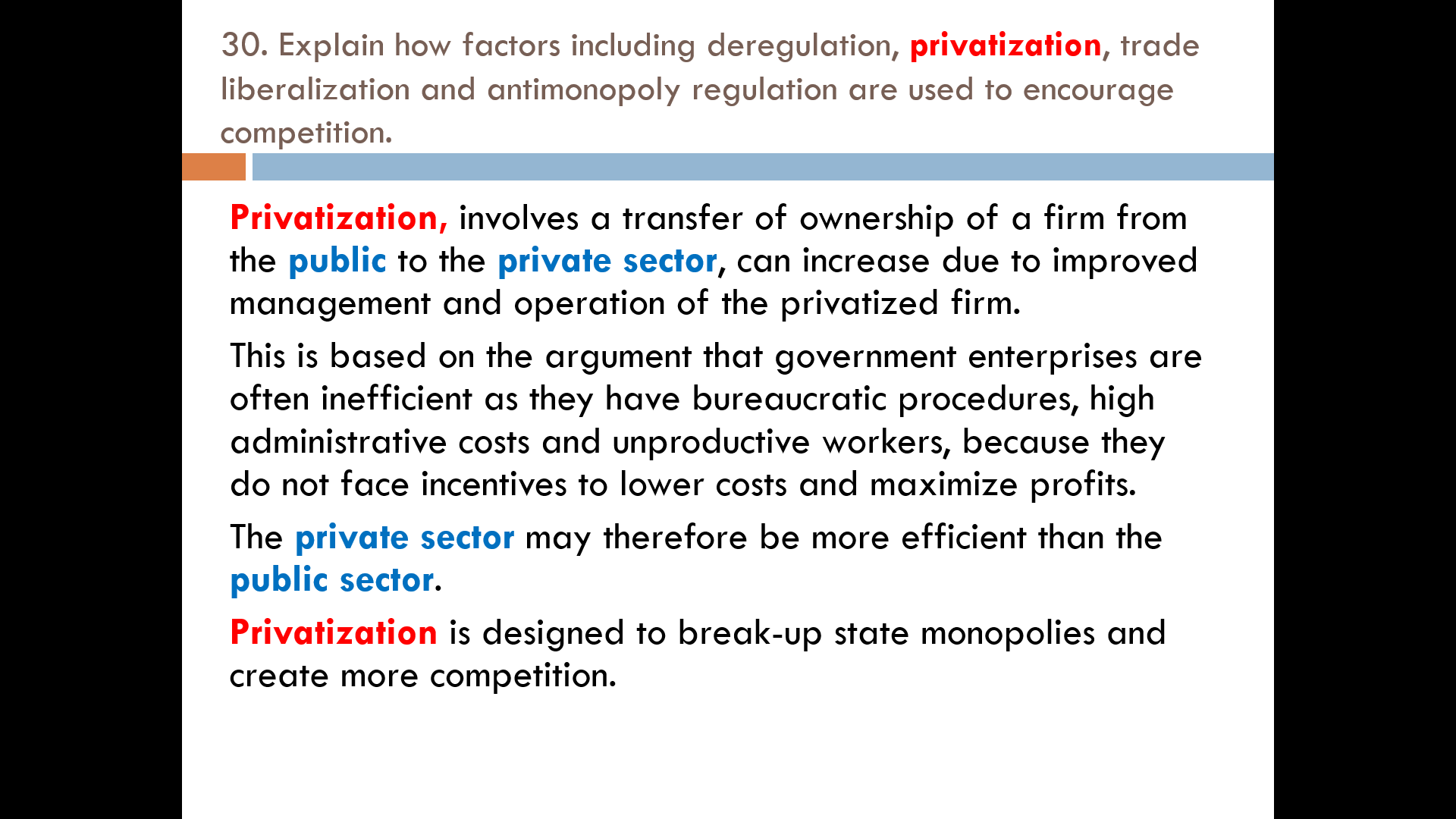
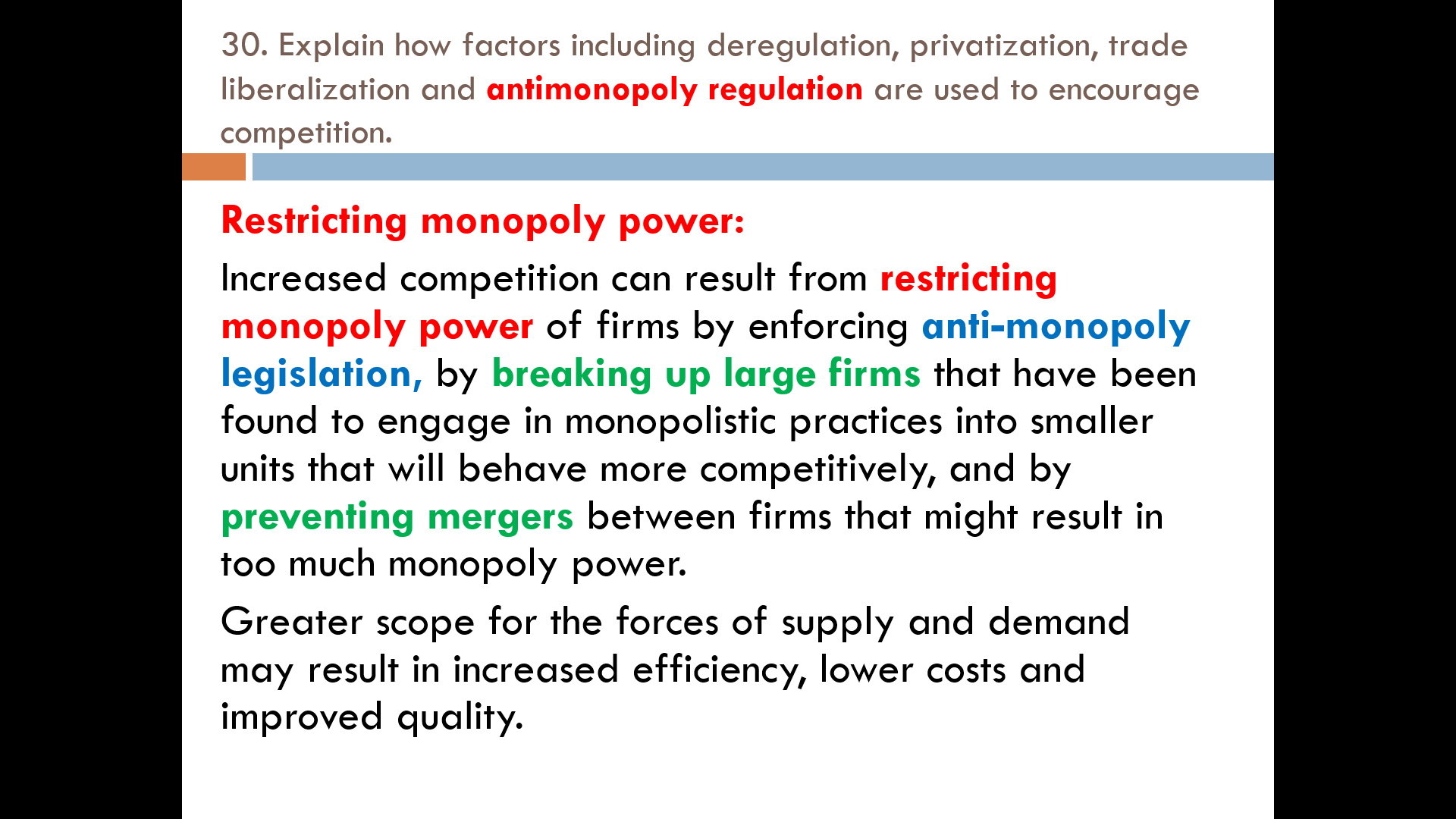
Explain the arguments for restricting monopoly power - why it could be considered a supply side policy?
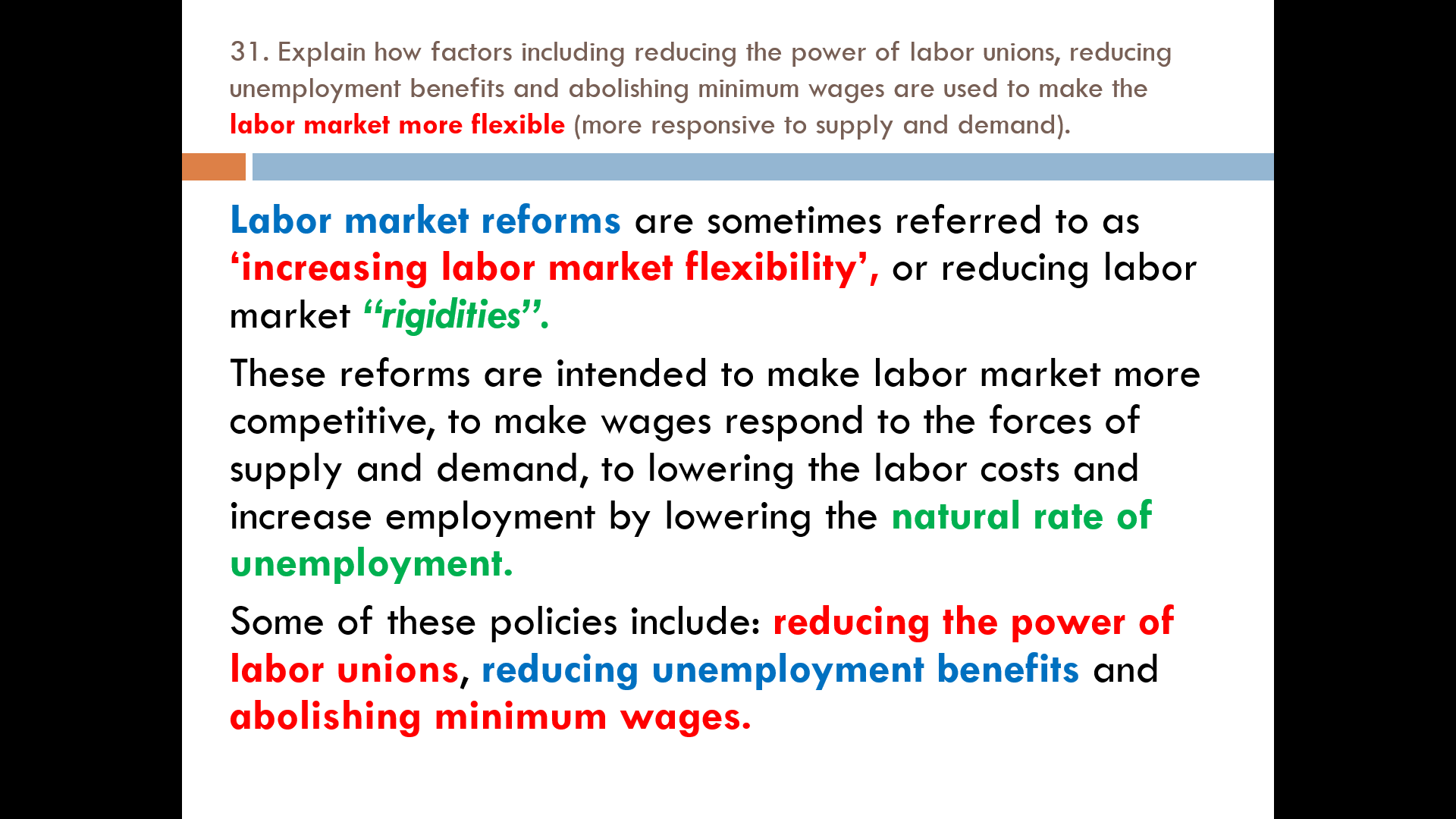
Explain, what are labour market rigidities.
Explain how Belgian labour market reforms could shift LRAS to the right.
Today, working week in Poland is 40 hours long. What would happen to LRAS if we extended working day from 8 hours to 10 hours and abolished weekends?
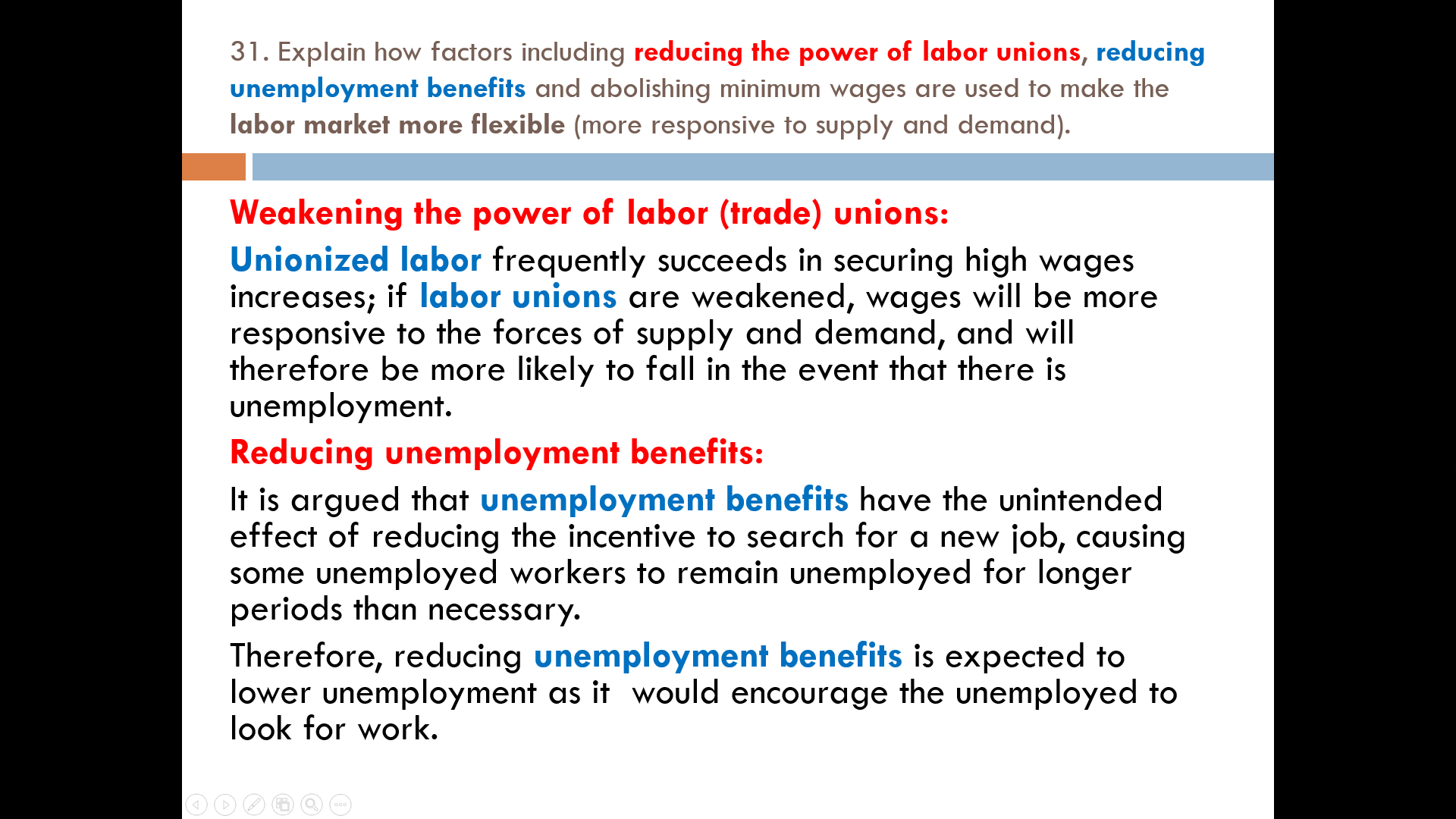
In your own words explain how weakening labour unions could make labour market more flexible.
In your own words explain how reducing unemployment benefits could make labour market more flexible.
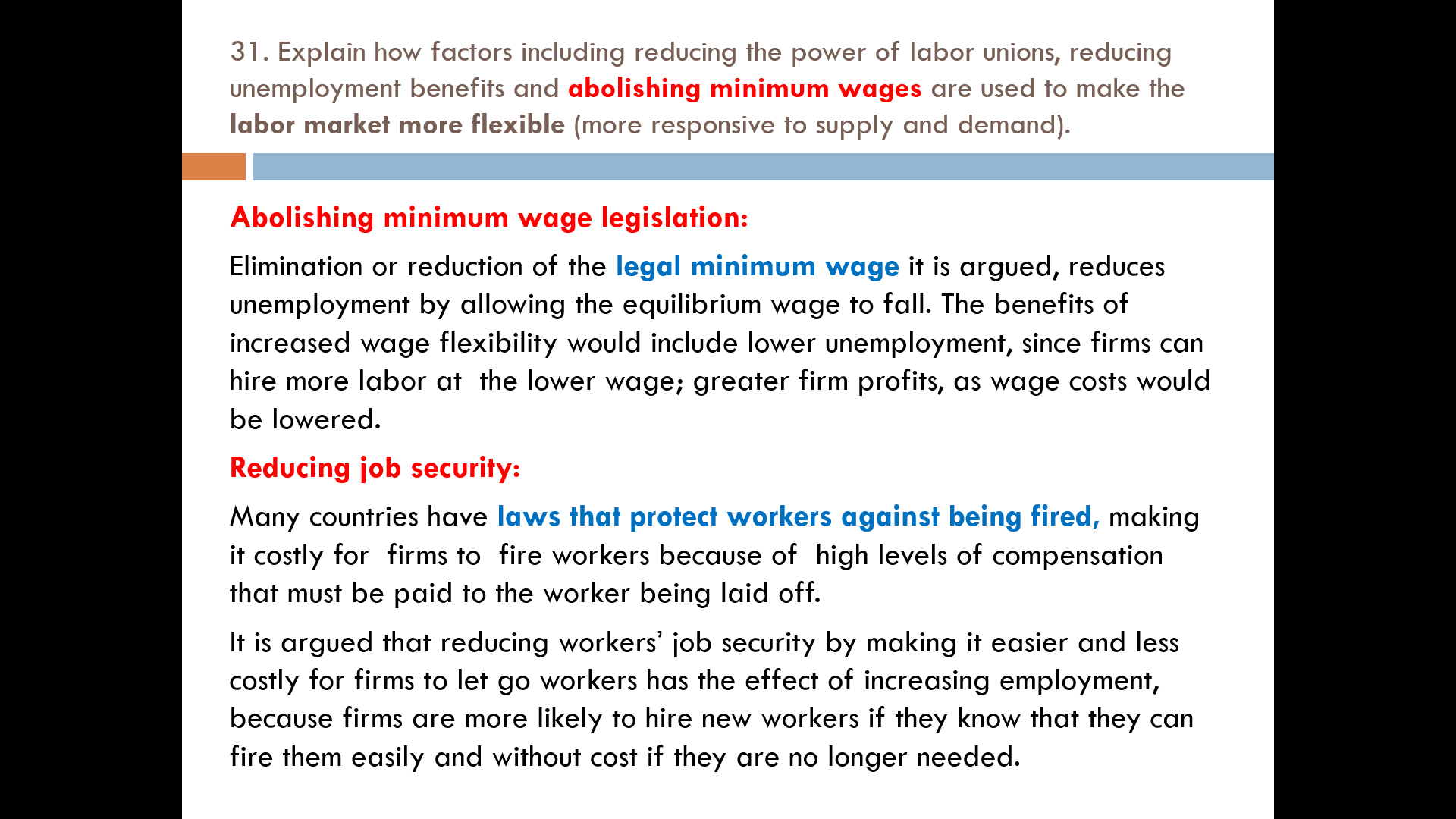
In your own words explain how abolishing minimum wage could make labour market more flexible.
In your own words explain how reducing job security could make labour market more flexible.
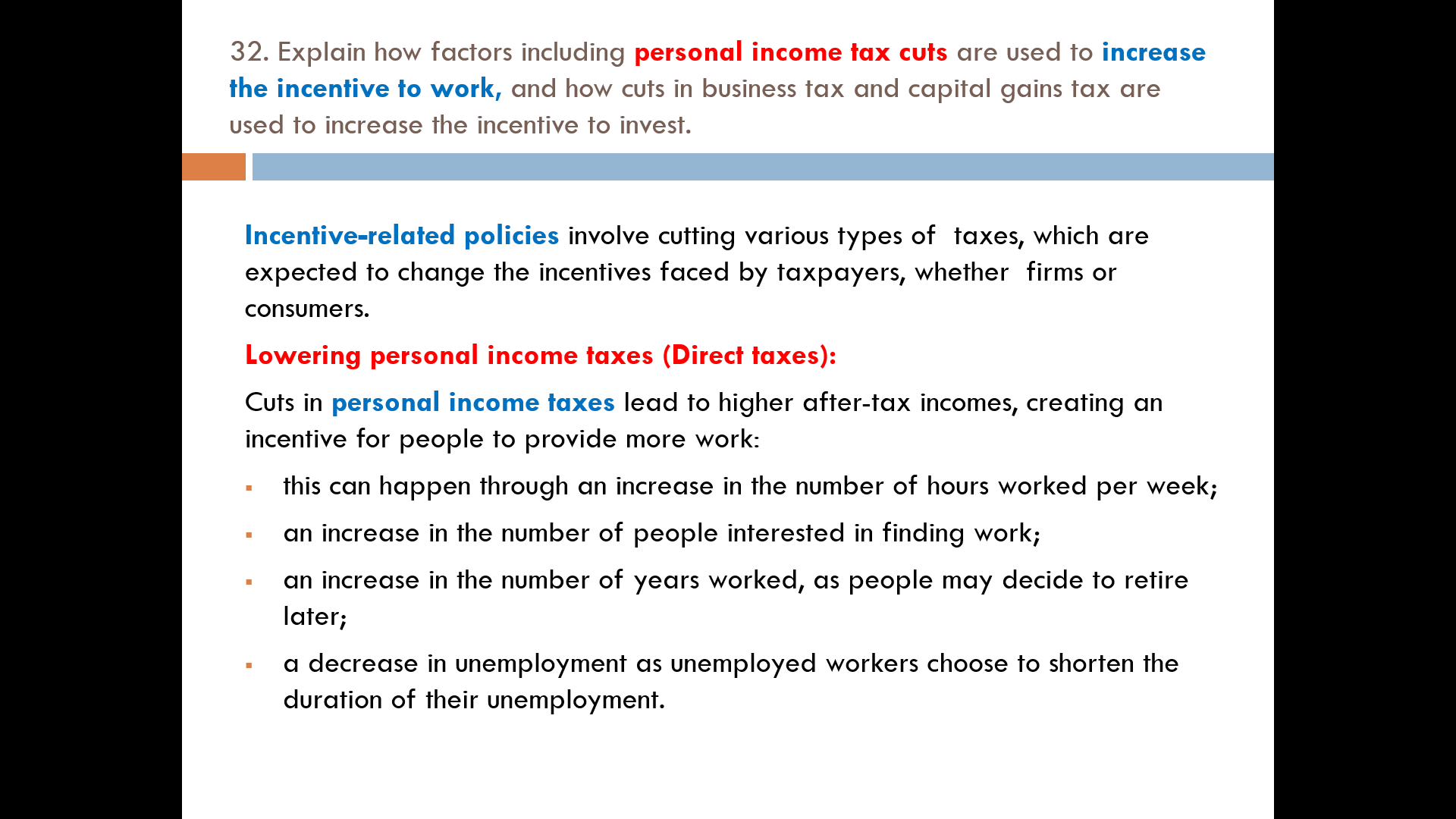
Explain what is an incentive?
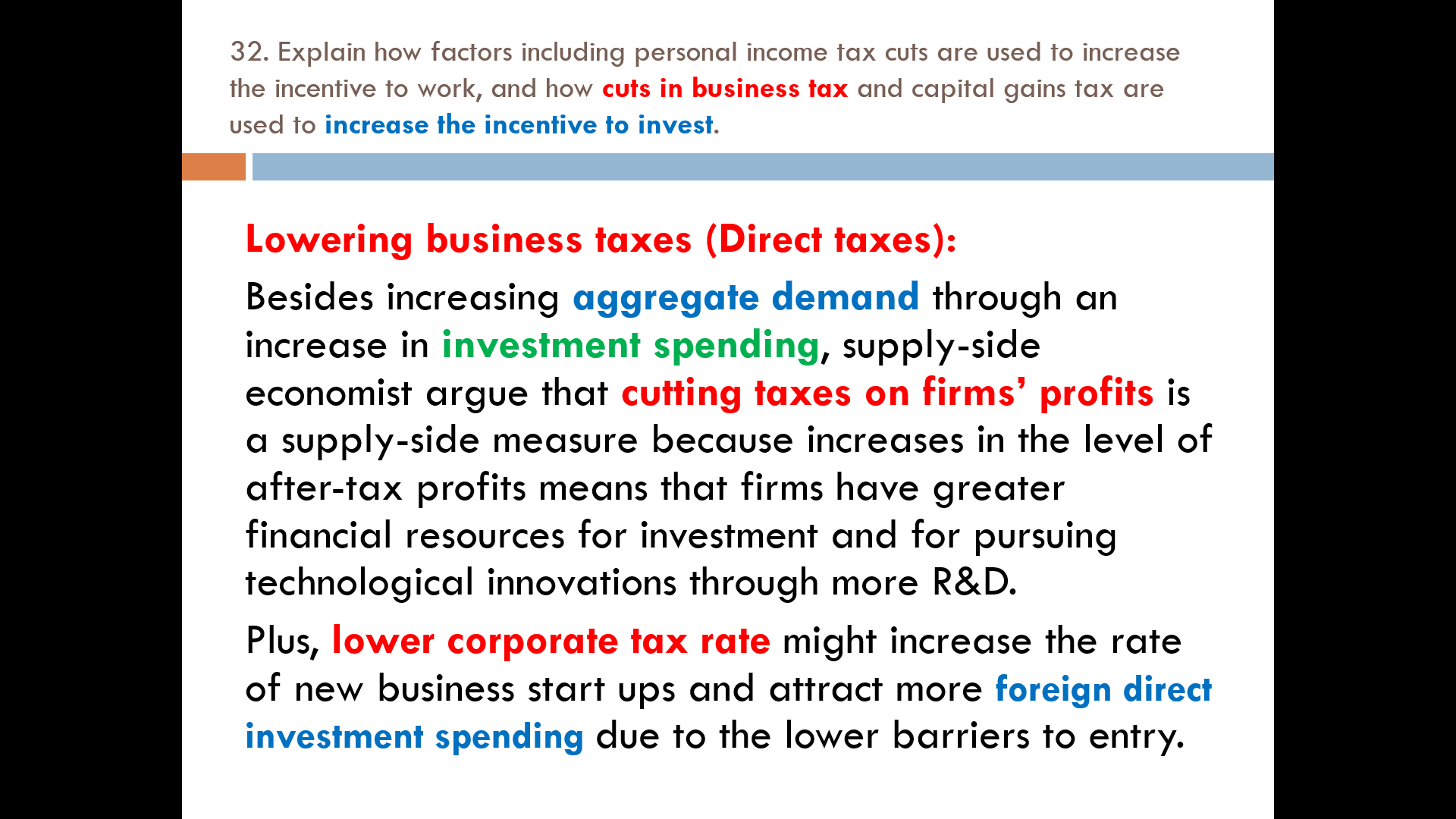
Explain how lowering taxes could be an incentive to work more and invest more.
Lowering taxes can have both supply side effects and demand side effects. Show both on the diagram below.