2. Supply side: Investements in Human Capital, R&D cloned 4/15/2022
star
star
star
star
star
Last updated over 4 years ago
13 Nsɛmmisa
1
1
1
1
1
1
1
1
1
1
1
1
1
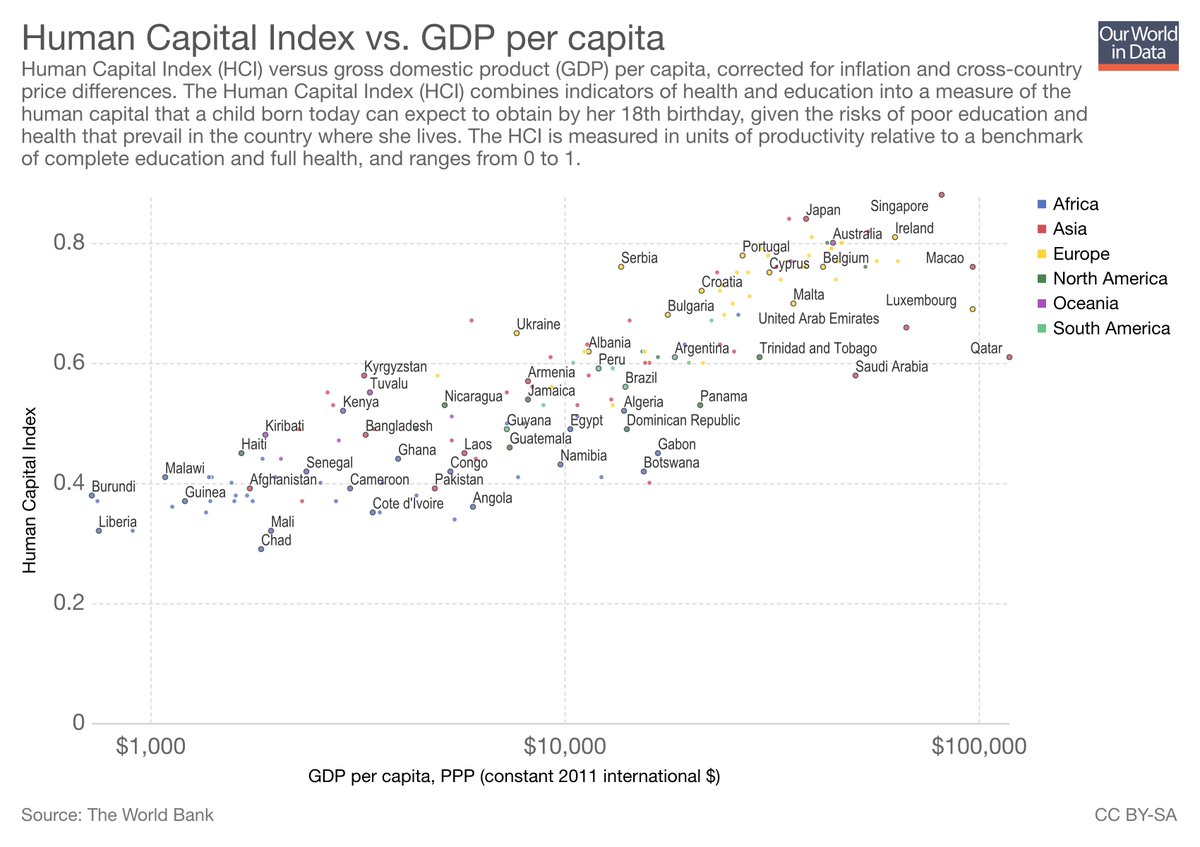
What is the correlation between human capital and GDP per capita?
Correlation is not causation. But if we assume, that human capital score is a cause of GDP per capita, what could be the explanation for that?
Now let's assume that it is the other way round: if human capital score is caused by GDP per capita, what could be the reason for that?
Which explanation seems more plausible to you?
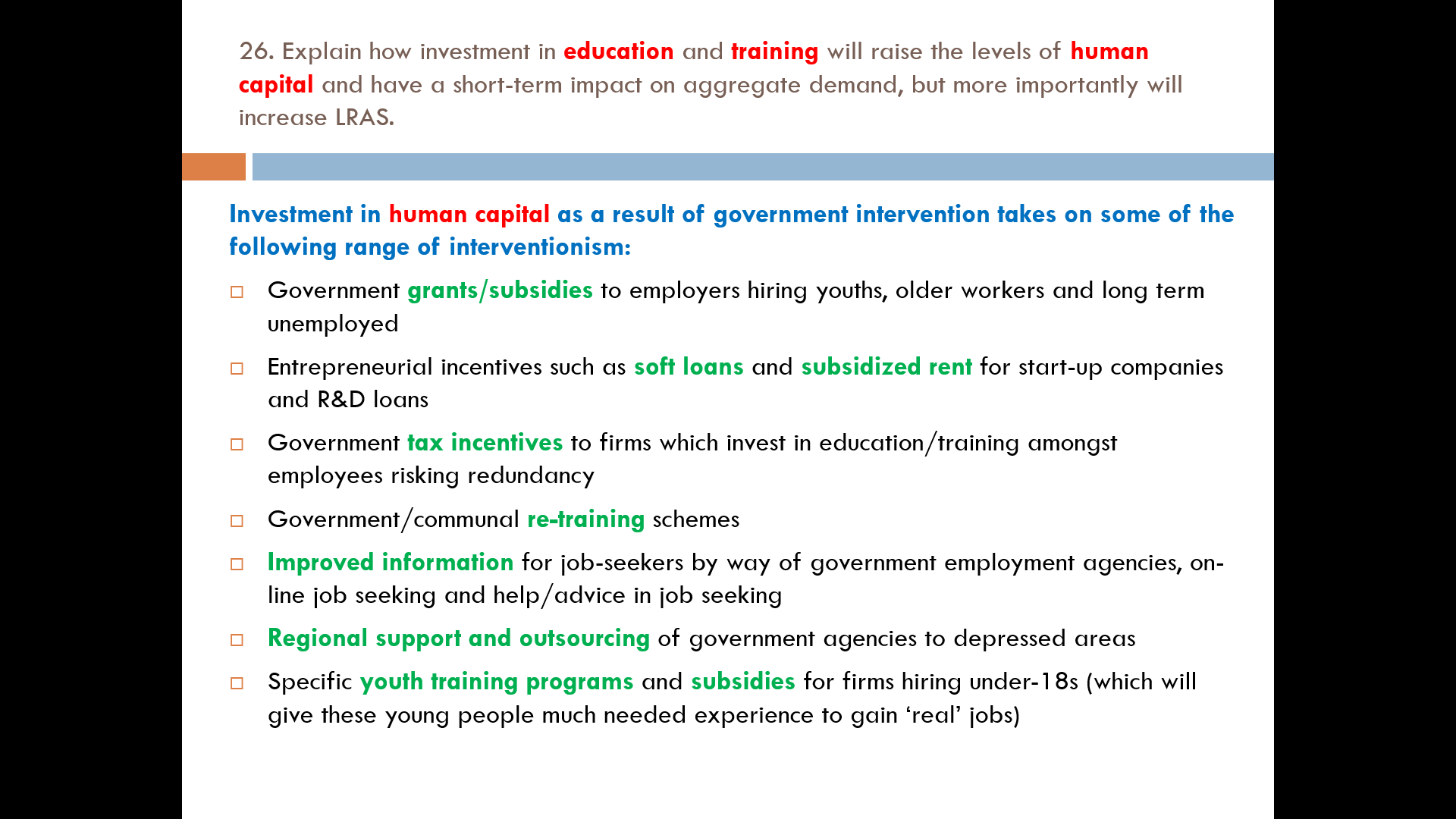
Above, you can see a simple model of a feedback loop between human capital and economic growth. What happens if you don't intevene in this cycle? What happens after you intervene and invest in education?
PS. You can build your own models with Loopy. Cool, right? If you want, you can start with editing the above model.
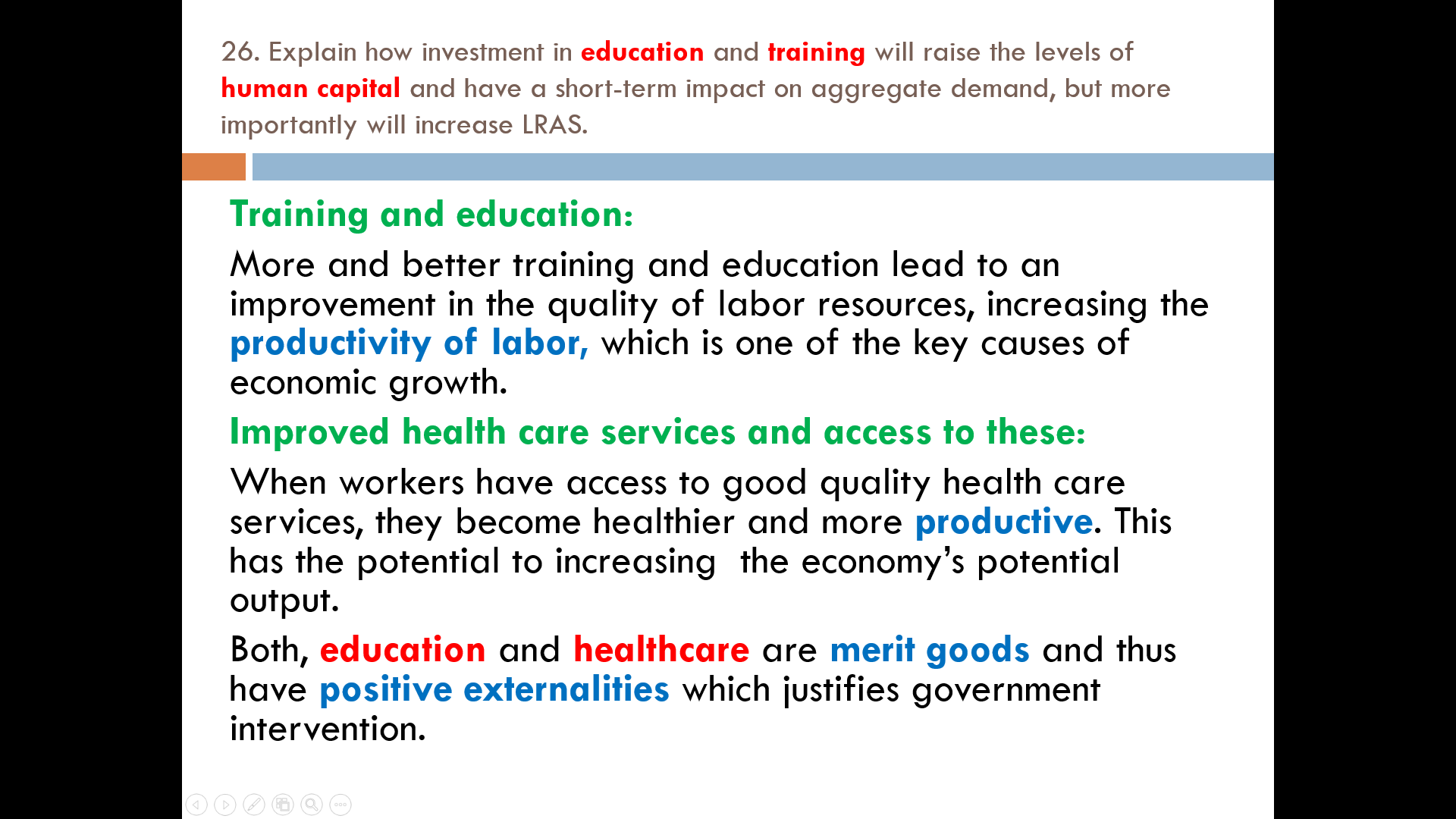
Education and health care have "positive externalities" because consumption of both affects not only the people inolved directly in the transaction (eg. a doctor and her patient), but also third parties. If you have a flu and then you treat yourself, I will benefit as well, because you won't pass on the flu. But I didn't pay for the treatment, so I benefit without any expenditure - that's positive externality. Can you think of any other examples of positive externalities?
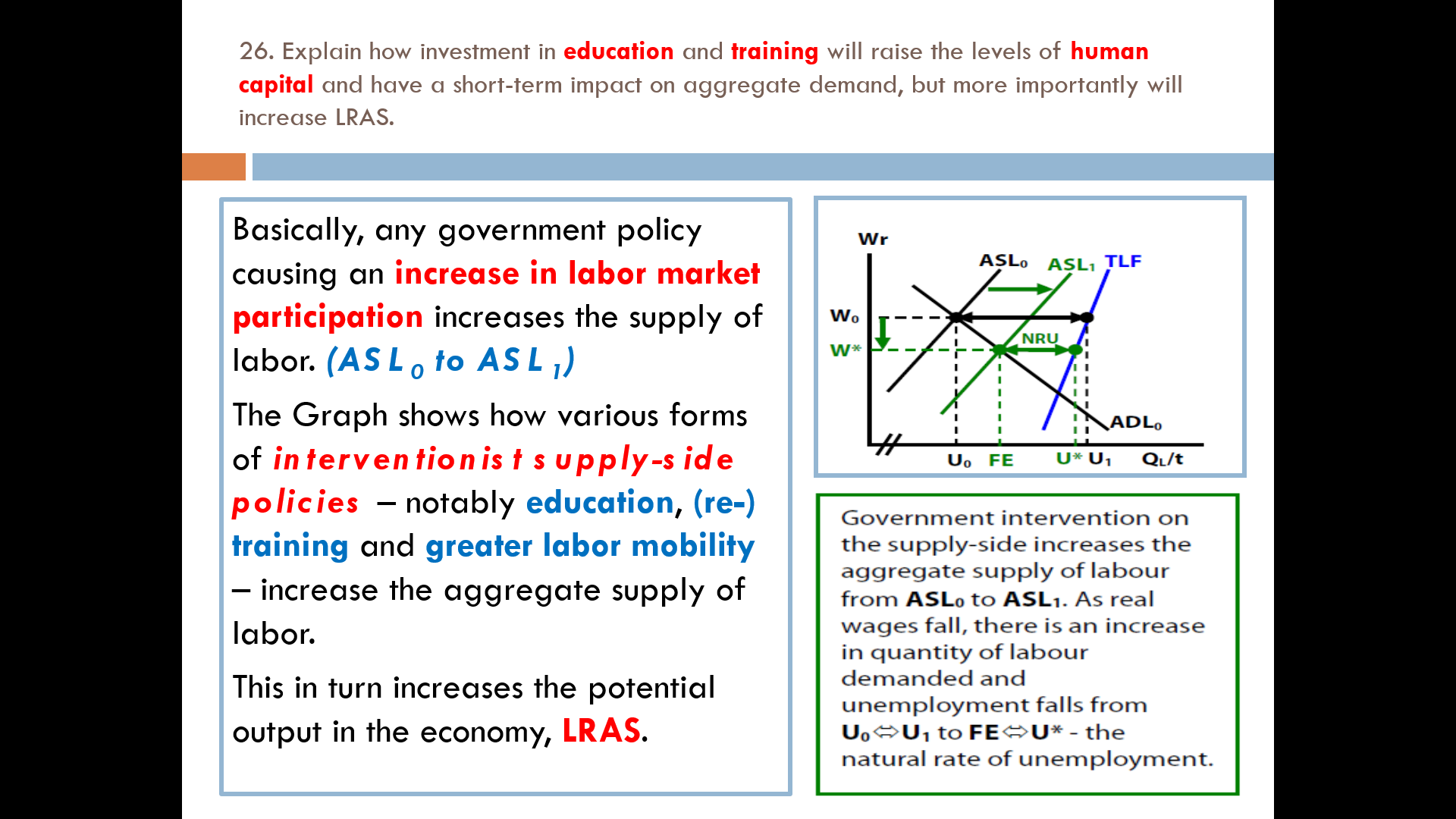
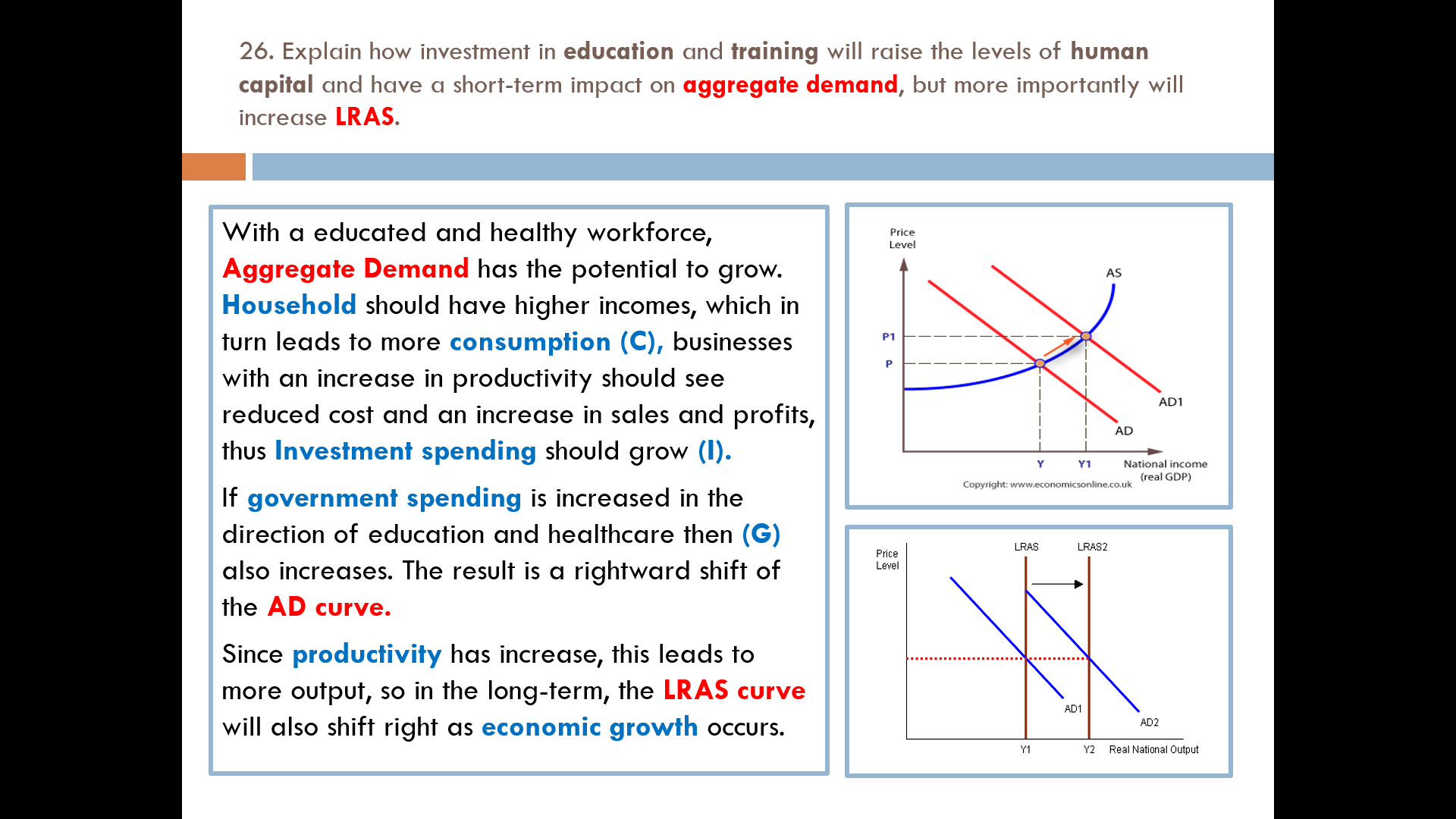
Explain, what happens on the diagram above?
Investments in human capital have both demand-side and supply-side effects. Chose the right sequence of following effects:
Structural unemployment shrinks
Economic growth occurs
After a year-long training people aquire new skills and are able to find jobs
Government invests in life-long learing and retraining
AD shifts to the right
AD and LRAS shifts to the right
There is a problem with structural unemployment
In the short run, unemployment/underemployment among teachers gets smaller
Do your own online research and find specific example of one of the above. Explain how it works.
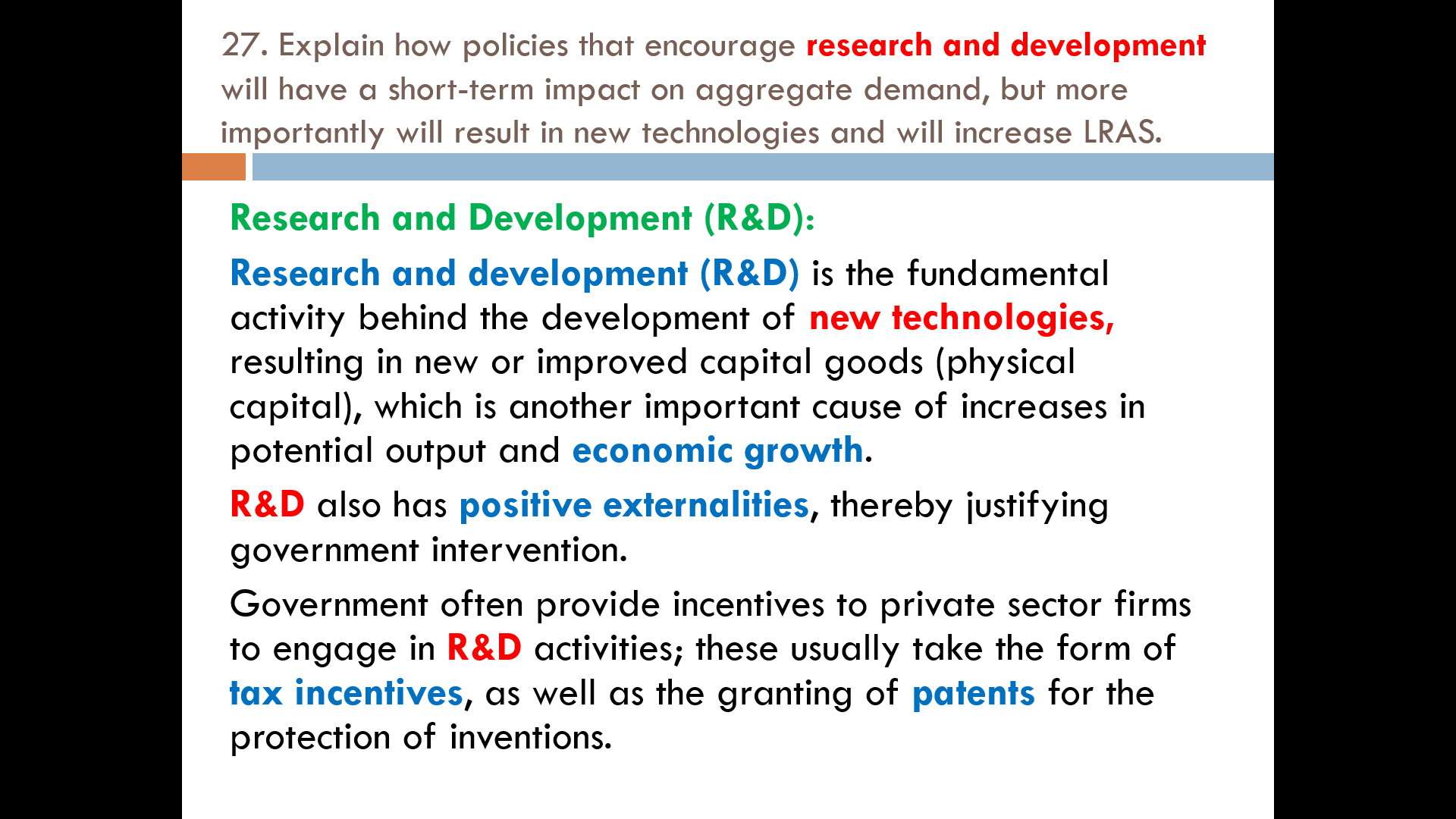
The sponsorship of research and development (R&D) is largely (though not exclusively) considered the domain of developed countries. The best case for such funding is that productive scientific research will not be undertaken by the market alone. This can be a result of costs and risks attached to the research. Research is often very expensive and returns are uncertain, thus profit-maximizing firms may shy away from it.
Explain, how the aforementioned "incentives to firms to engage in R&D" may work.
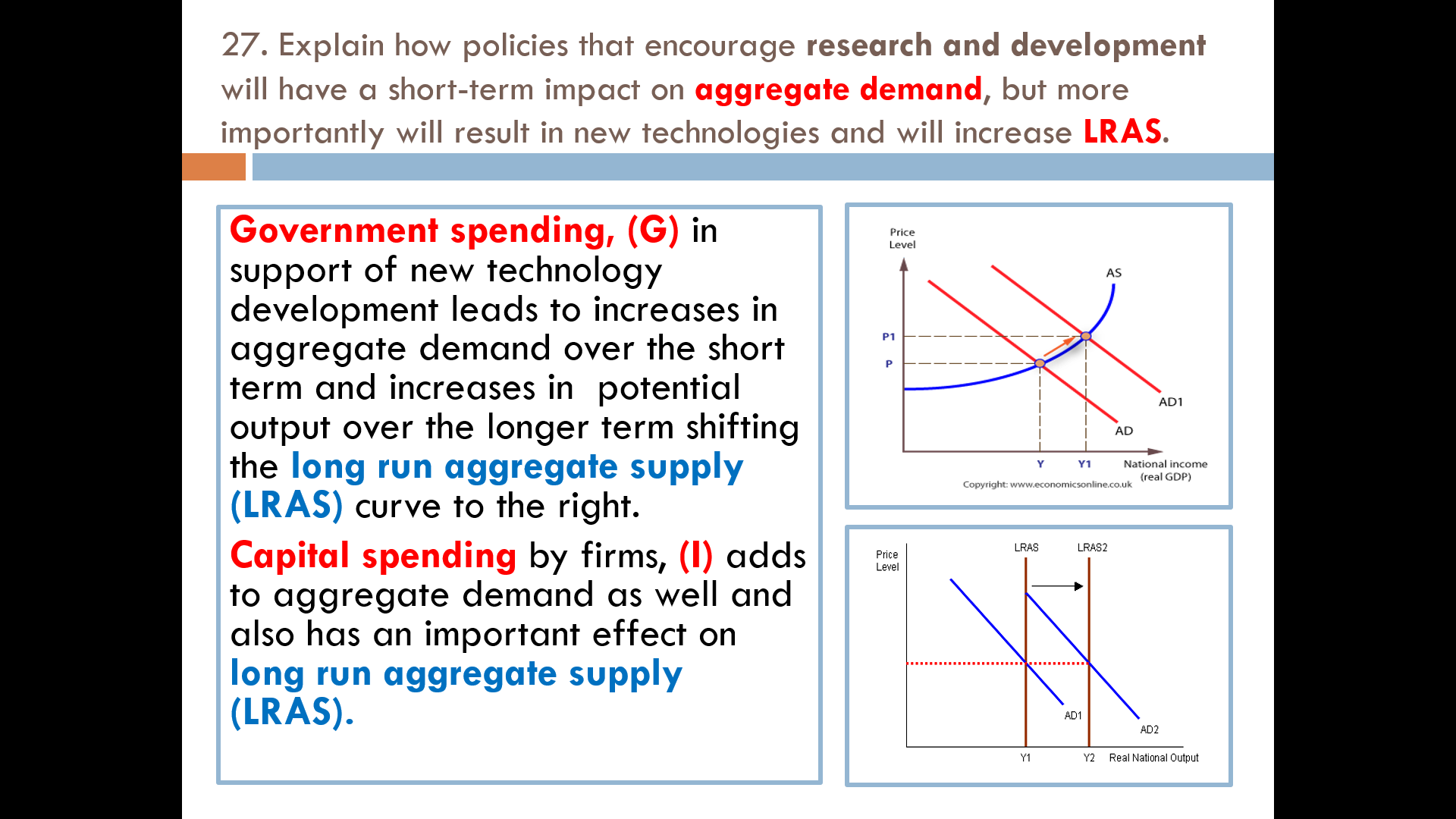
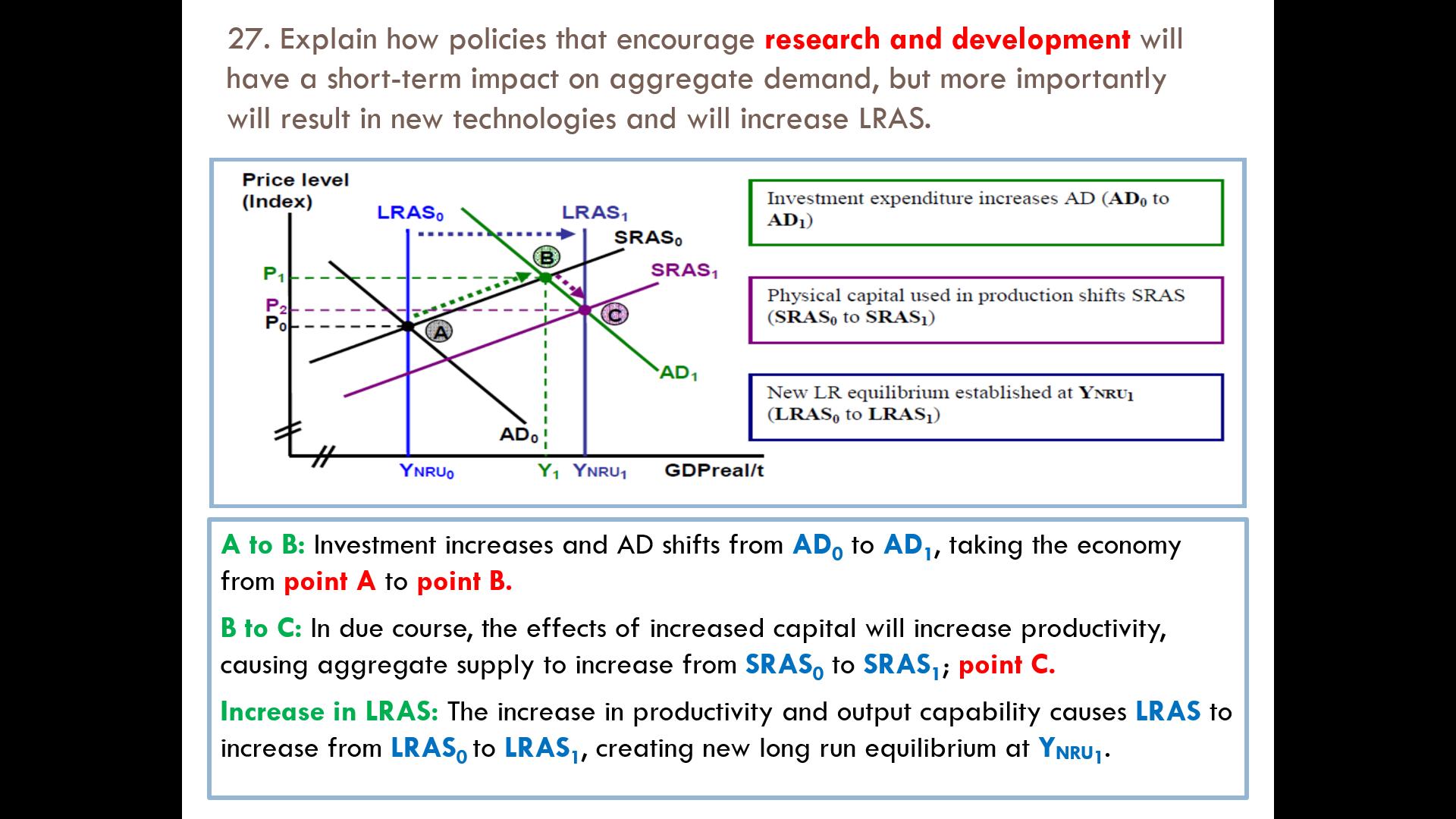
Just as investment in human capital, investment in R&D will have both supply side and demand side effects. Give on example of government spending (G) and one example of capital spending (I) that will affect AD when a policy of R&D encouragement is enforced.
Using examples from the previous question, explain what happens on the diagram above.
In ~100 words, summarize Mazzucato's argument.