2. Supply Side: Infrastructure and Industrial Policy cloned 4/15/2022
star
star
star
star
star
Last updated over 4 years ago
7 Nsɛmmisa
1
1
1
1

1
1
1
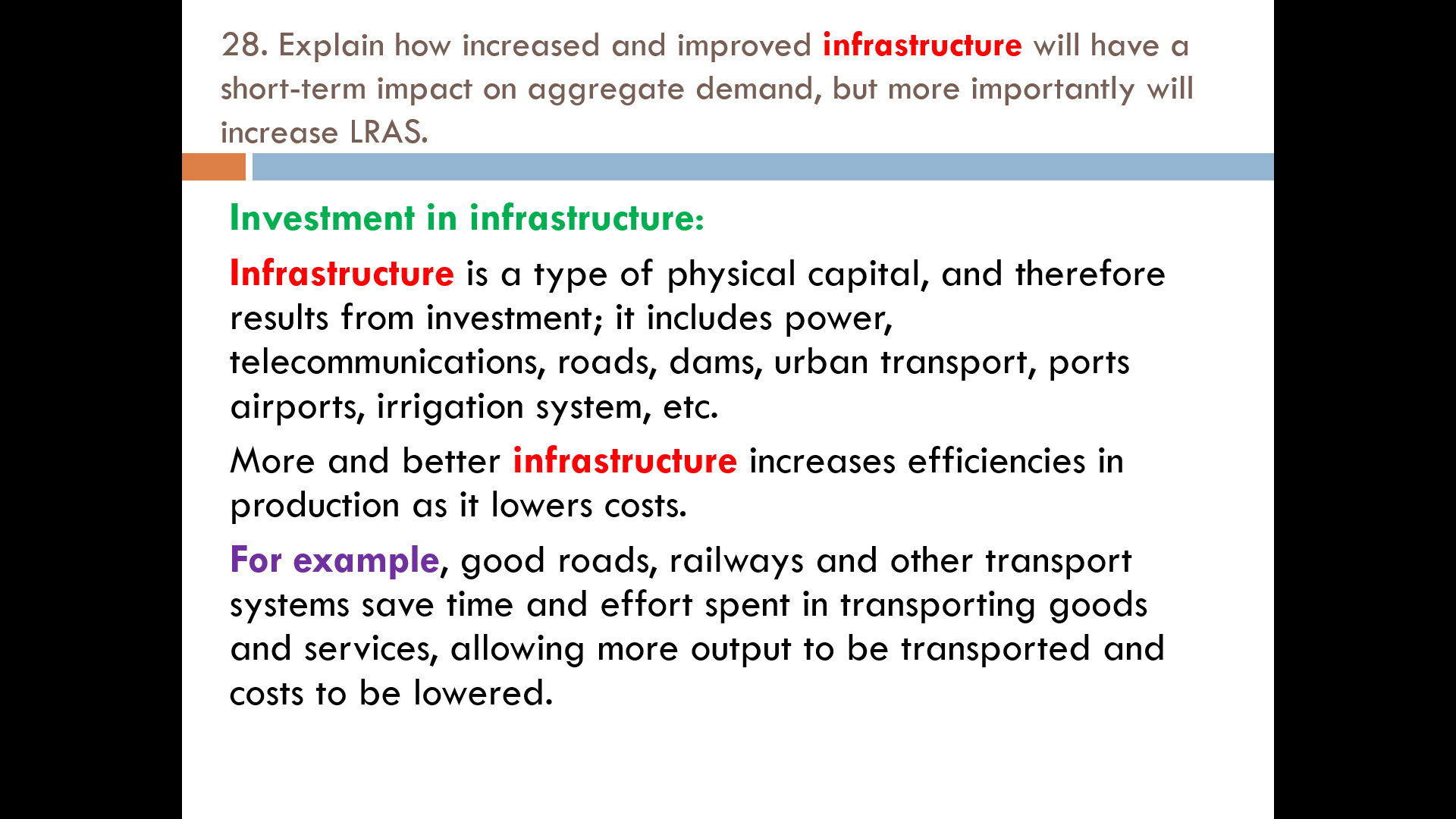
Questions of cost arise with the provision of infrastructure, though the benefits and costs are clear for these projects. Economists can estimate the prospective revenue and growth from construction of a new highway to relieve traffic, or from a rail system to improve the movement of goods. A strong case is made for infrastructure projects as public or merit goods that will not be undertaken if left to the market.
Such projects can be the source of enormous expenditure, especially in the case of major works like river damns and railways, and thus can be subject to significant corruption and waste as well.
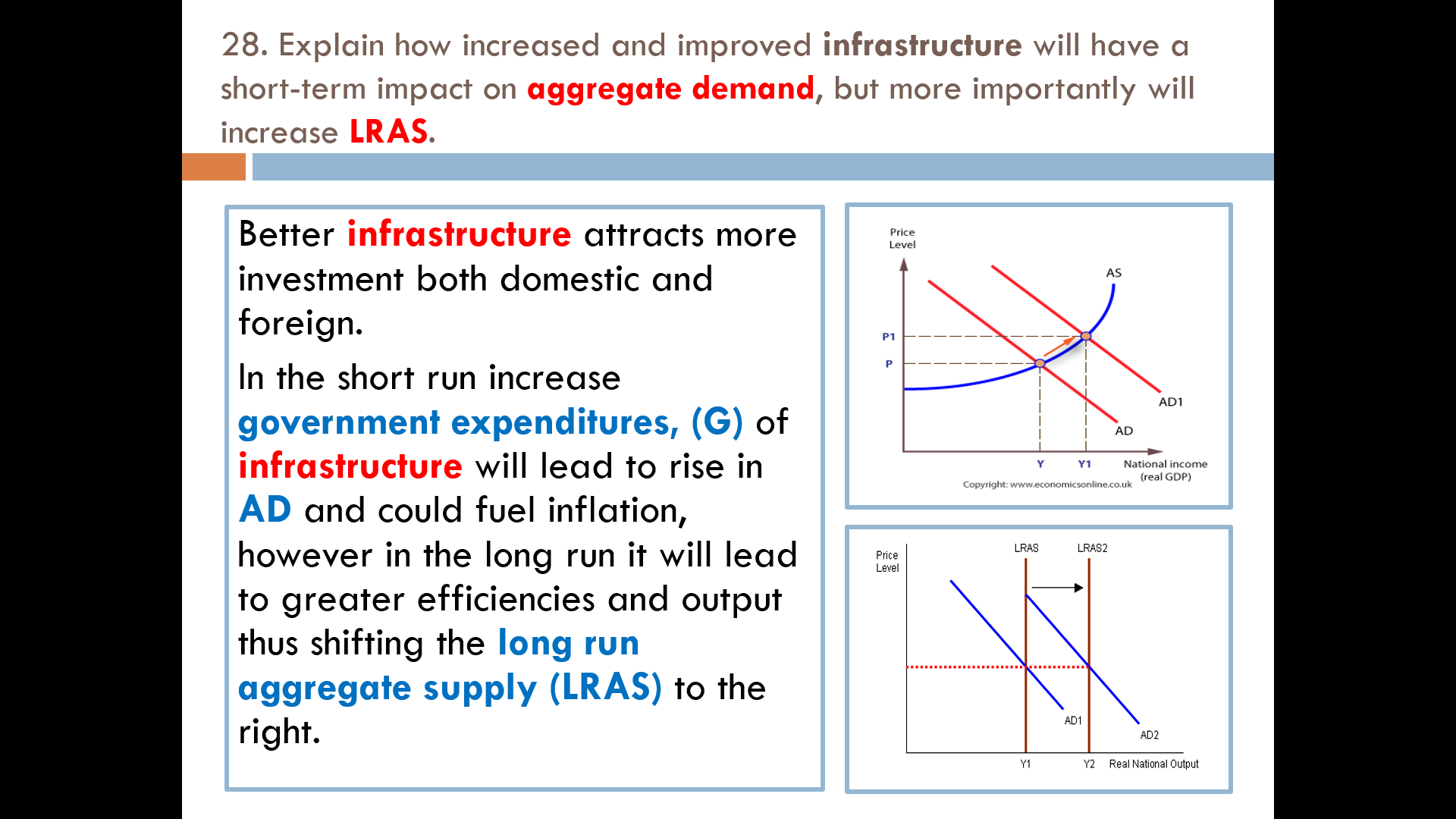
Hoover Dam was built in years 1931–1936, and it became one of the symbols of expansionary fiscal policies pursued by the US government to deal with the consequences of Great Depression. Investments in infrastructure have both demand-side and supply-side effects. Explain, what could be the supply-side and what could be the demand-side consequnece of the new $3 billion investment in the Dam.
Come up with three other specific examples of government investment in infrastructure.
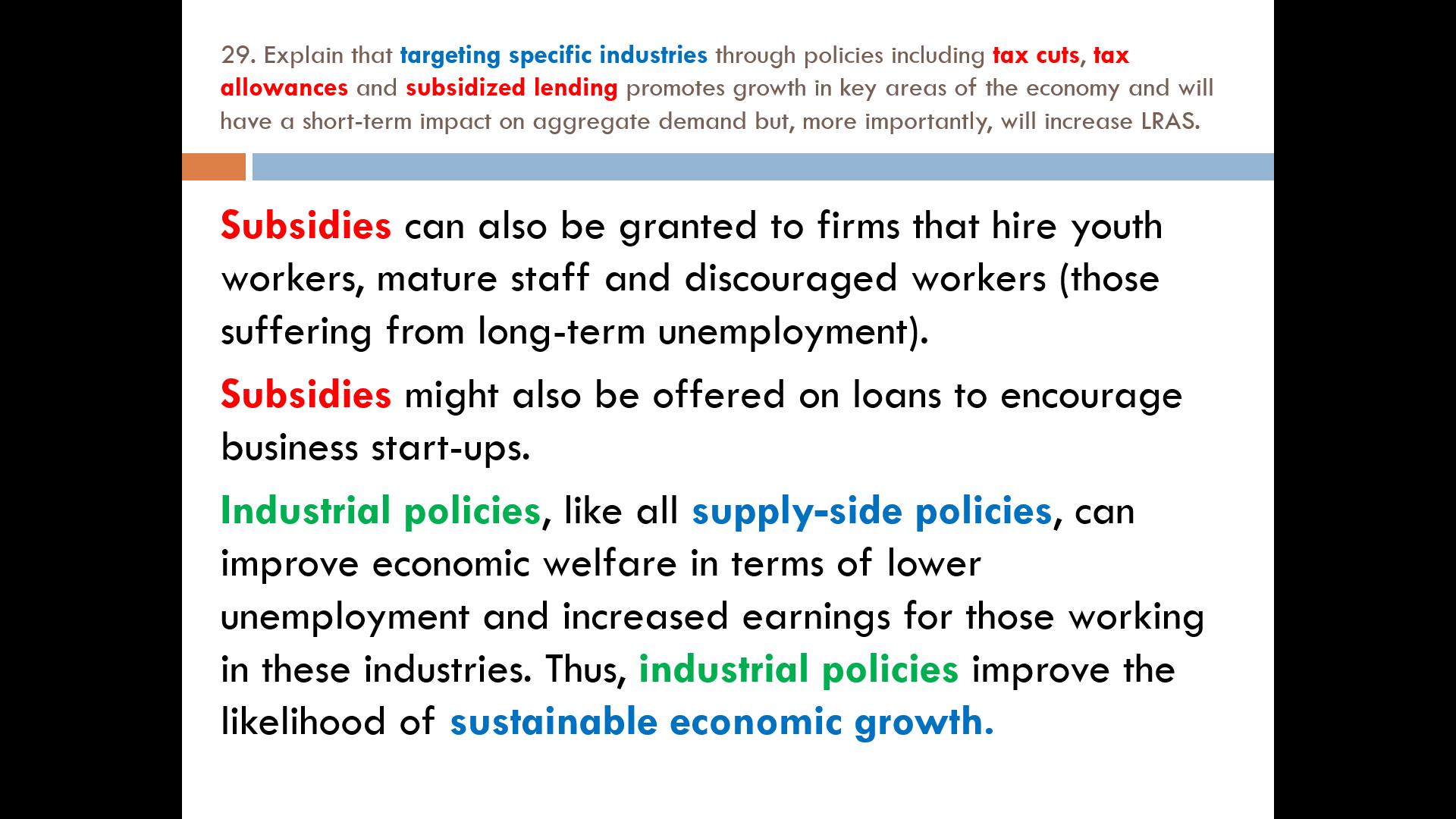
Governments may support specific industries; perhaps an industry where the country has comparative advantage, or one with good long-term prospects. The government can support the industry with reduced taxes, subsidized loans, and even direct subsidies. These all reduce the costs to the firms, and encourage more production.
Moreover if government believes that an industry has a large potential but is currently too small to enjoy the benefits of economies of scale it can put down protective tariffs or quotas to keep foreign competition out until the firm is sufficiently large and developed.
In your own words, explain what is industrial policy.
Define "economies of scale" (if you don't know what are these, find someone from HL, they'll explain).
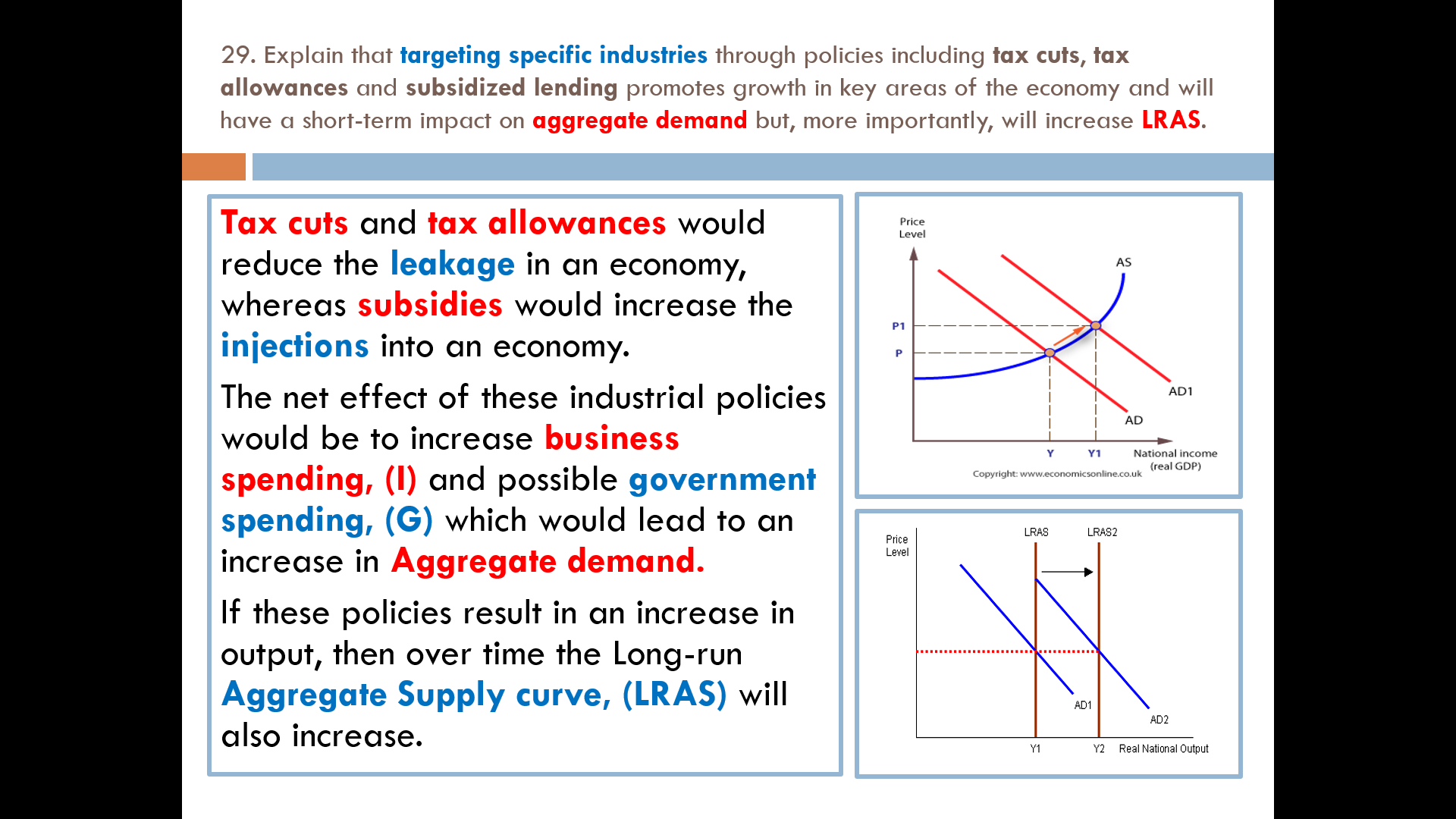
Explain how subsidies and tax cuts could contribute towards economic growth.
Industrial policy can have both supply-side and demand-side effects. If a government grants new subsidies to an industry it believes to have potential, explain what will happen to the size of circular flow of income.
Many economists argue today that industrial policy should not be just about granting subsidies and tax cuts, but more importantly about shaping economic institutions. Watch the two clips above and in ~100 words summarize the arguments put forward in them.