Give one reason, not stated in class, why and when we would care about sound wave interference.
Question 4
4.
Using what you discovered during the 'Beats Interactive' at bit.ly/3L6BLeI
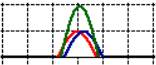
Represent the evidence you created that the waves were 'constructively' interfering with one another.
Question 5
5.
Using what you discovered during the 'Beats Interactive' at bit.ly/3L6BLeI
Represent the evidence you created that the waves were 'destructively' interfering with one another.
Drag and drop each of the following items to the correct category.
considered 'nodal'
two downward pulses traveling in the same direction within a medium
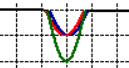
two upward pulses traveling in opposite directions within a medium
an upward and downward pulse traveling in the same direction within a medium
considered 'anti-nodal'
an upward and downward pulse traveling in opposite directions within a medium
Constructive Interference
Destructive Interference
Neither
Sound is not a transverse wave, but it can still interfere because...
...we can measure it with a loudspeaker, convert it into electromagnetic representations of compressions and rarefactions, and see them interfereing with it ourselves.
...when two or more sound waves occupy the same space, their pressures affect one another. The waves do not bounce off of each, but they move through each other.
...the change in pressure of the particles is converted into waves so that we can see them, and they interfere because that's how our interpretation of transverse waves works.
...the pitch of two waves will always be percevied to be quiet and loud in different areas.