Part 1
Aerodynamics is defined as “the science of how an object reacts to its motion through air”. Since our rocket will be traveling through air and not in space (there is no air in space), we need to review a few basics of science.
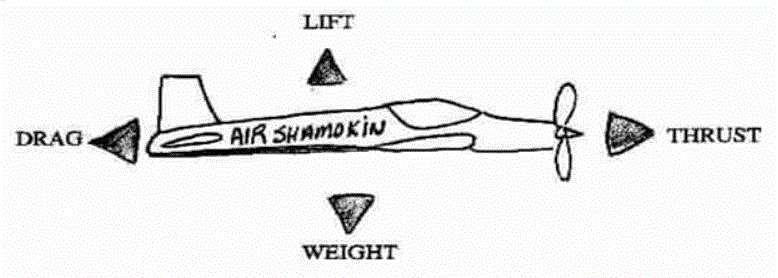
Though the diagram is that of an airplane the same basic forces also act on a rocket. There are four basic aerodynamic forces: thrust, weight, drag and lift.
THRUST:
We have discussed thrust earlier and as you recall, thrust is the force that makes rockets move. The rocket gets its thrust from the rocket engine. In our case air pressure creates the thrust to make the rocket move.
WEIGHT:
Everything has weight therefore the weight of our rockets is a concern in design and performance. The force of the weight wants to pull the rocket back to earth. If we want to make a rocket climb into the air we need to supply more thrust than it weighs. The heavier the rocket, the more thrust is necessary to overcome the force of gravity. When designing your rocket you want to make it as light as possible so that it can climb the highest.
DRAG:
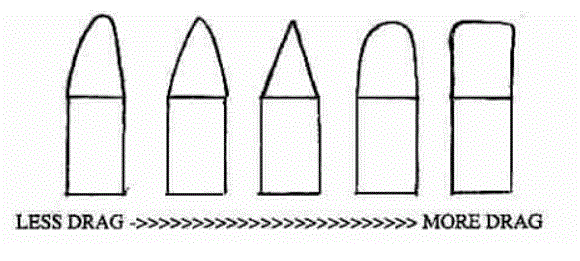
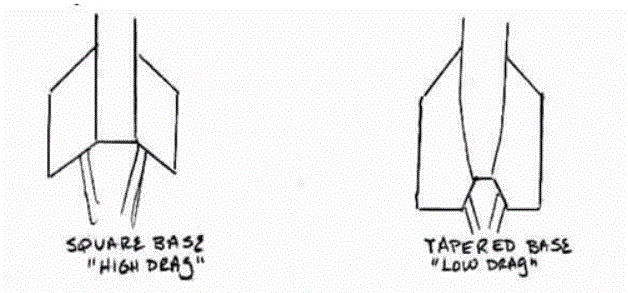
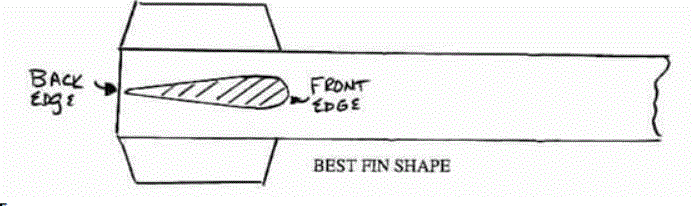
Any object, such as a rocket, that moves through air will be resisted or slowed down by the air it is traveling through. This resistance is called drag. You feel drag when you put your hand out of the window of a moving car and felt your hand pushed backwards. In designing a rocket we want to keep drag to a minimum. The nose cone, the body tube and the fins will create drag on your rocket. We can reduce drag by shaping these parts in various ways.