Chap 11 Sect 2.1-2.3
star
star
star
star
star
Last updated over 4 years ago
20 Nsɛmmisa

1
1
7
1

2
6
1
3

1
10
1
6
1
Rome was a
The
Match the roles.
in charge of the family
cook
clean
vote
fight in wars
perform important ceremonies
look after the children
Men's Roles
Women's Roles
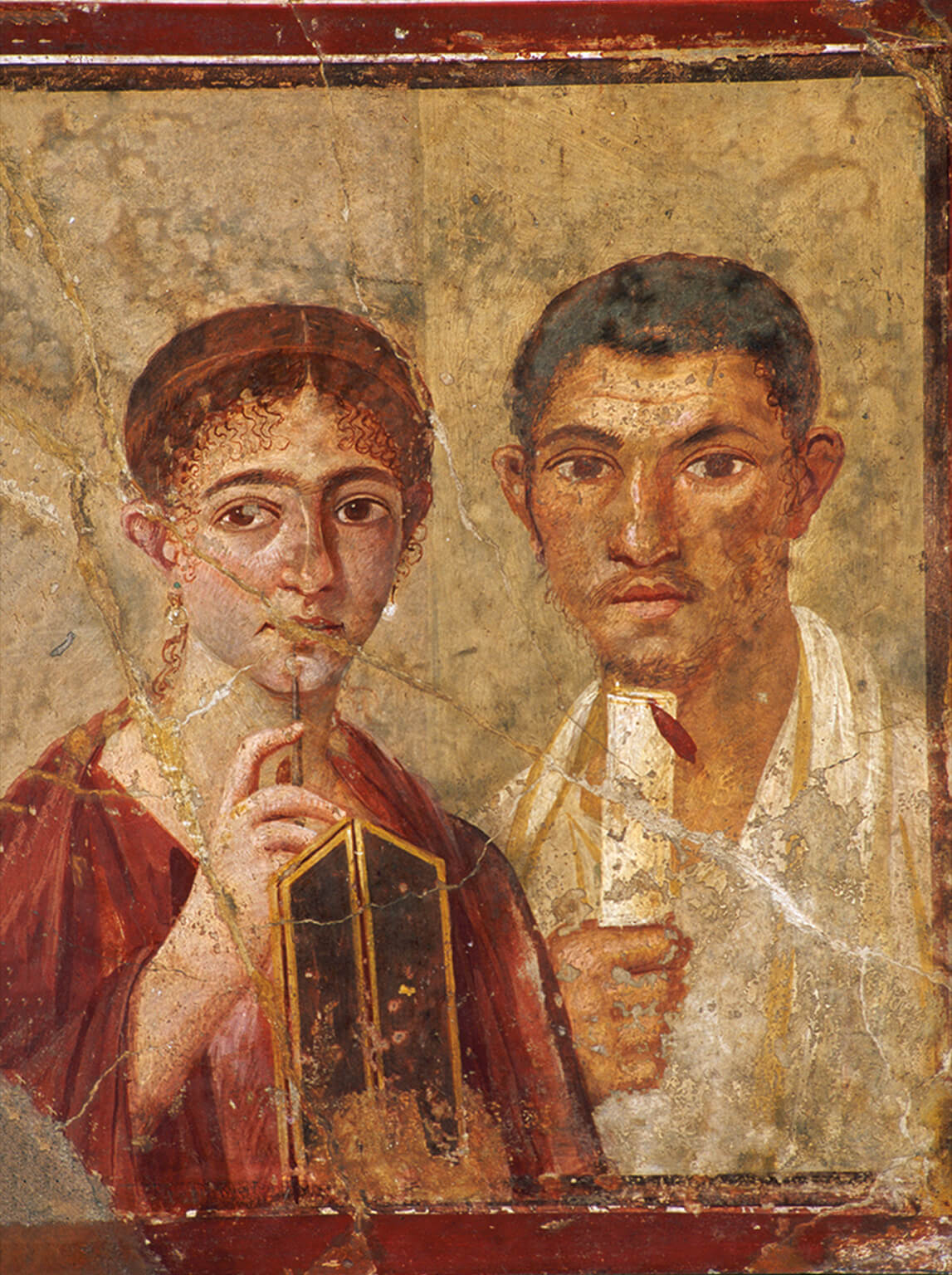
This fresco, a style of painting on fresh plaster, shows a Roman woman and man holding writing tools. Based on the details you can see in the fresco, what conclusions can you draw about these people?
Some girls from wealthy families learned basic reading, writing, and arithmetic at home. However, they mostly learned household skills to prepare them for married life, which could begin when girls were as young as
Order the class divisions from poorest to richest.
aristocracy
slaves
plebeians
Rich vs Poor
lived and worked on small farms
enjoyed lavish banquets with dozens of courses, including exotic foods
took part in politics
worked at manual labor for very low wages
lived in luxurious country estates
used cheap pottery bowls to eat porridge or bread with vegetables
lived in overcrowded buildings
Rich
Poor
A slave named
What were some jobs that slaves had.
| Draggable item | arrow_right_alt | Corresponding Item |
|---|---|---|
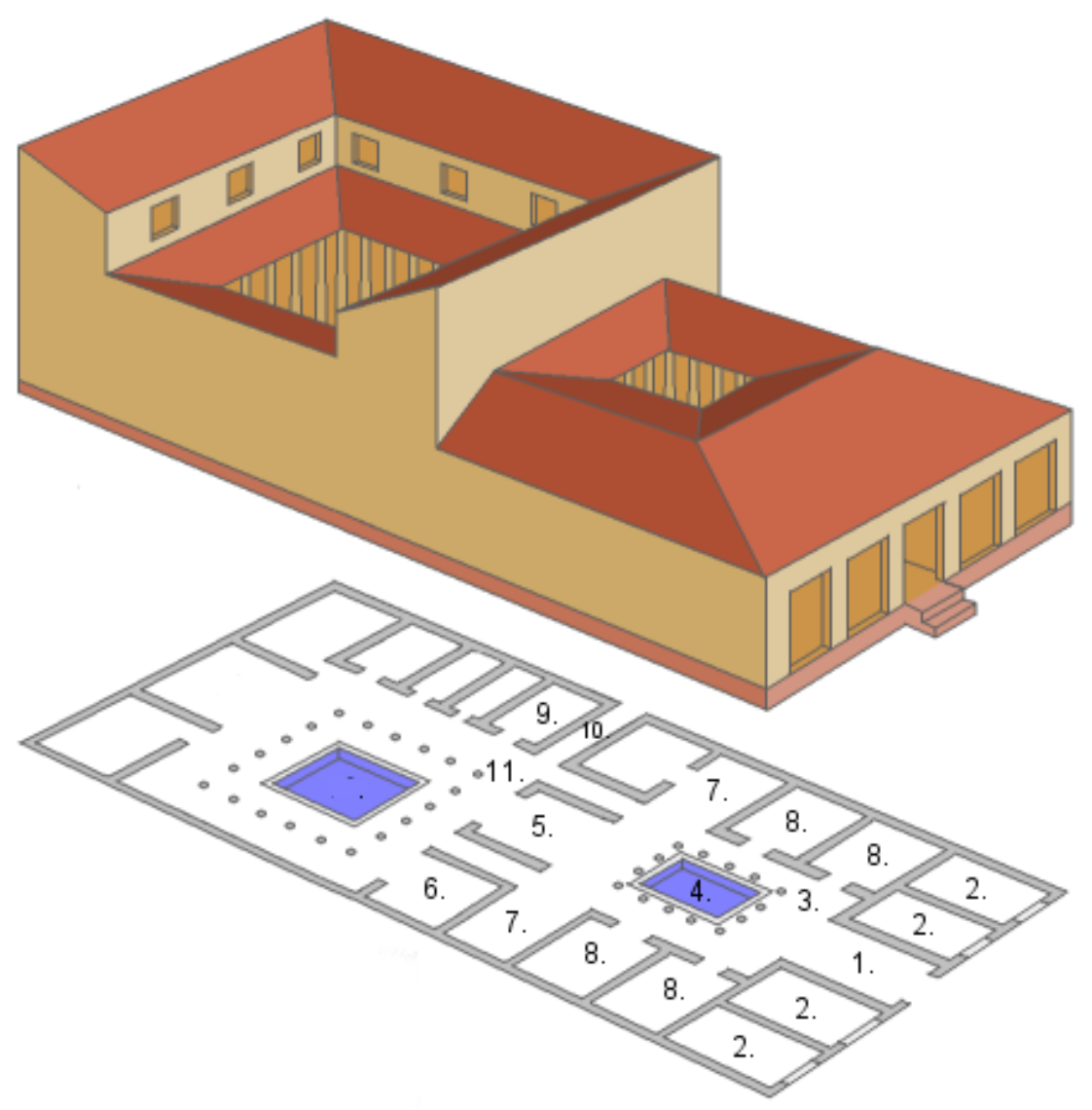
atrium (central hall with altar) | arrow_right_alt | 1 |
vestibulum (entrance hall) | arrow_right_alt | 2 |
taberna (walls facing the streets) | arrow_right_alt | 3 |
Roman religion was based on a
Match the gods and their titles.
| Draggable item | arrow_right_alt | Corresponding Item |
|---|---|---|
Venus | arrow_right_alt | king of the gods |
Apollo | arrow_right_alt | god of agriculture |
Saturn | arrow_right_alt | messenger of the gods |
Juno | arrow_right_alt | god of poetry and music |
Jupiter | arrow_right_alt | god of war |
Diana | arrow_right_alt | god of seas and earthquakes |
Mercury | arrow_right_alt | goddess of the harvest |
Mars | arrow_right_alt | goddess of women; wife of Jupiter |
Ceres | arrow_right_alt | goddess of the moon and hunt |
Neptune | arrow_right_alt | goddess of love and beauty |
Nearly every home had a
Categorize the following qualities to show the differences between Greek and Roman values.
elegance
strength
discipline
grace
loyalty
beauty
Greek
Roman
Having
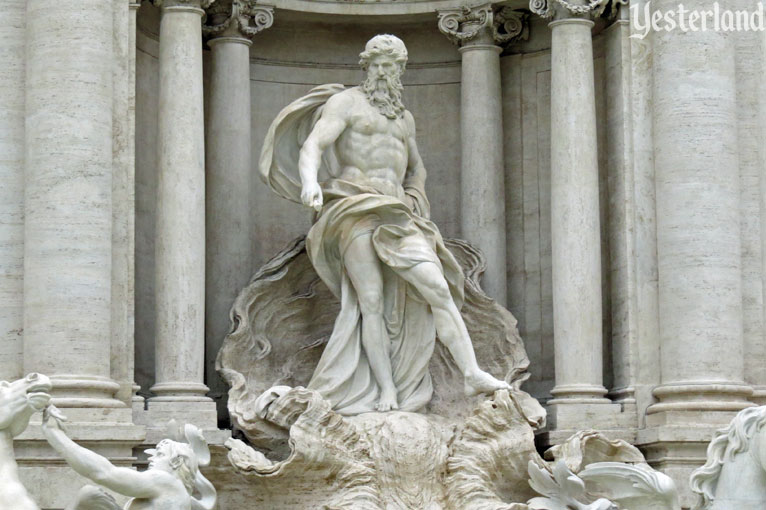
A statue of Neptune, god of the sea, stands above the flowing water of Rome’s Trevi Fountain. What details in the statue convey the qualities that the ancient Romans admired?
At what age did a Roman boy become an adult?
A father taught his son how to...
During the 8th hour, what did the men and boys do? (put in chronological order)
oiled
hot bath
scraped
massage
tepid bath
cold bath
What did the men do during the 9th hour?