LNM1 Chapter 6 De Druidibus
star
star
star
star
star
Last updated over 3 years ago
66 questions
1
Select the verb/s in this sentence.
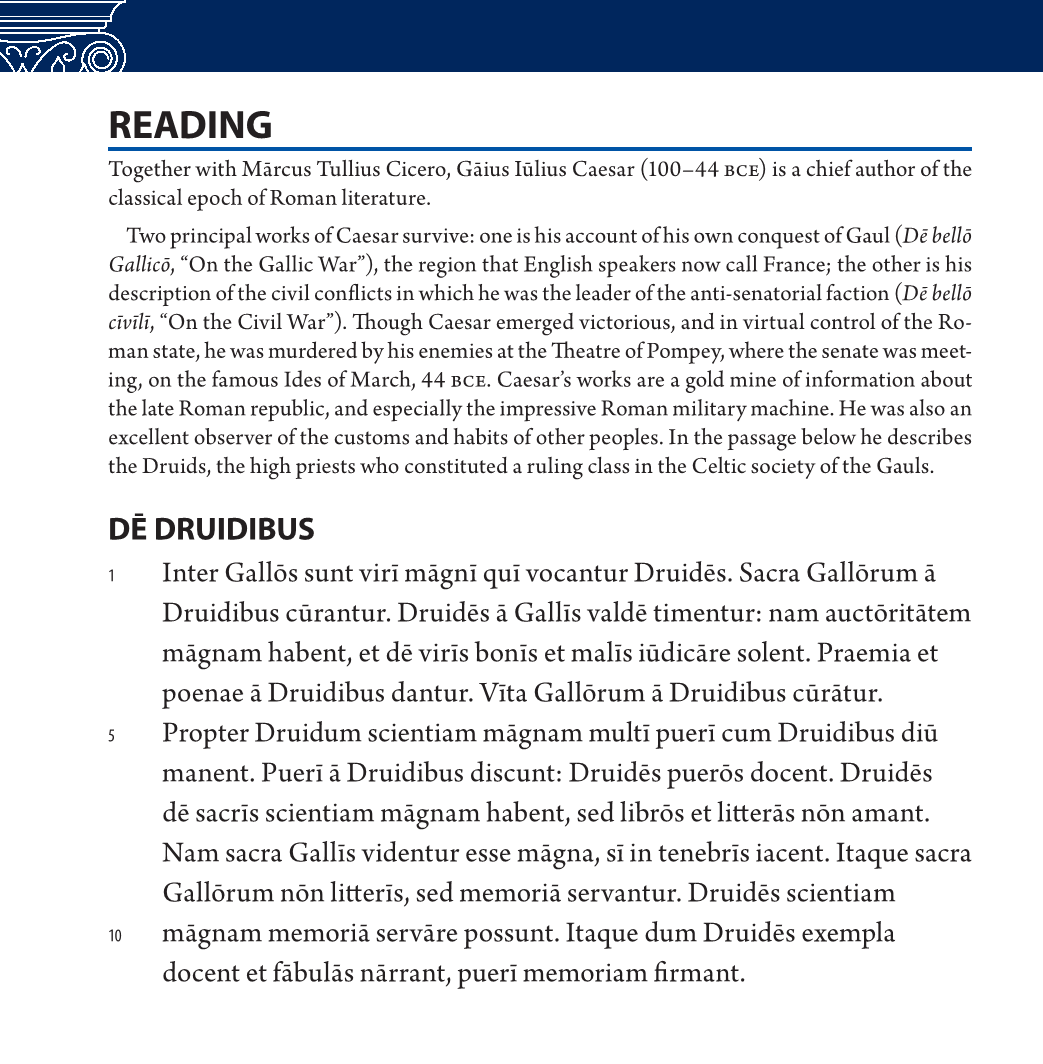
Inter Gallōs sunt virī māgnī quī vocantur Druidēs.
1
Inter Gallōs sunt virī māgnī quī vocantur Druidēs.What is the person and number for the verb/s in this sentence?
Inter Gallōs sunt virī māgnī quī vocantur Druidēs.
What is the person and number for the verb/s in this sentence?
1
Inter Gallōs sunt virī māgnī quī vocantur Druidēs.What voice is vocantur?
Inter Gallōs sunt virī māgnī quī vocantur Druidēs.
What voice is vocantur?
1
Inter Gallōs sunt virī māgnī quī vocantur Druidēs.What is the case of Gallōs?
Inter Gallōs sunt virī māgnī quī vocantur Druidēs.
What is the case of Gallōs?
1
Inter Gallōs sunt virī māgnī quī vocantur Druidēs.What is the number of Gallōs?
Inter Gallōs sunt virī māgnī quī vocantur Druidēs.
What is the number of Gallōs?
1
Inter Gallōs sunt virī māgnī quī vocantur Druidēs.What is the case of virī māgnī?
Inter Gallōs sunt virī māgnī quī vocantur Druidēs.
What is the case of virī māgnī?
1
Inter Gallōs sunt virī māgnī quī vocantur Druidēs.What is the number of virī māgnī?
Inter Gallōs sunt virī māgnī quī vocantur Druidēs.
What is the number of virī māgnī?
1
Rearrange the words so that they make an accurate translation of "Inter Gallōs sunt virī māgnī quī vocantur Druidēs."
- are
- Among the Gauls
- are called
- Druids
- who
- great men
1
Select the verb/s from the following sentence:
Sacra Gallōrum ā Druidibus cūrantur.
1
What is the person and number of the verb/s in the sentence:Sacra Gallōrum ā Druidibus cūrantur.
What is the person and number of the verb/s in the sentence:
Sacra Gallōrum ā Druidibus cūrantur.
1
What is the voice the verb/s in the sentence:Sacra Gallōrum ā Druidibus cūrantur.
What is the voice the verb/s in the sentence:
Sacra Gallōrum ā Druidibus cūrantur.
1
What is the case of the noun sacra?
1
What is the number of the noun sacra?
1
What is the case of the noun Gallōrum?
1
What is the number of the noun Gallōrum?
1
What is the case of the noun Druidibus?
1
What is the number of the noun Druidibus?
1
Rearrange the words so that they make an accurate translation of the sentence:Sacra Gallōrum ā Druidibus cūrantur.
Rearrange the words so that they make an accurate translation of the sentence:
Sacra Gallōrum ā Druidibus cūrantur.
- Gauls
- Druids
- by the
- of the
- the sacred rites
- are handled
4
Select all the verb/s in the following sentence:
Druidēs ā Gallīs valdē timentur: nam auctōritātem māgnam habent, et dē virīs bonīs et malīs iūdicāre solent.
1
What is the person and number (with the exception of any infinitives) for the verb/s in the sentence:Druidēs ā Gallīs valdē timentur: nam auctōritātem māgnam habent, et dē virīs bonīs et malīs iūdicāre solent.
What is the person and number (with the exception of any infinitives) for the verb/s in the sentence:
Druidēs ā Gallīs valdē timentur: nam auctōritātem māgnam habent, et dē virīs bonīs et malīs iūdicāre solent.
4
Select all the nouns in the following sentence:
Druidēs ā Gallīs valdē timentur: nam auctōritātem māgnam habent, et dē virīs bonīs et malīs iūdicāre solent.
1
Identify the subject (nominative case) in the sentence.
Druidēs ā Gallīs valdē timentur: nam auctōrit ātem māgnam habent, et dē virīs bonīs et malīs iūdicāre solent.
1
Identify the direct object (accusative case) in the sentence.
Druidēs ā Gallīs valdē timentur: nam auctōritātem māgnam habent, et dē virīs bonīs et malīs iūdicāre solent.
1
What is the case of Gallīs and virīs?
1
What is the number of Gallīs and virīs?
1
Arrange the words to make an accurate translation of the sentence:Druidēs ā Gallīs valdē timentur: nam auctōritātem māgnam habent, et dē virīs bonīs et malīs iūdicāre solent.
Arrange the words to make an accurate translation of the sentence:
Druidēs ā Gallīs valdē timentur: nam auctōritātem māgnam habent, et dē virīs bonīs et malīs iūdicāre solent.
- and
- by
- are accustomed
- for
- the Druids
- good and bad men
- great authority
- are exceedingly feared
- to make judgment
- about
- they have
- the Gauls
1
Identify the verb/s in this sentence:
Praemia et poenae ā Druidibus dantur.
1
What is the person and number for the verb/s?Praemia et poenae ā Druidibus dantur.
What is the person and number for the verb/s?
Praemia et poenae ā Druidibus dantur.
2
Identify the subject/s in the sentence:
Praemia et poenae ā Druidibus dantur.
1
Arrange the words to make an accurate translation of the sentence:Praemia et poenae ā Druidibus dantur.
Arrange the words to make an accurate translation of the sentence:
Praemia et poenae ā Druidibus dantur.
- rewards
- are
- and
- the Druids
- given
- punishments
- by
1
Identify the verb/s in this sentence:
Vīta Gallōrum ā Druidibus cūrātur.
1
What is the person and number for the verb/s?Vīta Gallōrum ā Druidibus cūrātur.
What is the person and number for the verb/s?
Vīta Gallōrum ā Druidibus cūrātur.
1
What is the voice of the verb/s?Vīta Gallōrum ā Druidibus cūrātur.
What is the voice of the verb/s?
Vīta Gallōrum ā Druidibus cūrātur.
1
Identify the subject (nominative case) in the sentence:
Vīta Gallōrum ā Druidibus cūrātur.
1
What is the case of Gallōrum?
1
What is the case of Druidibus?
1
Arrange the words to make an accurate translation of the sentence:Vīta Gallōrum ā Druidibus cūrātur.
Arrange the words to make an accurate translation of the sentence:
Vīta Gallōrum ā Druidibus cūrātur.
- is managed
- of
- the Druids
- the Gauls
- the life
- by
1
Identify the verb/s in this sentence:Propter Druidum scientiam māgnam multī puerī cum Druidibus diū manent.
Identify the verb/s in this sentence:
Propter Druidum scientiam māgnam multī puerī cum Druidibus diū manent.
1
Identify the subject (nominative case) in this sentence:
Propter Druidum scientiam māgnam multī puerī cum Druidibus diū manent.
1
Arrange the words to make an accurate translation of the sentence:Propter Druidum scientiam māgnam multī puerī cum Druidibus diū manent.
Arrange the words to make an accurate translation of the sentence:
Propter Druidum scientiam māgnam multī puerī cum Druidibus diū manent.
- for a long time
- stay
- many boys
- Because
- of the Druids
- of the great knowledge
- with the Druids
1
Identify the verb/s in this sentence:
Puerī ā Druidibus discunt:
1
Identify the subject/s in this sentence:
Puerī ā Druidibus discunt:
1
Arrange the words to make an accurate translation of the sentence:Puerī ā Druidibus discunt:
Arrange the words to make an accurate translation of the sentence:
Puerī ā Druidibus discunt:
- the boys
- learn
- from
- the Druids
1
Identify the verb/s in this sentence:
Druidēs puerōs docent
1
Identify the subject/s (nominative) in this sentence:
Druidēs puerōs docent
1
Identify the direct object/s (accusative) in this sentence:
Druidēs puerōs docent
1
Arrange the words to make an accurate translation of the sentence:Druidēs puerōs docent
Arrange the words to make an accurate translation of the sentence:
Druidēs puerōs docent
- teach
- the boys
- the Druids
2
Identify the verb/s in the sentence:
Druidēs dē sacrīs scientiam māgnam habent, sed librōs et litterās nōn amant.
1
Identify the subject/s (nominative case) in the sentence:
Druidēs dē sacrīs scientiam māgnam habent, sed librōs et litterās nōn amant.
3
Identify the direct object/s (accusative case) in the sentence:
Druidēs dē sacrīs scientiam māgnam habent, sed librōs et litterās nōn amant.
1
Arrange the words to make an accurate translation of the sentence:Druidēs dē sacrīs scientiam māgnam habent, sed librōs et litterās nōn amant.
Arrange the words to make an accurate translation of the sentence:
Druidēs dē sacrīs scientiam māgnam habent, sed librōs et litterās nōn amant.
- have
- literature
- but
- the Druids ,
- about
- great knowledge
- and
- books
- they do not like
- sacred rites
3
Identify the verb/s in this sentence:
Nam sacra Gallīs videntur esse māgna, sī in tenebrīs iacent.
1
Identify the subject/s (nominative case) in this sentence:
Nam sacra Gallīs videntur esse māgna, sī in tenebrīs iacent.
1
Arrange the words to make an accurate translation of the sentence:Nam sacra Gallīs videntur esse māgna, sī in tenebrīs iacent.
Arrange the words to make an accurate translation of the sentence:
Nam sacra Gallīs videntur esse māgna, sī in tenebrīs iacent.
- if
- For
- sacred rites
- to the Gauls
- great
- seem
- to be
- in shadows
- they lie (hidden)
1
Identify the verb/s in the sentence:Itaque sacra Gallōrum nōn litterīs, sed memoriā servantur.
Identify the verb/s in the sentence:
Itaque sacra Gallōrum nōn litterīs, sed memoriā servantur.
1
Identify the subject/s in the sentence:Itaque sacra Gallōrum nōn litterīs, sed memoriā servantur.
Identify the subject/s in the sentence:
Itaque sacra Gallōrum nōn litterīs, sed memoriā servantur.
1
Identify the case of litterīs and memoriā.
1
Arrange the words to make an accurate translation of the sentence:Itaque sacra Gallōrum nōn litterīs, sed memoriā servantur.
Arrange the words to make an accurate translation of the sentence:
Itaque sacra Gallōrum nōn litterīs, sed memoriā servantur.
- are not preserved
- but
- by writings
- the sacred rites
- by memory
- of the Gauls
- So
2
Identify the verb/s in the sentence.
Druidēs scientiam māgnam memoriā servāre possunt.
1
Identify the subject/s (nominative case) in the sentence.
Druidēs scientiam māgnam memoriā servāre possunt.
1
Identify the direct object/s (accusative case) in the sentence.
Druidēs scientiam māgnam memoriā servāre possunt.
1
What is the case of memoriā?
1
Arrange the words to make an accurate translation of the sentence:Druidēs scientiam māgnam memoriā servāre possunt.
Arrange the words to make an accurate translation of the sentence:
Druidēs scientiam māgnam memoriā servāre possunt.
- are able
- by means of memory
- to preserve
- a large body of knowledge
- the Druids
3
Identify the verb/s in this sentence:
Itaque dum Druidēs exempla docent et fābulās nārrant, puerī memoriam firmant.
2
Identify the subject/s in this sentence:
Itaque dum Druidēs exempla docent et fābulās nārrant, puerī memoriam firmant.
1
Arrange the words to make an accurate translation of the sentence:Itaque dum Druidēs exempla docent et fābulās nārrant, puerī memoriam firmant.
Arrange the words to make an accurate translation of the sentence:
Itaque dum Druidēs exempla docent et fābulās nārrant, puerī memoriam firmant.
- examples
- the boys
- their memories
- strengthen
- while
- and
- the Druids
- teach
- So
- tell
- stories