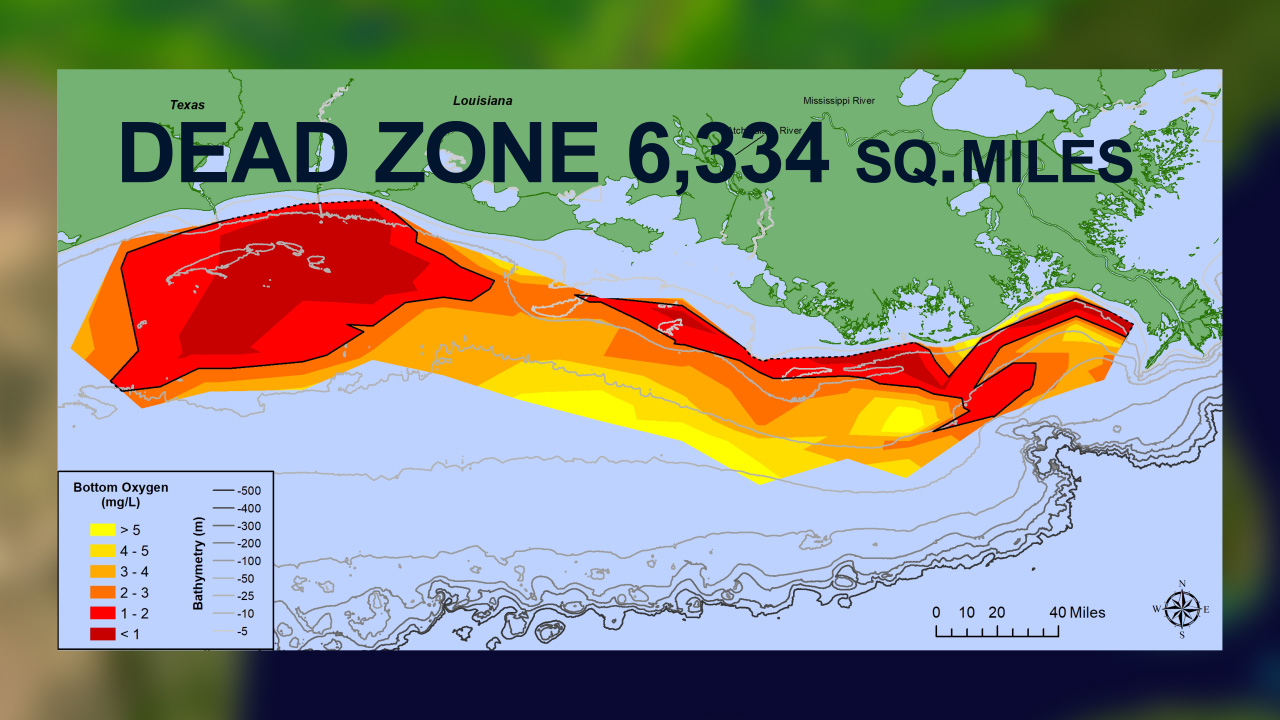
What is meant by the “dead zone” in the Gulf of Mexico?
What contributes to/causes this dead zone? (Be sure to include what nutrient cycle is disrupted in your explanation.)
Where are other dead zones found globally?
Define water pollution.
Why are nonpoint sources so much harder to manage than point sources?
List and explain (briefly) the top 3 causes of water pollution.
Explain the connection between atmospheric warming and water pollution.
One of the major water pollution problems is exposure to infectious diseases. List a few diseases caused by pathogens in water. How many people does this impact globally?
Scientists use different methods for testing water quality. Briefly note how they use the following:
E.coli
DO
Indicator species
GMOs
Turbidity
a. E. coli:
b. DO:
c. Indicator species:
d. GMO's
Flowing rivers and streams can recover rapidly from moderate levels of degradable, oxygen-demanding wastes through a combination of dilution and bacterial biodegradation of such wastes. The problem is when we overload this natural recovery process.
Study Figure 20-6. Explain the oxygen sag curve.
In less developed countries, how much of their untreated sewage ends up in rivers, streams, and lakes?
Explain 2 reasons why lake and reservoirs are more vulnerable to water pollution compared to flowing waterways.
Differentiate between eutrophication and cultural eutrophication.
What is an oligotrophic lake?
What is more effective – water pollution prevention or water cleanup? Why?
Why are the Great Lakes so susceptible to pollution from point and nonpoint sources? What have the U.S. and Canada done to improve water quality?
Would you eat fish from the Great Lakes? Why or why not?
Groundwater pollution comes from fertilizers, pesticides, gasoline, organic solvents, oil and paint thinners, but scientists have identified a new and growing potential threat. What is it and why is it a concern?
List/explain 3 reasons why can’t groundwater cleanse itself as quickly as a river or stream.
List/explain 2 technologies for purifying drinking water.
Explain advantages/disadvantages of bottled water.
Explain the U.S. Safe Drinking Water Act of 1974.
How much of the world’s population lives on or near coastlines?
How much of the municipal sewage from coastal areas in less-developed countries is dumped into oceans without treatment?
What causes harmful algal blooms and why are they harmful?
What is the North Pacific Garbage Patch? (Had you heard about this before reading it in the chapter?)
True or False: The largest sources of oil pollution in oceans comes from major catastrophes like the Exxon Valdez or the BP Deepwater Horizon.
Explain your answer to the previous question.
List two ways to prevent nonpoint sources of pollution.
List two ways to capture nutrients after they’ve left farms and gone into waterways.
What is the Clean Water Act of 1972?
Explain each step of wastewater (sewage) treatment plants.
Primary sewage treatment
Secondary sewage treatment
Tertiary sewage treatment
What is a disadvantage of conventional sewage treatment systems? What are some alternatives?
e. Turbidity: