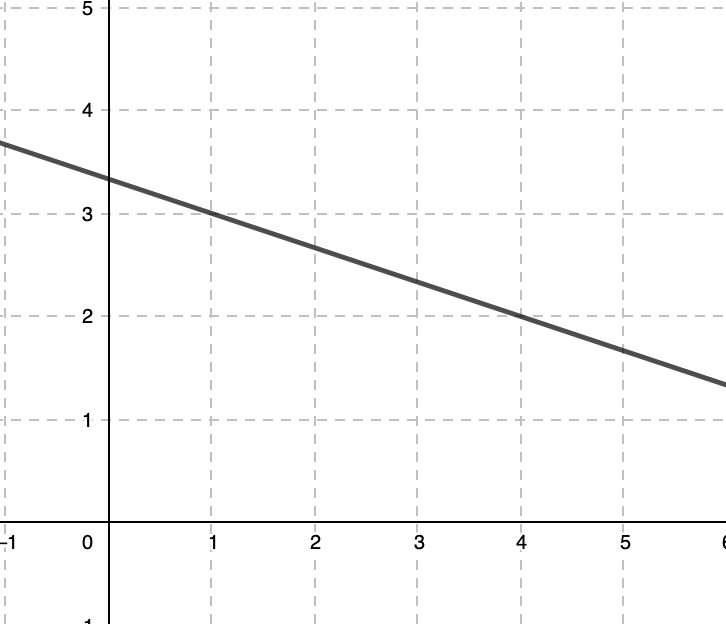
Does the following system have one solution, no solution, or infinitely many solutions?

Does the following system have one solution, no solution, or infinitely many solutions?
Does the following system have one solution, no solution, or infinitely many solutions?
Does the following system have one solution, no solution, or infinitely many solutions?
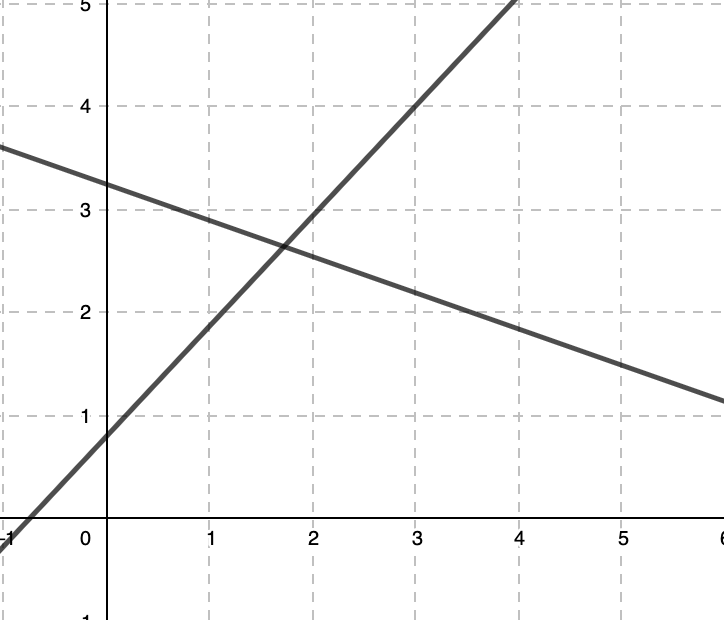
Does the following system have one solution, no solution, or infinitely many solutions?

Graph each equation. Identify the point where both lines intersect. Answer in (x,y) format.
y = 5x - 2
y = -x + 4
Graph each equation. Identify the point where both lines intersect. Answer in (x,y) format.
y = 3/4x - 1
y = -1/2x + 4
Graph each equation. Identify the point where both lines intersect. Answer in (x,y) format.
y = 1/3x
y = -x + 4
Graph each equation. Identify the point where both lines intersect. Answer in (x,y) format.
y = -1/2x - 2
y = -3/2x + 2
Graph each equation. Identify the point where both lines intersect. Answer in (x,y) format.
y = 3x - 4
y = -1/2x + 3
Graph each equation. Identify the point where both lines intersect. Answer in (x,y) format.
y = -5/3x + 3
y = 1/3x - 3
Graph each equation. Identify the point where both lines intersect. Answer in (x,y) format.
y = -1/2x - 1
y = 1/4x - 4
Graph each equation. Identify the point where both lines intersect. Answer in (x,y) format.
y = x + 6
y = -4x + 1
Does the following system have one solution, no solution, or infinitely many solutions?
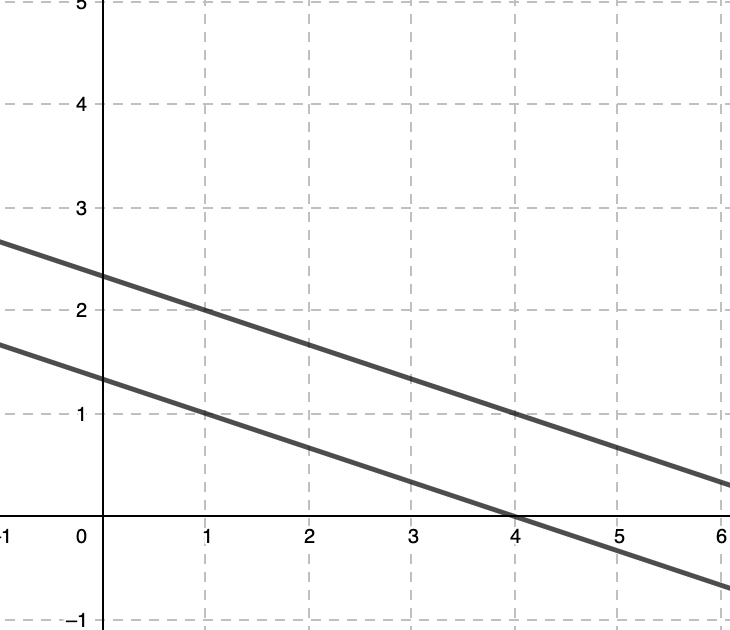
Does the following system have one solution, no solution, or infinitely many solutions?
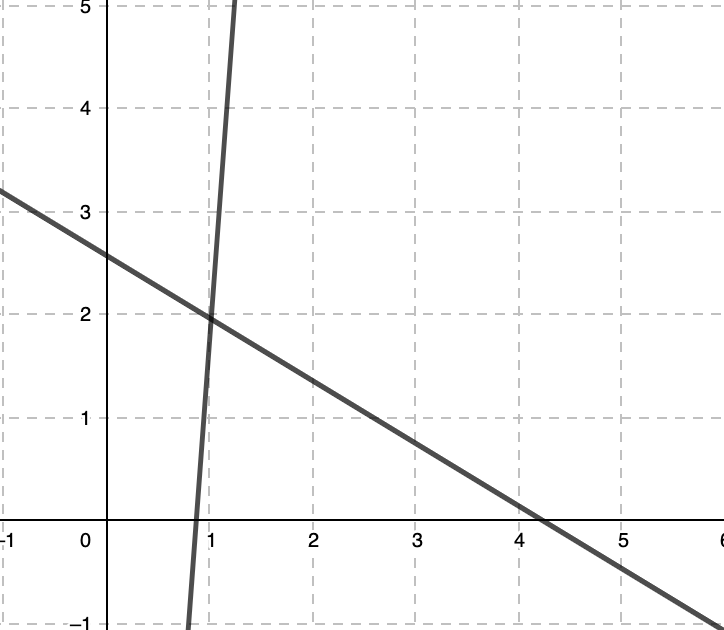
Does the following system have one solution, no solution, or infinitely many solutions?