Twa kɔ nsɛm atitiriw so
Log in
Sign up for FREE
arrow_back
Laabri

Unit 09 - Waves Test

star
star
star
star
star
Last updated almost 4 years ago
18 Nsɛmmisa
2
2
2
2
4
4
4
4
10
2
2
2
4
8
4
2
2
8
Asemmisa {{asɛmmisaAhyɛnsode}}
1.

As a transverse wave travels through a rope from left to right, the parts of the rope _____.

Asemmisa {{asɛmmisaAhyɛnsode}}
2.

For a longitudinal wave, the particles of the medium move ______ to the direction that the wave moves.

Asemmisa {{asɛmmisaAhyɛnsode}}
3.

The frequency of a wave describes _____.

Asemmisa {{asɛmmisaAhyɛnsode}}
4.

The amplitude of a wave describes _____.

Asemmisa {{asɛmmisaAhyɛnsode}}
5.

The wavelength of a wave increases if the ______.

Asemmisa {{asɛmmisaAhyɛnsode}}
6.

A sound wave is a pressure wave; regions of high (compressions) and low pressure (rarefactions) are established as the result of the vibrations of the sound source. These compressions and rarefactions result because sound

Asemmisa {{asɛmmisaAhyɛnsode}}
7.

A sound wave is different than a light wave in that a sound wave is

Asemmisa {{asɛmmisaAhyɛnsode}}
8.

Two musical notes that have a frequency ratio of 2:1 are said to be separated by an octave. A musical note that is separated by an octave from middle C (256 Hz) has a frequency of _____.

Asemmisa {{asɛmmisaAhyɛnsode}}
9.

Drag and drop each of the following items to the correct category.
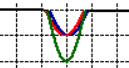
  • two downward pulses traveling in the same direction within a medium
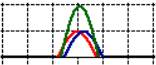
  • an upward and downward pulse traveling in the same direction within a medium

  • an upward and downward pulse traveling in opposite directions within a medium

  • considered 'nodal'

  • considered 'anti-nodal'

  • two upward pulses traveling in opposite directions within a medium

  • Constructive Interference

  • Destructive Interference

  • Neither

Asemmisa {{asɛmmisaAhyɛnsode}}
10.

Sound is not a transverse wave, but it can still interfere because...

Asemmisa {{asɛmmisaAhyɛnsode}}
11.

The frequency or frequencies at which an object tends to vibrate with when hit, struck, plucked, strummed or somehow disturbed.

Asemmisa {{asɛmmisaAhyɛnsode}}
12.

What seperates noise from music?

Asemmisa {{asɛmmisaAhyɛnsode}}
13.

A harmonic ...

Asemmisa {{asɛmmisaAhyɛnsode}}
14.

Pictured here is the formula we used in our resonance lab with the PVC pipes:

Explain each part of the formula and its purpose.

Asemmisa {{asɛmmisaAhyɛnsode}}
15.

A blue light wave approaches a mirror at 40degrees, which means that the light wave will reflect off the mirror at _____ degrees.

Asemmisa {{asɛmmisaAhyɛnsode}}
16.

Where could you find all of the visible light in the EM Spectrum?

Asemmisa {{asɛmmisaAhyɛnsode}}
17.

Where is the lowest frequency in this spectrum?

Asemmisa {{asɛmmisaAhyɛnsode}}
18.

Explain why a piece of paper would appear reddish-orange when hit with ROYGBIV light.