Just how deep does the ocean go? Way further than you think. This animation puts the actual distance into perspective, showing a vast distance between the waves we see and the mysterious point we call Challenger Deep.
Directions: Watch the video and complete the graphic organizer. Bullet points are fine.
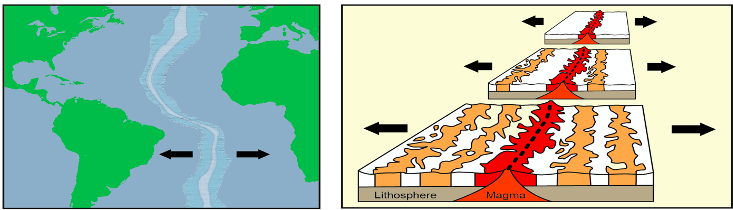
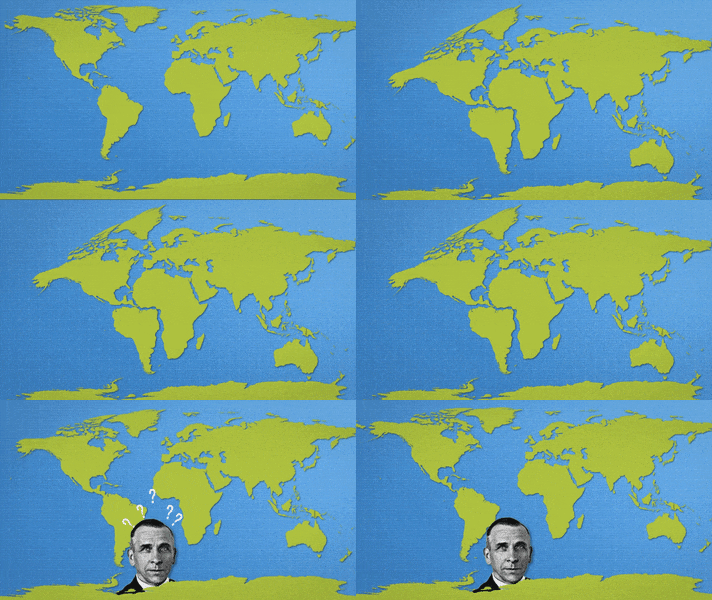
The theory of plate tectonics has evolved over the past 100 years as scientists have discovered new pieces of evidence. In the early 1900s, Alfred Wegener first proposed the theory of continental drift, which explained that all of the continents had once been connected in one massive supercontinent that eventually split and drifted apart.
1 point
1
1 point
1
Wegener made several observations that supported this theory; such as, fossil evidence and matching coastlines. Despite all the evidence Wegener had suggesting the continents were once together, he could not describe how or why they would move apart, and many scientists dismissed his theory. Wegener’s theory received the support it needed during the 1960s when scientists discovered seafloor spreading. Scientists were able to use a new technology called echo sounding to find ocean features such as trenches, seamount chains (mountains on the seafloor), and mid-ocean ridges.
1 point
1
1 point
1
Question 5
5.
What types of evidence did Wegener find to support his theory that the Earth was once a giant supercontinent?
<Bullet point list>
*
*
*
1 point
1
Question 6
6.
Alfred Wegener could not describe how the continents were drifting and spreading apart.
How did scientists later in the 1960's discover how continental drift works and what tools did they use to discover this process?
1 point
1
Question 7
7.
This is most likely a...
1 point
1
Question 8
8.
This is most likely a...
1 point
1
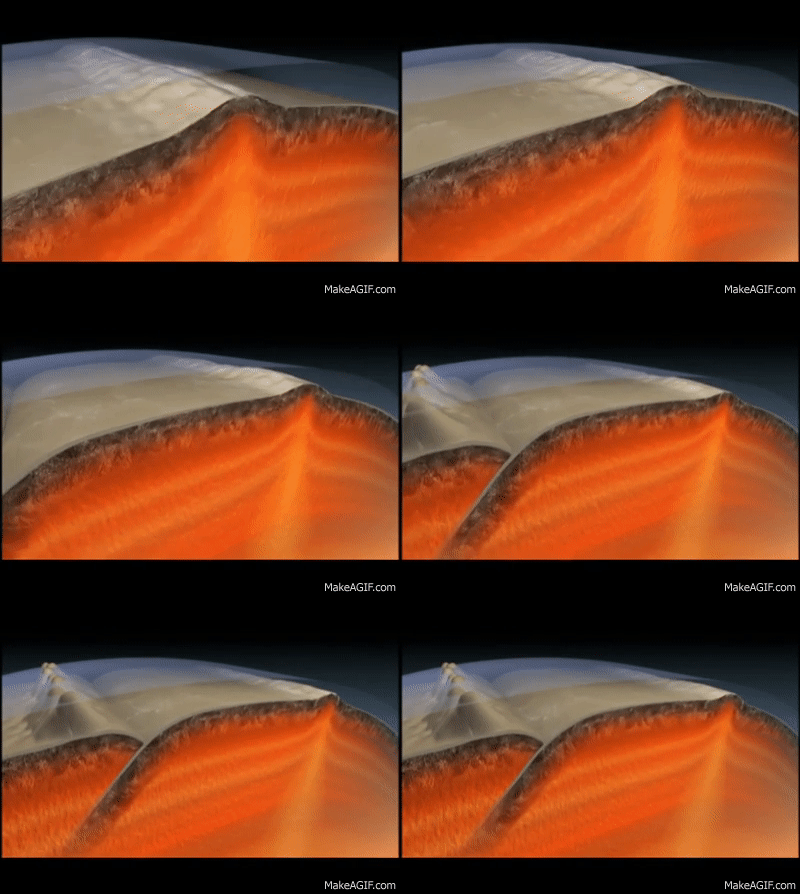
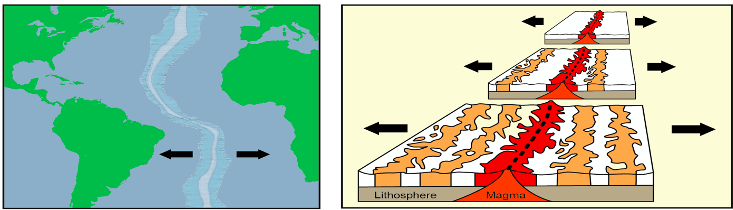
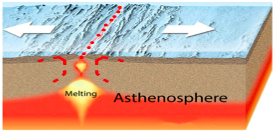
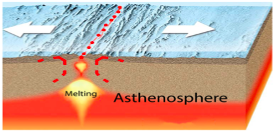
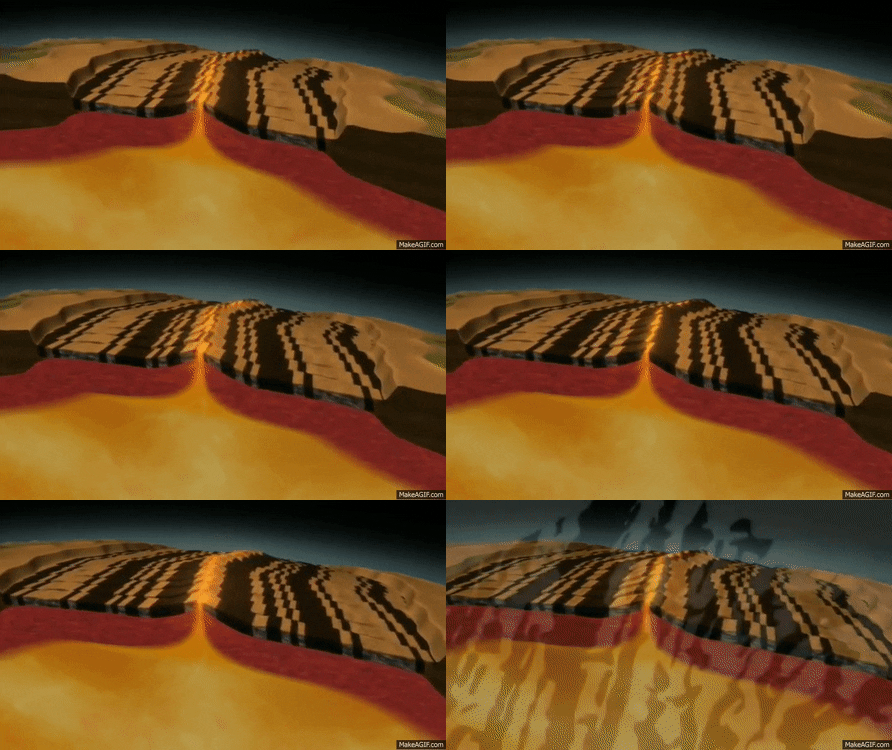
Seafloor spreading creates new ocean floor. Seafloor spreading is a phenomenon by which magma from Earth’s mantle, the layer beneath the crust, wells up at the mid-ocean ridge, pushing the ocean floor apart - this is called rifting. When the magma reaches the surface of the ocean crust, it cools and solidifies into igneous rock. This makes new oceanic crust in the center of the mid-ocean ridge.
1 point
1
1 point
1
Question 11
11.
List out the steps in order by which the sea floor spreads.
1.
2.
3.
4.
1 point
1
Question 12
12.
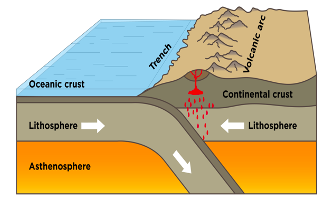
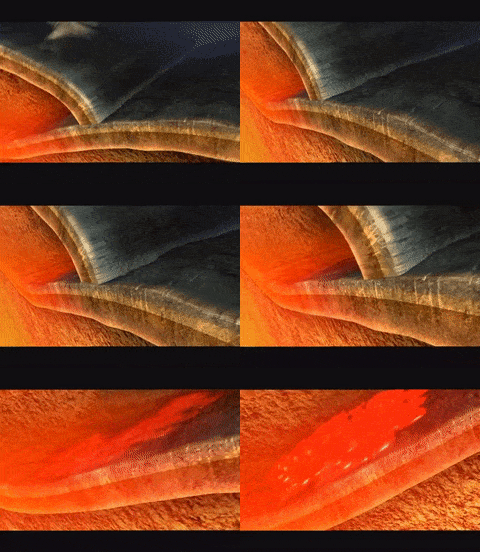
What happens to older oceanic crust as it converges with continental crust? Which is denser based on the evidence of what occurs?
Sentence Starter: According to the text, when older oceanic crust converges with continental crust... The crust that is more dense is _______ because...
1 point
1
Question 13
13.
_______ lines are ______ in the earth's crust where huge slabs of rock slowly grind past each other.
1 point
1
Question 14
14.
Word bank: Colorado Mexico Japan Oregon Illinois
The San Andreas extends from _______ down South to _______ in the North
1 point
1
Question 15
15.
The San Andreas Fault sits on the boundary between the
1 point
1
Question 16
16.
Transform boundaries can have strike slip faults, a place where
1 point
1
Question 17
17.
The longer plates get stuck
1 point
1
Question 18
18.
A device that measures the movement of tectonic plates at a fault
1 point
1
Question 19
19.
The San Andreas fault triggers more than ______ earthquakes a year
1 point
1
Question 20
20.
San Andreas is a transform plate boundary with a strike slip fault. Explain what a fault is and why it is important. How could it potentially affect us?