Log in
Sign up for FREE
arrow_back
Library

APUSH Chapter 31-32: The Politics of Boom and Bust (1920-1932) & The Great Depression and the New Deal (1933-1939)

star
star
star
star
star
Last updated over 1 year ago
27 questions
1
1
IITE.01
1
IITE.01
1
IITE.01
Welcome to your Chapter 31 reading! As you read, you should consider the following essential question:
  • What were the causes of the Great Depression?
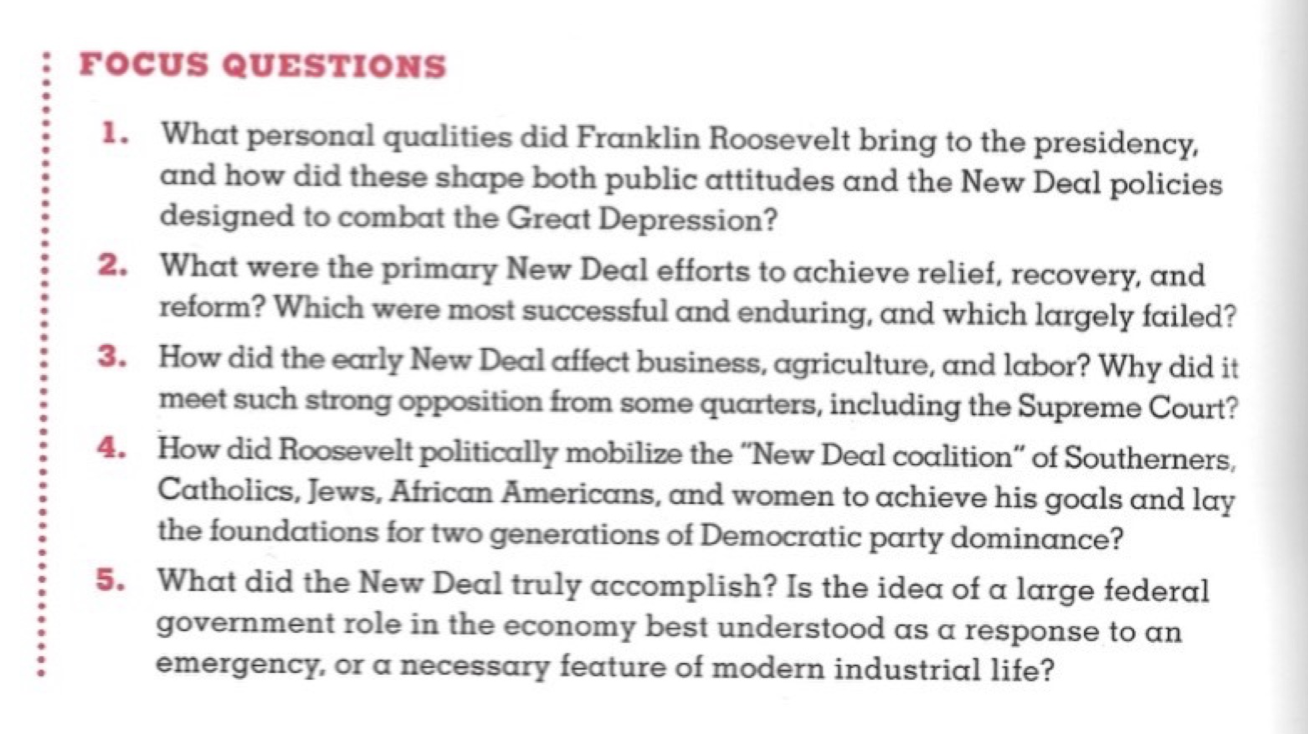
As always, "Focus Questions" should guide your reading and notes, but you do not necessarily have to explicitly answer them.
1
Question 1
1.

What do you already know about the Great Depression?

This next section is about the effects of World War I, which we skipped in the interest of time. Remember:

Allied Powers: Won
  • Great Britain, the United States, France
Axis Powers: Lost
  • Germany, Austria-Hungary, and the Ottoman Empire (which no longer exists)

Here is a quick video about the terms of the post-WWI negotiations in case you need a refresher from World History.
1
Question 2
2.

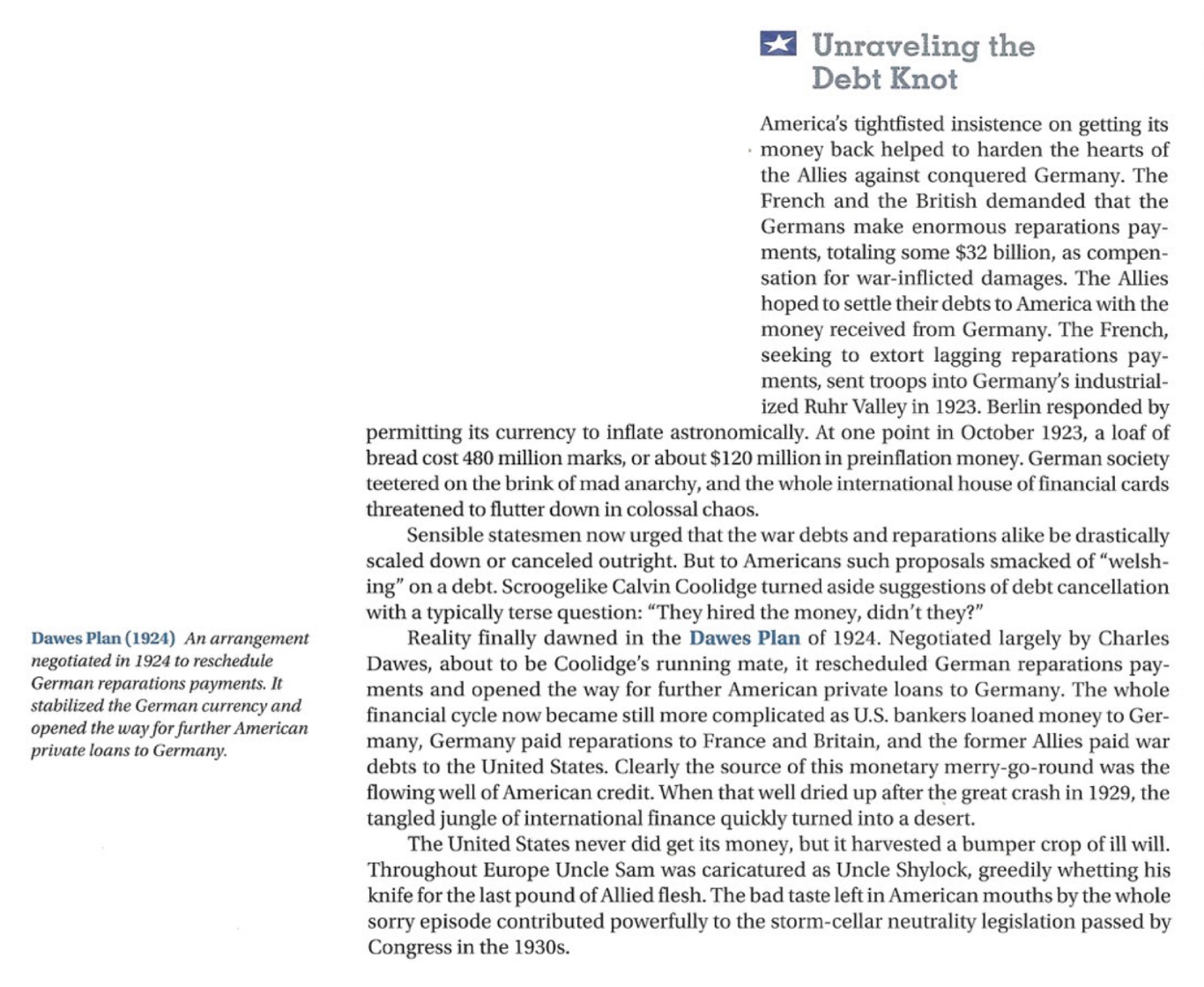
According to the passage, America's insistence that all Allied debts from World War I be repaid directly resulted in

IIRC.01
Question 3
3.

Which choice provides the best evidence for the answer to the previous question?
1
Question 4
4.

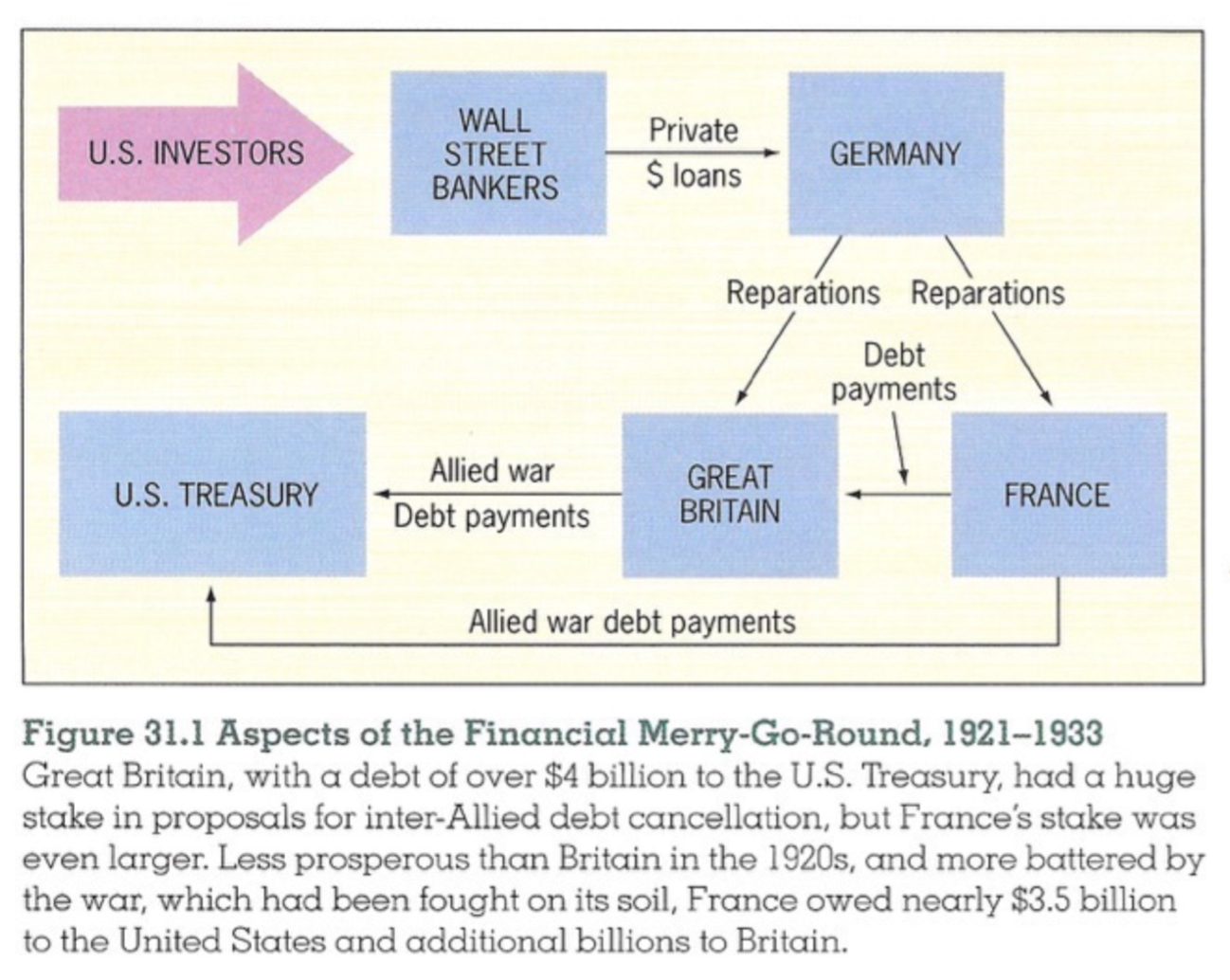
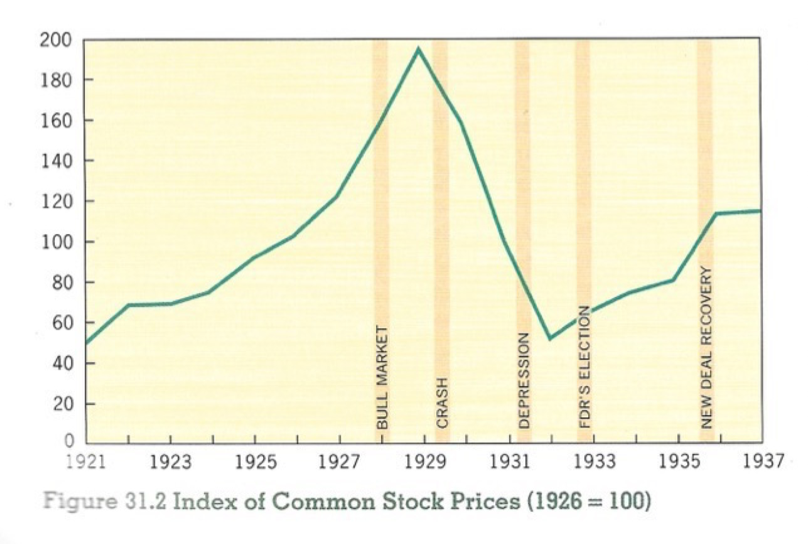
Which statement is best supported by the graph and the information in the passage?
SQN.01
1
Question 5
5.

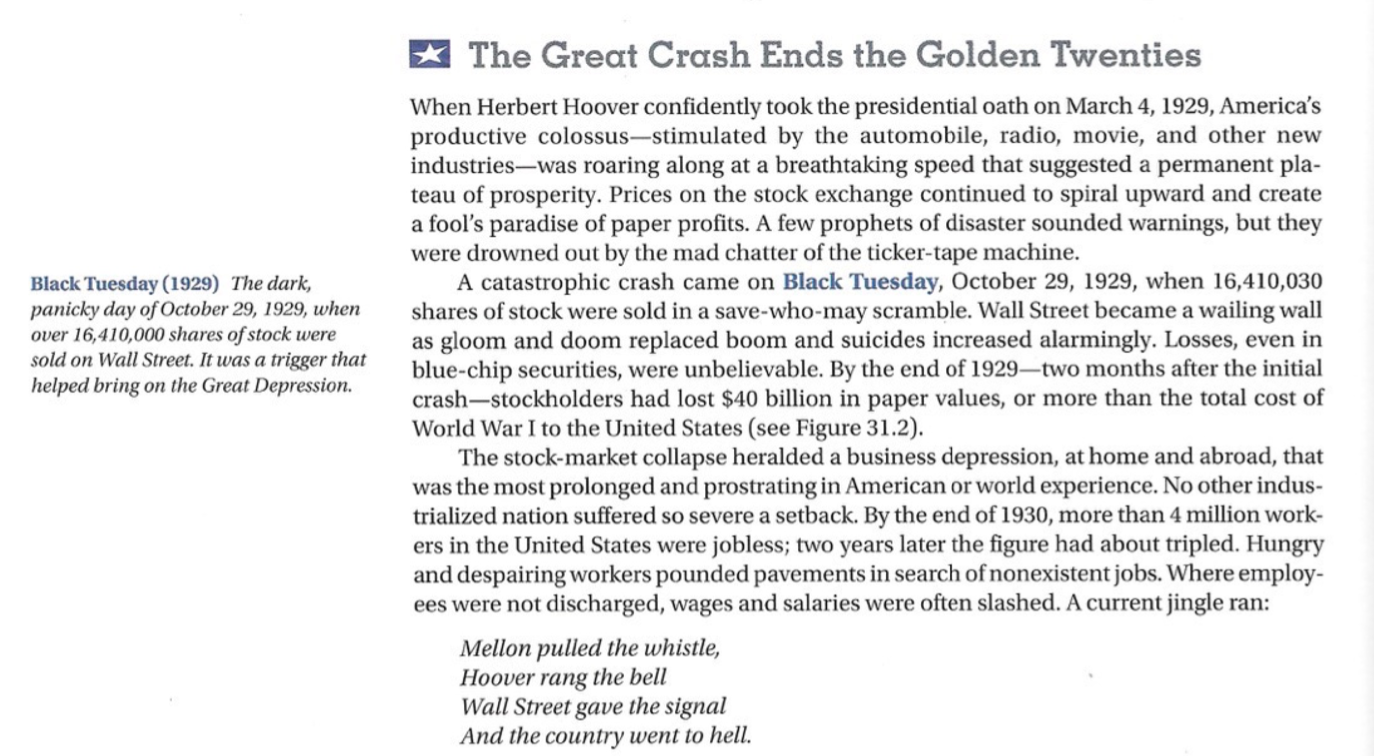
The economic mood of Americans just before the stock market crashed in 1929 could best be described as

RPV.01
Question 6
6.

Which choice provides the best evidence for the answer to the previous question?
1
Question 7
7.

In the graph, which range of years displays a decrease in Common Stock Prices?
SQN.01
1
Question 8
8.

IIWD.01
0
Question 9
9.

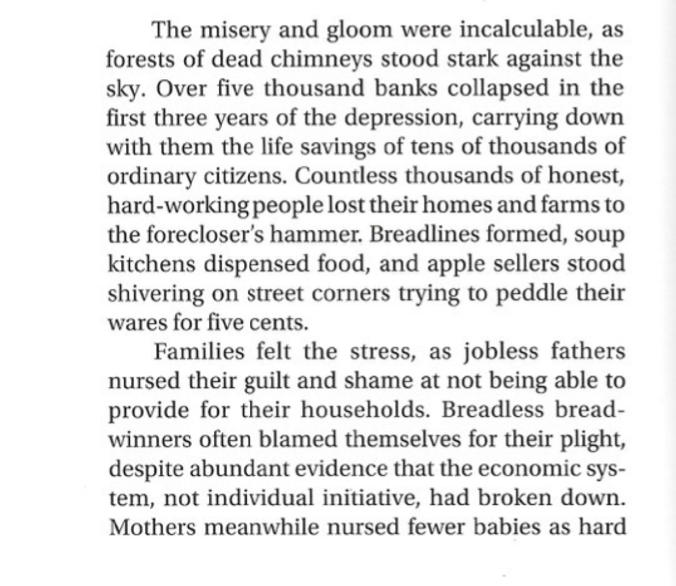
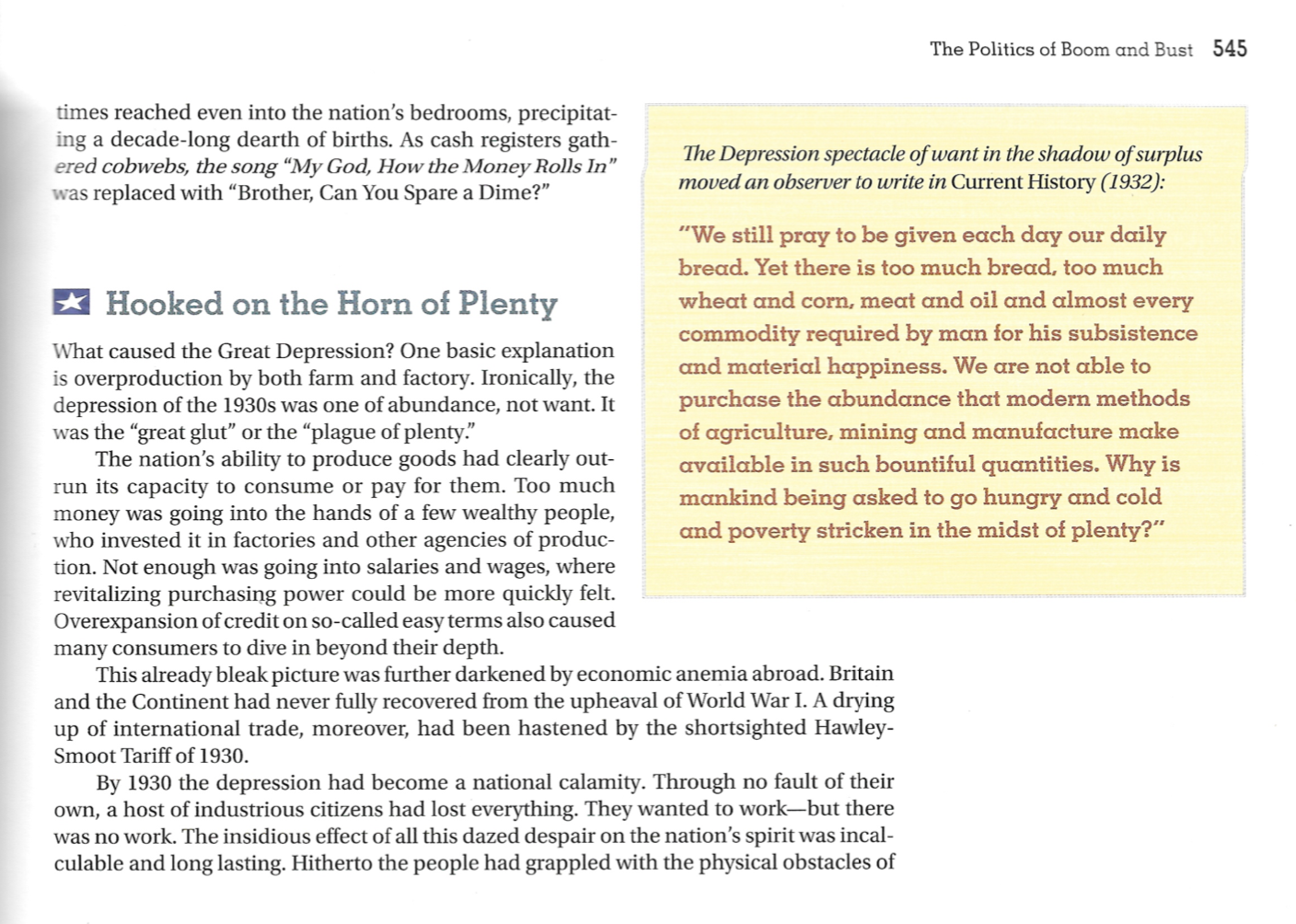
In explaining the causes of the Great Depression, your textbook asserts, "Ironically, the depression of the 1930s was one of abundance, not want. It was the 'great glut' or 'plague of plenty" (Kennedy and Cohen, 545).

Explain the meaning of this quote using complete sentences.

IIUR.01
1
Question 10
10.

As used in line 1, "brewed" most nearly means

IIWD.01
0
Question 11
11.

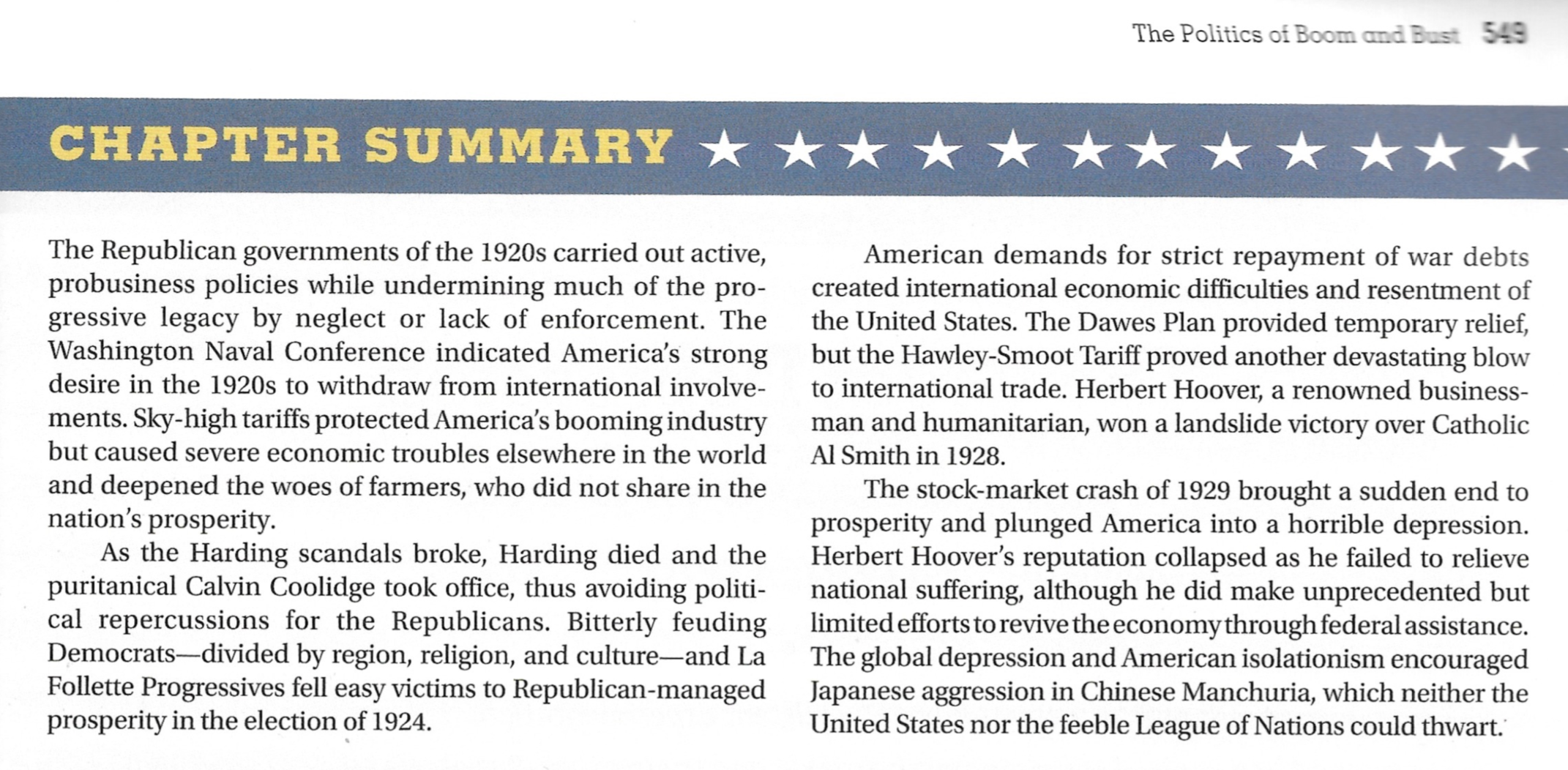
Excellent reading! Close out this Chapter by reviewing the "Chapter Summary" and using the "rectangle" tool to box the 5 most important key terms in the space provided.

0
Question 12
12.

That's all for classwork on Monday, 3/28! Any feedback or questions that you want to go over in class?

Welcome to your Chapter 32 reading! As you read, you should consider the following essential question:
  • How did the New Deal expand the power of the federal government in order to address the Great Depression?
As always, "Focus Questions" should guide your reading and notes, but you do not necessarily have to explicitly answer them.
1
Question 13
13.

The last economic depression that the U.S. experienced was in 2008! While you were too young to recall it, you should ask your prents/guadriaans bout it nd record their response here.

1
Question 14
14.

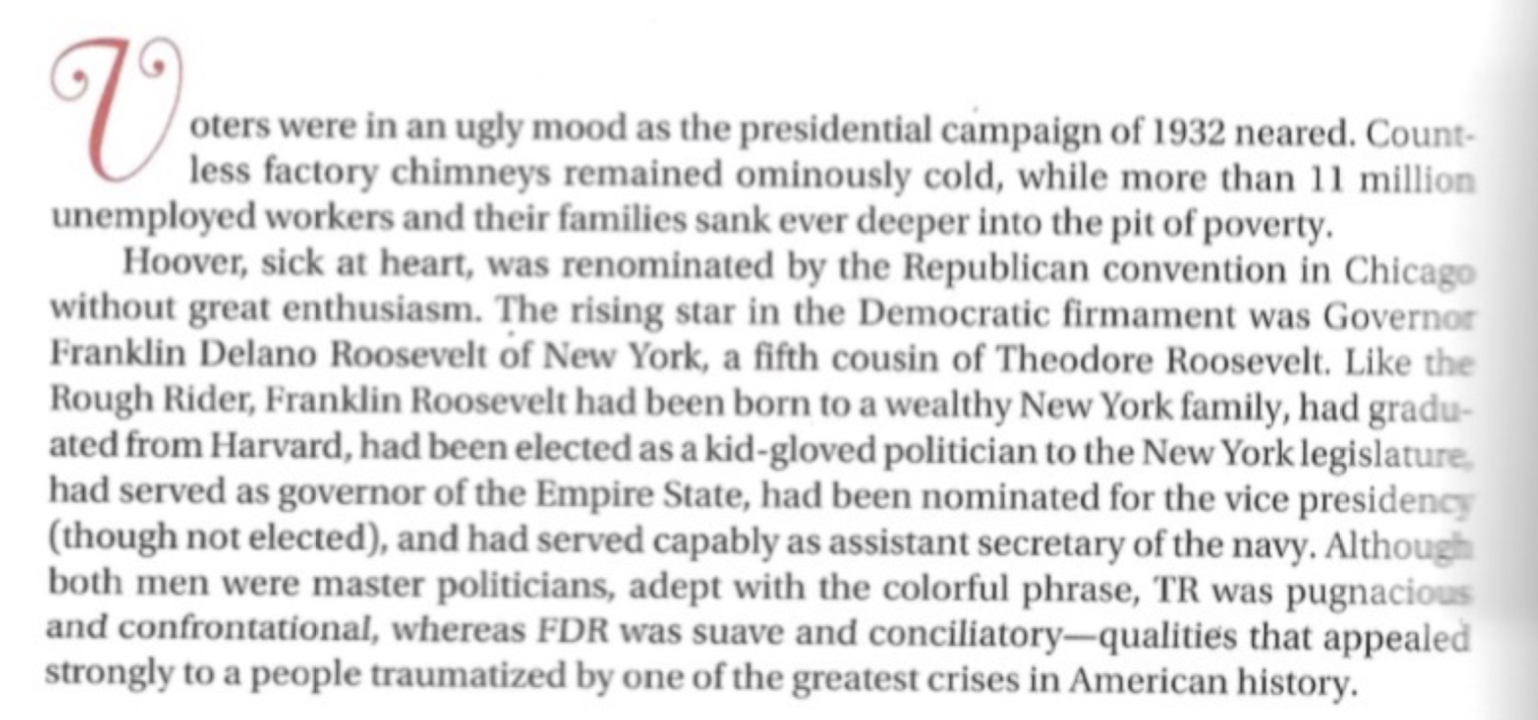
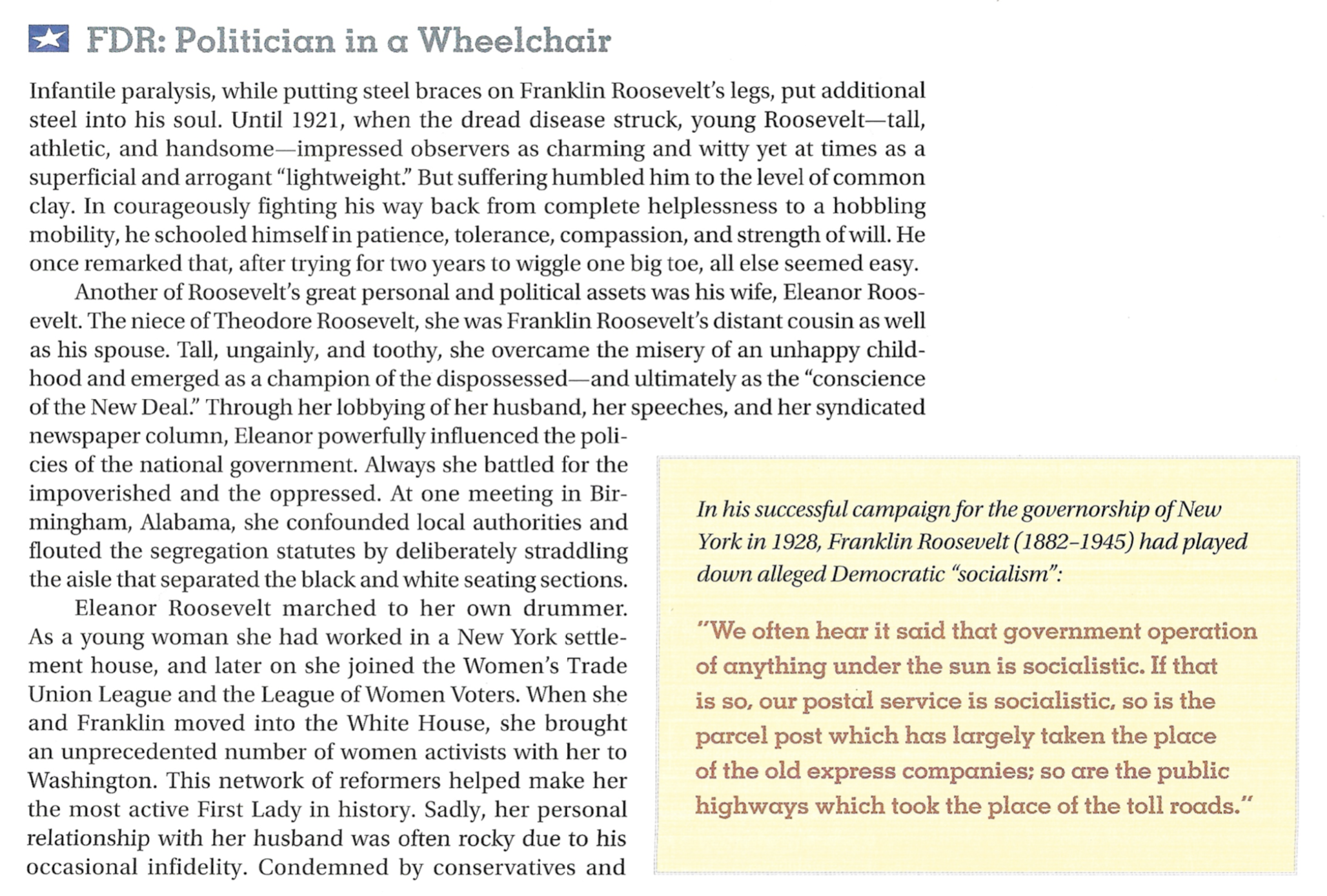
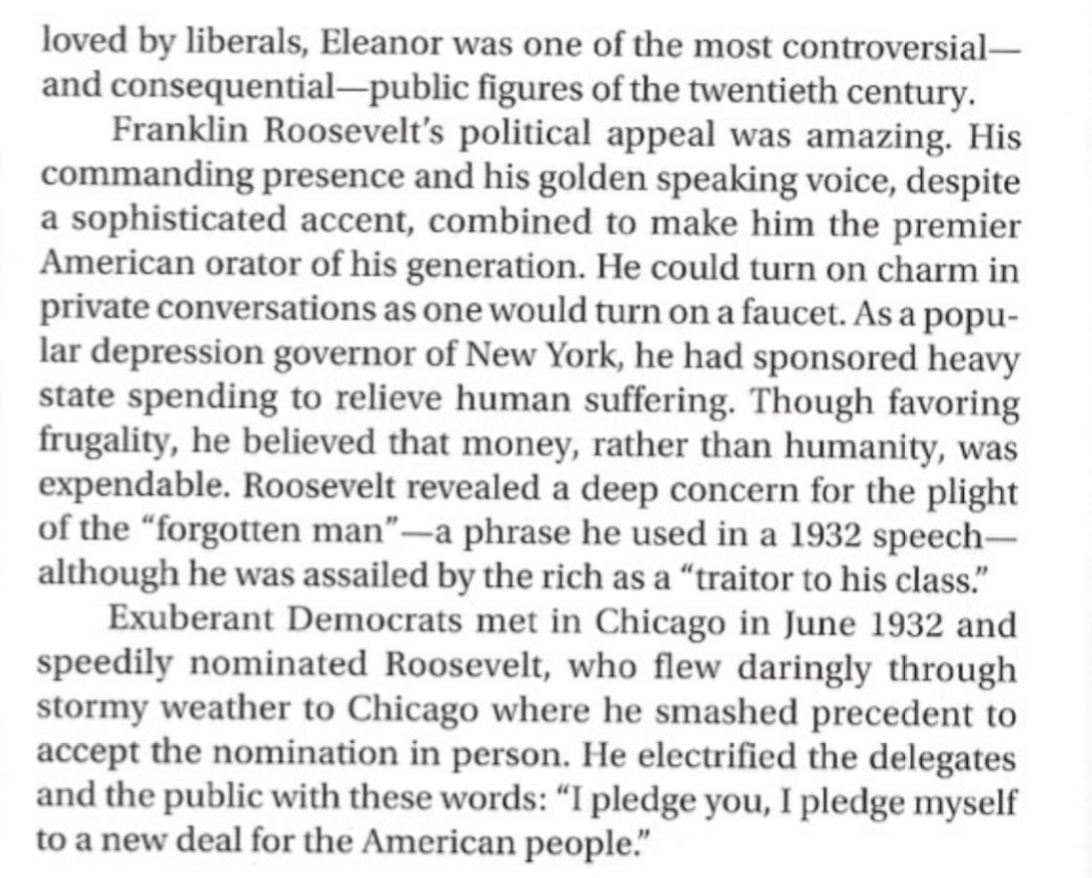
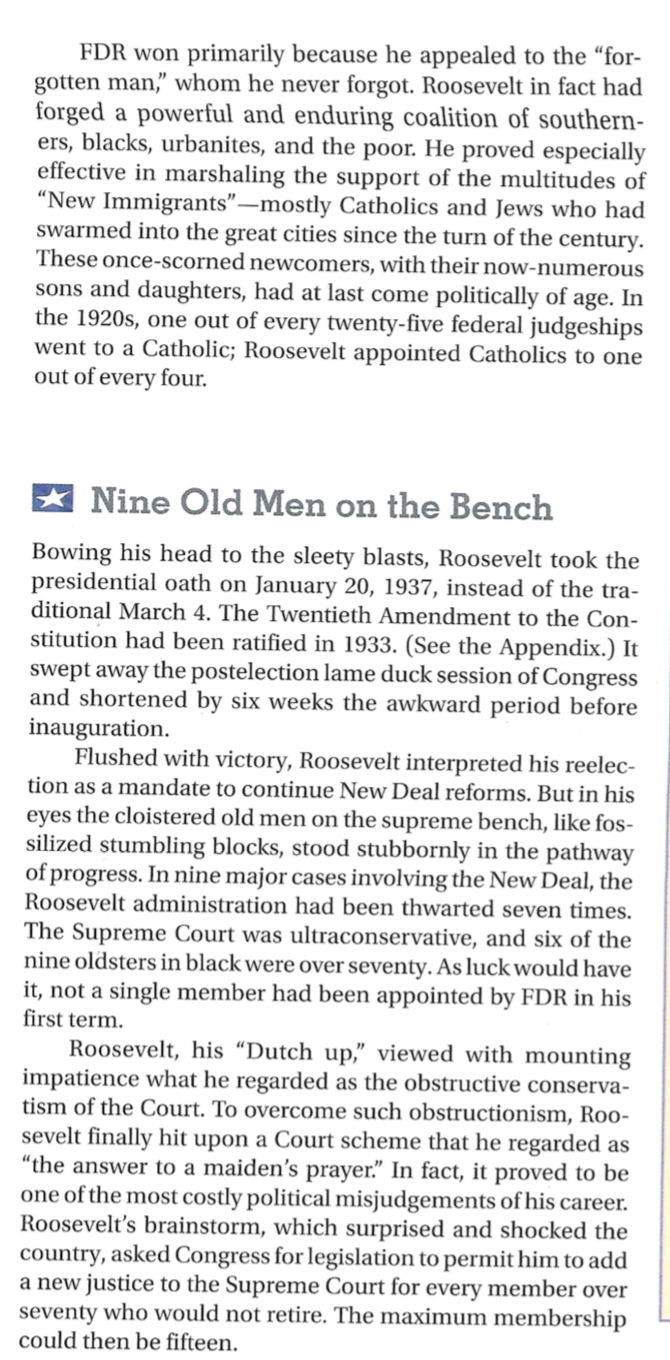
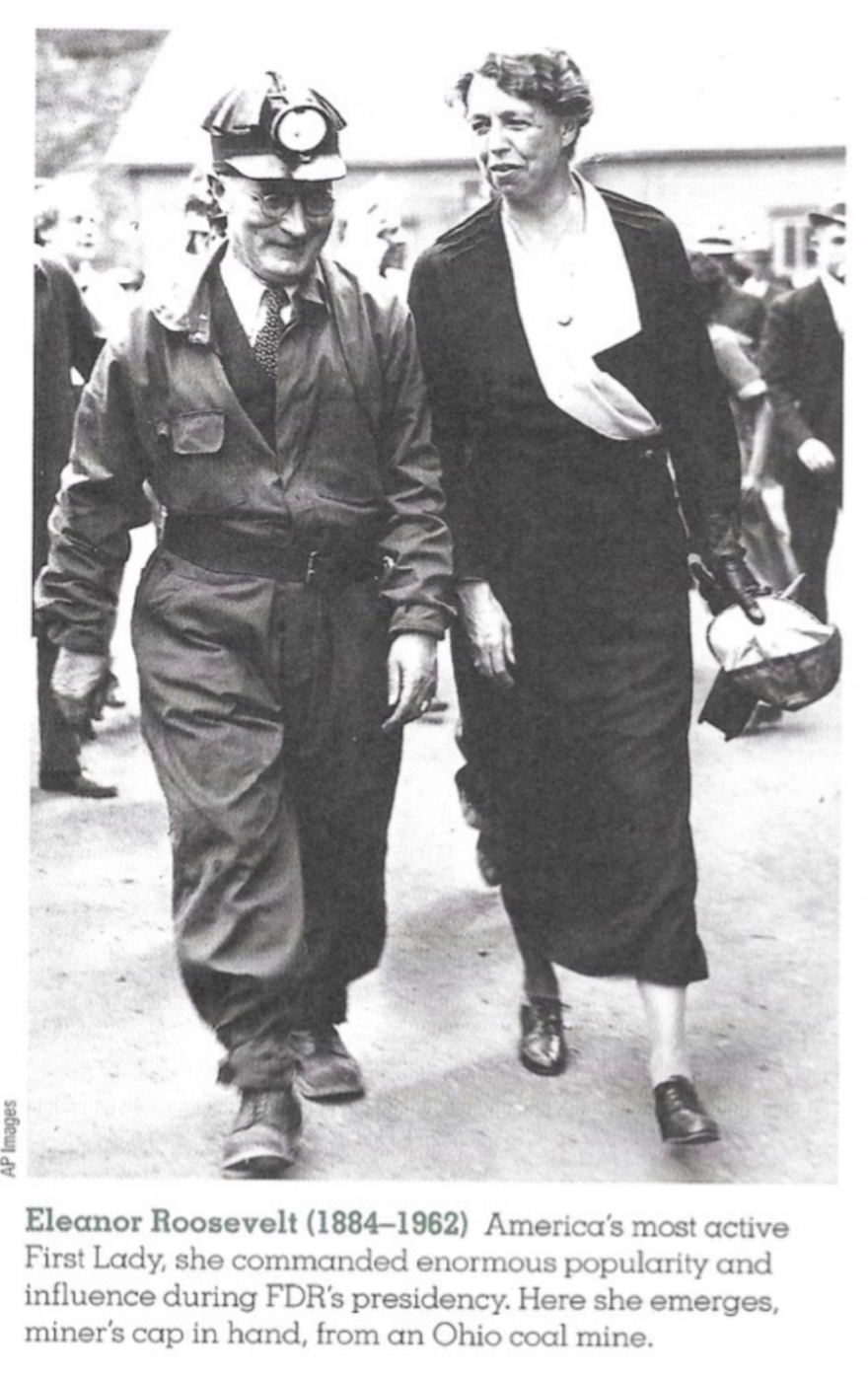
It can be reasonably inferred that President Franklin Roosevelt's compassion and strength of will can be attributed to his

IIRC.02
1
Question 15
15.

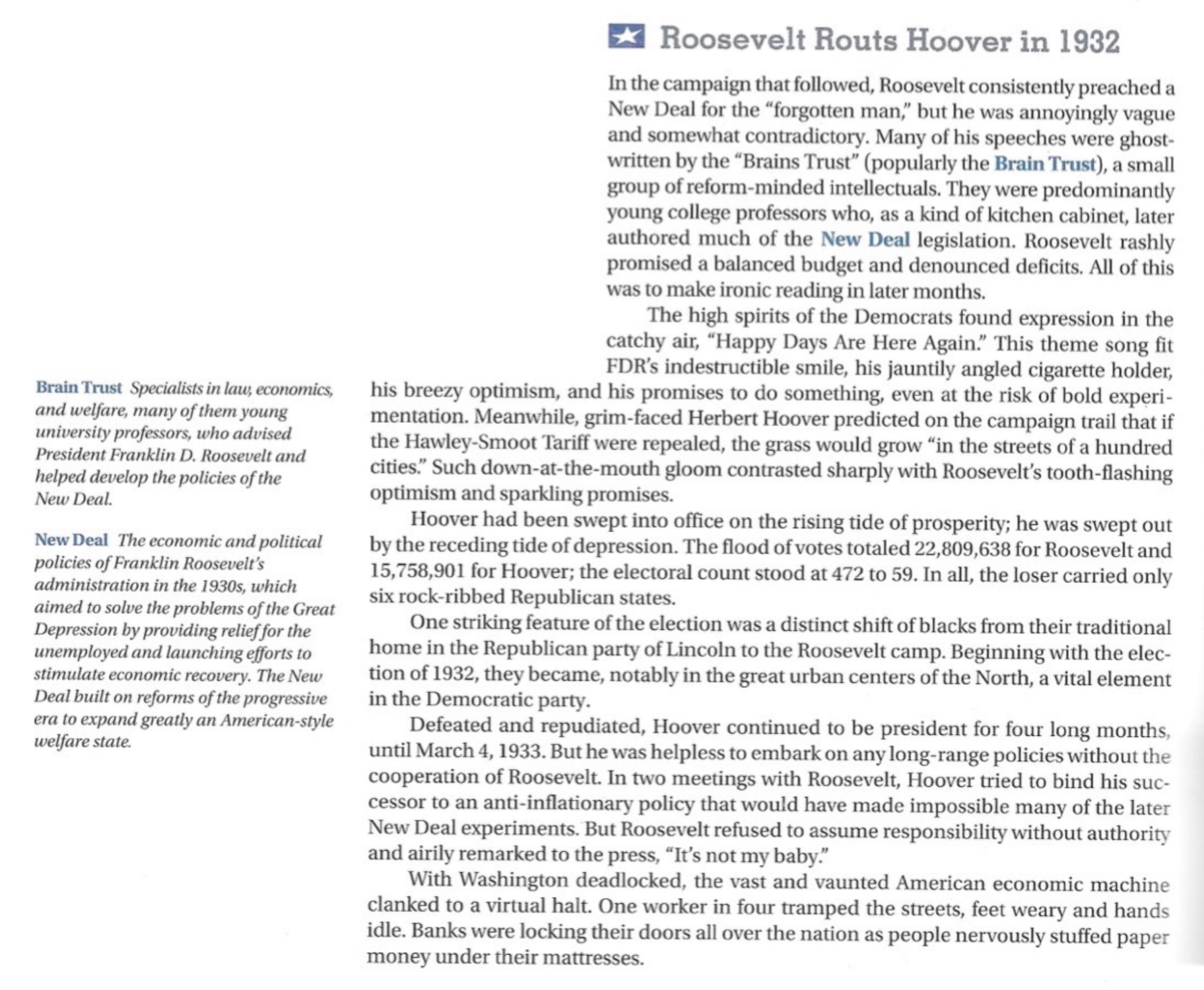
As used in line 3 of paragraph 5, "bind" most nearly means

IIWD.01
0
Question 16
16.

That's all due for class on Tuesday, 3/29! Any feedback or questions that you want to go over in class?

1
Question 17
17.

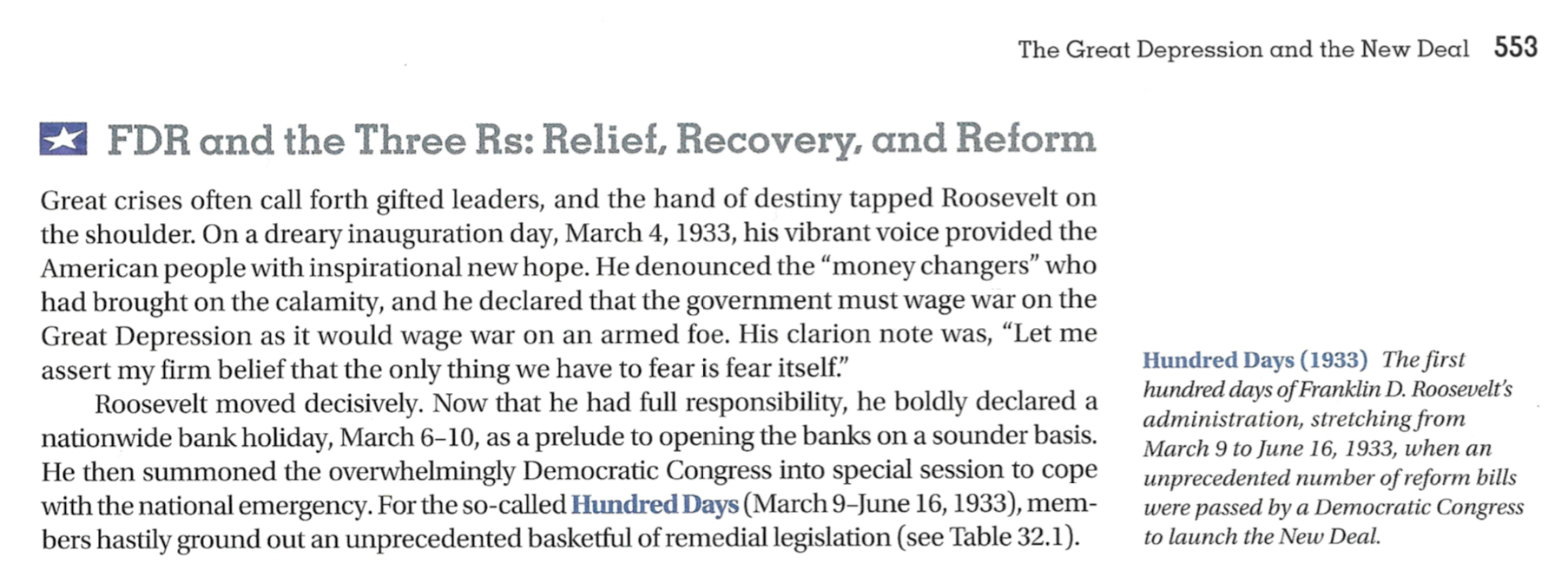
The phrase "Hundred Days" refers to the

RWC.01
1
Question 18
18.

The passage suggests that, when FDR became President in March 1933,

IIRC.02
Question 19
19.

Which choice provides the best evidence for the answer to the previous question?

Connections to the Present Day: The Obama administration used FDR's "Hundred Days" as a blueprint for how to handle the 2008 recession. Certain banks like Bank of America and JP Morgan Chase were deemed "too big to fail," so the U.S. government bailed them out in 2008.
The other issue in 1929 was "bank runs" or mad dashes to withdraw money from the bank afer stock markets crash. The Glass-Steagall Banking Reform Act was a relief program that was also intended to prevent this phenomenon from happening in the future.
Inflation is a continual increase in the price of goods and services, e.g. a can of soda is now $1.50 when it used to be $0.49.
1
Question 20
20.

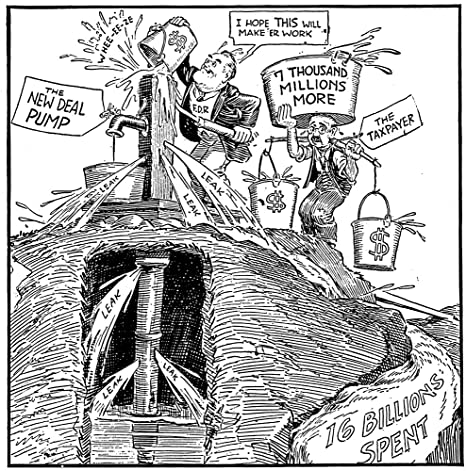
The phrase "prime the pump" (line 4) is used mainly to emphasize the fact that

RWC.01
0
Question 21
21.

That's all due for class on Wednesday, 3/30! Any feedback or questions that you want to go over in class?

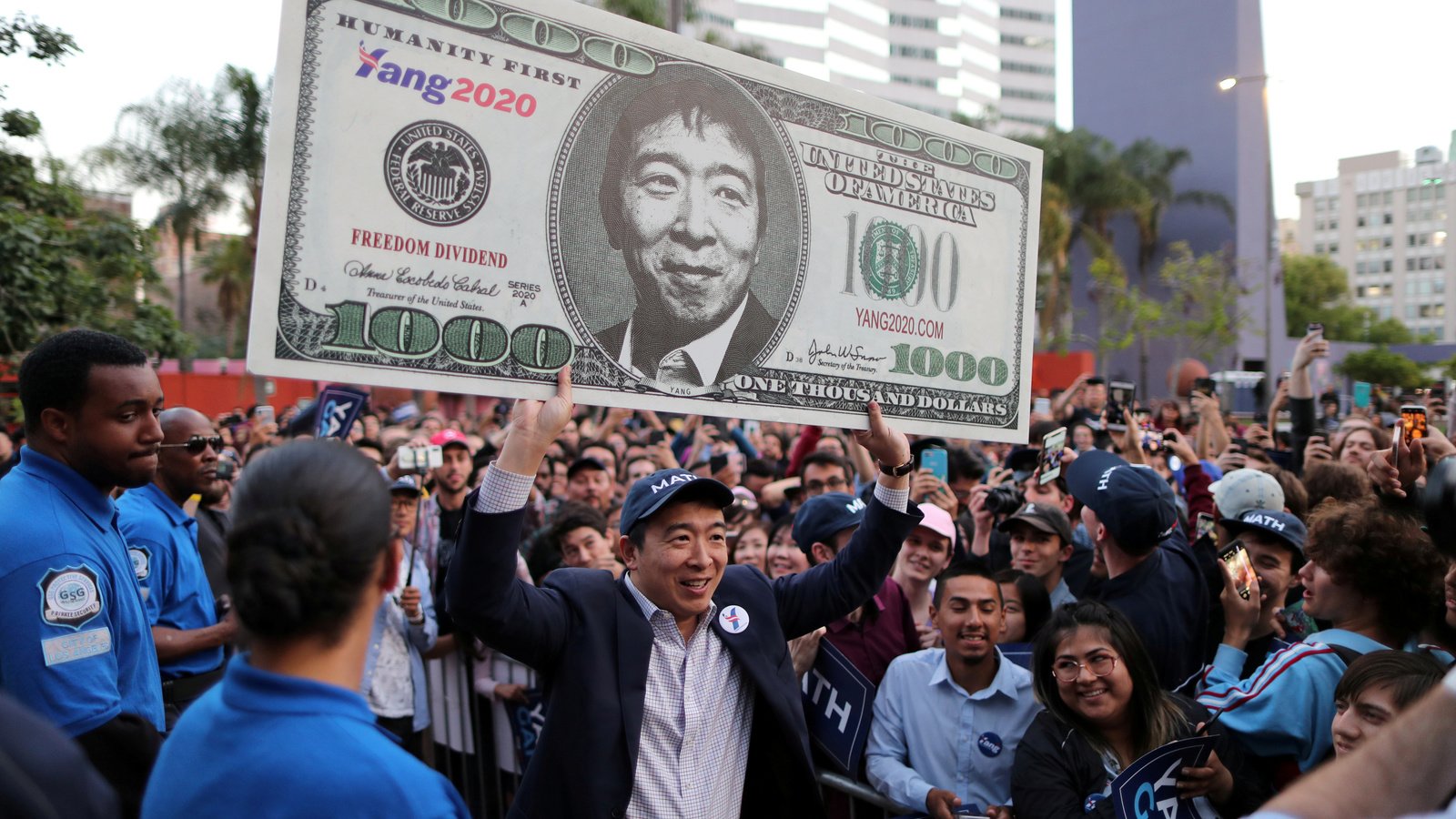
Senator Long would not be the last to advocate for a universal basic income.

2020 Presidential candidate Andrew Yang also proposed that every American family should receive at least $1000 each month.
Universal basic income is such a popular policy that it has found its way into President Biden's infrastructure plan, which proposes a $250-300/month to offset childcare costs for most American families.
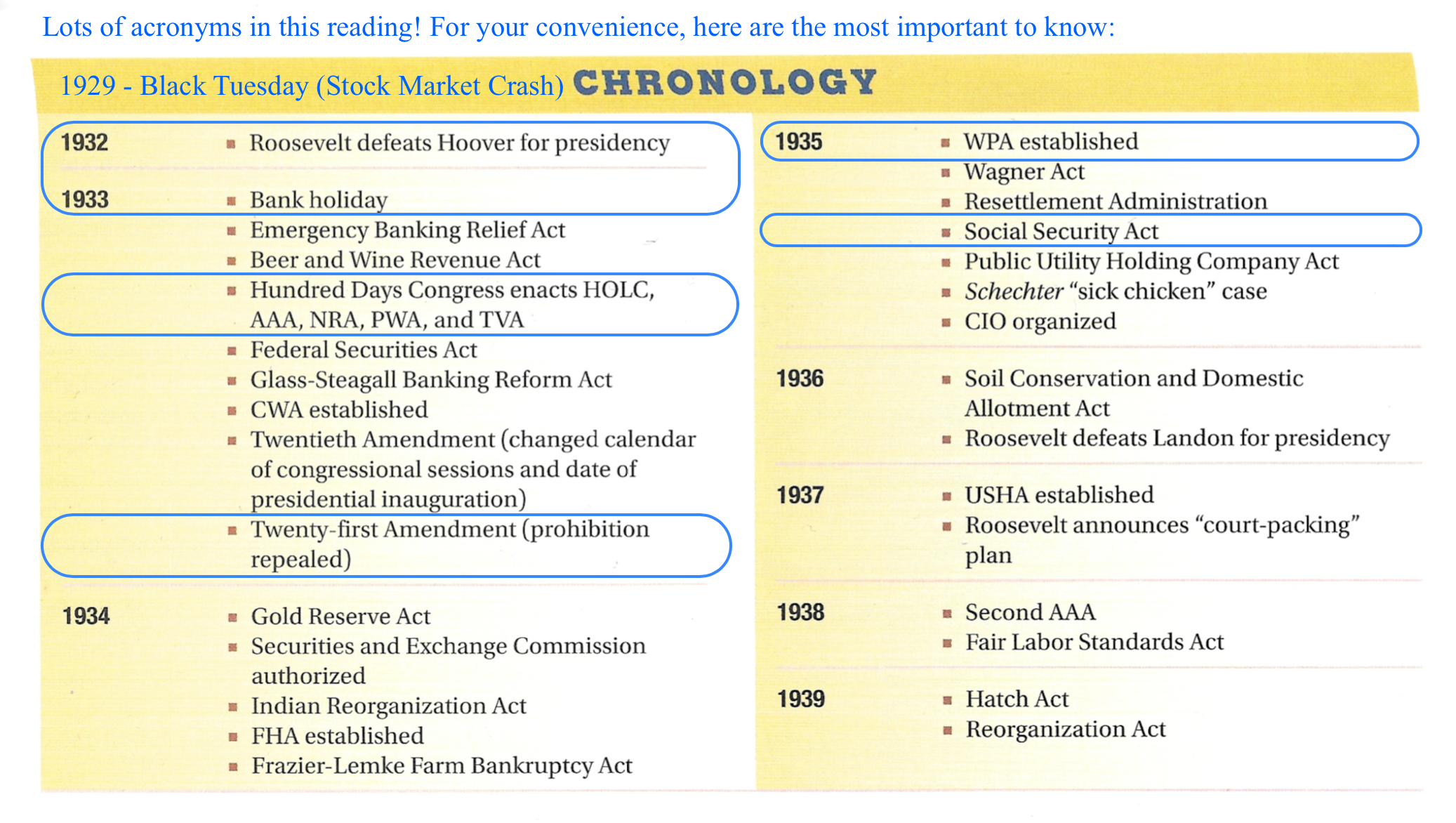
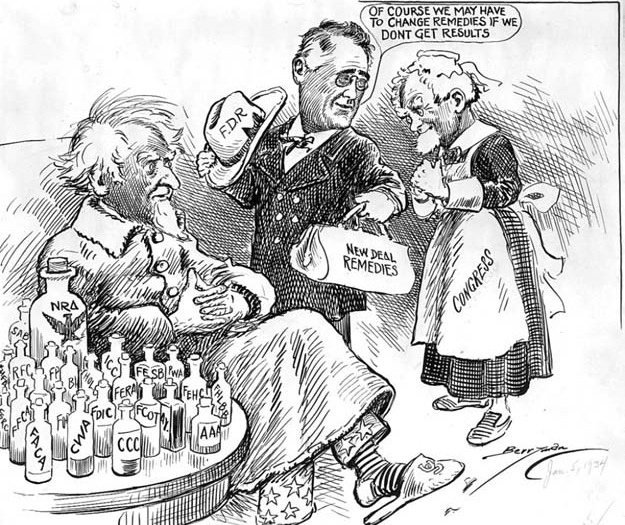
FDR is often criticized for his "alphabet soup" of New Deal programs. Don't worry too much about memorizing every single program. Just focus on the ones addressed in comprehension questions as they are most important to know!
1
Question 22
22.

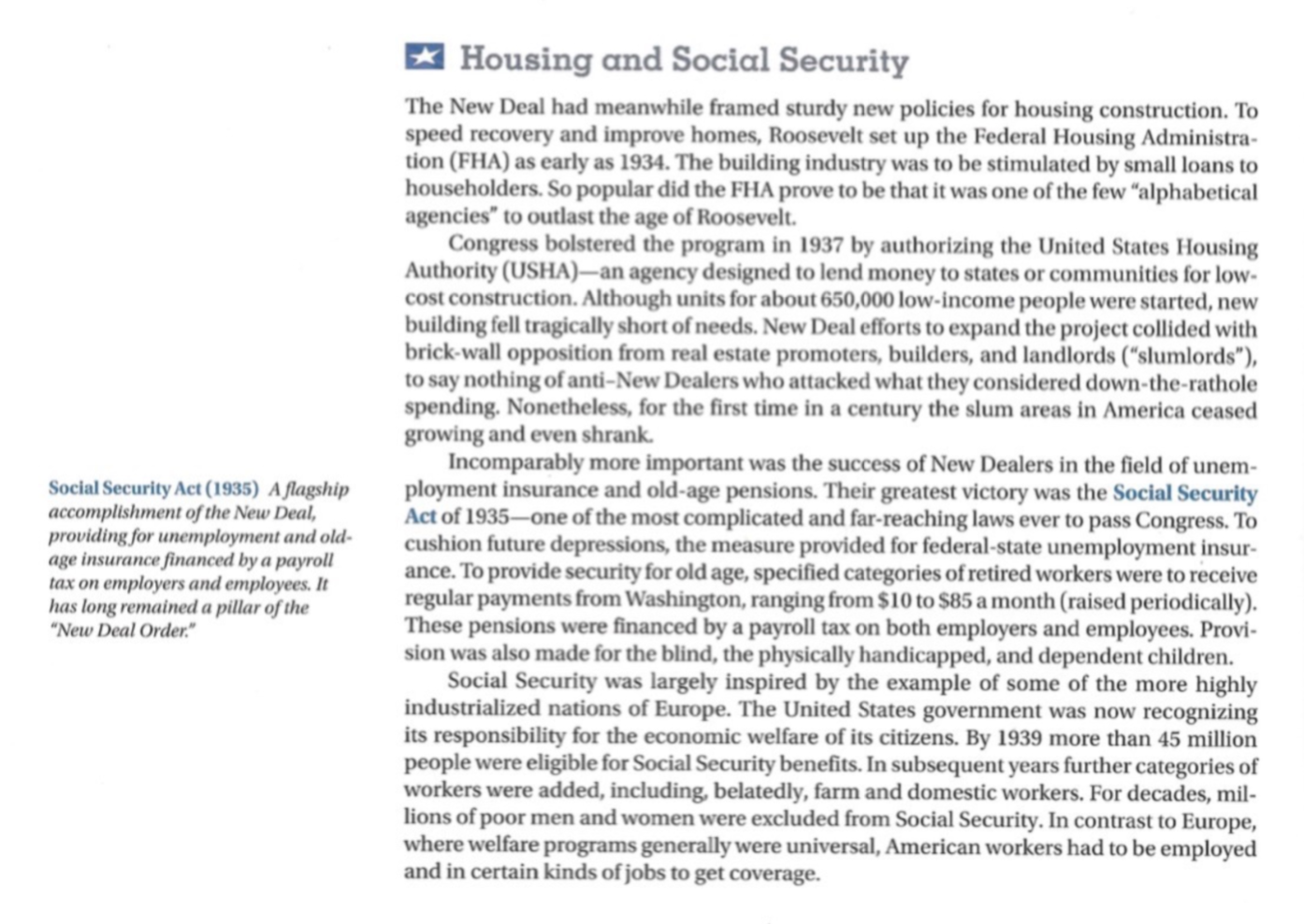
The passage suggests that a particularly important feature of the Social Security Act of 1935 was its provision of

IIRC.01
Question 23
23.

Which choice provides the best evidence for the answer to the previous question?

1
Question 24
24.

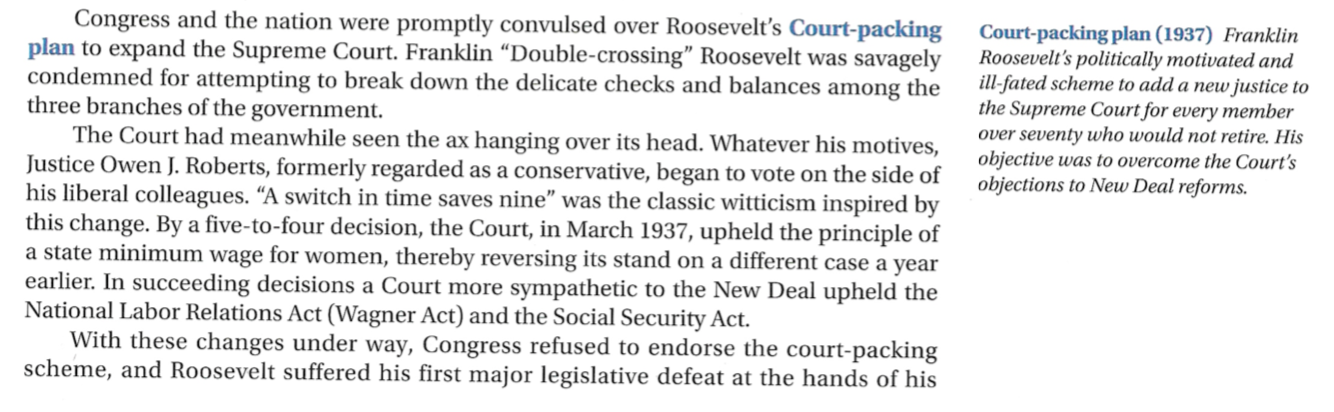
As used in line 4, paragraph 4, "costly" most nearly means

IIWD.01
0
Question 25
25.

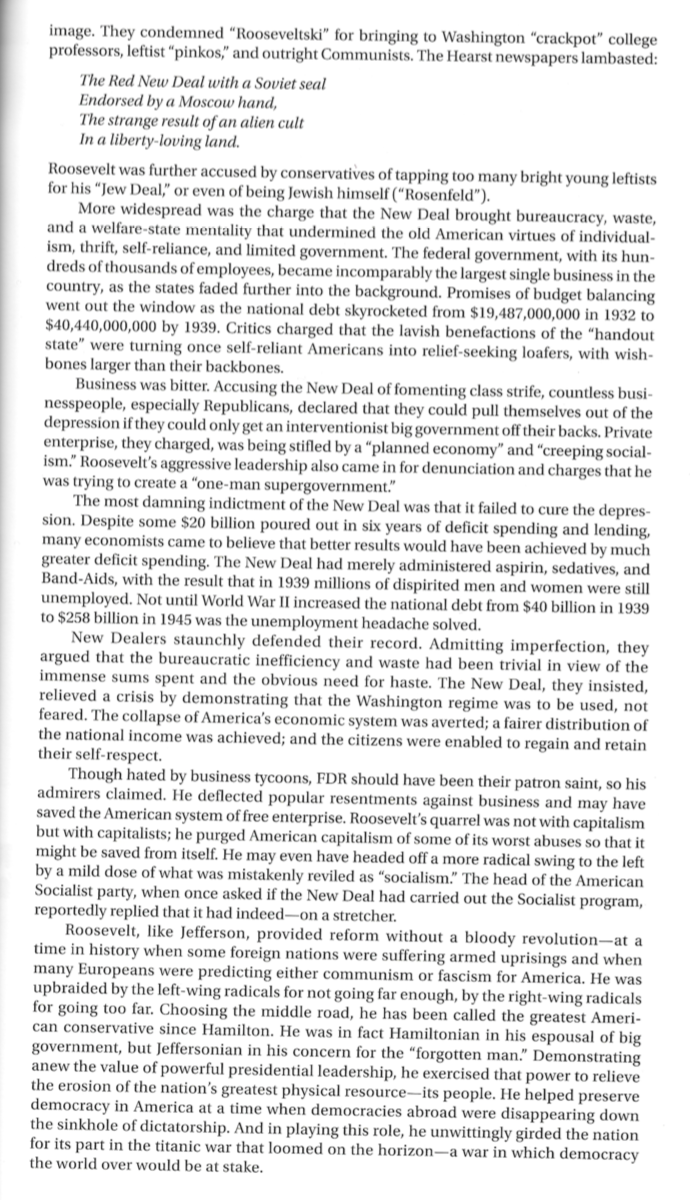
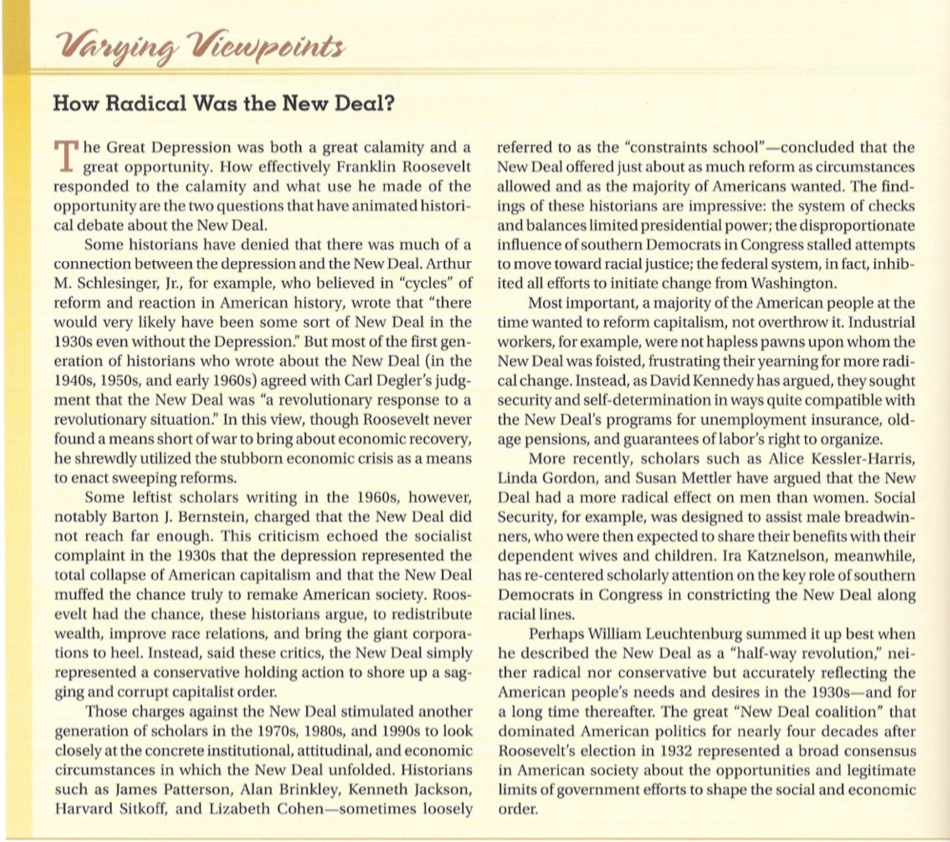
What do you think? Do you think that President Roosevelt was able to effectively address the crisis of the Great Depression with New Deal?

Explain why or why not using complete sentences with text evidence from the reading in order to receive full credit.

0
Question 26
26.

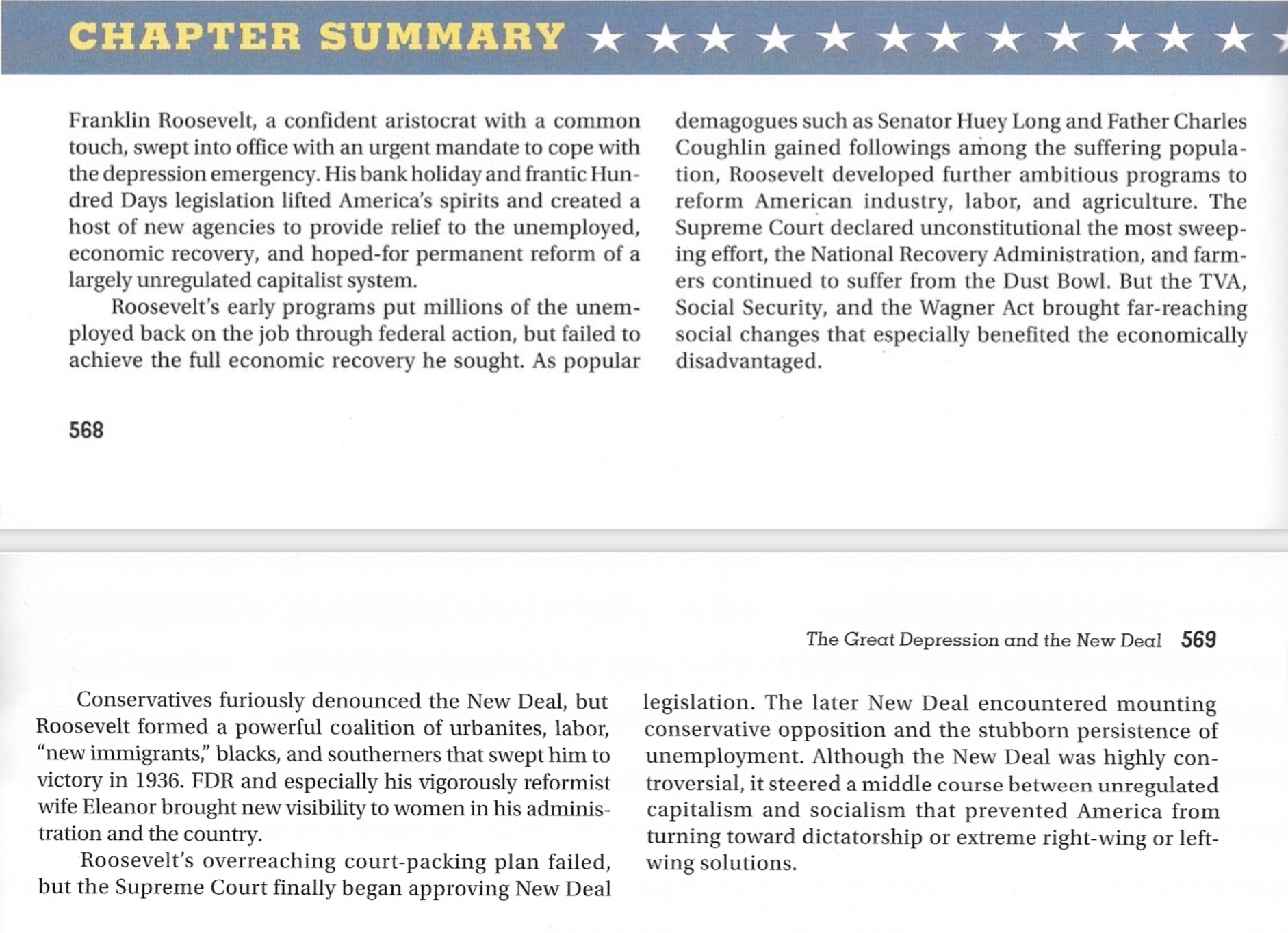
Excellent reading! Close out this Chapter by reviewing the "Chapter Summary" and using the "rectangle" tool to box the 5 most important key terms in the space provided.

0
Question 27
27.

That's all due for class on Thursday, 3/31! Any feedback or questions that you want to go over in class?

Another chapter in the books! Be sure to click "Submit" in Formative and then "Mark As DOne" in Google Classroom.
the French ordered all remaining U.S. troops off their soil in protest of the Dawes Plan.
the French and British subjected their people to ruinous tax rates.
the French and British demanded enormous reparations payments from Germany.
the British and French borrowed money from Switzerland to repay the loans.
Line 26-28 ("Clearly the... a desert")
The great stock market crash of 1929 caused American private investors to loan money to Germany.
Germany was forced to pay the Allies $32 billion in reparations for war-inflicted damages.
Germany's post-WWI economy suffered from massive inflation and crippling debt.
The Allies planned to settle their debts to America with money received from Germany.
supremely confident and optimistic.
aggressively hostile and frustrated.
uncertain and increasingly fearful.
overly anxious and pessimistic.
Line 15-17 ("By the... about tripled")
1925-1927
1929-1931
1933-1935
1921-1923
As used in line 3, "collapsed" most nearly means
caved in.
closed down.
gave way.
crumpled up.
prepared
concocted
caused
service in World War I.
domestic conflicts with Eleanor Roosevelt.
Ivy League education.
handcuff.
commit.
connect.
detach.
first months of FDR's presidency when Congress passed many important laws.
most severe months of the Great Depression.
transition between the presidential election and the inaugural address.
the presidency received unprecedented congressional support.
he rejected a pragmatic approach to governing the country.
he aimed to permanently recover and reform the economy.
Line 17-18 ("The frantic... later sessions")
the U.S. government was ready to face the Great Depression.
the New Deal was designed to get Americans excited about going back to work.
FDR spent federal money in order stimulate the U.S. economy.
health care for the poor and aged.
loans and job training for the unemployed.
unemployment insurance and old-age pensions.
Line 6-8 ("Congress bolstered... low-cost construction")
expensive.
valuable.
excessive.
damaging.