APUSH Chapter 34 - America in WWII (1941-1945) - SY22
star
star
star
star
star
Last updated over 1 year ago
24 questions
1
IITE.01
1
IITE.01
1
IITE.01
1
IITE.01
Welcome to Chapter 34! As you read, you should consider the following essential question:
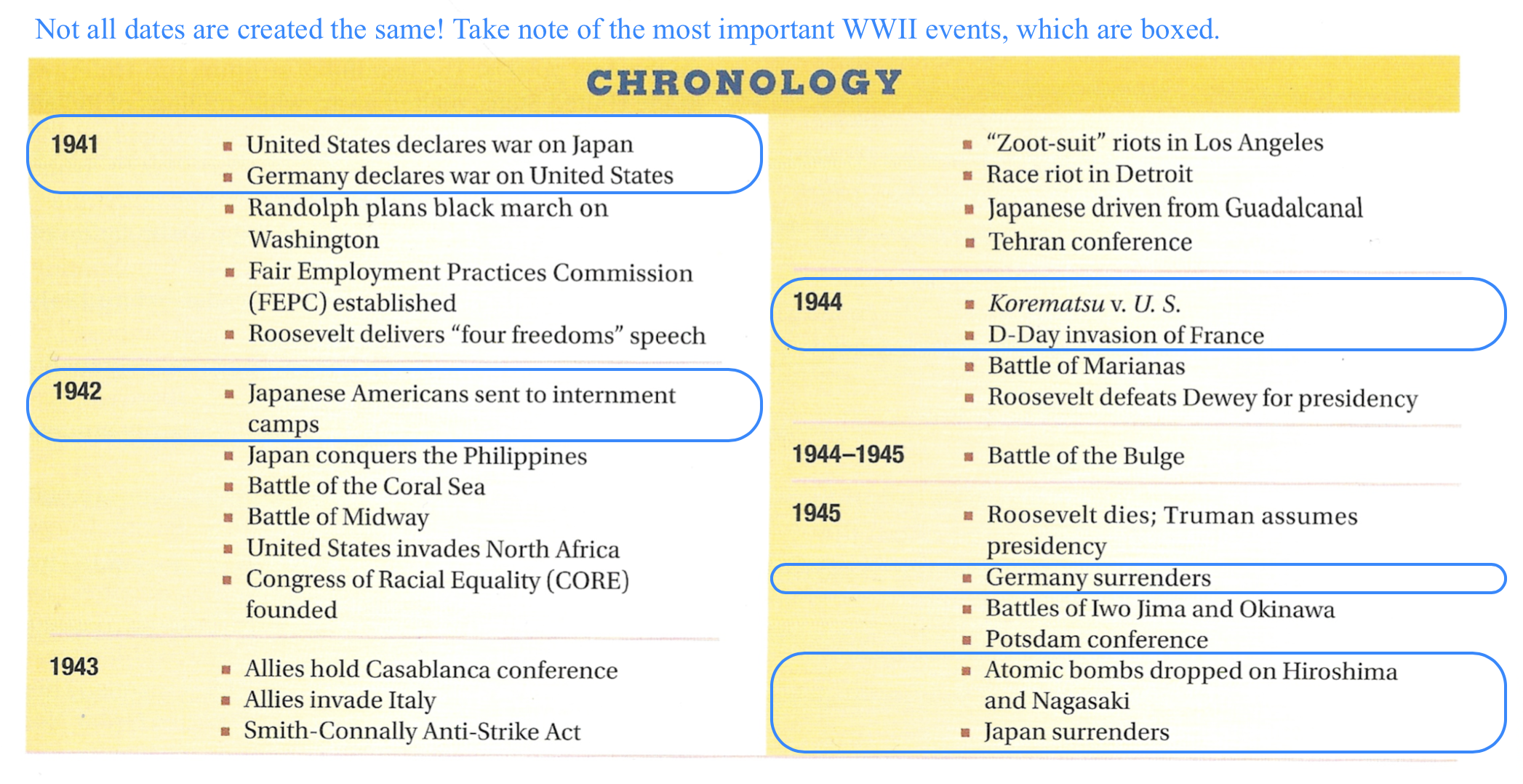
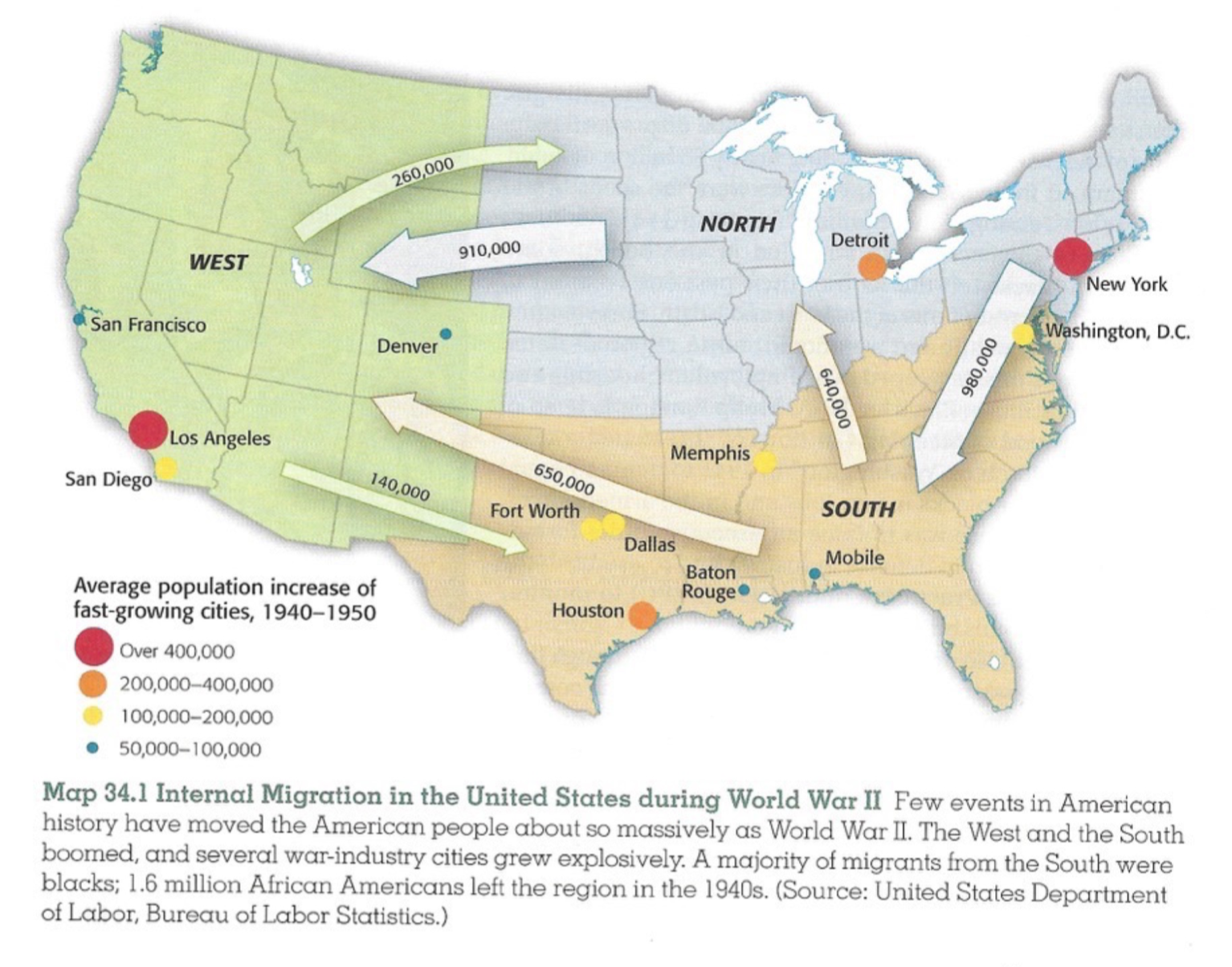
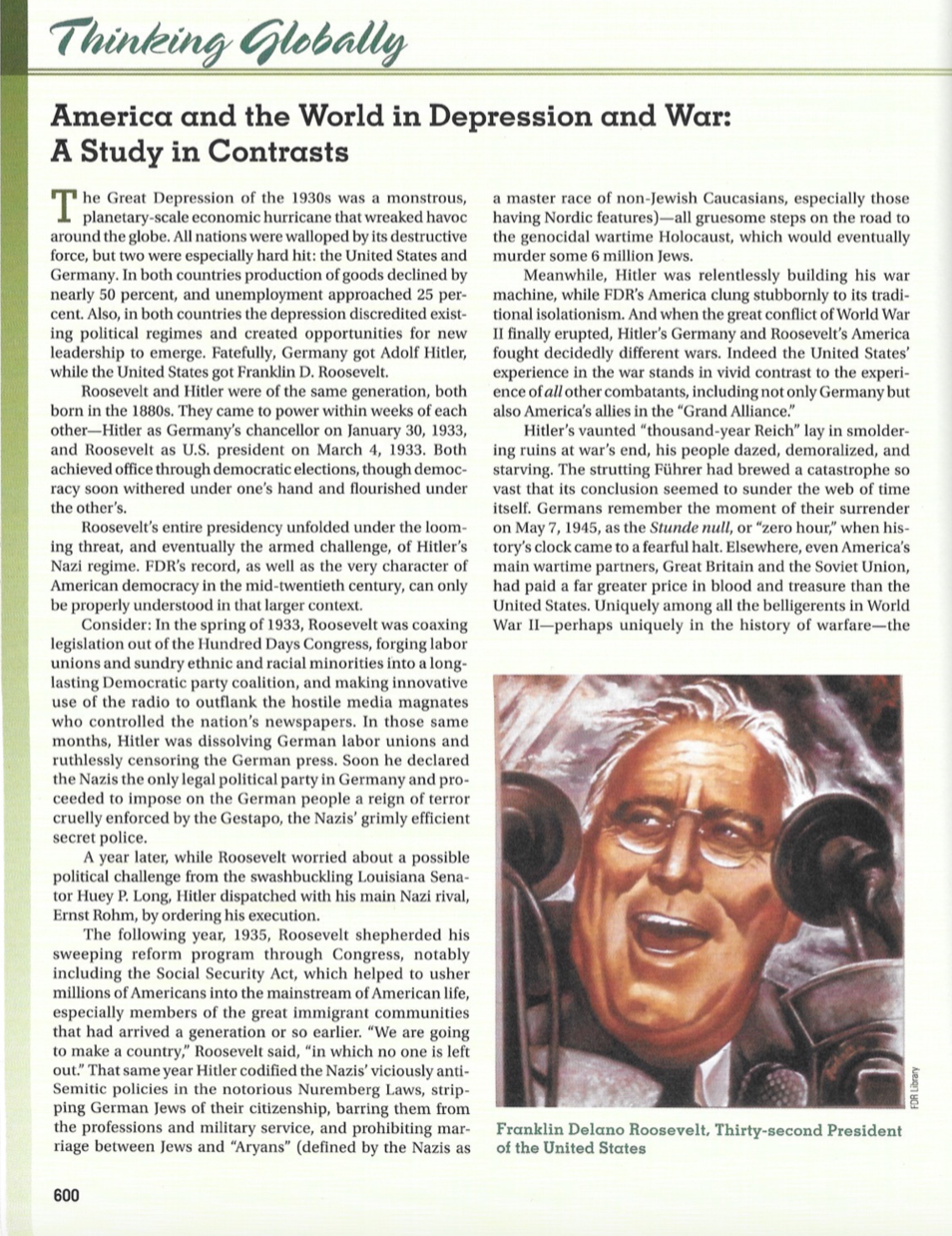
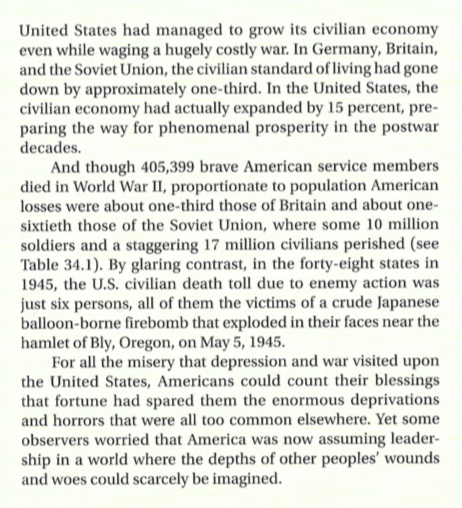
What were the effects of World War II on the U.S. economy and American citizens?
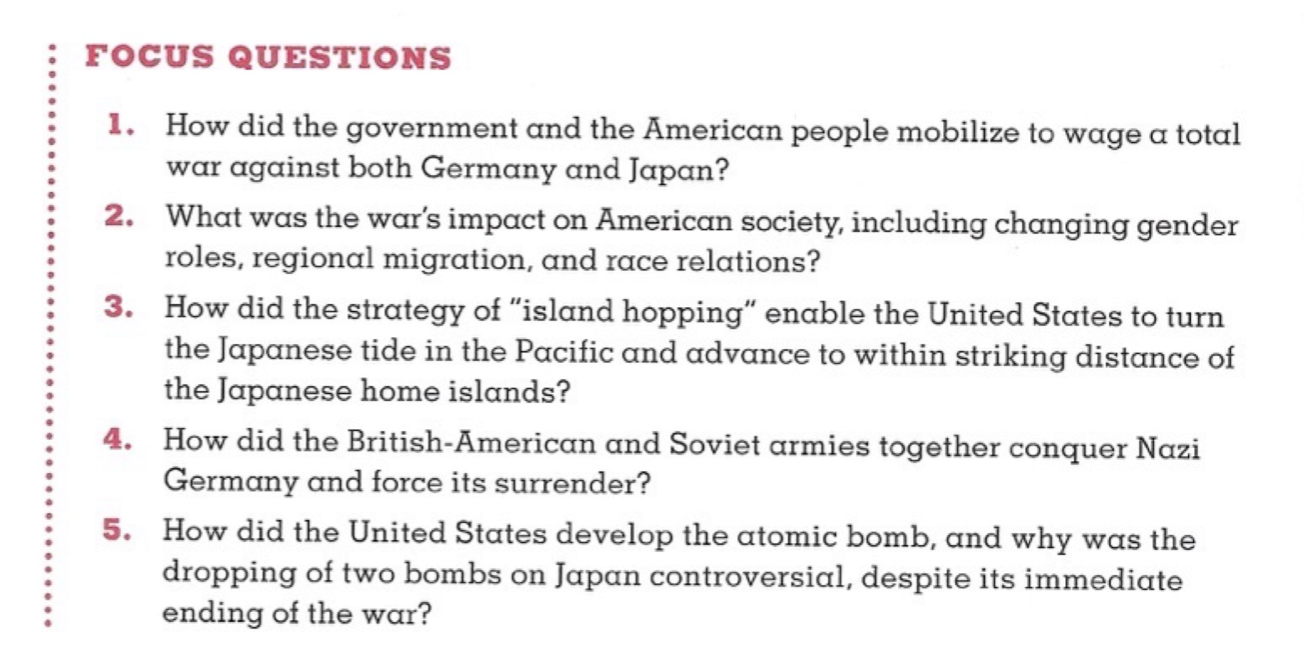
As always, "Focus Questions" should guide your reading and notes, but you do not necessarily have to explicitly answer them.
1
Question 1
1.
In sharp contrast to World War I, U.S. entry into WWII received near unanimous support from Americans. Why do you think this was the case after the U.S. had a long history of isolationism?
1
Question 2
2.
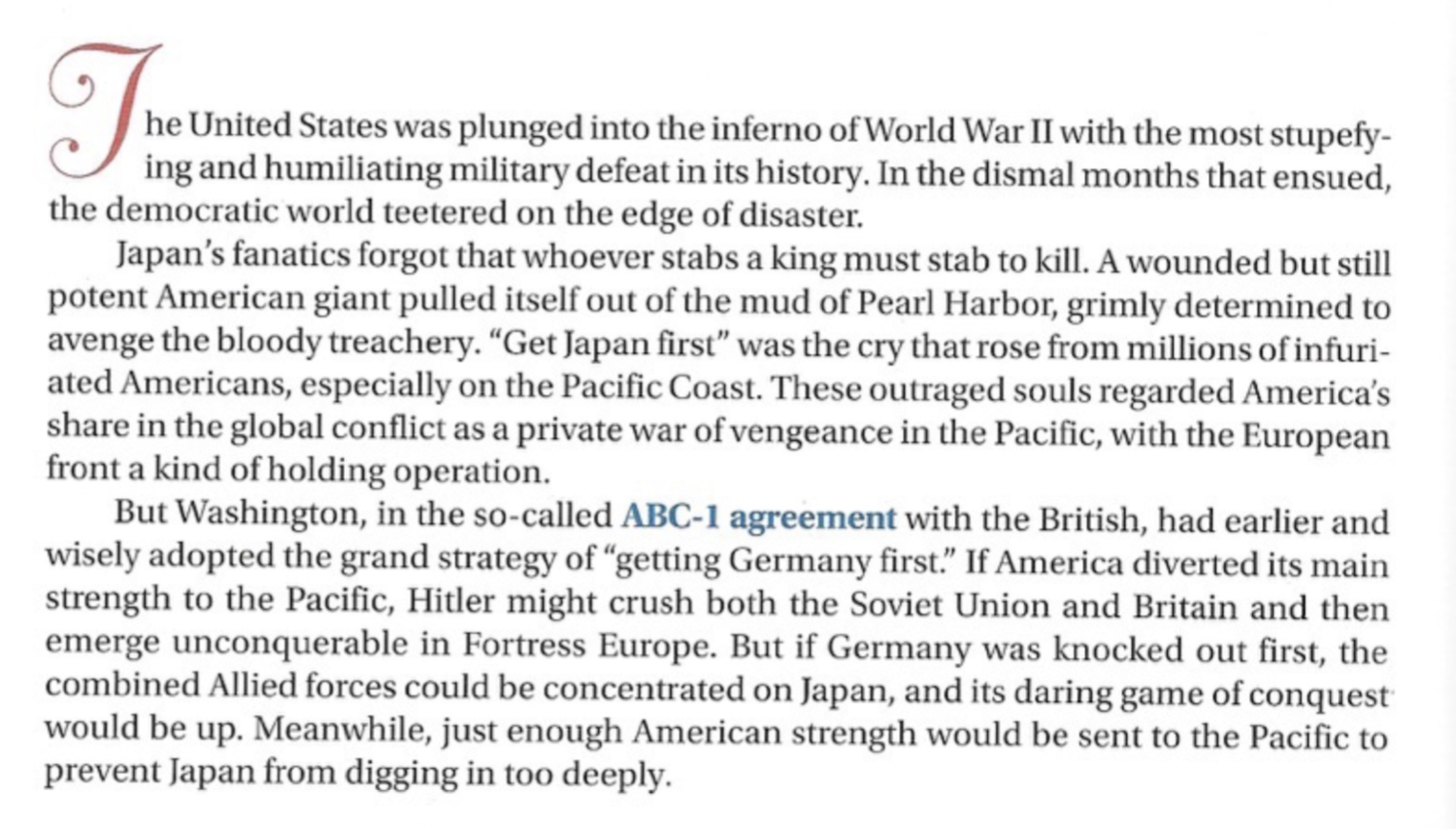
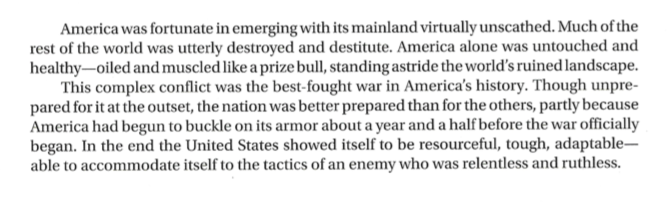
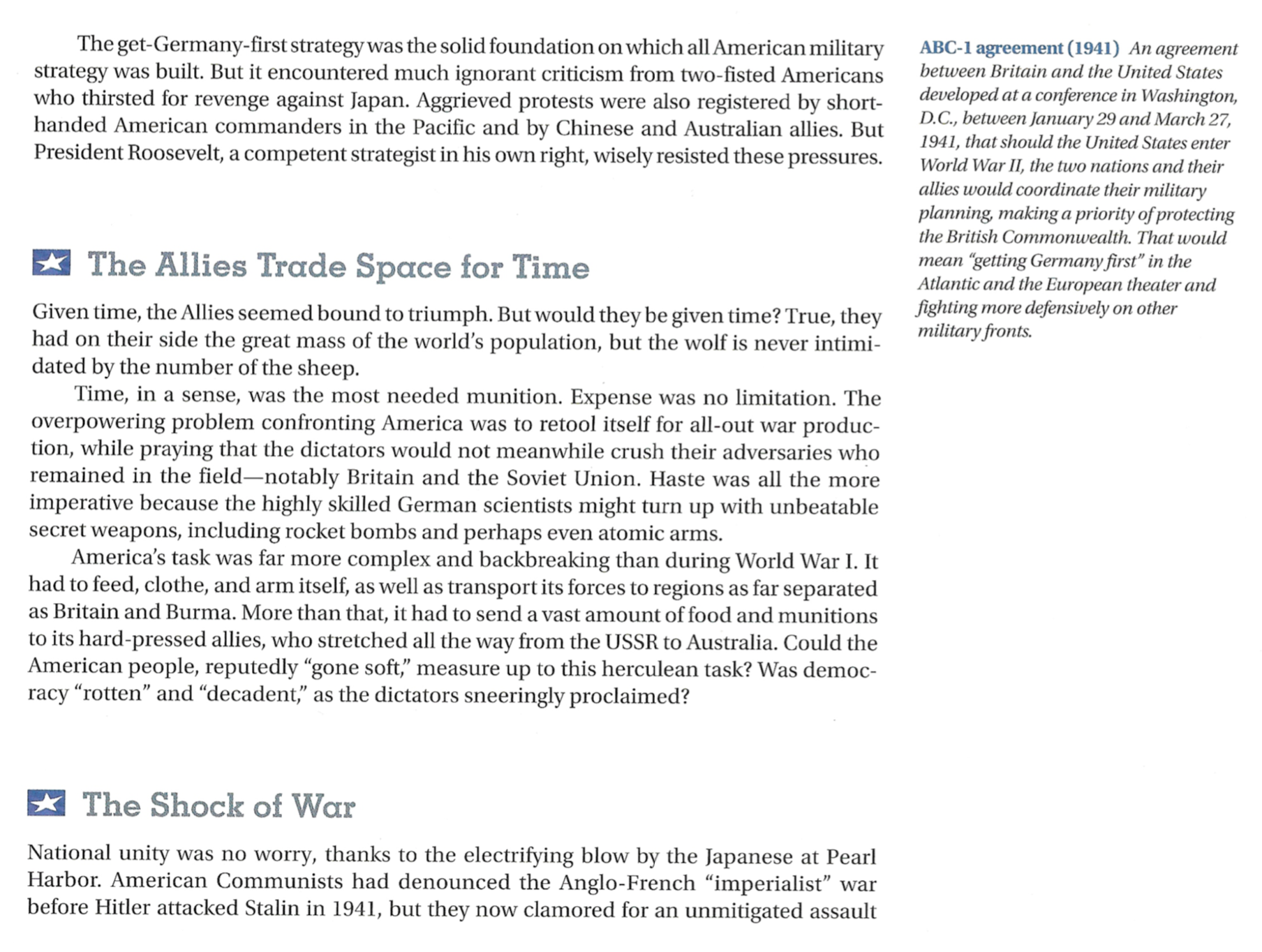
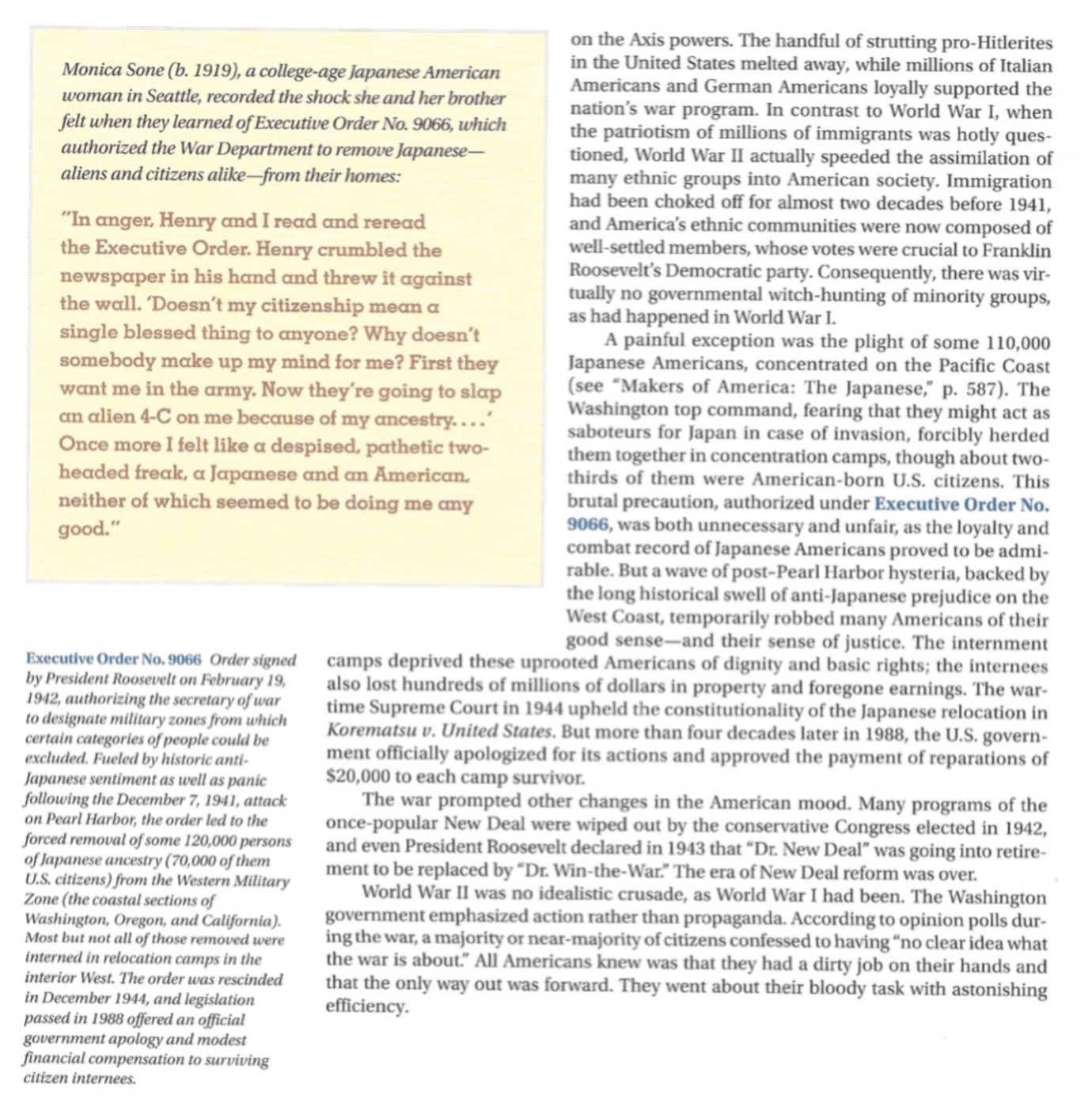
Once at war, America's first overpowering challenge was to
IIUR.01
1
Question 3
3.
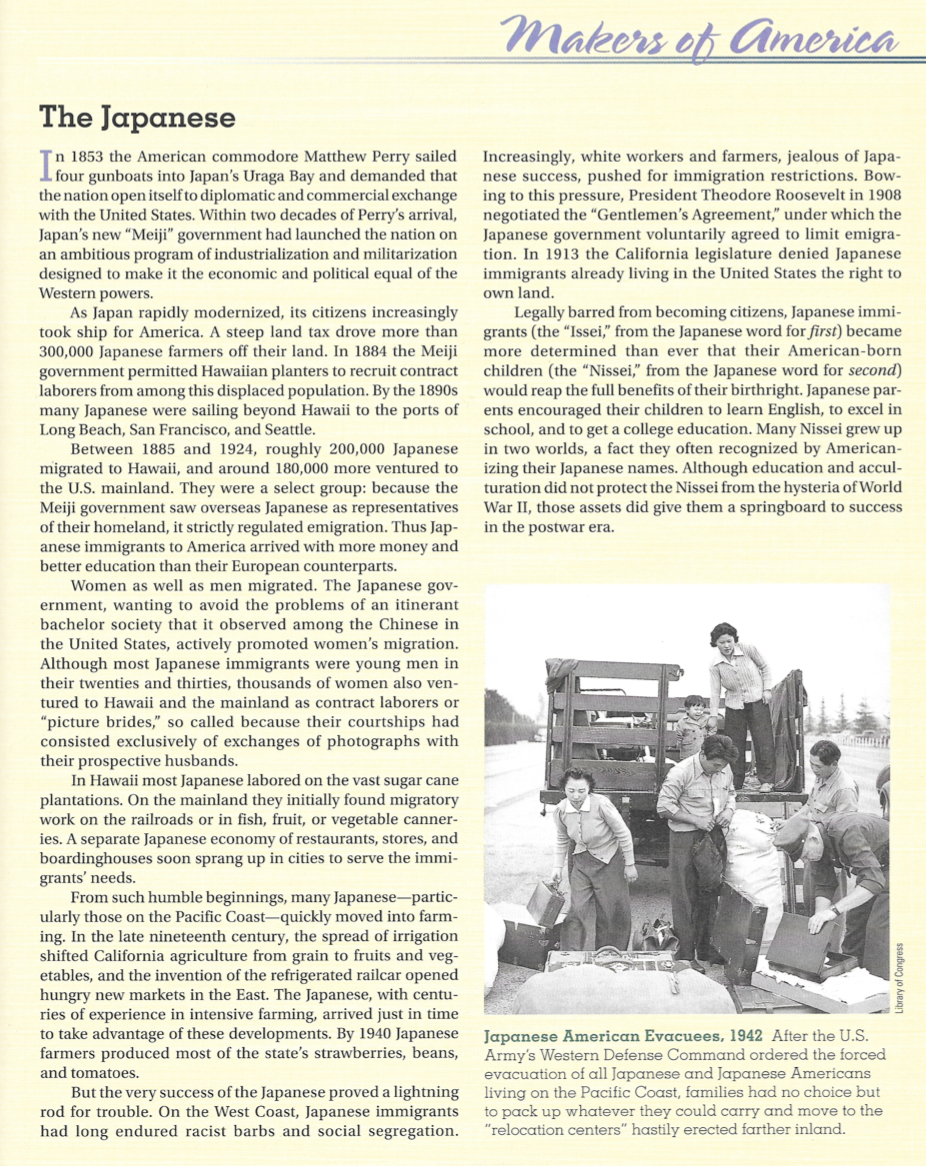
The passage indicates that Japanese relocation to concentration camps during World War II was mainly due to
IIUR.01
Question 4
4.
Which choice provides the best evidence for the answer to the previous question?
1
Question 5
5.
All of the following are true statements about the effect of Executive Order #9066 EXCEPT

IIRC.01
0
Question 6
6.
That's all due for Monday, 4/18/2022! Any questions?
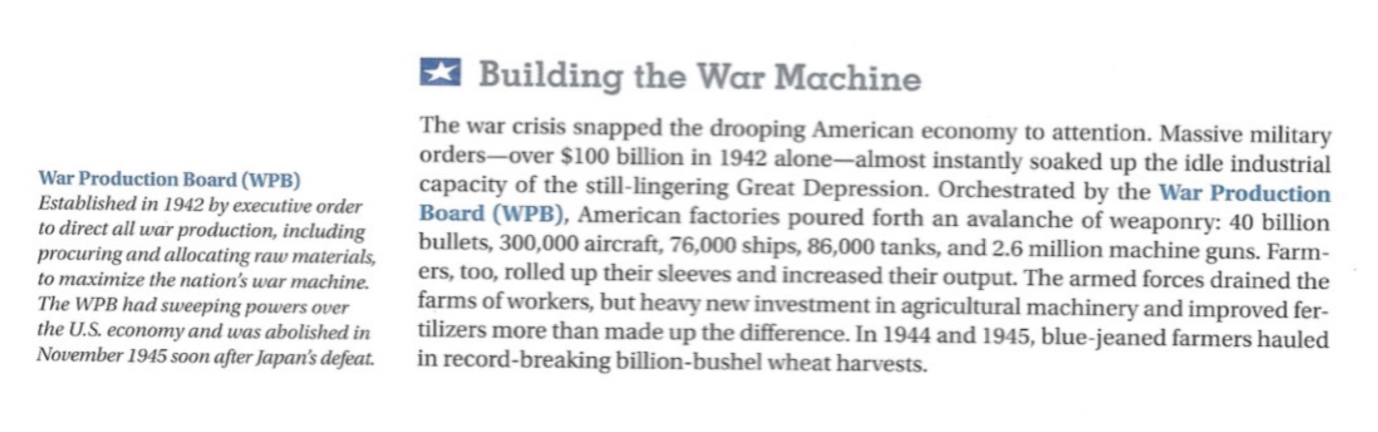
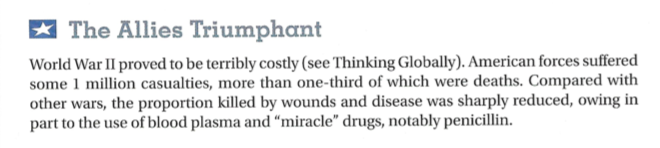
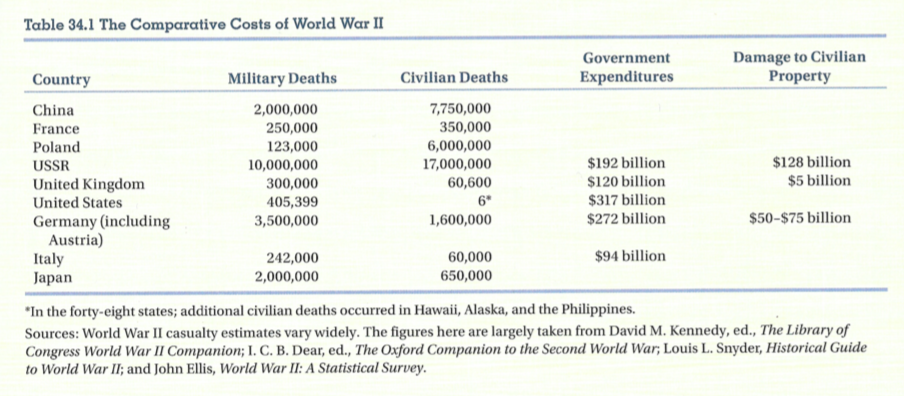
A common theme in APUSH is that entering war is expensive.
1
IICI.01
1
Question 8
8.
IIWD.01
1
Question 9
9.
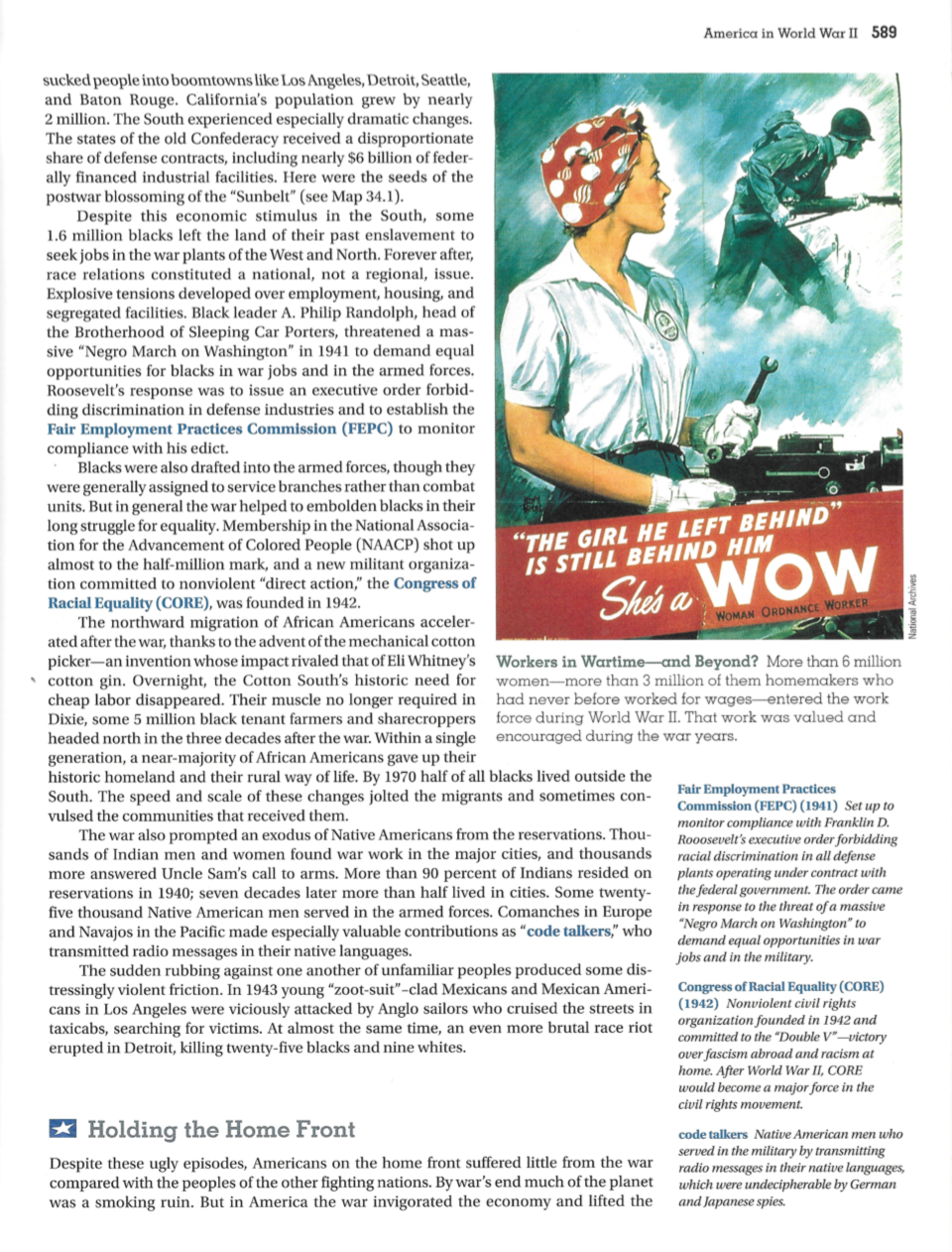
The employment of more than six million women in American industry during World War II led to
IIUR.01
Question 10
10.
Which choice provides the best evidence for the answer to the previous question?
1
Question 11
11.
During WWII, some Native Americans contributed to the war effort by
IIRC.01
1
Question 12
12.
IIWD.01
1
Question 13
13.
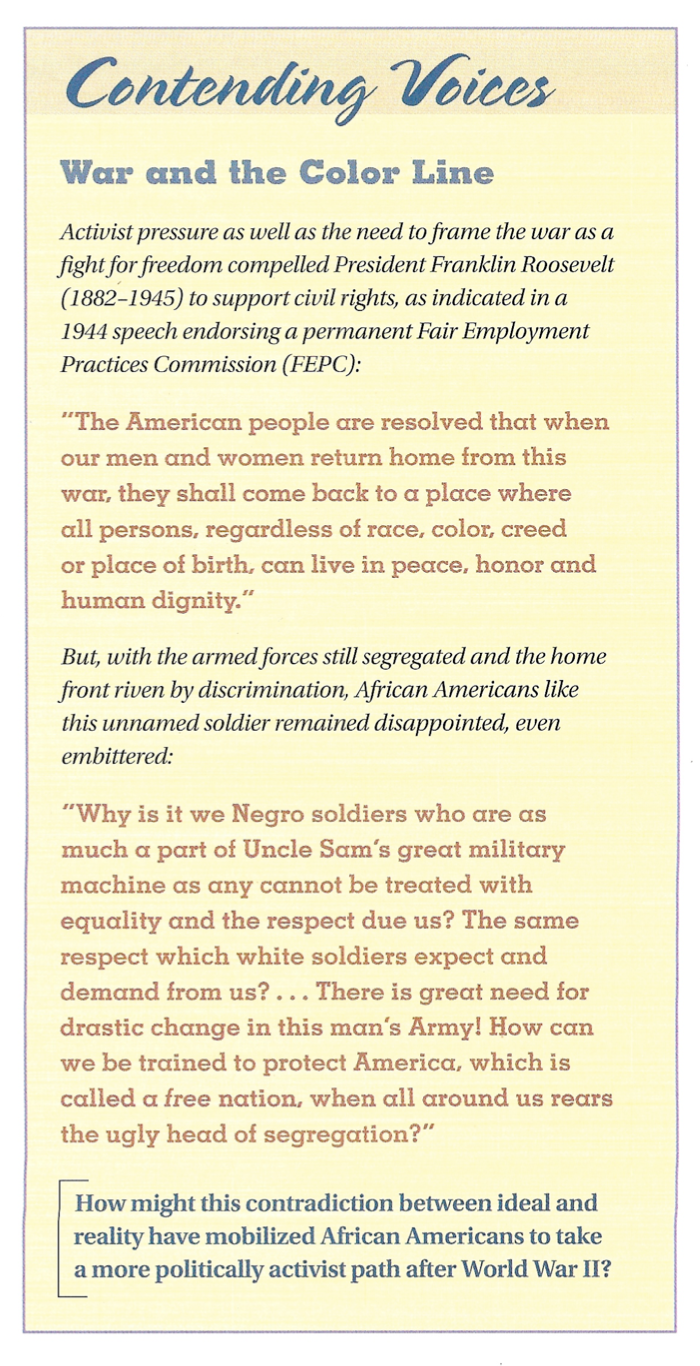
It can be reasonably inferred from the passage that African American soldiers
IIRC.02
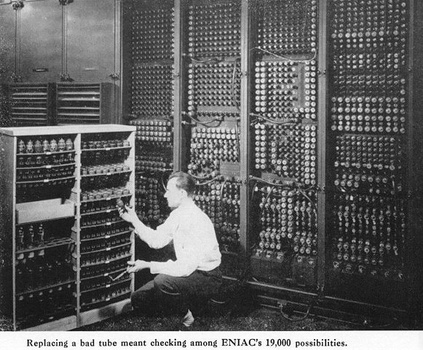
British attempts to crack the German code led Alan Turing to design the electromechanical machine that contributed to the development of the first computer. Check it out!
1
Question 14
14.
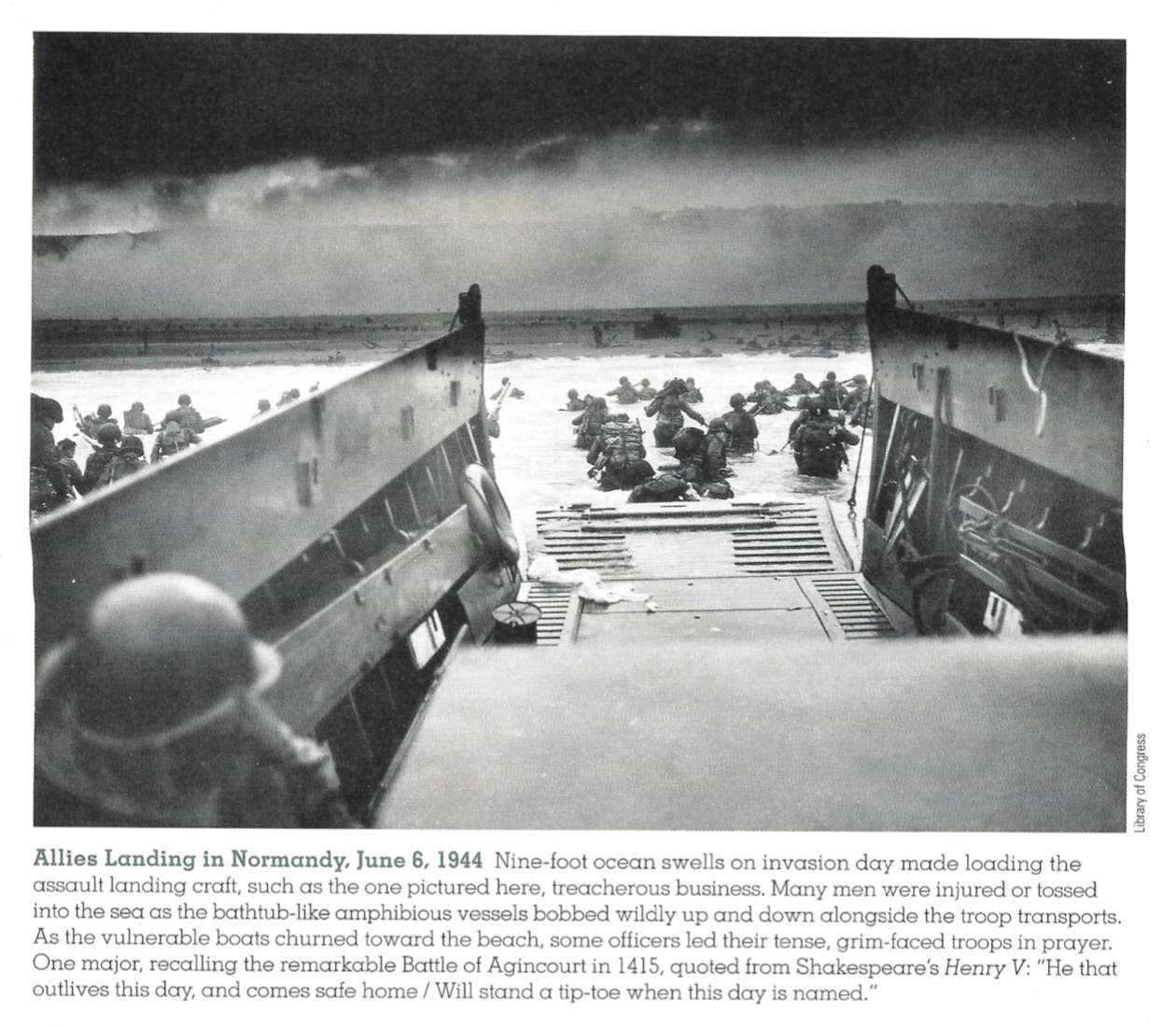
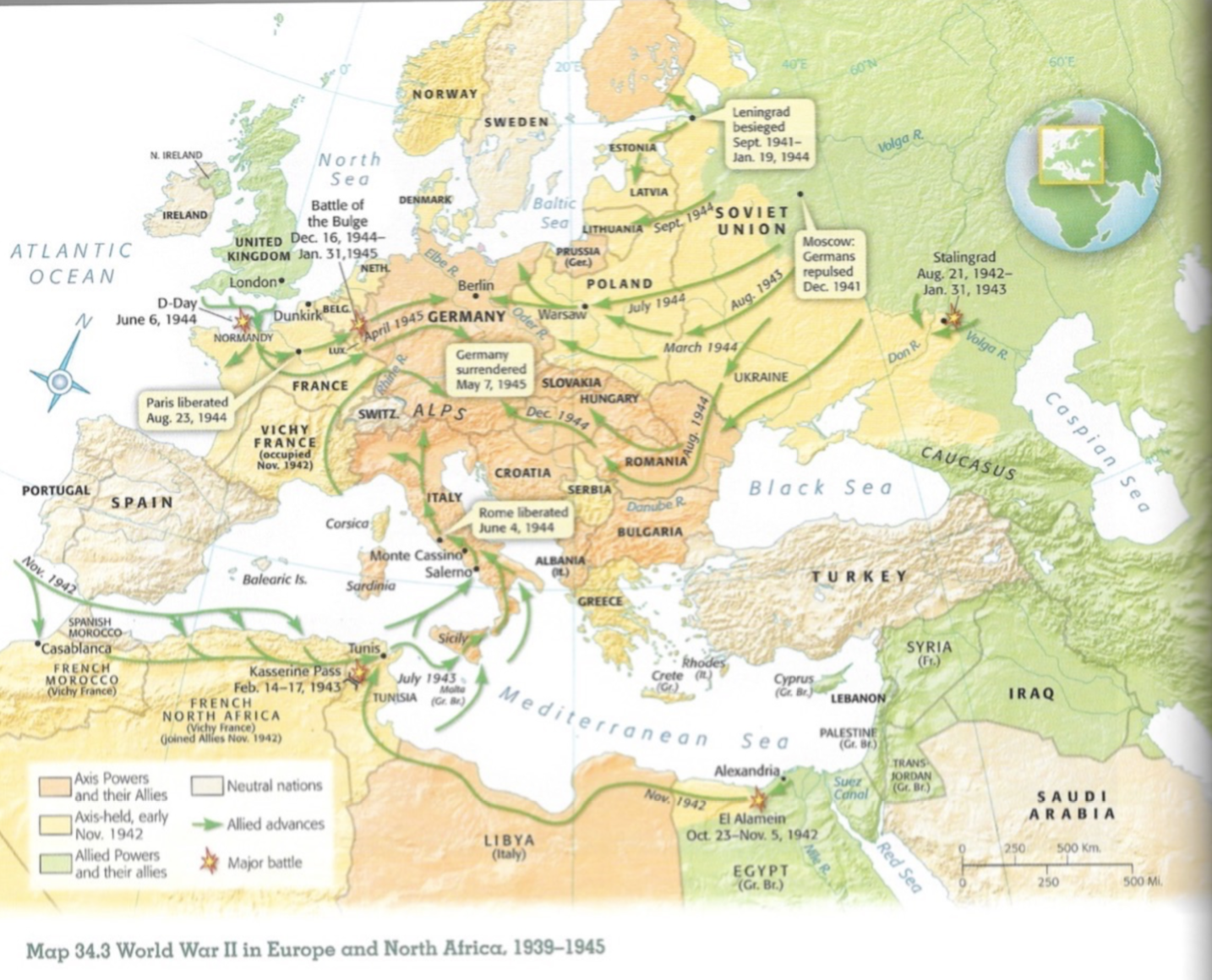
Within two months of the D-Day invasion,
IIUR.01
1
Question 15
15.
The passage indicates that U.S. action against Adolf Hitler's campaign of genocide against the Jews
IIRC.01
Question 16
16.
Which choice provides the best evidence for the answer to the previous question?
0
Question 17
17.
That's all due for Wednesday, 4/20/2022! Any questions?
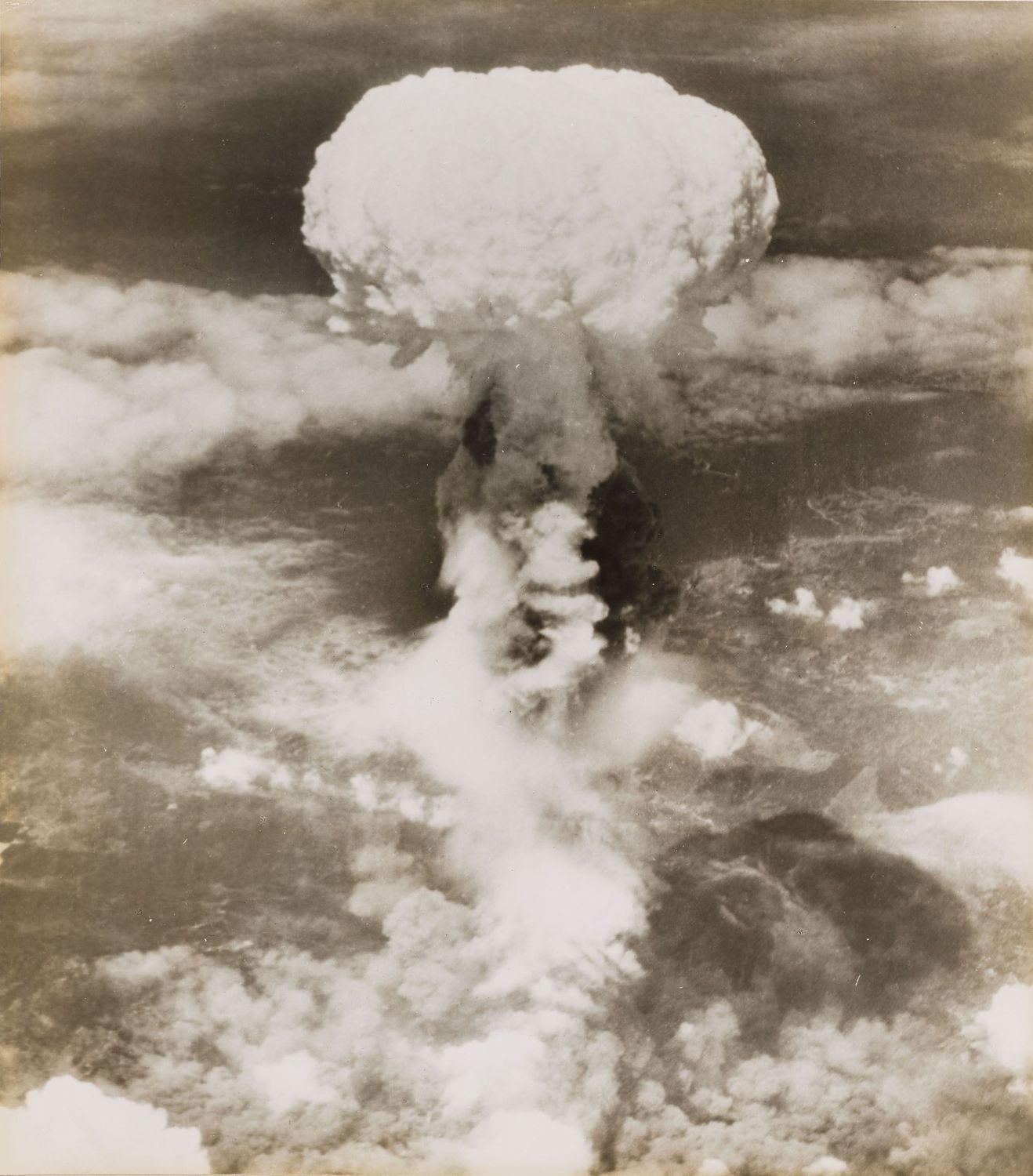
Under a Mushroom Cloud: Hiroshima, Nagasaki, and the Atomic Bomb
Japanese American National Museum
(Los Angeles, California)
1
Question 18
18.
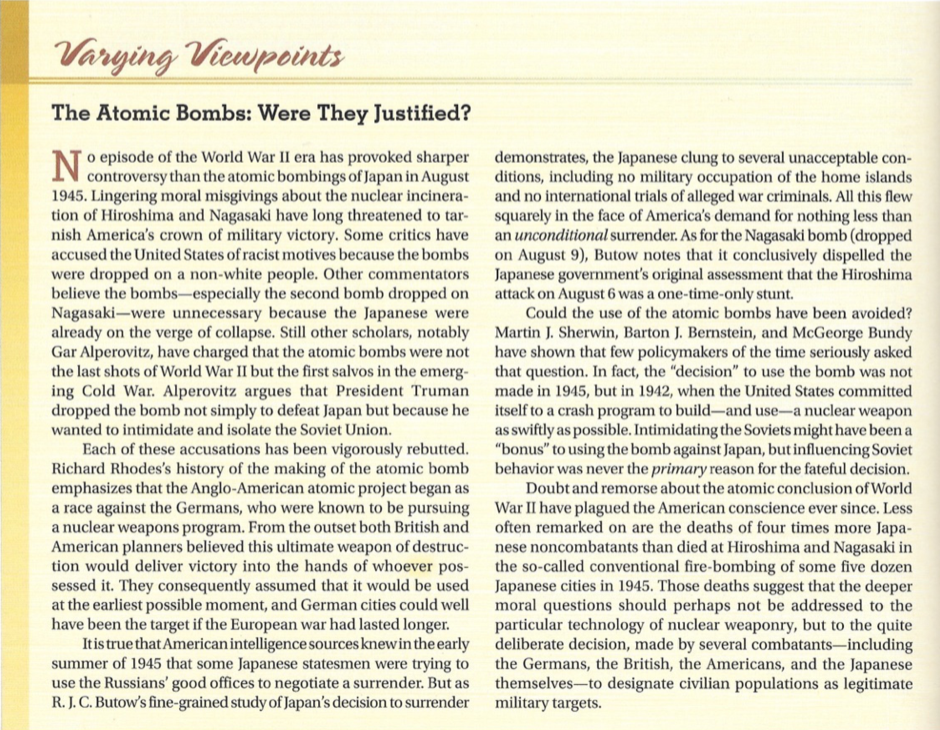
The passage suggests that the enormous spending on the Manhattan Project was spurred by the belief that
IIRC.02
Question 19
19.
Which choice provides the best evidence for the answer to the previous question?
Antibiotics for the win!
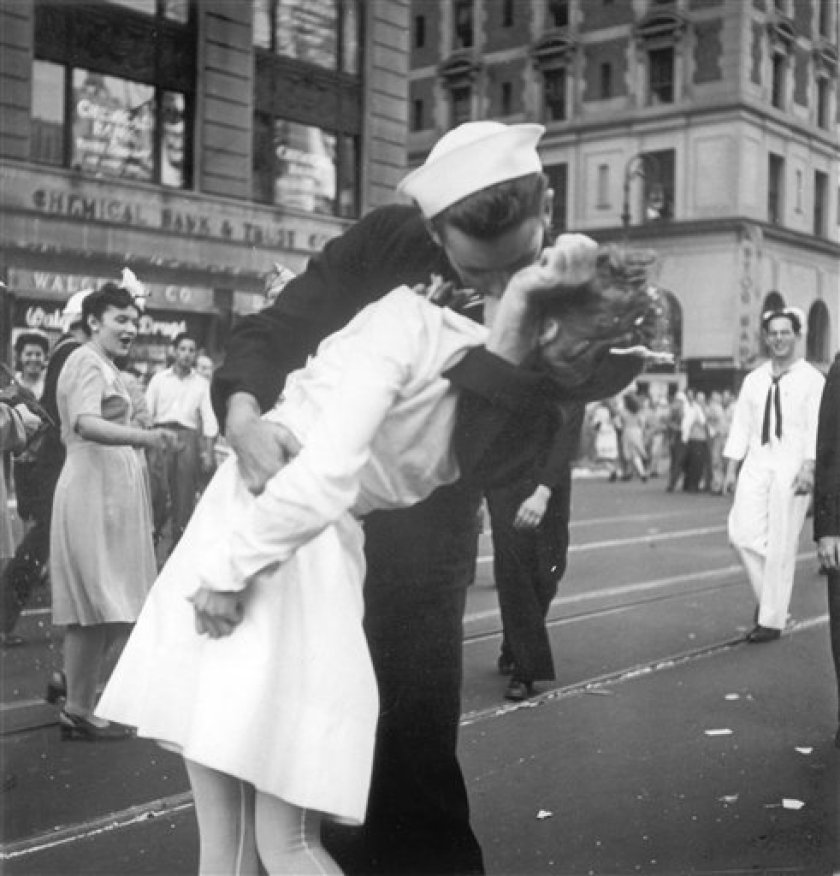
The joy over the end of World War II was famously captured in this iconic image of a sailor and a nurse’s impromptu kiss in Manhattan’s Times Square, a moment memorialized in the Kiss statue on San Diego’s waterfront.
(AP Photo/U.S. Navy, Victor Jorgensen)
1
Question 20
20.
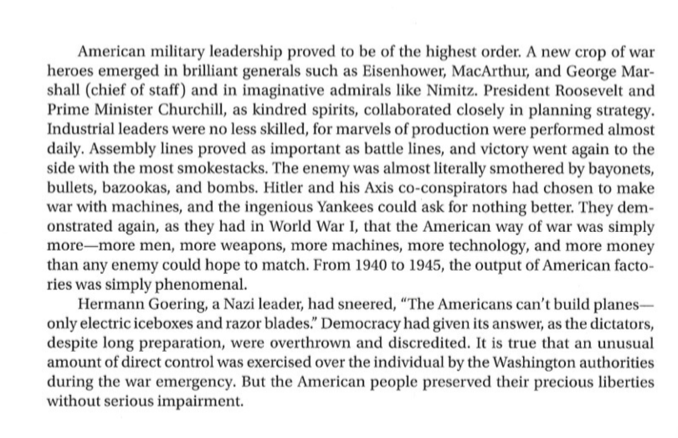
The main effect of the phrase "Assembly lines proved as important as battle lines" (line 6) is to
RWC.01
1
Question 21
21.
In your expert opinion, was the United States justified in dropping the atomic bombs on Japan? Explain why or why not based on the argument that you found to be most persuasive from this article.
Your response should be in complete sentences in order to earn full credit for this assignment.
0
Question 22
22.
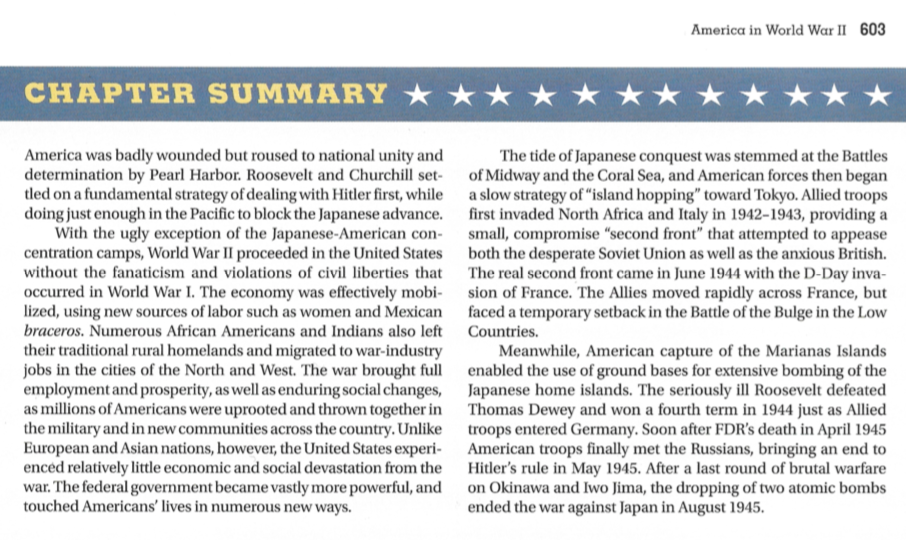
Excellent reading! Close out this Chapter by reviewing the "Chapter Summary" and using the "rectangle" tool to box the 5 most important key terms in the space provided.
Supporters of New Deal would point to the programs in the above video, yet critiques of the New Deal would argue that it was World War II - not the New Deal - that got the U.S. out of the Great Depression.
0
0
Question 24
24.
Final Chapter before the AP Exam is complete! Any questions?
Be sure to finish and submit by Thursday, 4/21/2022!
retool industry for all-out war production.
develop atomic weapons.
pass a conscription [draft] law.
raise an army and navy from scratch.
numerous acts of sabotage from U.S. citizens of Japanese ancestry.
retaliation for the Japanese government's placement of Americans in concentration camps.
continued loyalty to the Japanese government from Japanese Americans.
widespread anti-Japanese prejudice and fear in the United States.
Line 28-30 (All Americans... astonishing efficiency")
The U.S. Supreme Court declared that Japanese relocation to internment camps was unconstitutional.
Japanese Americans lost hundreds of millions of dollars in property and expected wages.
Japanese Americans living in the U.S. were put in internment camps.
The U.S. government officially apologized four decades later and gave each camp survivor $20,000.
Question 7
7.
Can you think of any previous wars we've studied that resulted in tons of war debt?
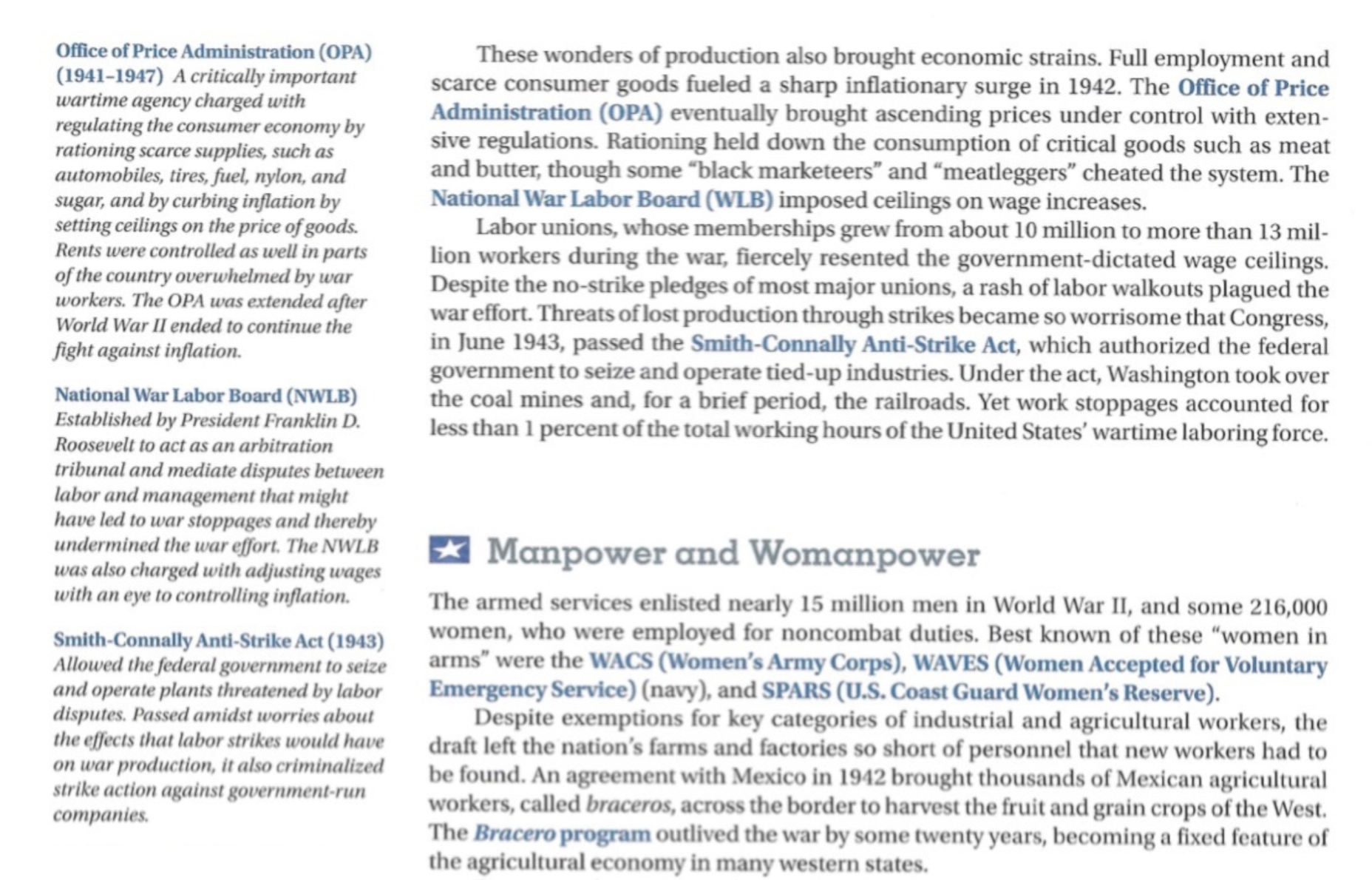
As used in line 6, "fixed" most nearly means
repaired.
altered.
flexible.
enduring.
a greater percentage of women in U.S. war industries than any other country.
equal pay for equal work between men and women.
the establishment of day care centers by the U.S. government.
a strong desire of most women to work for wages.
Line 11-14 ("In both... United States")
moving south to replace African American laborer who migrated to the north and west.
transmitting radio messages in their native languages for the U.S. military.
remaining on their reservations to promote the recovery of tribal language and culture.
As used in line 7, "intimately" most nearly means
informally
personally
privately
secretly
faced discrimination and segregation in spite of their military service to our country.
inspired the passage major legislation that resolved race relations for their return home after the war.
were able to fight in integrated combat units during World War II.
Hitler had crushed the Allies' armored divisions and tightened his grip on central France.
Hitler surrendered France and hunkered down in Germany.
the Allies had succeeded in liberating the city of Paris in France.
was understandably hesitant because the U.S. did not know about the death camps until the end of the war.
involved the bombing of rail lines used to carry victims to the Nazi death camps.
included the admission of large numbers of Jewish refugees into the United States.
Line 19-21 ("Roosevelt's administration... the camps")
scientists like Albert Einstein might be lost to the war effort.
the Germans might acquire and use such a weapon first against the Allies.
a nuclear weapon was the only way to win World War II.
Line 19-20 ("Much technical... the dictators"
argue that superior American craftsmanship led to fewer military casualties for the U.S.
explain how the U.S. was able to preserve the American homeland against invasion or destruction from the air.
indicate that strong leadership resulted in highly effective military decisions.
Question 23
23.
Class Poll: What do you think rescued the U.S. from the Great Depression?