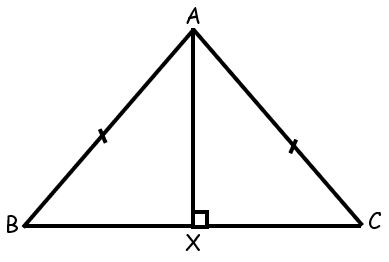
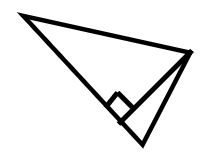
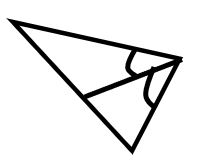
Use the diagram below for the next 4 questions.
1
\overline{AC} is the _____________ of Triangle ABC
1
1
1
Match the triangle description with the most specific name.
| Draggable item | arrow_right_alt | Corresponding Item |
|---|---|---|
Side Lengths: 5 ft, 7 ft, 9 ft | arrow_right_alt | Right |
Side Lengths: 6 m, 3 m, 6 m | arrow_right_alt | Equilateral |
Angle Measures: 30o, 60o, 90o | arrow_right_alt | Equilateral |
Angle Measures: 60o, 60o, 60o | arrow_right_alt | Isosceles |
Angle Measures: 20o, 125o, 35o | arrow_right_alt | Scalene |
Side Lengths: 2 cm, 2 cm, 2 cm | arrow_right_alt | Obtuse |
An equilateral triangle can have one obtuse angle.
A right triangle can be equilateral.
An isosceles triangle can be scalene.
An obtuse triangle can be a right triangle.
A scalene triangle can be a right triangle.
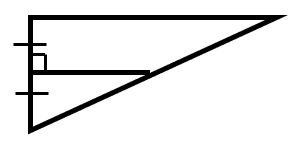
Use the diagram below for the next 4 questions.
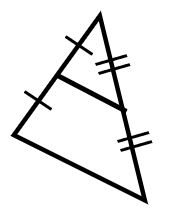
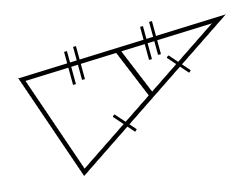
Use the diagram below for the next 3 questions.
Triangle LMN has midpoints of A, C, and T.
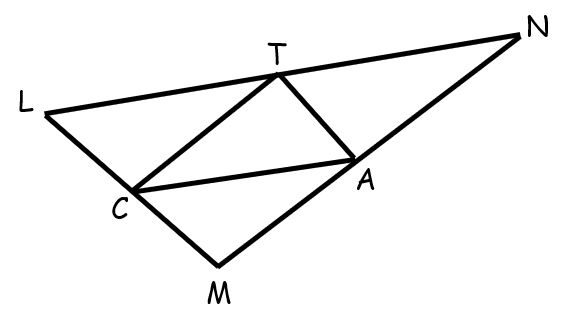
MN || ________
If CA = 11, then LN = ________
If TA = 3x + 8 and LM = 2x + 24, then TA = ________
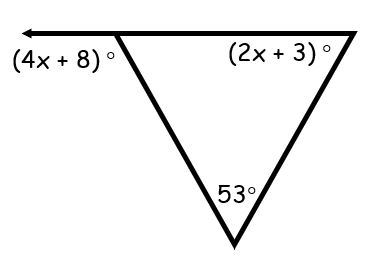
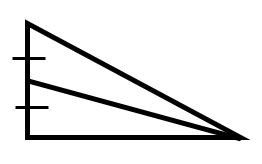
Using the diagram below, find the value of x.
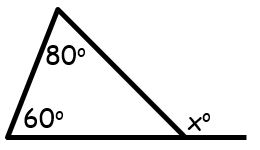
Using the diagram below, find the value of x.
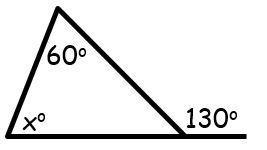
Using the diagram below, find the value of x.
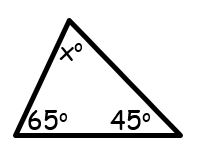
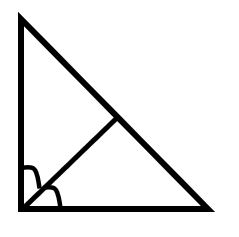
Use the diagram below to find the value of x.
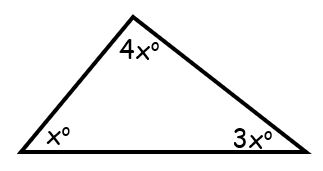
Use the diagram below to find the value of x.
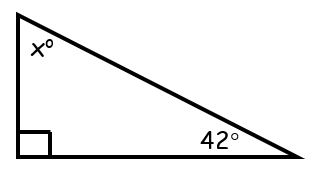
Use the diagram below to find the value of x.
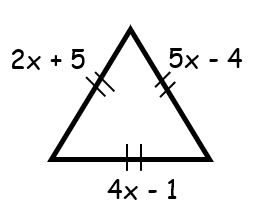
Use the diagram below to find the value of x.
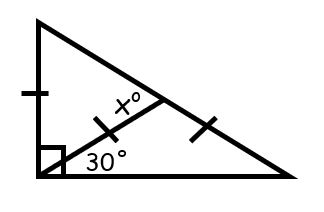
Use the diagram below to find the value of x.
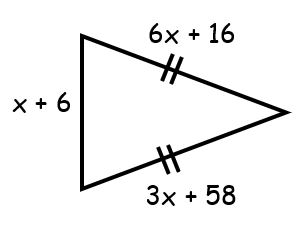
Use the diagram below to find the value of x.
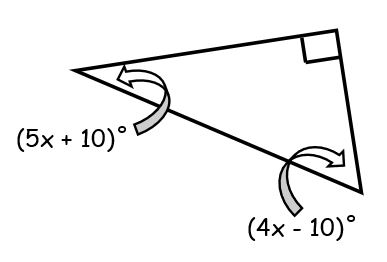
Use the diagram below to find the value of x.
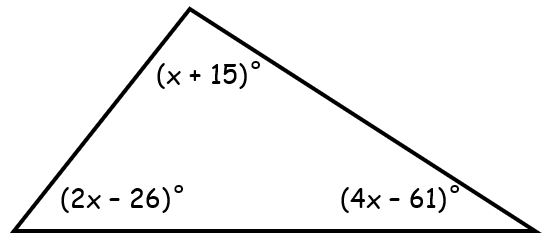
Use the diagram below to find the value of x.




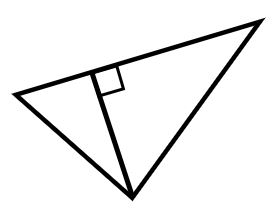
A triangle has lengths of 7, 24, and 25. Determine if the triangle is acute, right, or obtuse.
A triangle has lengths of 10, 12, and 5. Determine if the triangle is acute, right, or obtuse.
A triangle has lengths of 5, 10, and 9. Determine if the triangle is acute, right, or obtuse.
A triangle has lengths of 2, 2, and 3. Determine if the triangle is acute, right, or obtuse.
List the sides in order from smallest to largest. Put a comma between your sides and do not include spaces.
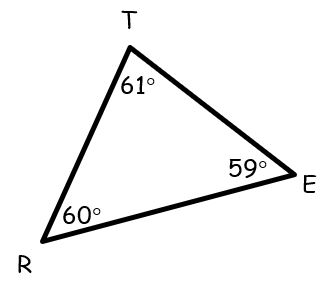
List the angles in order from smallest to largest. Put a comma between your sides and do not include spaces.
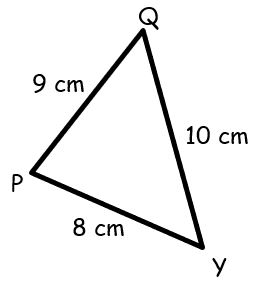
Use the following information for the next 2 questions:
A triangle has vertices A(-3, 5), B(5, 6), and C(7, -4).
Determine if the triangle is acute, right, or obtuse.
Using the Pythagorean Theorem Converse, type your final inequality or equality.
Determine the type of triangle.