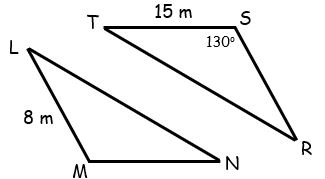
In the diagram below,
1
\overline{MN} \cong ___________
1
MN = ___________
MN = ___________
1
m\angle{M} = _______
1
1
1
In the diagram below,
MN = ___________
If the two triangles can be proven congruent, choose the correct congruence postulate, then write a congruence statement. If they cannot be proven congruent, choose None, and write "None" for a congruence statement.
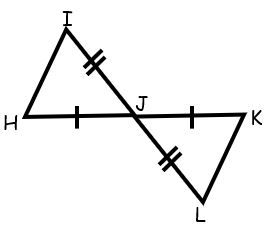
Congruence Postulate
If the two triangles can be proven congruent, choose the correct congruence postulate, then write a congruence statement. If they cannot be proven congruent, choose None, and write "None" for a congruence statement.
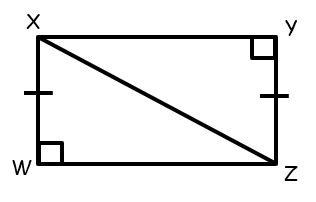
Congruence Postulate
If the two triangles can be proven congruent, choose the correct congruence postulate, then write a congruence statement. If they cannot be proven congruent, choose None, and write "None" for a congruence statement.
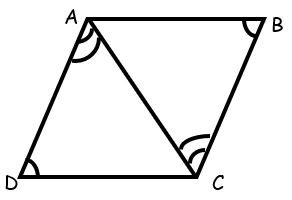
Congruence Postulate
If the two triangles can be proven congruent, choose the correct congruence postulate, then write a congruence statement. If they cannot be proven congruent, choose None, and write "None" for a congruence statement.
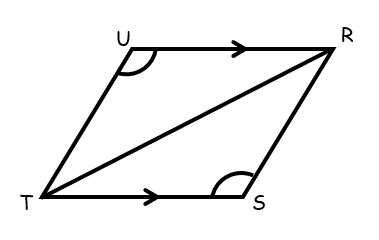
Congruence Postulate
If the two triangles can be proven congruent, choose the correct congruence postulate, then write a congruence statement. If they cannot be proven congruent, choose None, and write "None" for a congruence statement.
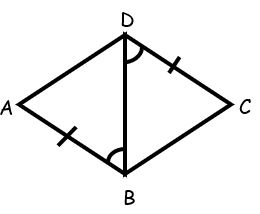
Congruence Postulate
If the two triangles can be proven congruent, choose the correct congruence postulate, then write a congruence statement. If they cannot be proven congruent, choose None, and write "None" for a congruence statement.
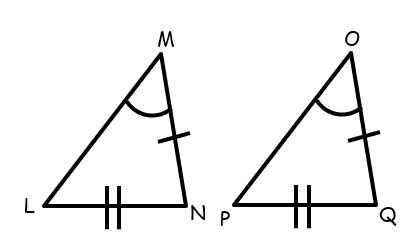
Congruence Postulate
Using the diagram below, for the next 2 questions, name the included angle between each pair of sides given. Do not include the angle symbol.
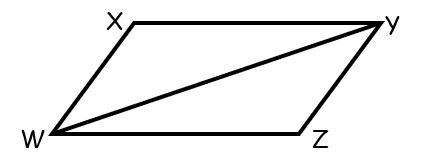
XY and YW
ZW and YW
Use the SSS Congruence Postulate
Use the SAS Congruence Postulate
Use the ASA Congruence Postulate
Use the AAS Congruence Postulate
Use the HL Congruence Postulate
In the diagram below,
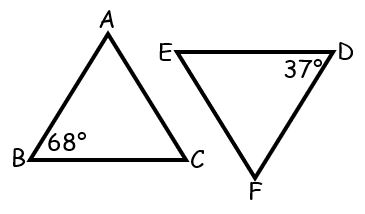
Use the diagram below for the next 2 questions.
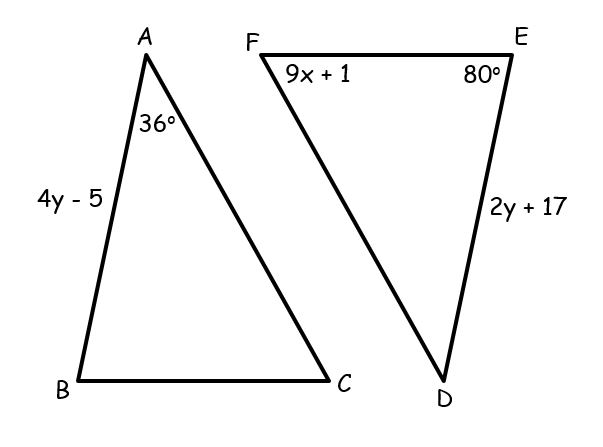
Find the value of x.
Find the value of y.
Use the diagram below for the next 2 questions.
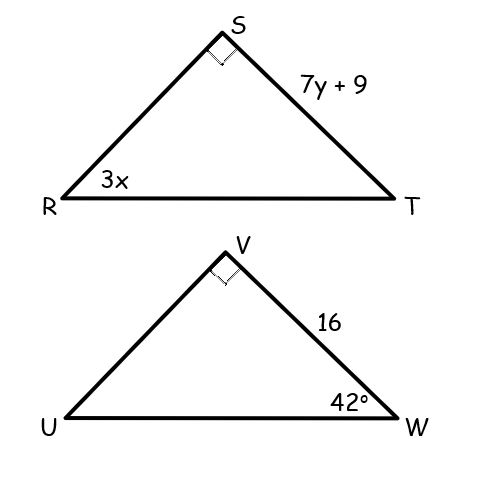
Find the value of x.
Find the value of y.
Use the diagram below for the next 2 questions.
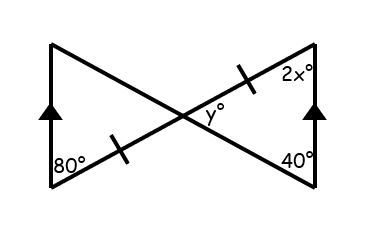
Find the value of x.
Find the value of y.
What does CPCTC stand for?
Put the statements in the correct order to complete the proof.
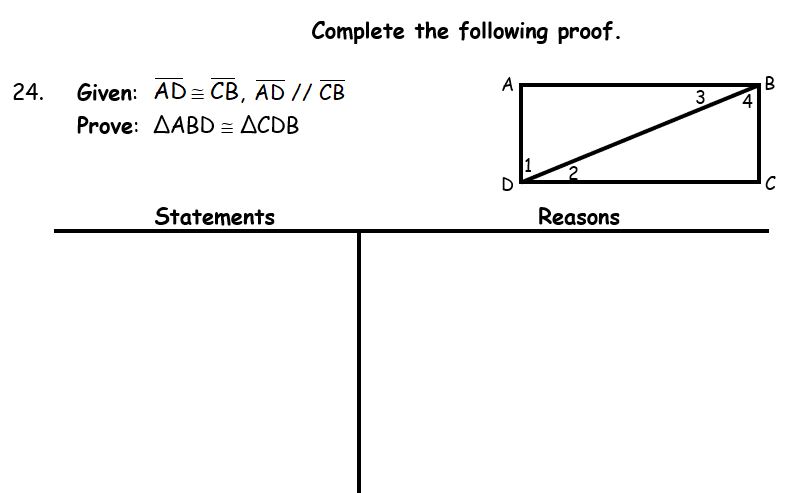
Using the correct order of the proof completed above, state the reasons for each step.
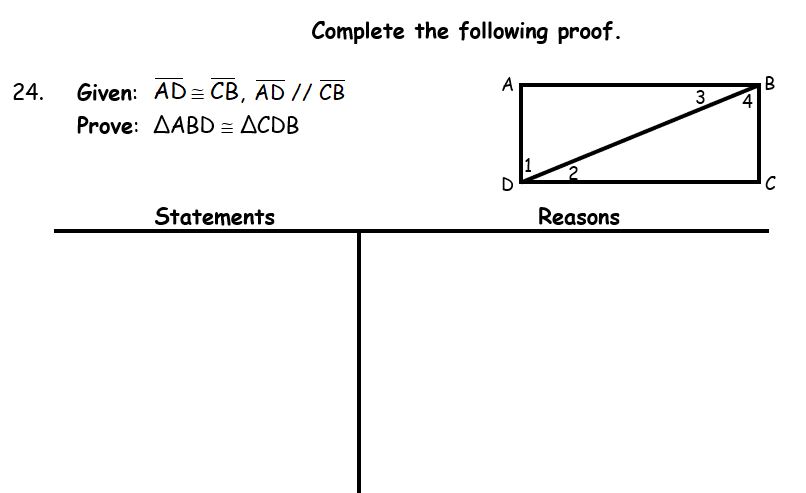
Reason #1
Reason #2
Reason #3
Reason #4
Put the statements in the correct order to complete the proof.
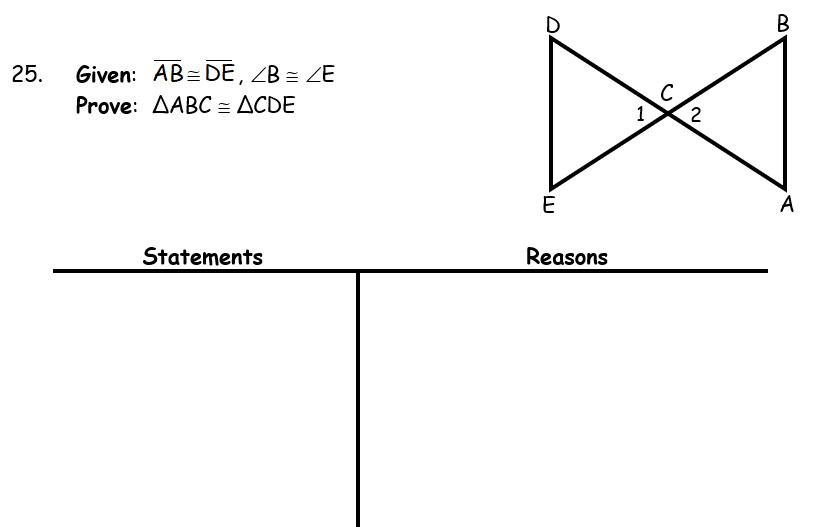
Using the correct order of the proof completed above, state the reasons for each step.
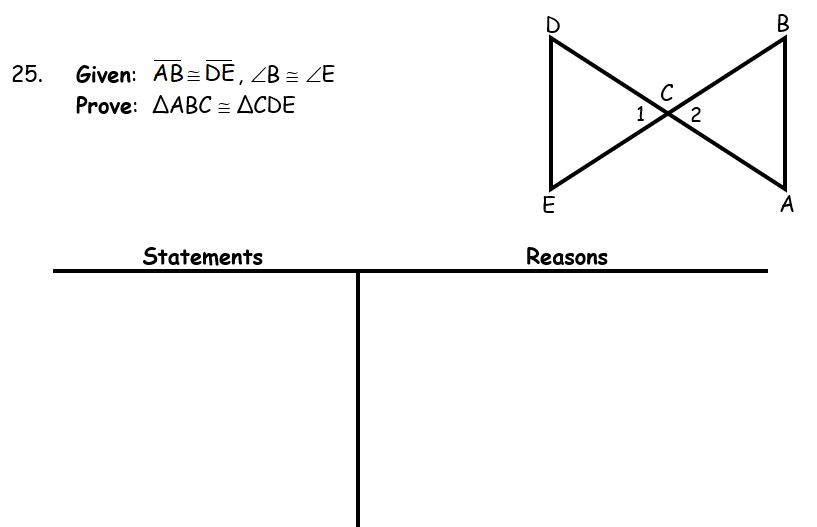
Reason #1
Reason #2
Reason #3
Reason #4
Put the statements in the correct order to complete the proof.
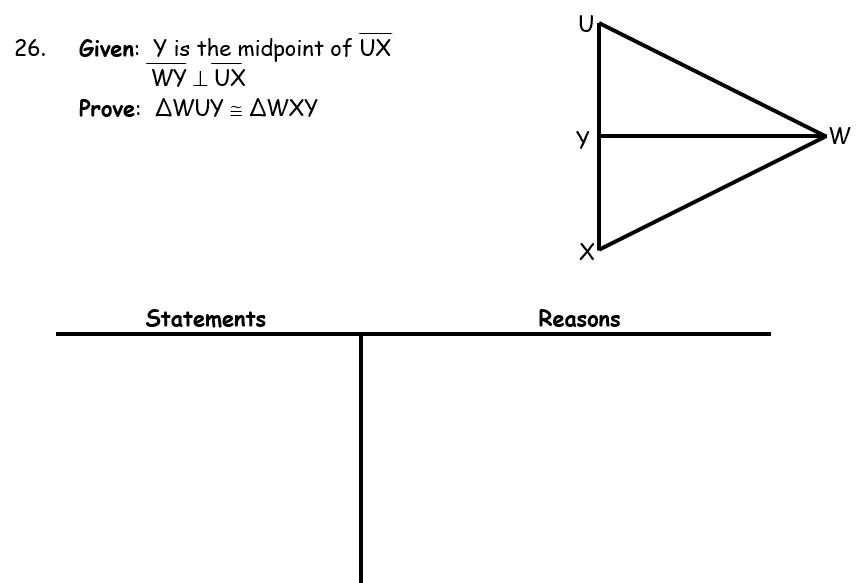
Y is the midpoint of UX
Using the correct order of the proof completed above, state the reasons for each step.
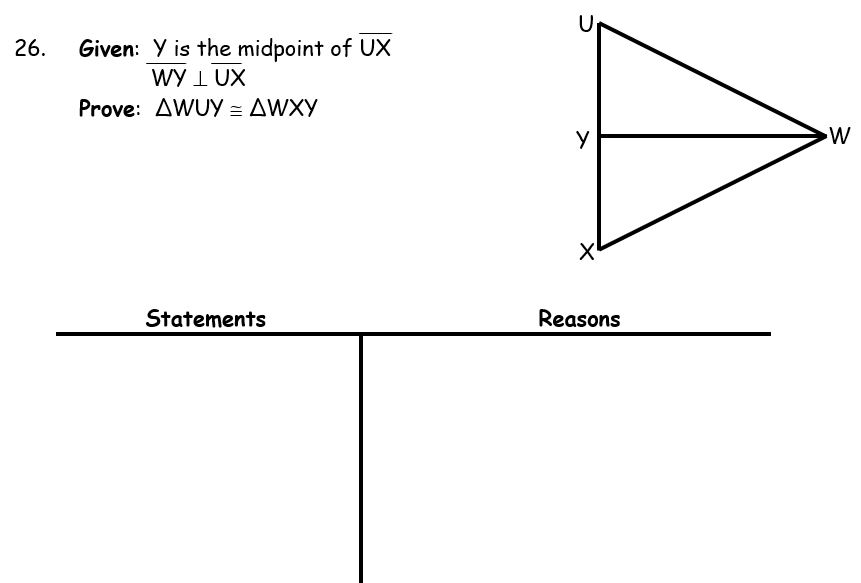
Reason #1
Reason #2
Reason #3
Put the statements in the correct order to complete the proof.
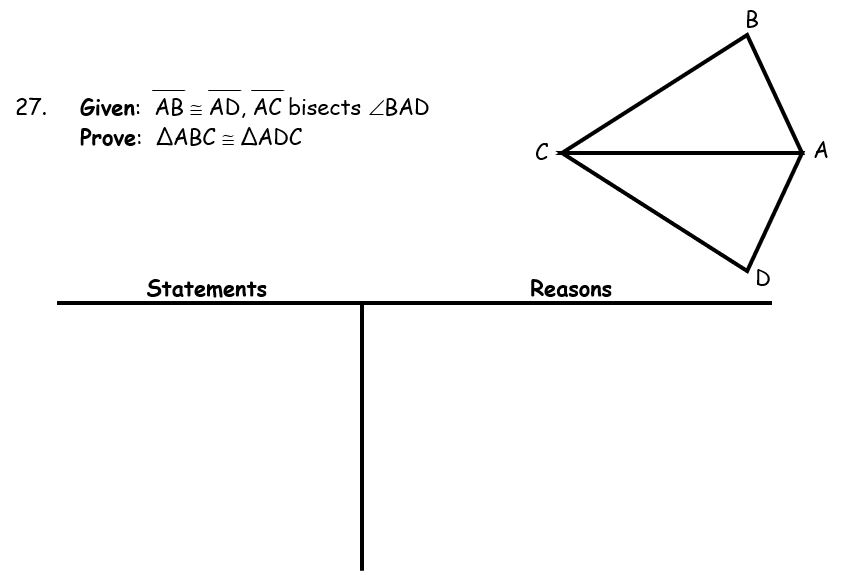
AC bisects
Using the correct order of the proof completed above, state the reasons for each step.
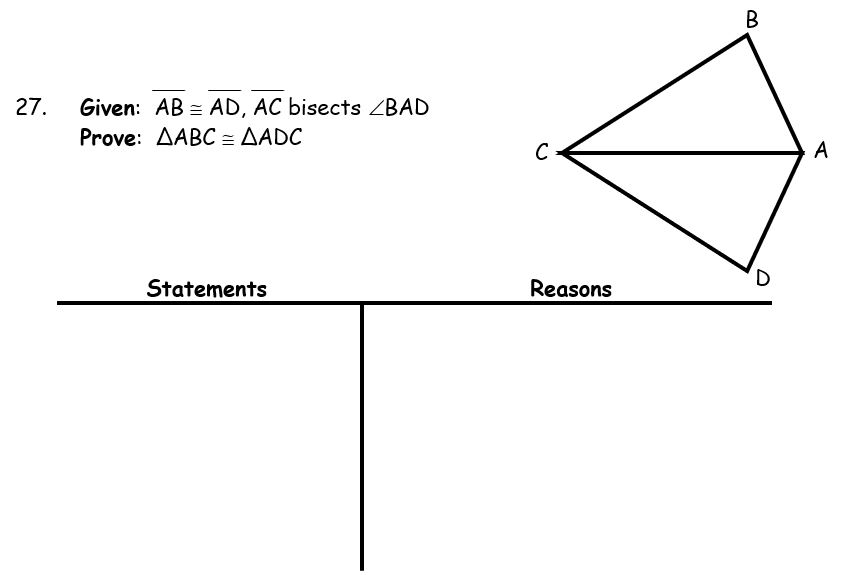
Reason #1
Reason #2
Reason #3
Reason #4
Put the statements in the correct order to complete the proof.
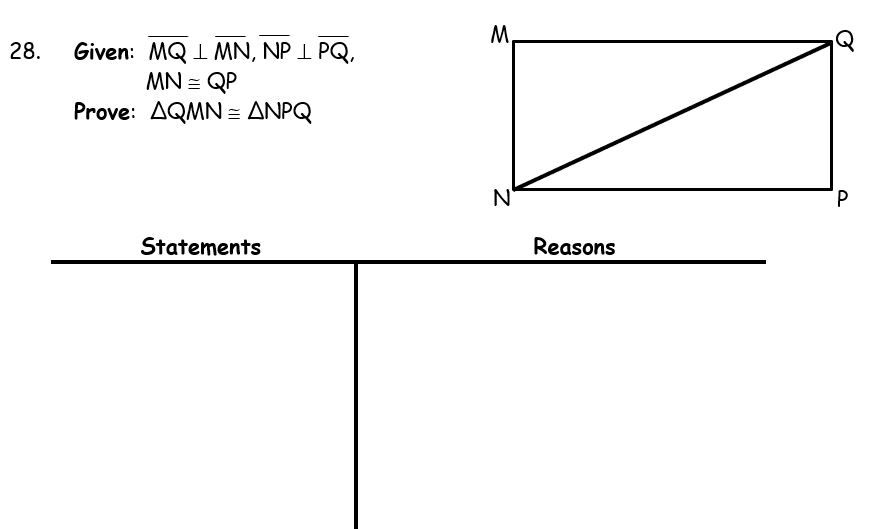
Using the correct order of the proof completed above, state the reasons for each step.
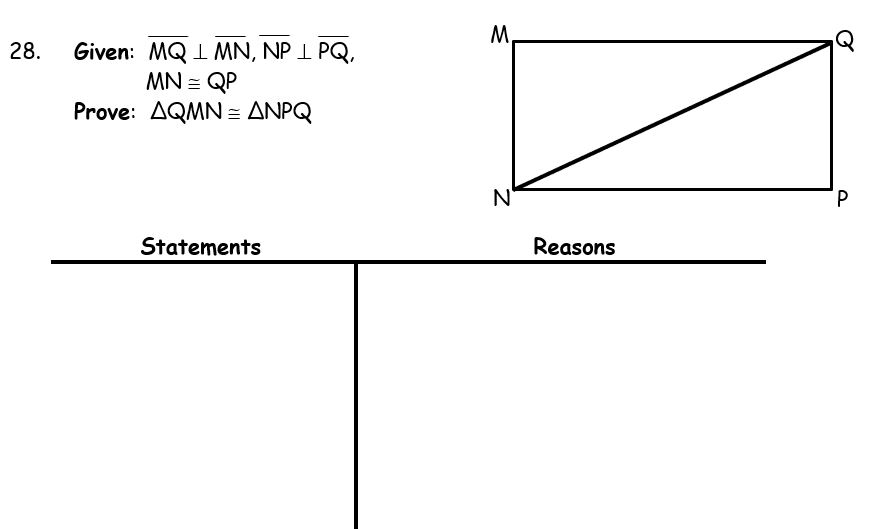
Reason #1
Reason #2
Reason #3
Reason #4
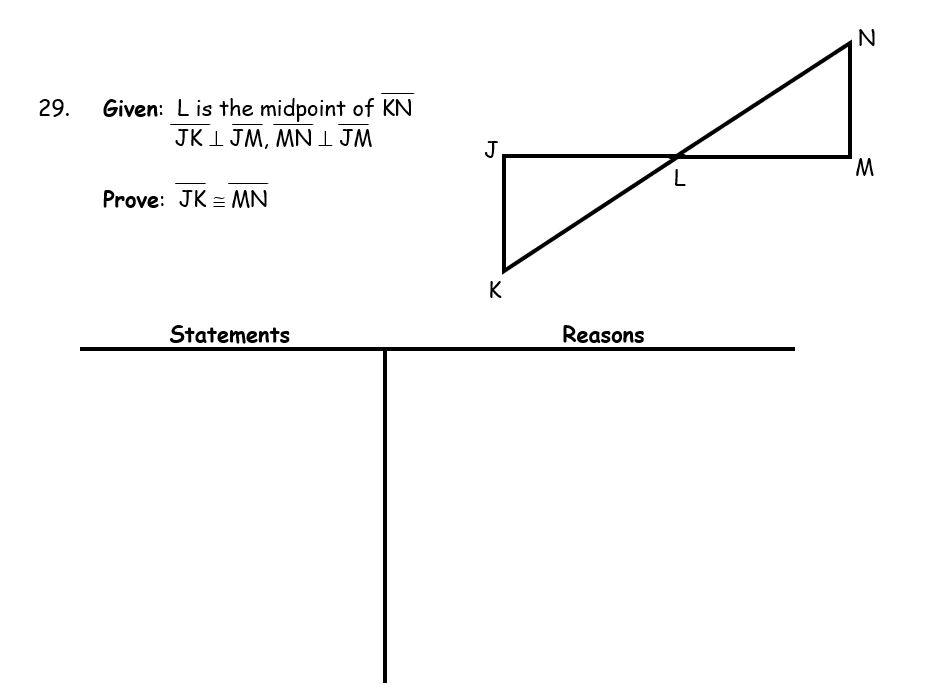
Put the statements in the correct order to complete the proof.
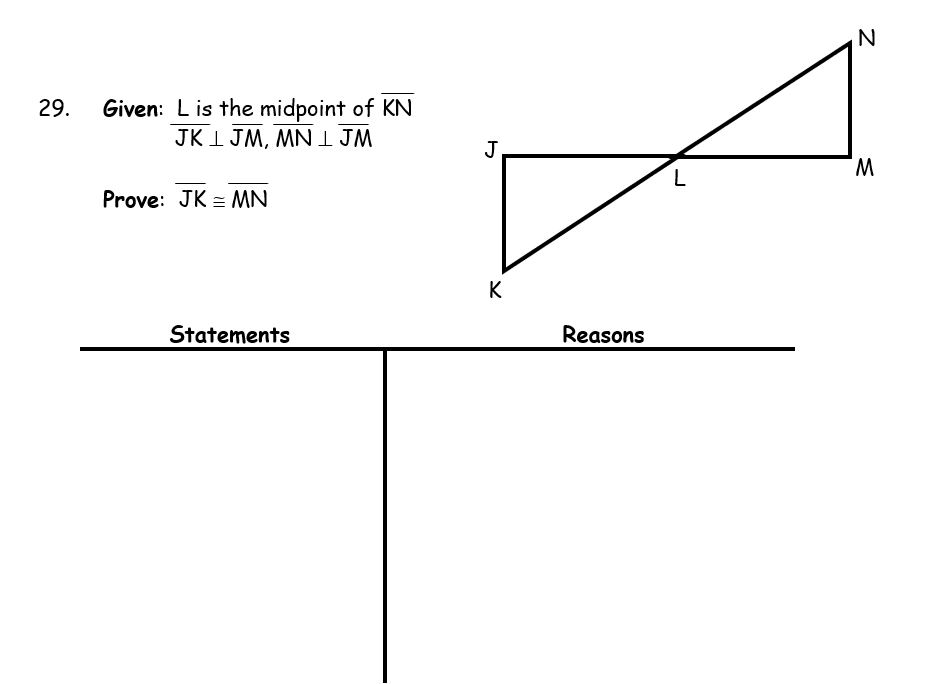
L is the midpoint of KN
Using the correct order of the proof completed above, state the reasons for each step.
Reason #1
Reason #2
Put the statements in the correct order to complete the proof.
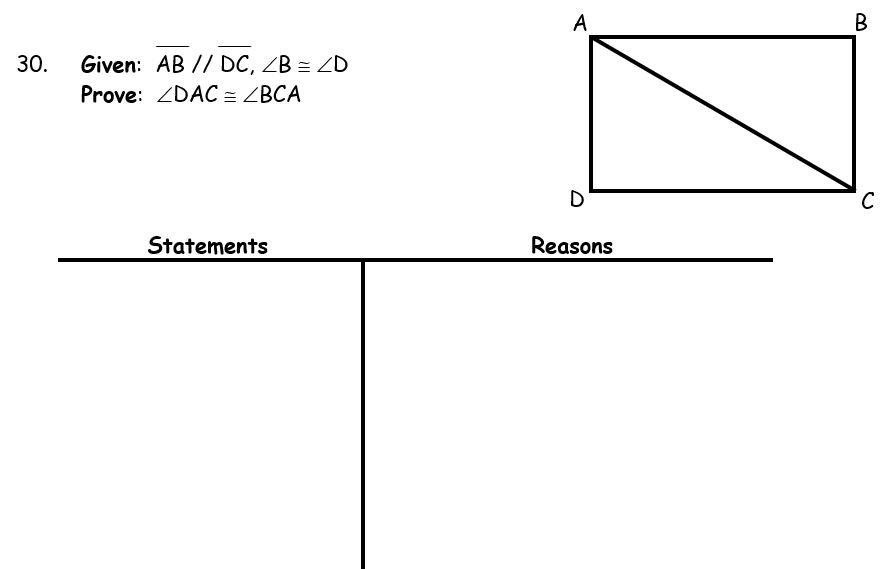
Using the correct order of the proof completed above, state the reasons for each step.
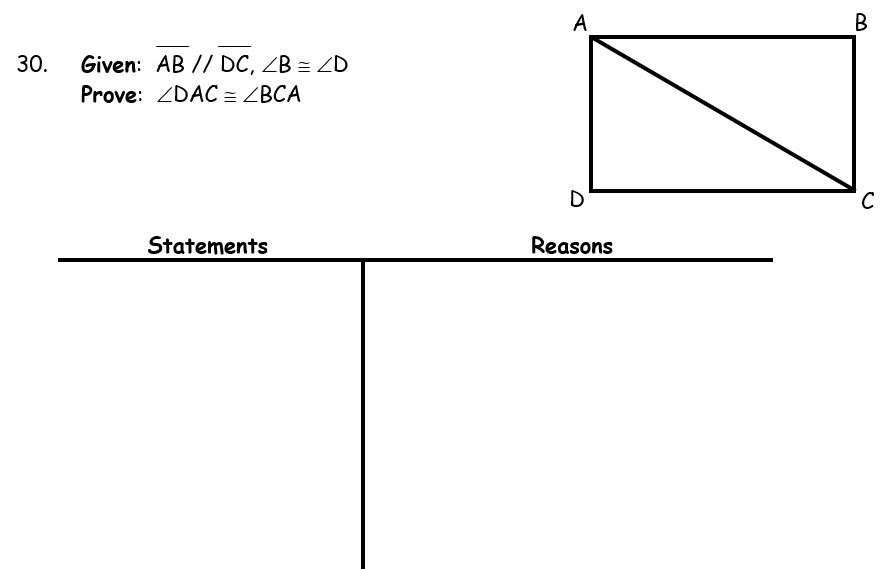
Reason #1
Reason #2
Reason #3
Reason #4
Put the statements in the correct order to complete the proof.
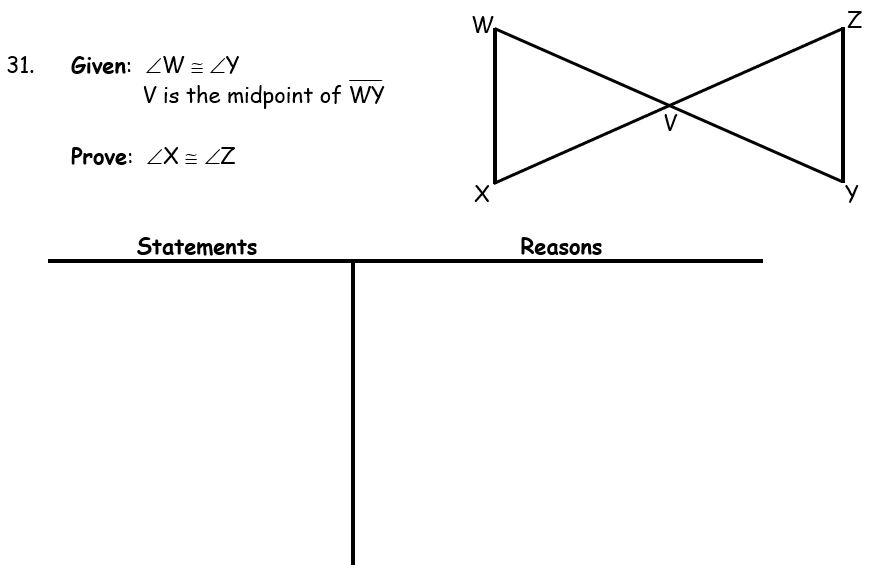
V is the midpoint of WY
Using the correct order of the proof completed above, state the reasons for each step.
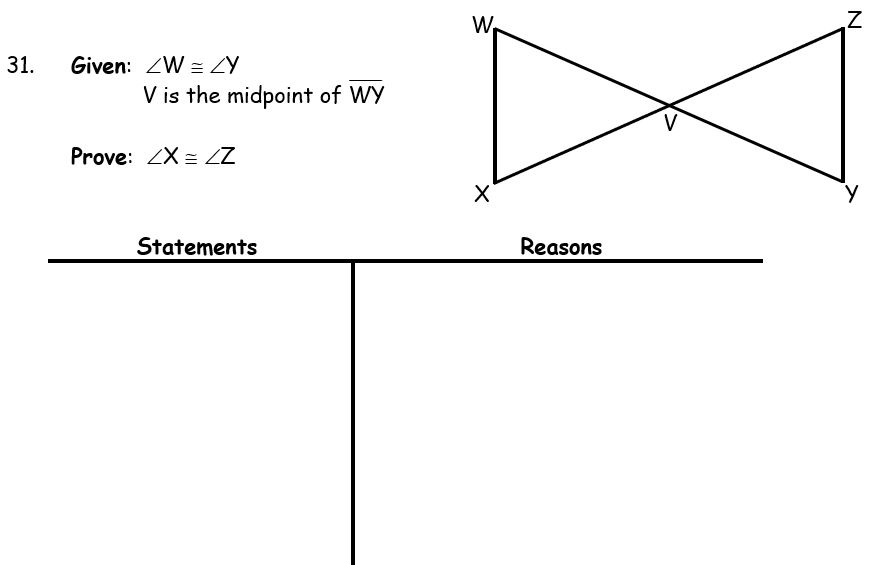
Reason #1
Reason #2
Reason #3
Reason #4
Congruence Statement. Do not write "Triangle" and use "=" for congruence
Congruence Statement. Do not write "Triangle" and use "=" for congruence
Congruence Statement. Do not write "Triangle" and use "=" for congruence
Congruence Statement. Do not write "Triangle" and use "=" for congruence
Congruence Statement. Do not write "Triangle" and use "=" for congruence
Congruence Statement. Do not write "Triangle" and use "=" for congruence
Reason #5
Reason #4
Reason #5
Reason #6
Reason #7
Reason #5
Reason #5
Reason #6
Reason #3
Reason #4
Reason #5
Reason #6
Reason #7
Reason #8
Reason #5
Reason #6
Reason #5
Reason #6