Name the solid that can be formed by the net shown below.

Name the solid that can be formed by the net shown below.
Match the term on the left with its definition on the right. Not all terms will be used.
Sphere
Platonic Solids
Cylinder
Convex Polyhedron
Concave Polyhedron
Edge
Vertex
Face
Lateral Area
Prism
Pyramid
A polyhedron with all vertices pointing out
A segment at which two faces of a polygon intersect
A polyhedron with two polygon bases and rectangular lateral faces
The five regular polyhedra
A polyhedron made up of one polygon base and triangular sides that meet at one vertex
The polygon that makes up a side of a polyhedron
The area of the sides of a polyhedron (Surface Area not including the base(s))
A solid with two circular bases
The intersection of three or more edges
A solid in which all points are equidistant from the center.
Name the solid that can be formed by the net shown below.
Name the solid that can be formed by the net shown below.

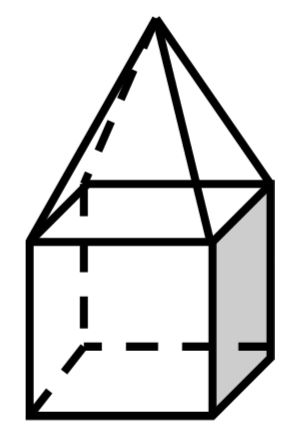
Find the number of faces
Find the number of vertices
Find the number of edges
A polyhedron has 20 faces, and 30 edges. Use Euler's Theorem to find the number of vertices.
A polyhedron has 15 faces made up of 9 hexagons and 6 pentagons. Find the number of EDGES.
A polyhedron has 15 faces made up of 9 hexagons and 6 pentagons. Find the number of VERTICES.
A prism is a polyhedron that has two faces called bases that are always __________.
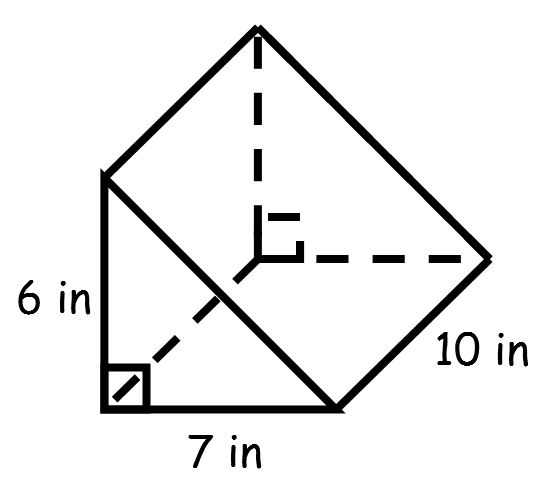
Find the SURFACE AREA.
Find the VOLUME.
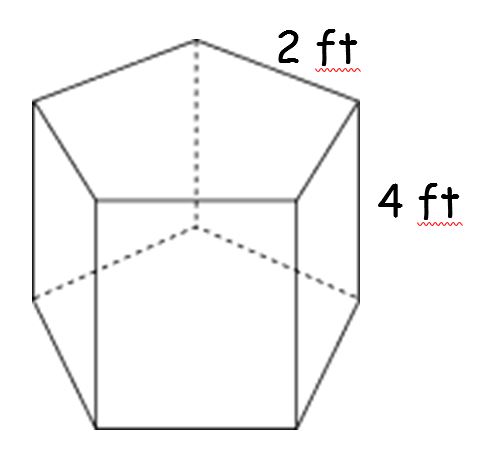
Find the SURFACE AREA.
Find the VOLUME.
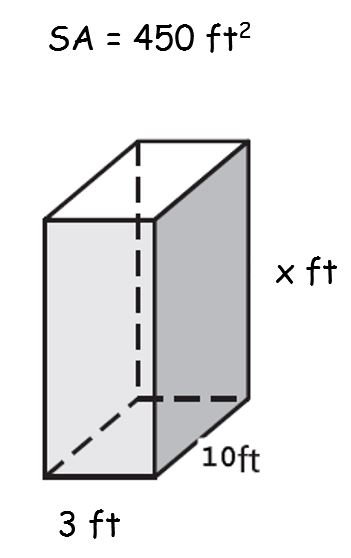
Given the SURFACE AREA, solve for x.
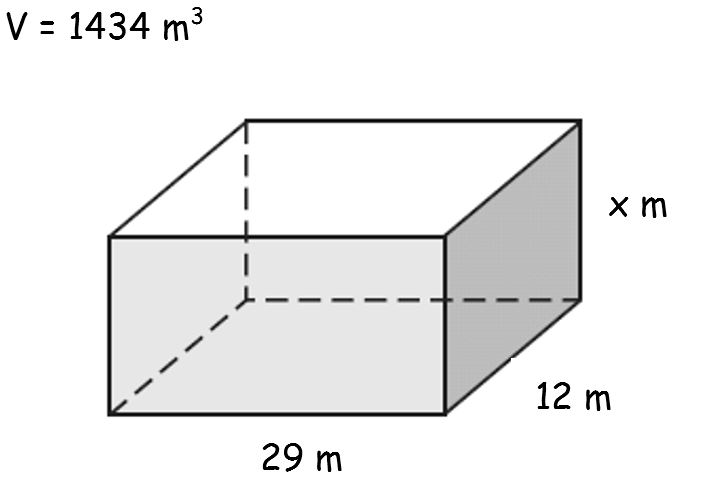
Given the VOLUME, solve for x.
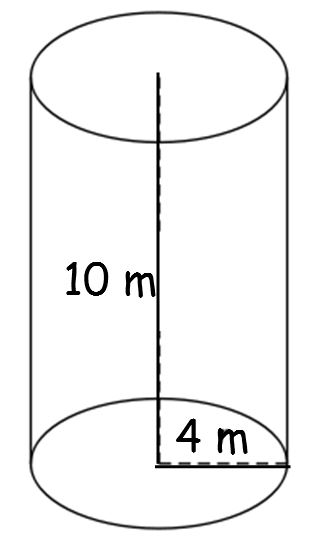
Find the SURFACE AREA.
Find the VOLUME.
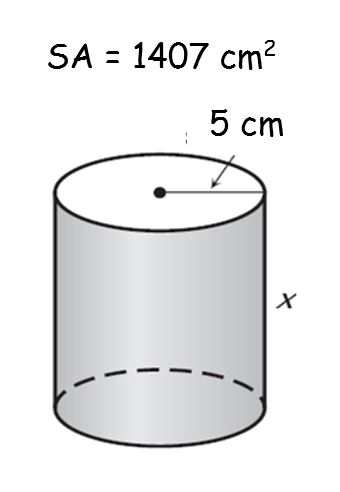
Given the SURFACE AREA, solve for x.
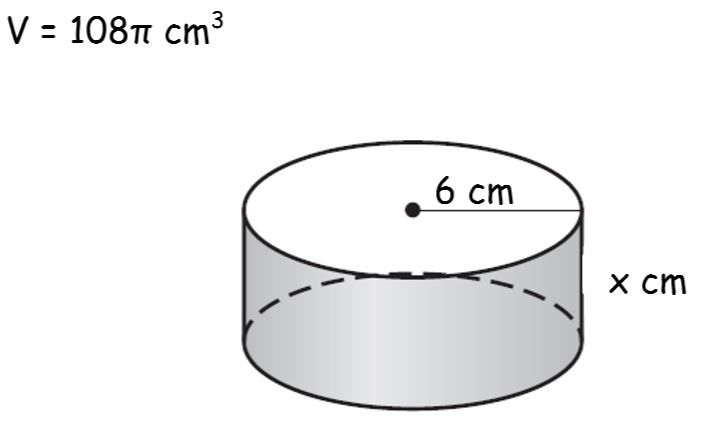
Given the VOLUME, solve for x.
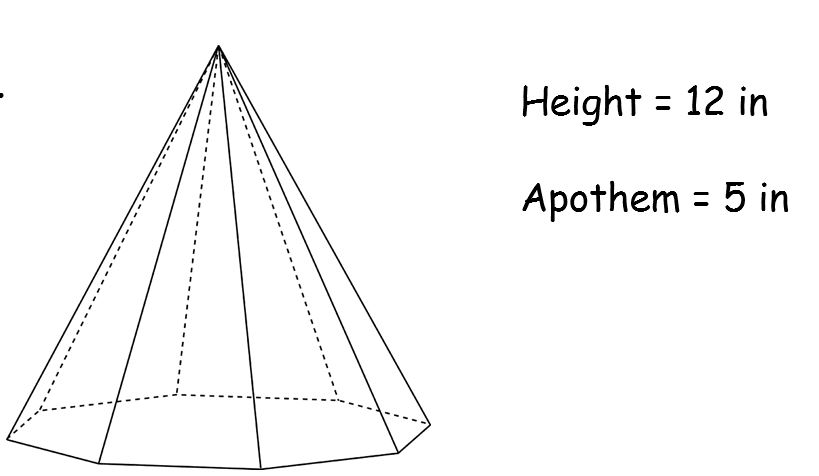
Find the SURFACE AREA.
The base is an octagon.
Find the VOLUME.
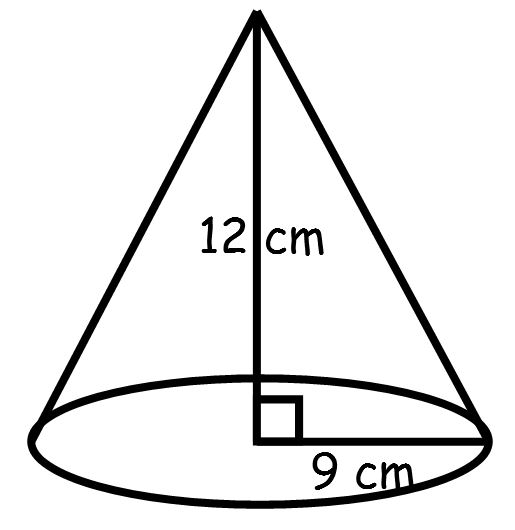
Find the SURFACE AREA
Find the VOLUME.
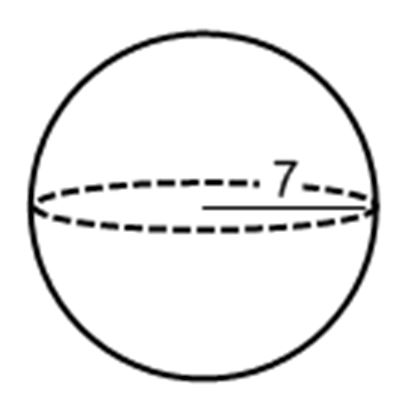
Find the SURFACE AREA.
Find the VOLUME.
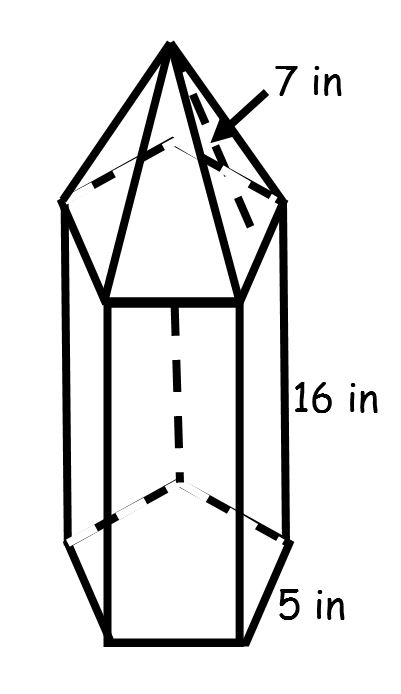
Find the SURFACE AREA.
7 is the slant height.
Find the VOLUME.
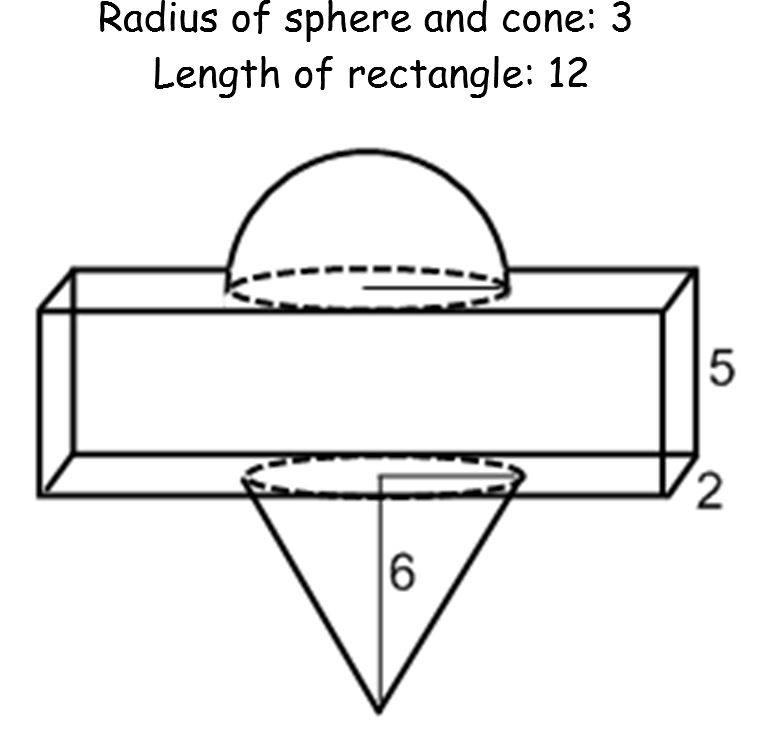
Find the VOLUME.
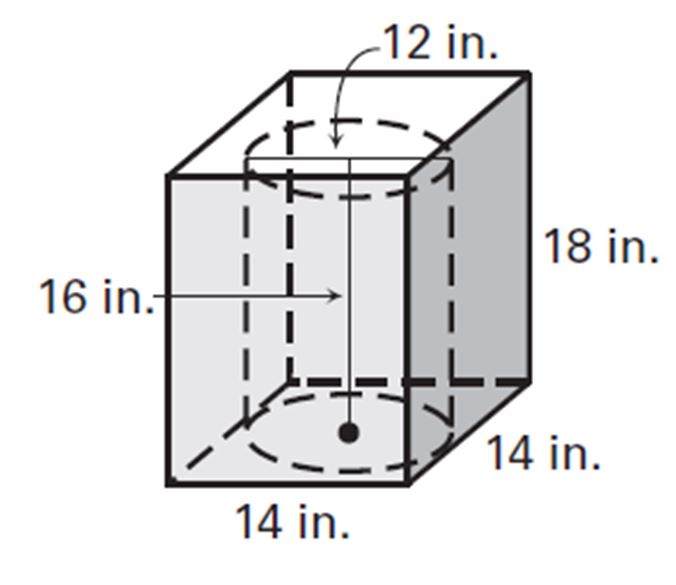
A cylindrical side table is packaged in the rectangular prism as shown. How much space is not taken up by the table inside the box?
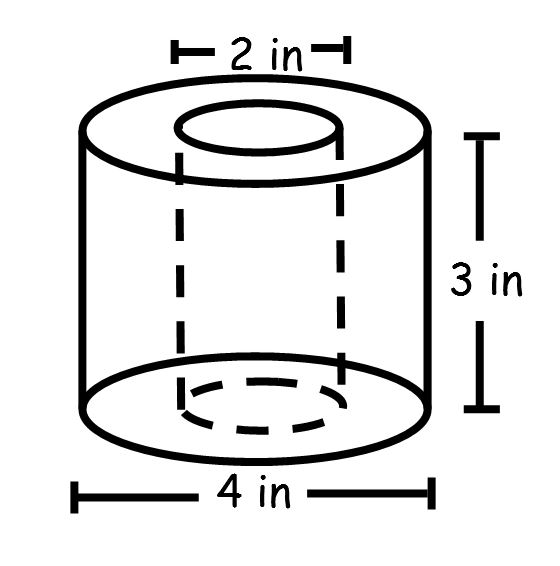
BONUS:
The figure shown is a cylindrical solid with a circular cylindrical hole drilled out of the center. Find the SURFACE AREA of the solid.
BONUS:
The figure shown is a cylindrical solid with a circular cylindrical hole drilled out of the center. Find the VOLUME of the solid.