Use the Triangle Sum Theorem to find the value of x.
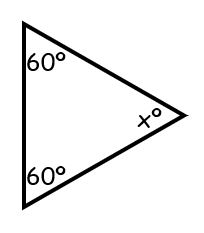
Use the Triangle Sum Theorem to find the value of x.
Use the Triangle Sum Theorem to find the value of x.
Use the Triangle Sum Theorem to find the value of x.
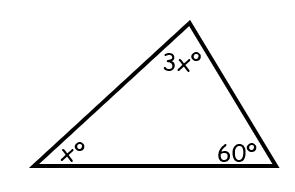
Use the Triangle Sum Theorem to find the value of x.
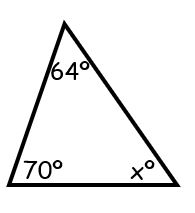
Find the measure of x using the Exterior Angle Theorem.
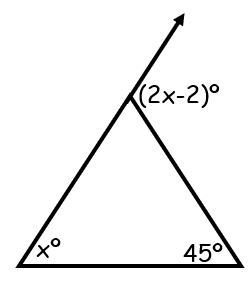
Find the measure of x using the Exterior Angle Theorem.
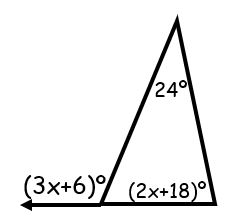
Find the measure of x using the Exterior Angle Theorem.

Use the corollary to the Triangle Sum Theorem to find. Then find the measure of each angle. Write your answer as #,#,# with no spaces between, and least to greatest.
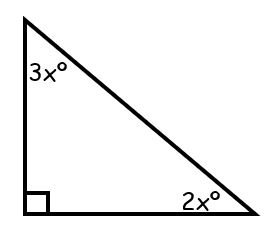
Use the diagram below for the next 6 questions.
For each question, find the measure of the indicated angle.
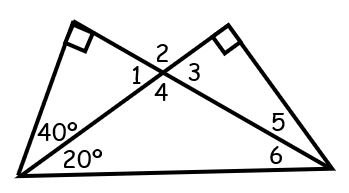
Use the diagram below for the next 2 questions.
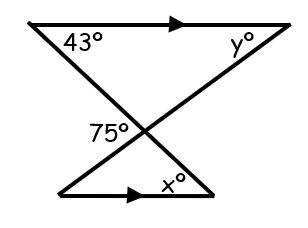
Find the value of x.
Find the value of y.
Use the diagram below for the next 2 questions.

Find the value of x.
Find the value of y.
Is it possible to construct a triangle with the given side lengths below?
6, 7, 11
Is it possible to construct a triangle with the given side lengths below?
9, 6, 3
Is it possible to construct a triangle with the given side lengths below?
34, 28, 39
Is it possible to construct a triangle with the given side lengths below?
35, 120, 125
List the sides in order from smallest to largest. Put a comma between your sides and do not include spaces.
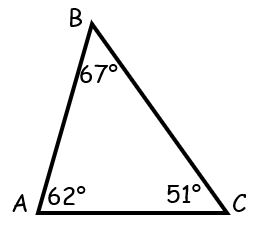
List the sides in order from smallest to largest. Put a comma between your sides and do not include spaces.
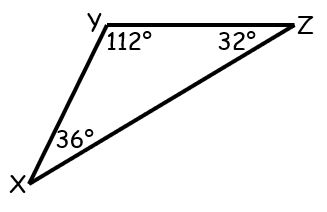
List the sides in order from smallest to largest. Put a comma between your sides and do not include spaces.
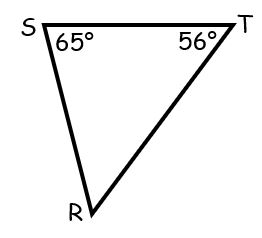
List the angles in order from smallest to largest. Put a comma between your angle and do not include spaces.
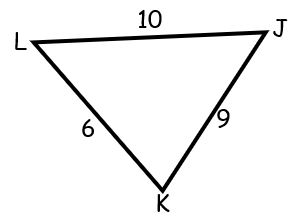
List the angles in order from smallest to largest. Put a comma between your angle and do not include spaces.
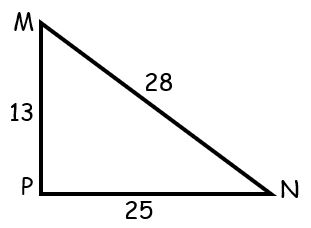
List the angles in order from smallest to largest. Put a comma between your angle and do not include spaces.
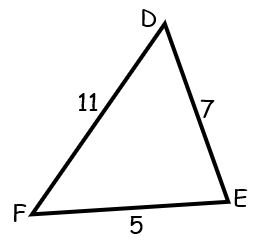
Describe the possible lengths of the third side of the triangle given the lengths of the other two sides.
5 inches, 12 inches
_____ < x < ______ ------> Write your answer as #,#
Describe the possible lengths of the third side of the triangle given the lengths of the other two sides.
3 meters, 4 meters
_____ < x < ______ ------> Write your answer as #,#
Describe the possible lengths of the third side of the triangle given the lengths of the other two sides.
12 feet, 18 feet
_____ < x < ______ ------> Write your answer as #,#
Describe the possible lengths of the third side of the triangle given the lengths of the other two sides.
10 yards, 23 yards
_____ < x < ______ ------> Write your answer as #,#
Describe the possible lengths of the third side of the triangle given the lengths of the other two sides.
24 inches, 40 inches
_____ < x < ______ ------> Write your answer as #,#
Describe the possible lengths of the third side of the triangle given the lengths of the other two sides.
25 meters, 25 meters
_____ < x < ______ ------> Write your answer as #,#
Describe the possible values of x. Express your answer as a solved inequality.
JK + KL > JL
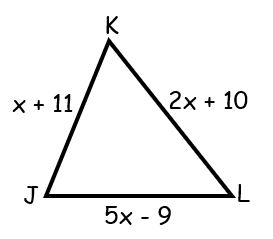
Describe the possible values of x. Express your answer as a solved inequality.
UT + TV > UV

Using the diagram below, copy and complete the statement with <, >, or =
AD ______ CD

Using the diagram below, copy and complete the statement with <, >, or =
MN ______ LK
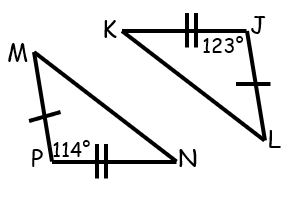
Using the diagram below, copy and complete the statement with <, >, or =
TR ______ UR
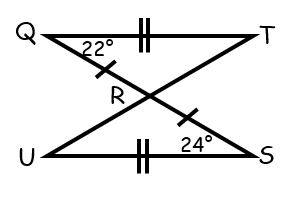
Using the diagram below, copy and complete the statement with <, >, or =
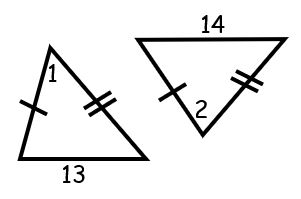
Using the diagram below, copy and complete the statement with <, >, or =
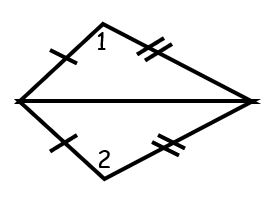
Using the diagram below, copy and complete the statement with <, >, or =
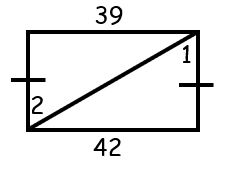
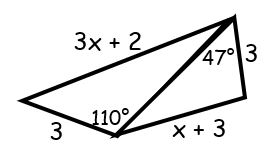
Use the Hinge Theorem or its converse to write an inquality and solve for x. Leave your answer as a solved inequality.

Use the Hinge Theorem or its converse to write an inquality and solve for x. Leave your answer as a solved inequality.