Corporate houses use glass facades in their architecture. Which type of glass is best for this use?
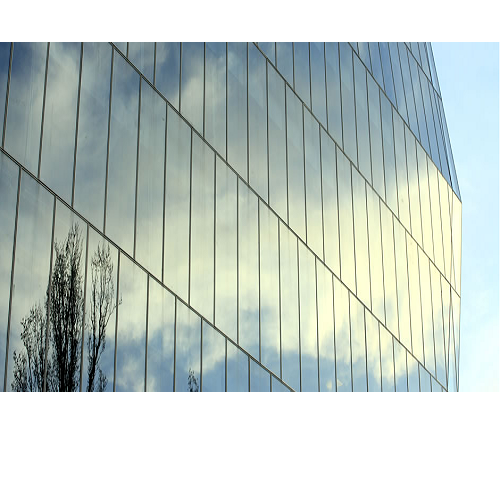
Corporate houses use glass facades in their architecture. Which type of glass is best for this use?
______________materials give off a small electrical discharge when deformed.
This material deforms plastically and does not return to its original length or shape. This effect is known as____________.
The resistance a material offers to penetration or scratching is known as____________________
The resistance of an elastic body to deflection by an applied force is known as______________________
List and explain 3 characteristics of man-made timber.
Warping is the distortion in wood caused by uneven drying, which results in the material bending or twisting.
Which material property would be needed in the tyre-pressure sensors of a car?
Corporate houses use glass facades in their architecture. Which type of glass is best for this use?
This commercial glass and is the most commonly used. Has medium to low thermal shock, in other words, it will shatter going from cold to hot or the other way.
What are 3 Characteristics of glass? Be specific and use the topic terms.
Creep is usually carried out after hardening of metal to: increase its toughness and ductility, decrease hardness and brittleness.
Ferrous is an alloy that exhibits excellent mechanical strength, resistance to thermal creep deformation, good surface stability and resistance to corrosion.
Creep is the tendency of a metal (or material) to slowly move or deform permanently due to the long term exposure of stress that are below the yield strength or ultimate strength of the metal.
Provide some properties of super alloys and give an example of it use.
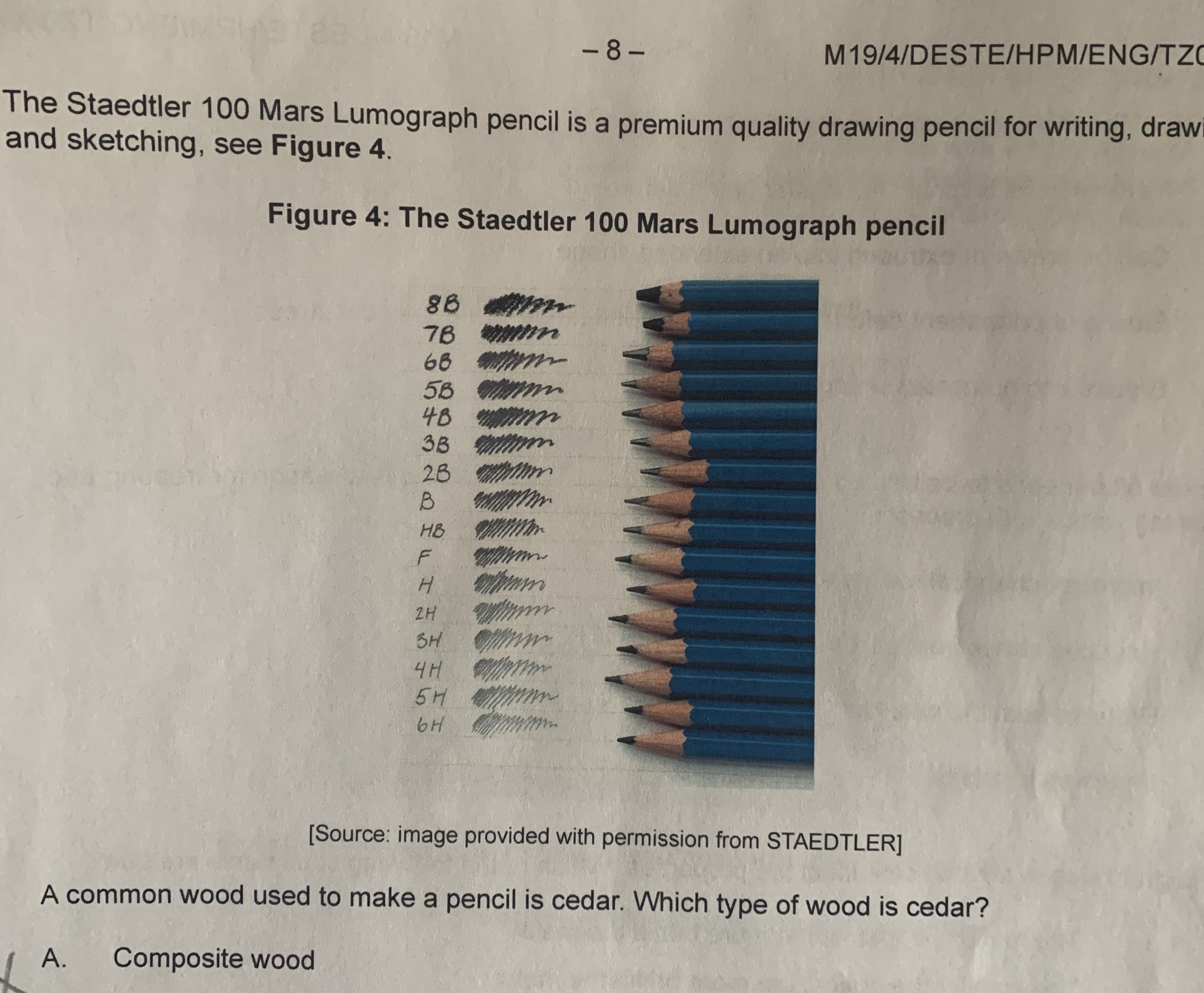
A common wood to make a pencil is cedar. Which type of wood is cedar?
The grain size in a metal can affect the properties. Which of the following statements are true? 1. The larger the grain, the more brittle the metal 2. The smaller the grain, the more brittle the metal 3. The larger the grain, the more ductile the metal
Which of the following best describes the term brittle?
Which of the following is a heat-treating process?
Metals and metallic alloys are easily recyclable. Which of the following is an example of an alloy?
Human factor data related to physical characteristics used to optimise the user’s safety, health, comfort and performance is known as Psychological factors.
Anthropometrics: The aspect of ergonomics that deals with body measurements, particularly those of size, strength and physical capacity.
Typically descriptive data used to find out in-depth the way people think or feel – their perception. Useful for research at the individual or small (focus) group level is known as Quantitative data.
Data that can be measured and recorded using numbers. Examples include height, shoe size, and fingernail length. This is known as Quantitative Data
Technology that is used to reduce pollutants and waste at the end of a process are referred to as :
Products which are improved and developed over time leading to new versions and generations are known as:
An additive manufacturing technique that uses a laser to fuse small particles of material into a mass that has a desired 3D shape.
Prototypes that are equipped with the ability to take measurements to provide accurate quantitative feedback for analysis.
A system that virtually slices a 3D CAD model into thin layers, then cuts out each layer from a roll of material using a laser or plotter cutter. The layers can then be glued in the correct order to create a 3D model.
These models are clear representations of the final part. They provide a complete set of data for the product to be realized. ----->Surface