Log in
Sign up for FREE
arrow_back
Library

Chapter 3 Review

star
star
star
star
star
Last updated almost 4 years ago
35 questions
0
0.25
0.25
0.5
0.25
0.5
0.5
0.5
0.5
0.5
0.25
0.25
0.25
0.25
0.5
0.5
0.5
0.5
0.5
0.5
0.5
0.25
0.5
0.5
2
0.5
0.75
Question 1
1.

Name:

0.25
0.25
0.25
0.25
0.25
0.25
0.25
0.5
Question 10
10.

Question 11
11.

Question 12
12.

Question 13
13.

Question 14
14.

Question 15
15.

Question 16
16.

Question 17
17.

Question 18
18.

Question 19
19.

Question 20
20.

Question 21
21.

Question 22
22.

Question 23
23.

Question 24
24.

Question 25
25.

Question 26
26.

Question 27
27.

Question 28
28.

Question 29
29.

Question 30
30.

Question 31
31.

Explain why the daughter cells produced by meiosis are genetically different from each other, whereas the daughter cells produced by mitosis are not.

Question 32
32.

What two major events occur during meiosis that give the new cells genetic variation?

Question 33
33.

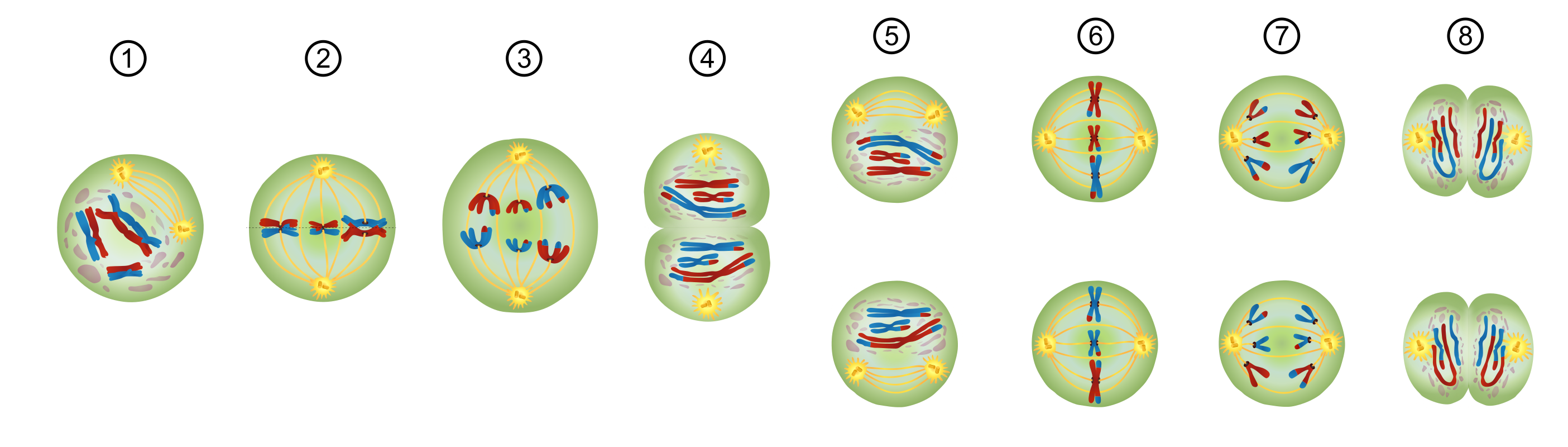
Label the phases of Meiosis (be sure to be specific with I or II). Open the image below and insert text into the numbered boxes by clicking the "T" button on the toolbar to the right.

Question 34
34.

Question 35
35.

Question 2
2.

What is the name of this phase?

Question 3
3.

What is the name of this phase?

Question 4
4.

What is the name of this phase?

Question 5
5.

What is the name of this phase?

Question 6
6.

What is the name of this phase?

Question 7
7.

What is the name of this phase?

Question 8
8.

What is the name of this phase?

Question 9
9.

What is the name of this phase?

#1 In what phase of the cell cycle are chromosomes duplicated?
G1
S
G2
M
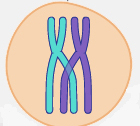
This picture demonstrates what a chromosome would look like after it was duplicated.
True
False
#3. A duplicated chromosome consists of:
2 sister chromatids
2 sister chromosomes
2 heterozygous chromosomes
2 homologous chromosomes
#4. After DNA replication, each duplicated chromosome consists of 2 sister chromatids held together at the ___________.
telomere
centromere
chromatid
centriole
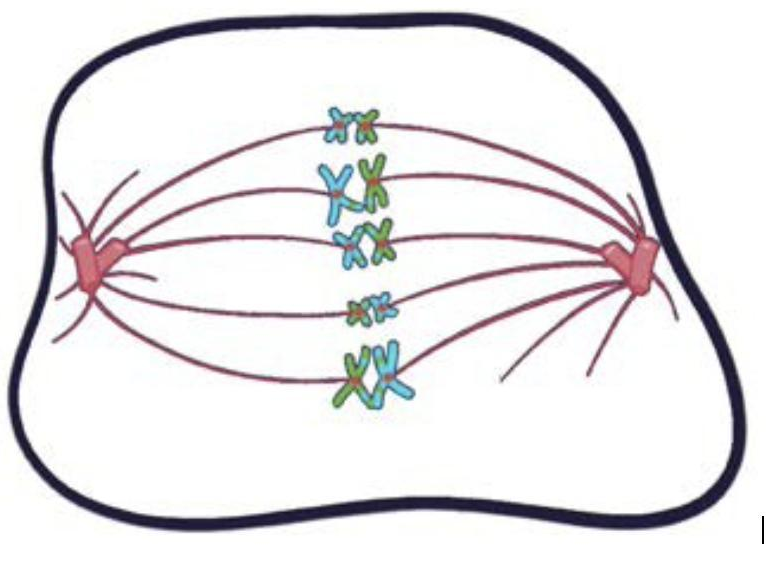
Does the picture above demonstrate Metaphase I in Meiosis I?
True
False
Does the picture above demonstrate crossing over between homologous pairs of chromosomes?
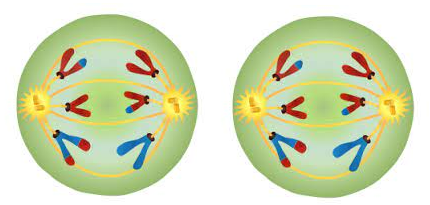
True
False
Does the picture above demonstrate Telophase I in Meiosis I?
True
False
#11 How many cells are there at the end of meiosis I.
4
2
1
3
#12. Are the cells at the end of meiosis I haploid or diploid?
diploid
haploid
#15. How many cells do you have at the end of meiosis II?
4
2
1
3
#16. Are the cells at the end of meiosis II haploid or diploid?
diploid
haploid
#17. Are the cells at the end of meiosis II identical or different?
different
identical
Gametes have
homologous chromosomes
twice the number of chromosomes found in body cells
two sets of chromosomes
one copy of each chromosome
The figure above illustrates:
Crossing over
Independent assortment
Metaphase II
Non-disjunction
At the end of meiosis, there are
two haploid daughter cells
four haploid daughter cells.
two diploid daughter cells.
four diploid daughter cells.
How many chromosomes are in a human gamete?
43
46
23
26
If a eukaryotic cell has 20 chromosomes and it undergoes meiosis, how many cells will result, and how many chromosomes will they contain?
4 cells, each with 20 chromosomes
4 cells, each with 10 chromosomes
2 cells, each with 10 chromosomes
2 cells, each with 20 chromosomes
Cells that are ________ possess a single set of chromosomes
diploid
haploid
somatic
zygotes
You have homologous pairs of chromosomes in each of your cells. In what way are these pairs of chromosomes similar?
They have exactly the same alleles.
They both come from the same parent
They have genes for the same traits
They will stay together during meiosis
What process produces genetic diversity through random distribution of maternal & paternal chromosomes(meaning they can line up on either side of the metaphase plate)?
alignment of the metaphase plate to one side instead of in the middle
cytokinesis
independent assortment
recombination
crossing over
From the list below, which choice represents a correct difference between sperm production and egg production?
Sperm are produced by mitosis; eggs are produced by meiosis
Sperm are produced by meiosis; eggs are produced by mitosis.
Four mature sperm are produced from one cell; one large egg is produced from one cell.
Eight mature sperm are produced from one cell; two eggs are produced from one cell
Sperm are produced by somatic (body) cells; eggs are produced by gametes
Though the stages of meiosis have the same names as the stages of mitosis, they exhibit fundamental differences. What are the main differences between the two processes?
Meiosis differs from mitosis in that the number of chromosomes is halved and genetic variation is introduced in meiosis, but not in mitosis
Meiosis differs from mitosis in that the number of chromosomes is halved and genetic variation is reduced in meiosis, but not in mitosis.
Metaphase and telophase portions of meiosis and mitosis are the same. Meiosis and mitosis are also the same, except for the number of chromosomes. Anaphase I and anaphase are different.
Prophase and telophase portions of meiosis and mitosis are the same. Meiosis II and mitosis are also the same and have the same number of chromosomes. Anaphase I and anaphase are different.
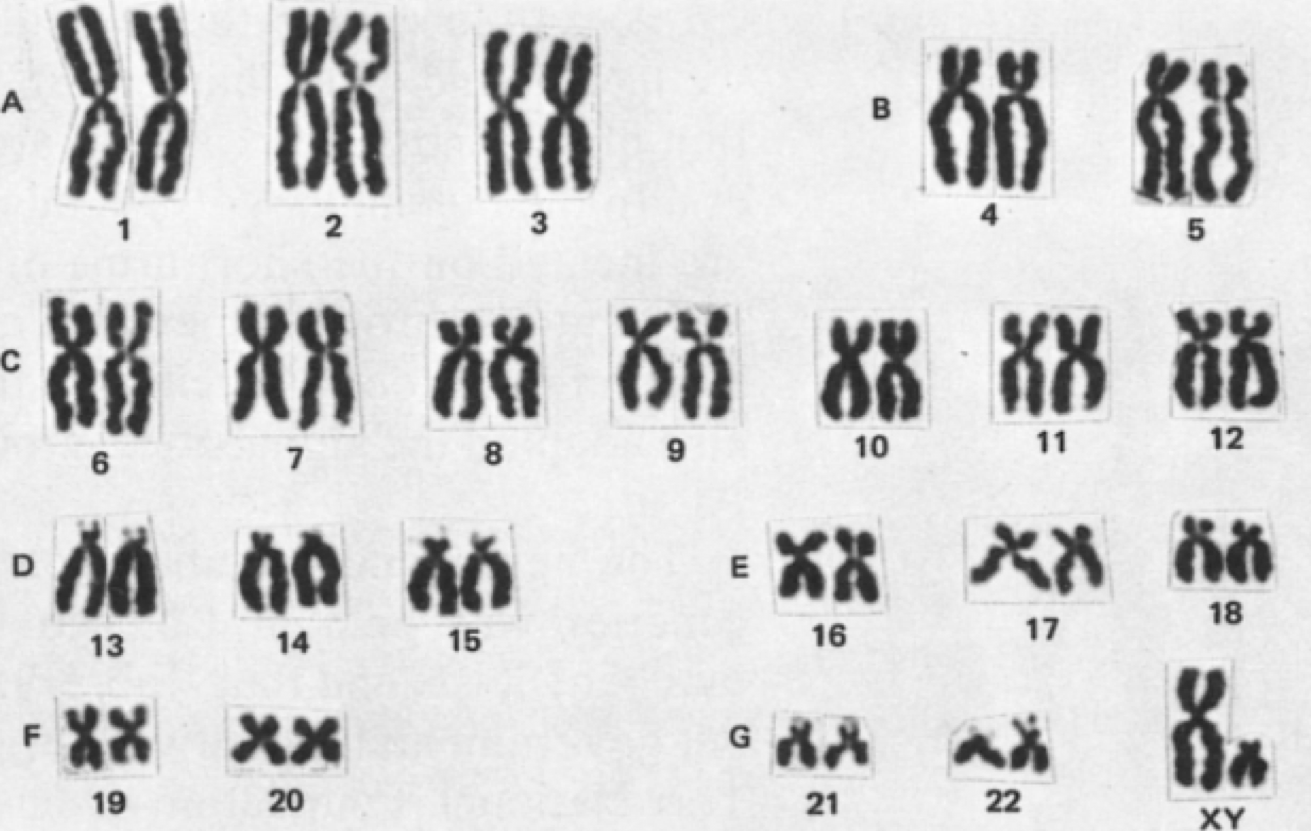
What can you tell about the person that this karyotype is from? Choose ALL that apply.
The person is female
The person is male
The person has Down's syndrome
The cell the DNA was taken from has gone through S phase
The cell the DNA was taken from was in G1 phase of cell cycle
The person has cancer
Nondisjunction occurred here
This is from a body cell
This is from a gamete