Which element is found in all organic molecules, is used by plants for photosynthesis and is recycled by decay and burning?
A. carbon
B. hydrogen
C. oxygen
D. nitrogen
What is the monomer for carbohydrates?
A. nucleotide
B. amino acid
C. monosaccharide
D. fatty acid
What is a function of carbohydrates?
A. short term energy
B. provide structure and support, and speeds up chemical reactions
C.long term energy and insulation
D. stores genetic information
An example of carbohydrates are?
A. phospholipids and oils
B. glucose and sucrose
C. helicase and lipase
D. DNA and RNA
What is the monomer of proteins?
A. nucleotide
B. amino acid
C. monosaccharide
D. fatty acid
What is a function of proteins?
A. short term energy
B. provide structure and support, and speeds up chemical reactions
C. long term energy and insulation
D. stores genetic information
An example of proteins are?
A. phospholipids and oils
B. glucose and sucrose
C. helicase and lipase
D. DNA and RNA
What is the monomer of lipids?
A. nucleotide
B. amino acid
C. monosaccharide
D. fatty acide
What is a function of lipids?
A. short term energy
B.provide structure and support, and speeds up chemical reactions
C. long term energy and insulation
D. stores genetic information
An example of lipids are?
A. phospholipids and oils
B. glucose and sucrose
C. helicase and lipase
D. DNA and RNA
What is the monomer of nucleic acids
A. nucleotide
B. amino acids
C. monosaccharides
D. lipid
What is a function of nucleic acids?
A. short term energy
B.provide structure and support, and speeds up chemical reactions
C. long term energy and insulation
D. stores genetic information
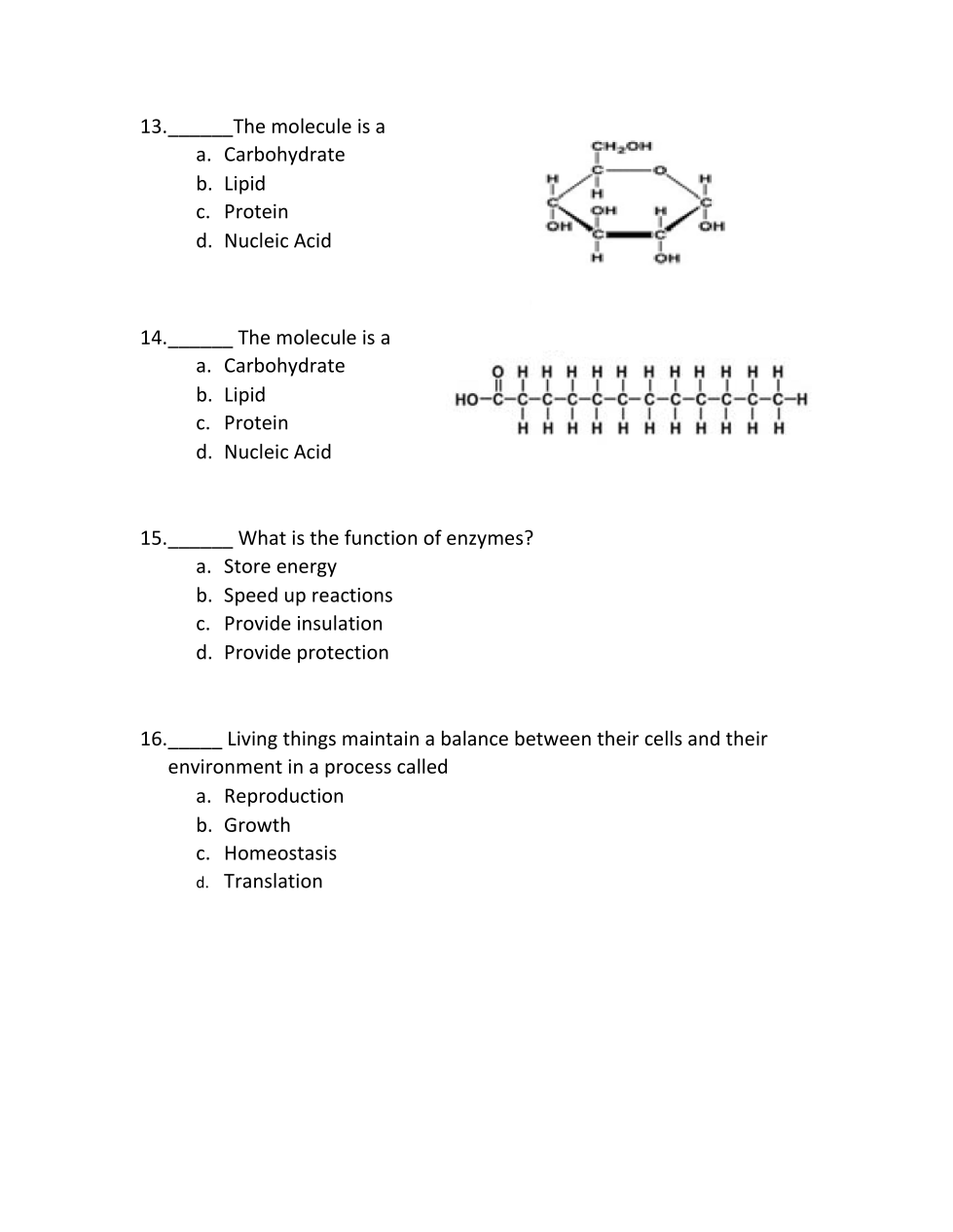
The molecule is a
A. carbohydrate
B. lipid
C. protein
D. nucleic acid
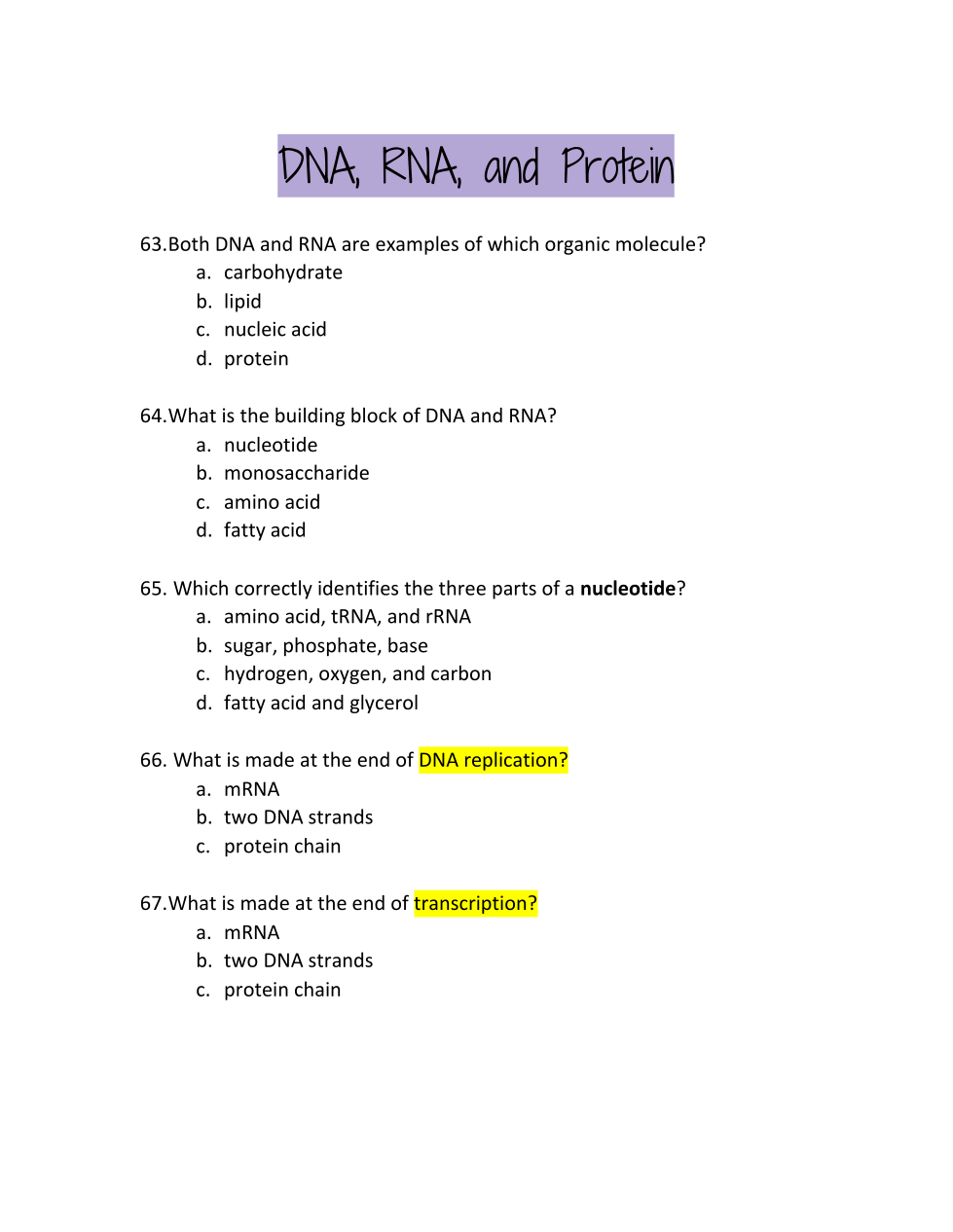
The molecule is a
A. carbohydrate
B. lipid
C. protein
D. nucleic acid
What is the function of enzymes?
A. store energy
B. speed up reactions
C. provide insulation
D. provide protection
What process makes ATP?
A. photosynthesis
B. decomposition
C. fertilization
D. cellular respiration
What process occurs in the chloroplast?
A. photosynthesis
B. decomposition
C. fertilization
D. cellular respiration
What process occurs in the mitochondria?
A. photosynthesis
B. decomposition
C. fertilization
D. cellular respiration
What process removes carbon dioxide from the atmosphere?
A. photosynthesis
B. decomposition
C. fertilization
D. cellular respiration
During which part of the cell cycle does the nucleus divide?
A. cytokinesis
B. interphase
C. mitosis
During which part of the cell cycle does the cytoplasm divide?
A. cytokinesis
B. interphase
C. mitosis
During which part of the cell cycle does the cell grow in size and carry out its normal functions?
A. cyotkinesis
B. interphase
C. mitosis
During which part of the cell cycle does the DNA replicate?
A. Cytokinesis
B. Interphase
C. mitosis
How many cells are made at the end of mitosis?
A. 2 identical cells
B. 2 different cells
C.4 identical cells
D. 4 different cells
How many cells are made at the end of meiosis?
A. 2 identical cells
B. 2 different cells
C. 4 identical cells
D. 4 different cells
A starfish has 40 chromosomes. If a starfish cell went through mitosis, how many chromosomes would be in each daughter cell?
A. 20
B. 10
C. 40
D. 80
A starfish has 40 chromosomes. How many chromosomes would be in a starfish egg cell?
A. 20
B.10
C.40
D. 80
Both DNA and RNA are examples of which organic molecule?
A. carbohydrate
B. lipid
C. nucleic acid
D. protein
What is the building block of DNA and RNA?
A. nucleotide
B. monodsaccharide
C. amino acid
D. fatty acid
Which correctly identifies the three parts of a nucleotide?
A. amino acid, tRNA, and rRNA
B. sugar, phsophate, base
C. hydrogen, oxygen, carbon
D. faty acid and glycerol
What is made at the end of DNA replication
A. mRNA
B. two DNA strands
C. protein chain
What is made at the end of transcription?
A. mRNA
B. two DNA strands
C. protein chain
What is made at the end of translation?
A. mRNA
B. two DNA strands
C. protein chain
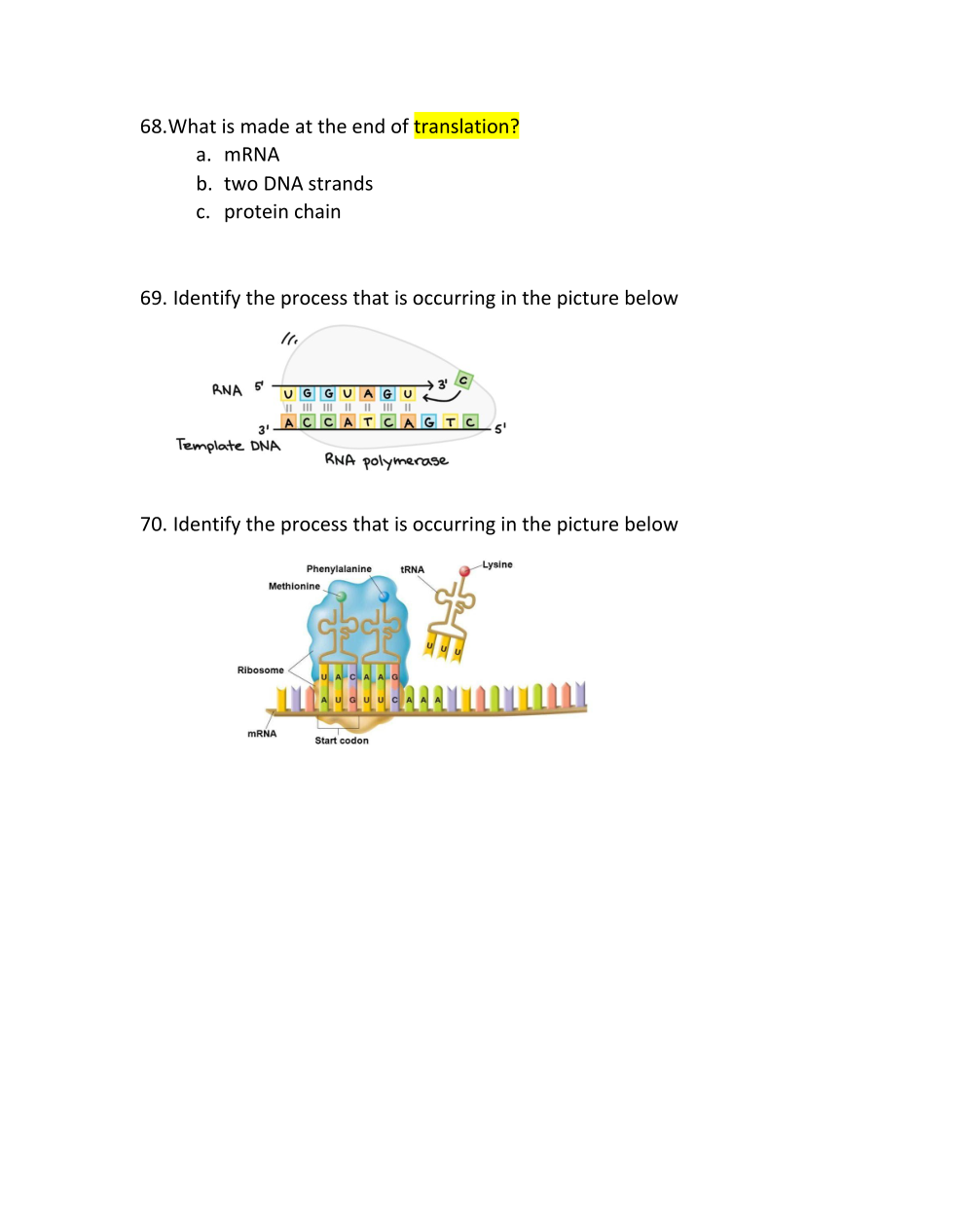
Identify the process that is occuring in the picture
A. transcription
B.DNA replication
C. translation
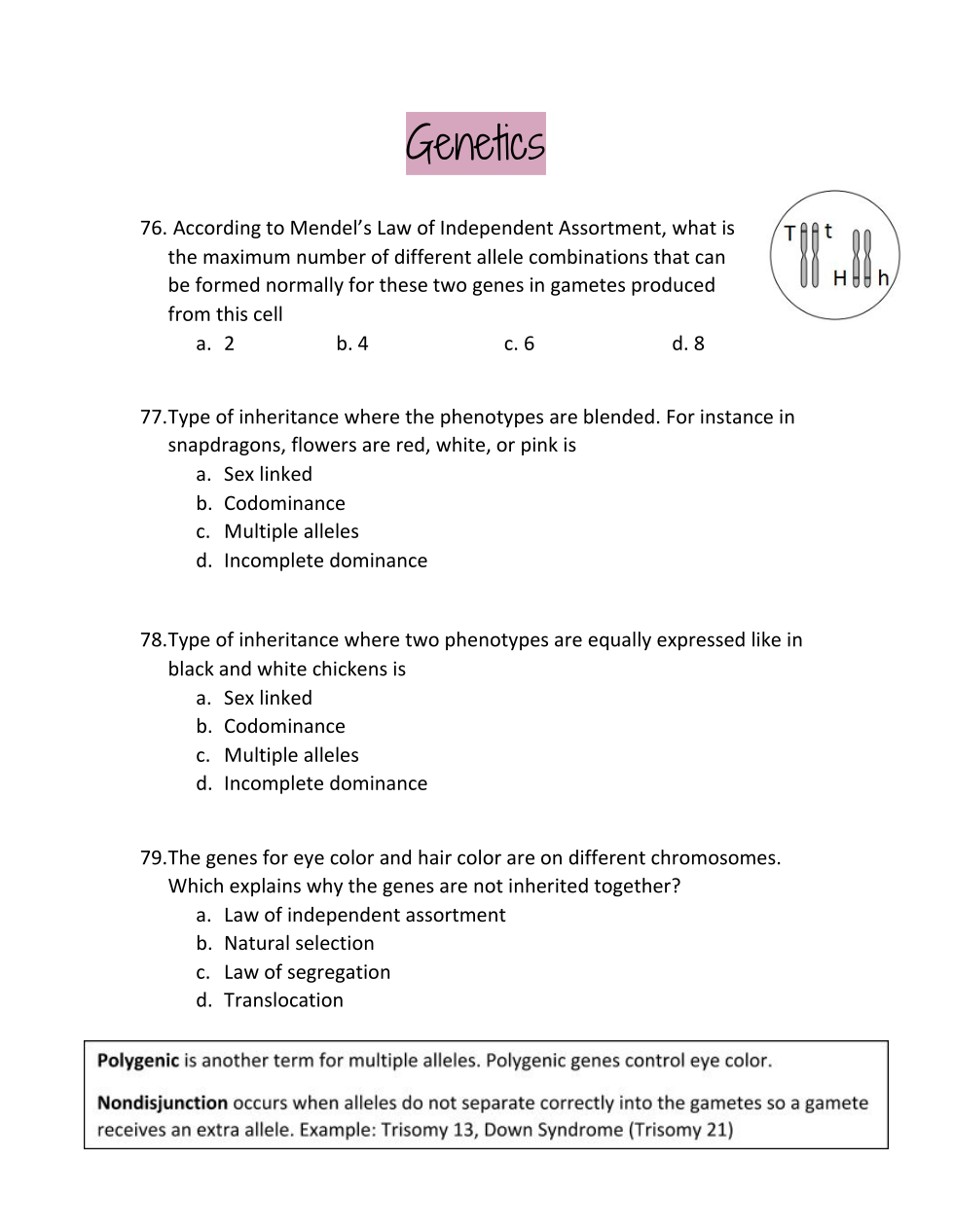
Identify the process that is occuring in the picture
A. transcription
B.DNA replication
C. translation
According to Mendel's Law of Independent assortment, what is the maximum number of different allele combinations that can be formed for these two genes in gametes produced from this cell.
A. 2
B. 4
C. 6
D. 8
Type of inheritance where the phenotypes are blended. For instance in snapdragons, flowers are red, white, or pink
A. sex-linked
B. codominance
C. multiple alleles
D. incomplete dominance
The type of inheritance where two phenotypes are equally expressed like in black and white chicken is
A. sex-linked
B. codominance
C. multiple alleles
D. incomplete dominance
The genes for eye color and hair color are on different chromosomes. Which explains why the genes are not inherited