Log in
Sign up for FREE
arrow_back
Library

The Battle of the Greasy Grass

star
star
star
star
star
Last updated over 3 years ago
7 questions
Required
1
8th Grade U.S. History
Lesson goals:
-Identify when the Battle of the Little Bighorn was and who led the Lakota and Northern Cheyenne
-Explain how the Battle of the Little Bighorn impacted the American view of the Indian Wars
-Create an argument for whether or not the battle was a long-term victory for the Lakota
Notes:
-The Battle of the Little Bighorn is the most importnat battle of Great Sioux War
-"The Battle of the Greasy Grass" and "The Battle of the Little Bighorn" are the same event. The Greasy Grass is the translation of the Lakota name for the river.
Question 1 | 00:15
Question 2 | 00:38
Question 3 | 00:55
00:00/00:00
Question 1
00:15
keyboard_arrow_down
1
Question 2
00:38
keyboard_arrow_down
Required
1
Question 3
00:55
keyboard_arrow_down
Required
1
Where?:
-Little Bighorn River, modern-day Montana
Who?:
-Lakota Sioux and Cheyenne vs. United States Army (7th Cavalry)
-Lakota and Cheyenne were led by the warrior Tasunke Witco and medicine man Tatanka Iyotake
Required
1
Results of the battle:
-Major Lakota victory
-Most important result: U.S. Army's summer campaign ends
-U.S. Army: 268 killed, 55 wounded
-Lakota/Northern Cheyenne: 31 killed, up to 160 wounded
-The U.S. became even more determined to defeat the Lakota and sent more troops to the west.
Required
1
Question 5
5.

Who won the Battle of the Little Bighorn?
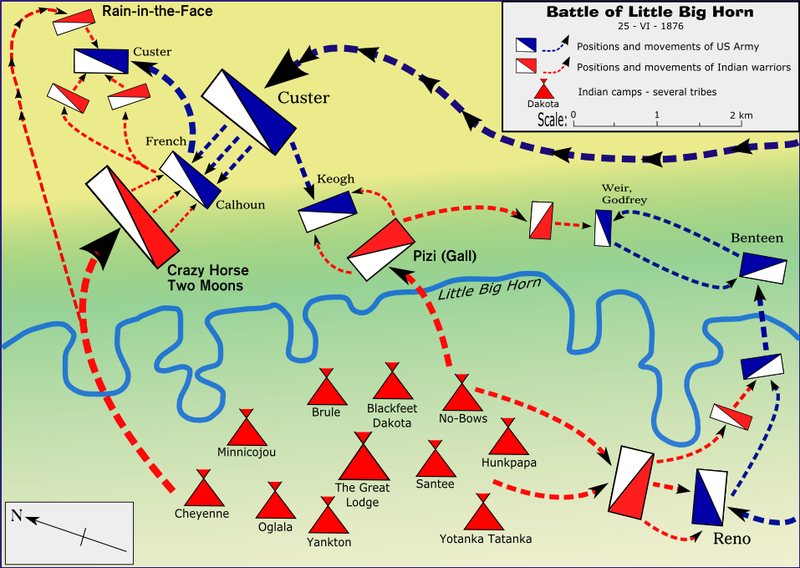
Question 6 | 00:41
00:00/00:00
Question 6
00:41
keyboard_arrow_down
Required
1
Question 6
6.

In your own words, how did the result of the battle impact how the U.S. viewed the Indian Wars?

-The Lakota won the Battle of the Little Bighorn, but lost the Great Sioux War.
-In 1877, Crazy Horse was murdered by U.S. soldiers and Sitting Bull fled to Canada.
-The Lakota were forced onto reservations where attempts destroy their language, culture, and spiritual beliefs accelerated.
Question 7
7.

The Battle of the Little Bighorn was a clear short-term victory for the Lakota. However, based on what happened in the year 1877, can it still be considered a victory? Give at least one reason for your answer.

Question 1
1.

What year did the Battle of the Little Bighorn take place?

Question 2
2.

What is the U.S. Army's goal? (What is the 7th Cavalry trying to do?)

Question 3
3.
The Sioux and Cheyenne are resisting the Army because they don't want to give up their _______.
Question 4
4.

Who led the Lakota at the Battle of the Little Bighorn?