igcse-section 1 class practice
star
star
star
star
star
Last updated over 3 years ago
39 questions
1
Some yeast, sugar and water are mixed in a test-tube. The diagrams show the test-tube at the start and after one hour. Which process causes this change?
Some yeast, sugar and water are mixed in a test-tube. The diagrams show the test-tube at the start and after one hour.
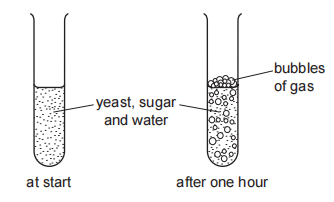
Which process causes this change?
1
Phototropism demonstrates which two characteristics of living organisms?
1
Some lizards detach their tails when threatened by a predator.Which characteristic is shown?
Some lizards detach their tails when threatened by a predator.
Which characteristic is shown?
1
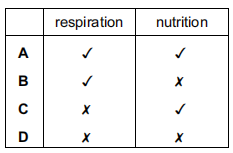
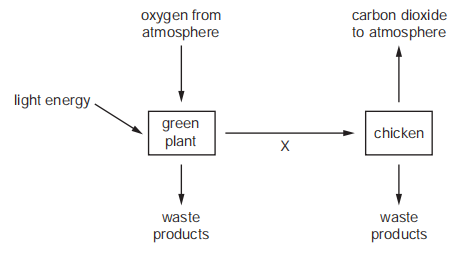
The diagram illustrates some of the processes carried out by living organisms. Which characteristic of living organisms is represented by arrow X?
The diagram illustrates some of the processes carried out by living organisms.
Which characteristic of living organisms is represented by arrow X?
1
What is not a characteristic of all living organisms?
1
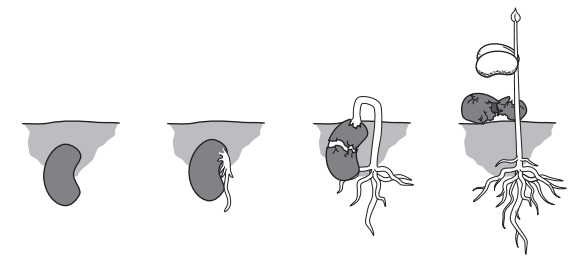
The diagram shows how a seed changes after it is planted in well-watered soil. Which characteristics of living things are demonstrated by this sequence?
The diagram shows how a seed changes after it is planted in well-watered soil.
Which characteristics of living things are demonstrated by this sequence?
1
Which name is given to a group of individuals that can reproduce to produce fertile offspring?
1
A rat has the scientific name Rattus rattus.What do the two parts of this name refer to?
A rat has the scientific name Rattus rattus.
What do the two parts of this name refer to?
1
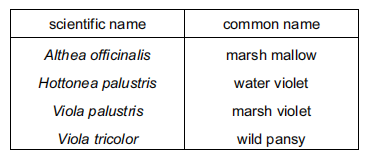
The table shows the scientific names and the common names of four plants. Which word in their names shows that two of the plants share the greatest number of features?
The table shows the scientific names and the common names of four plants.
Which word in their names shows that two of the plants share the greatest number of features?
1
The equation shows a chemical reaction that occurs in living organisms. glucose + oxygen → carbon dioxide + waterWhich of these characteristics of living organisms is this equation associated with?
The equation shows a chemical reaction that occurs in living organisms.
glucose + oxygen → carbon dioxide + water
Which of these characteristics of living organisms is this equation associated with?
1
What is a correct way of naming a species, according to the binomial system?
1
What is a correct way of naming an organism using the binomial system?
1
The list shows the scientific names for eight animals, using the binomial system. Alderia modesta Arenicola cristata Arenicola marina Austrominius modestus Bittium reticulatum Botrylloides leachii Botryllus schlosseri Clypeostoma reticulatumWhich two animals are most closely related?
The list shows the scientific names for eight animals, using the binomial system.
Alderia modesta
Arenicola cristata
Arenicola marina
Austrominius modestus
Bittium reticulatum
Botrylloides leachii
Botryllus schlosseri
Clypeostoma reticulatum
Which two animals are most closely related?
1
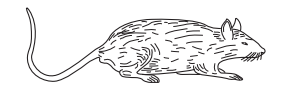
The diagram shows an animal whose scientific name is Rattus rattus. Which genus does it belong to?
The diagram shows an animal whose scientific name is Rattus rattus.
Which genus does it belong to?
1
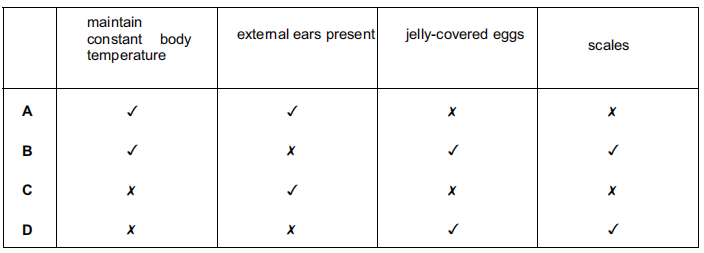
What are the characteristics of bony fish?
1
Many snakes that belong to the viper family are unusual in that they give birth to live young.This is usually a characteristic of which vertebrate group?
Many snakes that belong to the viper family are unusual in that they give birth to live young.
This is usually a characteristic of which vertebrate group?
1
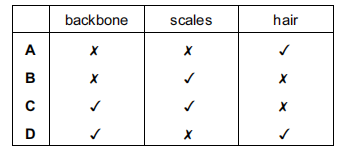
All fish, all birds and all mammals are
1
Which characteristics do bony fish have?
1
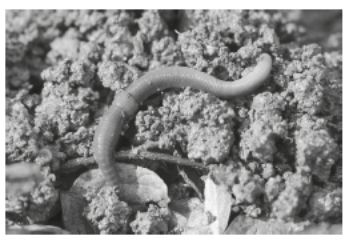
To which phylum does the earthworm Lumbricus rubellus belong?
1
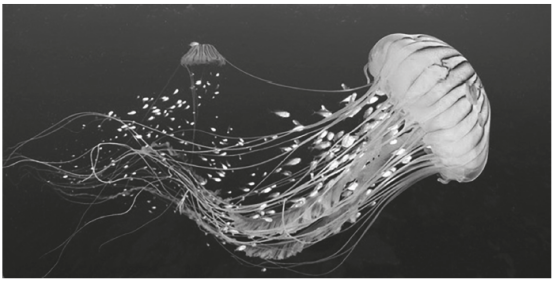
The image shows the northern sea nettle (Chrysaora melanaster). To which phylum does C. melanaster belong?
The image shows the northern sea nettle (Chrysaora melanaster).
To which phylum does C. melanaster belong?
1
A locust is an arthropod. For invertebrate groups, which recognition feature is found only in arthropods?
1
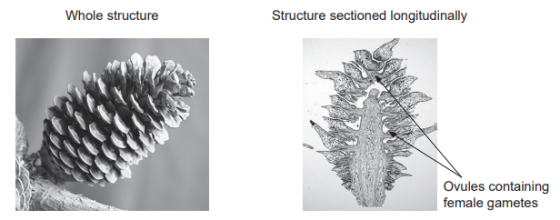
The images show a structure found on members of a phylum of green plants. What is the name of the phylum to which the organisms belong?
The images show a structure found on members of a phylum of green plants.
What is the name of the phylum to which the organisms belong?
1
An animal has the following characteristics: bilateral symmetry, mouth but no anus, ribbon shape. Which phylum does the animal belong to?
1
An organism has the following characteristics:• single opening for ingestion and egestion• radial symmetry• tentacles with stinging cells.In what phylum would it most likely be classified?
An organism has the following characteristics:
• single opening for ingestion and egestion
• radial symmetry
• tentacles with stinging cells.
In what phylum would it most likely be classified?
1
The image shows an organism belonging to the Kingdom Animalia. What feature does this organism have in common with all members of the phylum chordata?
The image shows an organism belonging to the Kingdom Animalia.
What feature does this organism have in common with all members of the phylum chordata?
1
If seeds of an unknown species of plant are discovered, what assumption can be made about the species?
1
Which phyla have bilateral symmetry?
1
Which is the hierarchy of taxa in order of increasing numbers of species?
1
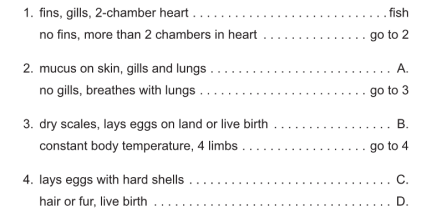
Which of the organisms A–D, identified by the key, represents a reptile?
1
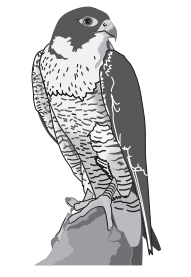
The diagram shows an animal whose scientific name is Falco peregrinus. To which species does it belong?
The diagram shows an animal whose scientific name is Falco peregrinus.
To which species does it belong?
1
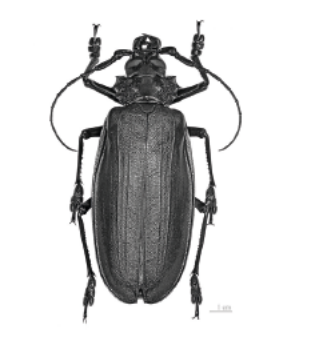
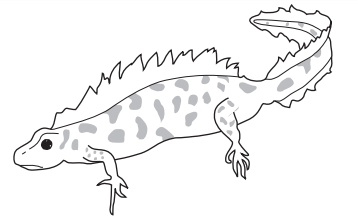
The diagram shows an animal. Use the key to identify the animal.1 front limbs with five fingers ....................... go to 2 front limbs with four fingers ...................... go to 32 skin with spots .......................................... A skin without spots ..................................... B3 tail with fins ............................................... C tail without fins .......................................... D
The diagram shows an animal.
Use the key to identify the animal.
1 front limbs with five fingers ....................... go to 2
front limbs with four fingers ...................... go to 3
2 skin with spots .......................................... A
skin without spots ..................................... B
3 tail with fins ............................................... C
tail without fins .......................................... D
1
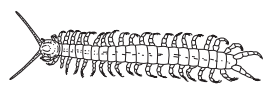
Use the key to identify the arthropod shown. 1 body divided into segments .................................... go to 2 body not divided into segments .............................. go to 32 body has one pair of legs per segment .................. A body has two pairs of legs per segment ................. B3 one pair of antennae .............................................. C two pairs of antennae ............................................. D
Use the key to identify the arthropod shown.
1 body divided into segments .................................... go to 2
body not divided into segments .............................. go to 3
2 body has one pair of legs per segment .................. A
body has two pairs of legs per segment ................. B
3 one pair of antennae .............................................. C
two pairs of antennae ............................................. D
1
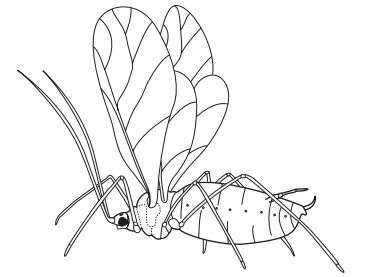
The diagram shows an animal. Use the key to identify the animal.1 has two wings ...................................................... go to 2 has four wings ..................................................... go to 32 has antennae much shorter than legs ................. A has antennae about the same length as legs ...... B3 has feathery antennae ......................................... C has smooth antennae .......................................... D
The diagram shows an animal.
Use the key to identify the animal.
1 has two wings ...................................................... go to 2
has four wings ..................................................... go to 3
2 has antennae much shorter than legs ................. A
has antennae about the same length as legs ...... B
3 has feathery antennae ......................................... C
has smooth antennae .......................................... D
1
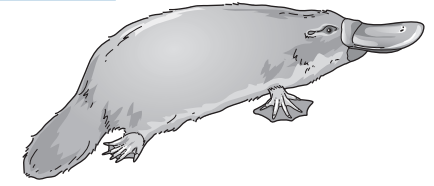
The diagram shows an animal. Use the key to identify this animal.1 body covered with scales ...................... go to 2 body covered with hair .......................... go to 32 has a rounded bill .................................. A has a pointed bill ................................... B3 has webbed feet .................................... C does not have webbed feet ................... D
The diagram shows an animal.
Use the key to identify this animal.
1 body covered with scales ...................... go to 2
body covered with hair .......................... go to 3
2 has a rounded bill .................................. A
has a pointed bill ................................... B
3 has webbed feet .................................... C
does not have webbed feet ................... D
1
Use the key to identify which group is amphibians.1 hair present …………………………… mammals hair absent ……………………………. go to 22 feathers present ………………….……group A feathers absent ………………….……. go to 33 dry scaly skin……………………….….. group B moist skin ………………….……….….. go to 44 four limbs …………………………….… group C no limbs ………...…………….....…...… group D
Use the key to identify which group is amphibians.
1 hair present …………………………… mammals
hair absent ……………………………. go to 2
2 feathers present ………………….……group A
feathers absent ………………….……. go to 3
3 dry scaly skin……………………….….. group B
moist skin ………………….……….….. go to 4
4 four limbs …………………………….… group C
no limbs ………...…………….....…...… group D
1
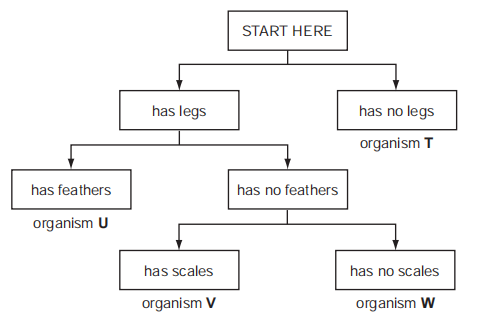
The diagram shows a key for five vertebrates. Which class of vertebrates does organism W belong to?
The diagram shows a key for five vertebrates.
Which class of vertebrates does organism W belong to?
1
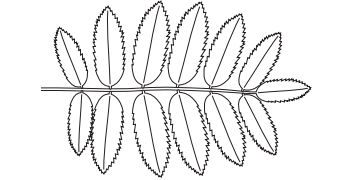
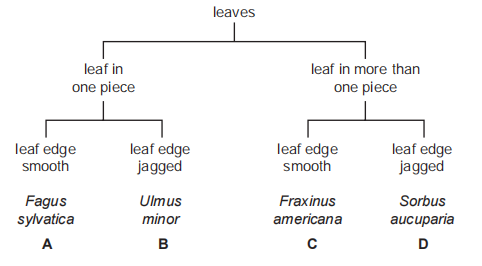
The diagram shows a leaf. Use the key to identify the plant to which the leaf belongs.
The diagram shows a leaf.
Use the key to identify the plant to which the leaf belongs.
1
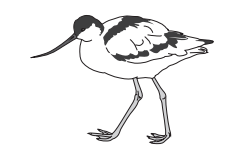
The diagram shows a bird that lives near rivers. Use the key to identify the bird shown in the diagram.1 toes joined by a flap of skin ........................... go to 2 toes separate ................................................. A heron2 beak as long or longer than the head ............ go to 3 beak not as long as the head ........................ B little grebe3 top of head black ........................................... C avocet top of head white ........................................... D mute swan
The diagram shows a bird that lives near rivers.
Use the key to identify the bird shown in the diagram.
1 toes joined by a flap of skin ........................... go to 2
toes separate ................................................. A heron
2 beak as long or longer than the head ............ go to 3
beak not as long as the head ........................ B little grebe
3 top of head black ........................................... C avocet
top of head white ........................................... D mute swan
1
Use the key to identify the animal shown in the diagram.