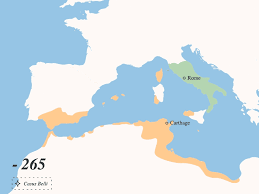
Ɛhia
2
(DOK 1) Identify the continent on which Rome is located.
(DOK 1) Identify the continent on which Rome is located.
Ɛhia
2
Standard VI: Trace the expansion of the Roman Republic and its transformation into an empire, including key geographic, political, and economic elements.
• Interpreting spatial distributions and patterns of the Roman Republic using geographic tools and technologies.
Standard VII: Describe the widespread impact of the Roman Empire.
• Tracing important aspects of the diffusion of Christianity, including its relationship to Judaism, missionary impulse, organizational development, transition from persecution to acceptance in the Roman Empire, and church doctrine.
• Explaining the role of economics, societal changes, Christianity, political and military problems, external factors, and the size and diversity of the Roman Empire in its decline and fall.
(DOK 1) ALL of the following statements about Roman Legionaries are true EXCEPT:
(DOK 2) Differentiate between a Legionary and an Auxiliary.
non-citizen
After 25 years of service - gifted a piece of land
Roman citizen
After 25 years of service - granted citizenship
Legionary
Auxiliary
(DOK 1) When Roman soldiers (Legionnaires and Auxiliary) were not engaged in combat, they were working on civil projects such as roads, forts, and aqueducts.
(DOK 1) Identify the continent on which Rome is located.
(DOK 2) Edit the map to identify the island mentioned in the statement below. Be sure to click the checkmark in the blue square (upper right corner) to save your answer.
In 264 B.C., Rome intervened in a dispute between Syracuse and Messina on the western coast of this island. This struggle exploded into a direct conflict between Rome and Carthage.
(DOK 1) The term "Punic" is derived from "Punicus," which translates to mean "Phoenician." Identify the term's root origin.
Prior to the First Punic War, Rome was superior in naval warfare while Carthage was superior in land warfare. As the first war progressed, Rome and Carthage became superior in the other's tactics/strategies.
The First Punic War was fought over a period of twenty-three years for control of the island of Sicily. Rome’s strength was in its army (land forces). Carthage’s strength was in its navy (sea forces). Rome’s solution was to build up its navy. Rome built four fleets, each destroyed in turn, before mastering naval warfare.
Rather than bemoan the fact that they fought better on land than at sea, the Romans found a way to utilize their excellent hand-to-hand fighting skills on the water. They achieved this through the use of an ingenious new weapon - the grappling hook. All that the Romans needed to do was to get close enough to a Carthaginian ship to attach a grappling hook, which lashed the two ships together. Once hooked, the ships’ crews were forced to fight one another on deck.
The Romans effectively turned sea battles into land battles. Rome won the First Punic War, and Sicily became a province of Rome.
(DOK 2) Explain how the Romans turned what seemed to be a weakness into a strength through the use of a grappling hook.
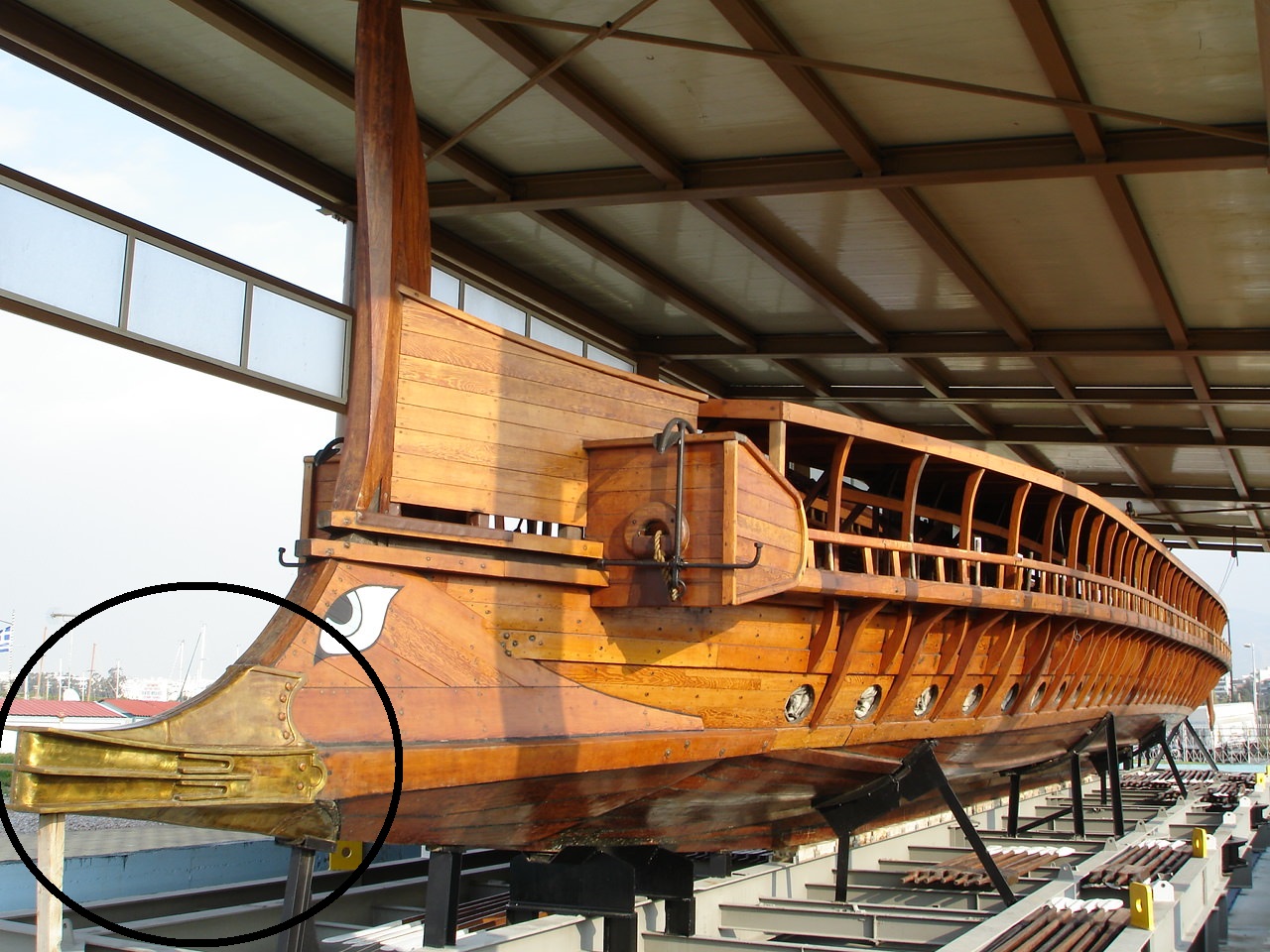
(DOK 1) Name this bronze beak that served as the primary weapon of a Roman warship.
(DOK 1) The Romans learned how to improve their naval warfare tactics from Athenian success in which major battle of the Greco-Persian Wars.
(DOK 1) Identify the Carthaginian general who became the "first enemy of Rome."
(DOK 1) Edit the map to illustrate the route mentioned in the statement below. Be sure to click the checkmark in the blue square (upper right corner) to save your answer.
In 218 B.C., Hannibal Barca led his Carthaginian army through this route, bypassing Roman garrisons and directly assaulting the Roman Republic from the north.
(DOK 1) Hannibal's northern invasion caught the Romans by surprise. Identify the geographical feature that Hannibal had to navigate to achieve this daring feat.
(DOK 1) Name the animal that Hannibal used to assault Roman soldiers and secure a string of victories along the Italian peninsula.
(DOK 1) Identify the battlefield where Hannibal was said to have achieved tactical perfection in the slaughter of 70,000+ Romans.
(DOK 1) In 203 B.C., Hannibal’s troops were forced to abandon the struggle in Italy in order to defend North Africa. Identify the battlefield where Scipio Africanus and his troops routed the Carthaginians.
(DOK 2) Explain how Hamilcar and Hannibal Barca's suicide is considered one last act of defiance to Rome.
CARTHAGE: Carthage rebuilt its trading networks and commercial power.
ROME: Rome felt threatened by competition from Carthage.
Senator Cato ended all of his speeches with the warning: “Carthago delenda est!” (“Carthage must be destroyed!”)
(DOK 2) Explain how Carthage was destroyed.
After seven days of horrific bloodshed, the Carthaginians surrendered, obliterating an ancient city that had survived for some 700 years.
According to legend, as Scipio Aemilianus watched the once-mighty city fall into utter ruin, he broke down in tears. When asked why by his teacher Polybius, he replied, “A glorious moment, Polybius; but I have a dread foreboding that some day the same doom will be pronounced on my own country.”
(DOK 3) Will Rome suffer a similar fate as foreshadowed by Scipio or will Rome overcome ruin? Justify your reasoning.
(DOK 1) Identify the continent on which Carthage is located.