These assignments are for making up work if you were absent many days or have many missing assignments. It is optional. If you do not have many missing assignments, they will count for extra credit if you complete them. There are four assignments below; each one you complete will count for one missing assignment, or it will give you 10% extra credit. It will be due Wednesday, March 6th.
Estas tareas son para recuperar el trabajo si estuvo ausente muchos días o le faltan muchas tareas. Es opcional. Si no le faltan muchas tareas, contarán para crédito adicional si las completa. Hay cuatro tareas a continuación; cada una que completes contará como una tarea faltante o te dará un 10 % de crédito adicional. Vencerá el miércoles 6 de marzo.
هذه المهام مخصصة لتعويض العمل إذا كنت غائبًا لعدة أيام أو كان لديك العديد من المهام المفقودة. إنه اختياري. إذا لم يكن لديك العديد من المهام المفقودة، فسيتم احتساب رصيد إضافي إذا أكملتها. هناك أربع مهام أدناه؛ سيتم احتساب كل مهمة تكملها كمهمة واحدة مفقودة، أو ستمنحك رصيدًا إضافيًا بنسبة 10%. ومن المقرر أن يكون يوم الأربعاء 6 مارس.
Inshingano ni iyo gukora akazi niba udahari iminsi myinshi cyangwa ufite imirimo myinshi yabuze. Ntabwo ari ngombwa. Niba udafite inshingano nyinshi zabuze, bazabara inguzanyo yinyongera niba urangije. Hano hari imirimo ine; buriwese urangije azabarirwa kumurimo umwe wabuze, cyangwa izaguha inguzanyo yinyongera 10%. Bizaba ku wa gatatu, 6 Werurwe.
Ces devoirs servent à rattraper le travail si vous avez été absent plusieurs jours ou si vous avez de nombreux devoirs manquants. C'est facultatif. S'il ne vous manque pas beaucoup de devoirs, ils compteront pour un crédit supplémentaire si vous les complétez. Il y a quatre missions ci-dessous ; chacun de vos travaux comptera pour un devoir manquant ou vous donnera 10 % de crédit supplémentaire. Il sera rendu le mercredi 6 mars.
These assignments are for making up work if you were absent many days or have many missing assignments. It is optional. If you do not have many missing assignments, they will count for extra credit if you complete them. There are four assignments below; each one you complete will count for one missing assignment, or it will give you 10% extra credit. It will be due Wednesday, March 6th.
Estas tareas son para recuperar el trabajo si estuvo ausente muchos días o le faltan muchas tareas. Es opcional. Si no le faltan muchas tareas, contarán para crédito adicional si las completa. Hay cuatro tareas a continuación; cada una que completes contará como una tarea faltante o te dará un 10 % de crédito adicional. Vencerá el miércoles 6 de marzo.
هذه المهام مخصصة لتعويض العمل إذا كنت غائبًا لعدة أيام أو كان لديك العديد من المهام المفقودة. إنه اختياري. إذا لم يكن لديك العديد من المهام المفقودة، فسيتم احتساب رصيد إضافي إذا أكملتها. هناك أربع مهام أدناه؛ سيتم احتساب كل مهمة تكملها كمهمة واحدة مفقودة، أو ستمنحك رصيدًا إضافيًا بنسبة 10%. ومن المقرر أن يكون يوم الأربعاء 6 مارس.
Inshingano ni iyo gukora akazi niba udahari iminsi myinshi cyangwa ufite imirimo myinshi yabuze. Ntabwo ari ngombwa. Niba udafite inshingano nyinshi zabuze, bazabara inguzanyo yinyongera niba urangije. Hano hari imirimo ine; buriwese urangije azabarirwa kumurimo umwe wabuze, cyangwa izaguha inguzanyo yinyongera 10%. Bizaba ku wa gatatu, 6 Werurwe.
Ces devoirs servent à rattraper le travail si vous avez été absent plusieurs jours ou si vous avez de nombreux devoirs manquants. C'est facultatif. S'il ne vous manque pas beaucoup de devoirs, ils compteront pour un crédit supplémentaire si vous les complétez. Il y a quatre missions ci-dessous ; chacun de vos travaux comptera pour un devoir manquant ou vous donnera 10 % de crédit supplémentaire. Il sera rendu le mercredi 6 mars.
When do molecules form?
Why could the atoms that were in a dinosaur millions of years ago be in you today?
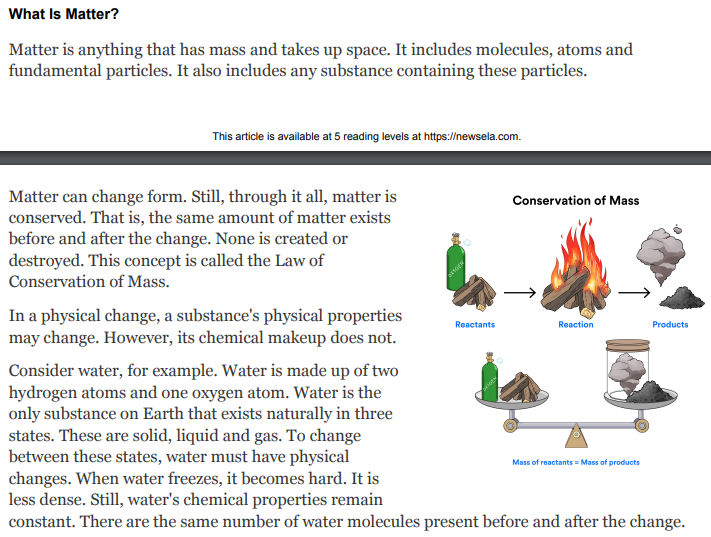
What happens when matter changes form?
Look at the picture. If the mass of the reactants is 500 grams, what is the mass of the products?
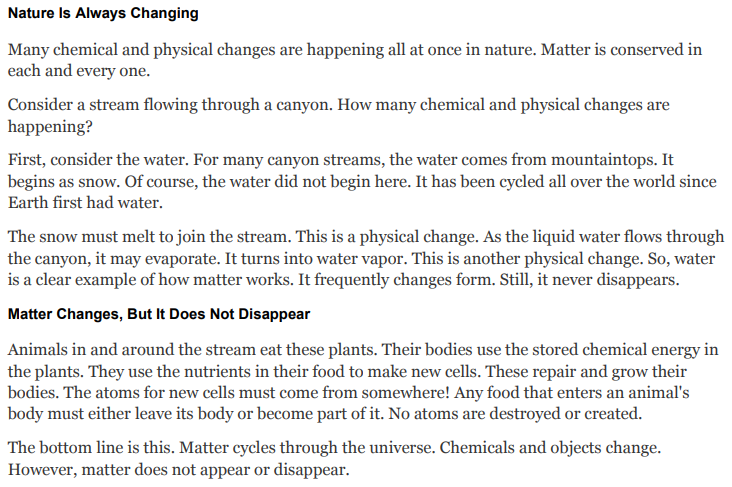
What is similar about both physical and chemical changes?
Where do animals get atoms for new cells?
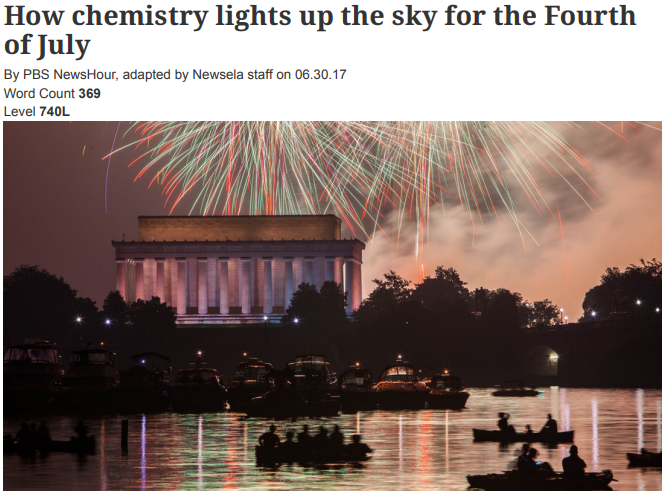
What is a sign that a chemical reaction is happening in the picture?
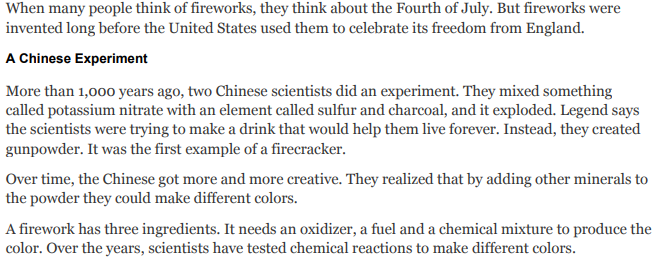
Which sentence BEST helps you understand that fireworks were discovered by accident?
What three ingredients do fireworks have?
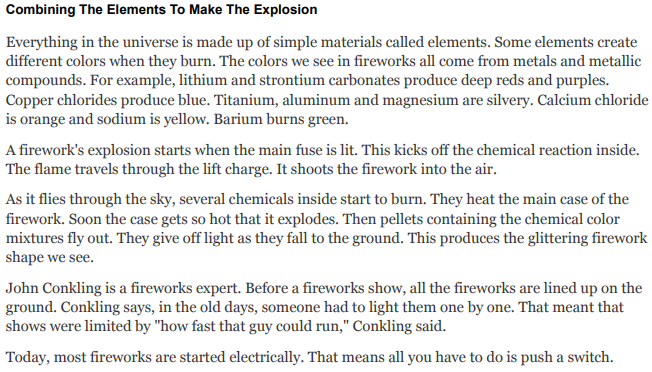
What element or elements could you use to make fireworks in your favorite color?
What starts the chemical reaction in a firework?
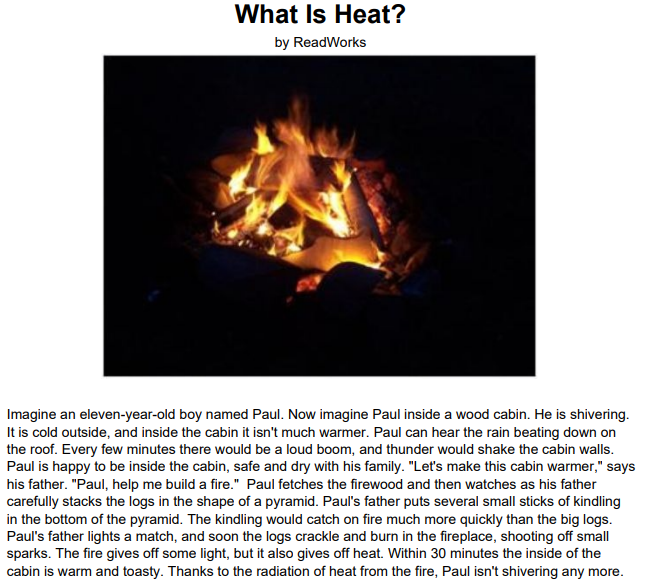
What do Paul and his father build in the cabin?
Why does Paul become warmer?
Heat moves from warmer areas to cooler areas.
What evidence from the text supports this statement?
What is the difference between a heat source and a heat sink?
What is conduction?
What does this text explain?
What kind of heat transfer is happening in the picture? Why?
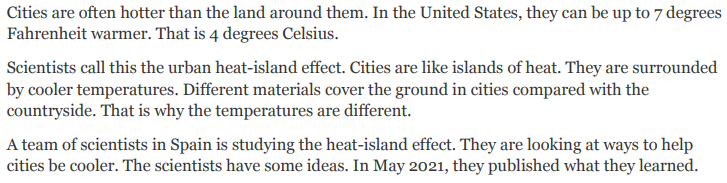
What is the urban heat island effect?
Why did scientists study the heat-island effect?
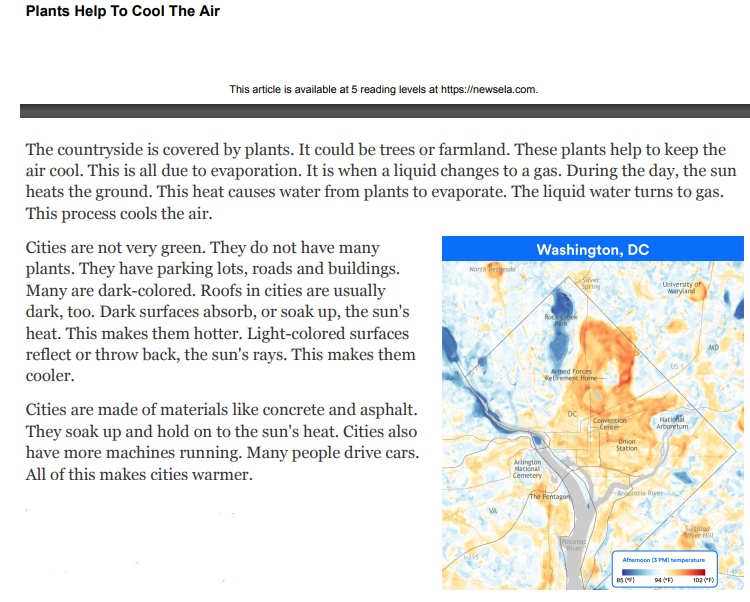
Why do plants help keep the air cool?
Why do dark surfaces make cities hotter?
How did scientists find out if different roofs could make a city cooler?
What could happen because of cooling roofs and extra watering for green spaces?
Which idea from the text for cooling cities do you think is the best? Why?
What happens to water's chemical properties when it freezes?
How do scientists make fireworks different colors?
How are fireworks today different from fireworks in the past?
Using information from the text, explain how a fire makes someone warmer.
When the sun shines on a dark surface, what kind of heat transfer occurs?