Divergent Plate Boundary
star
star
star
star
star
Last updated over 3 years ago
28 Nsɛmmisa
Divergent plate boundaries are locations where plates are moving away from one another. This occurs above rising convection currents. The rising current pushes up on the bottom of the lithosphere, lifting it and flowing laterally beneath it. This lateral flow causes the plate material above to be dragged along in the direction of flow. At the crest of the uplift, the overlying plate is stretched thin, breaks and pulls apart.
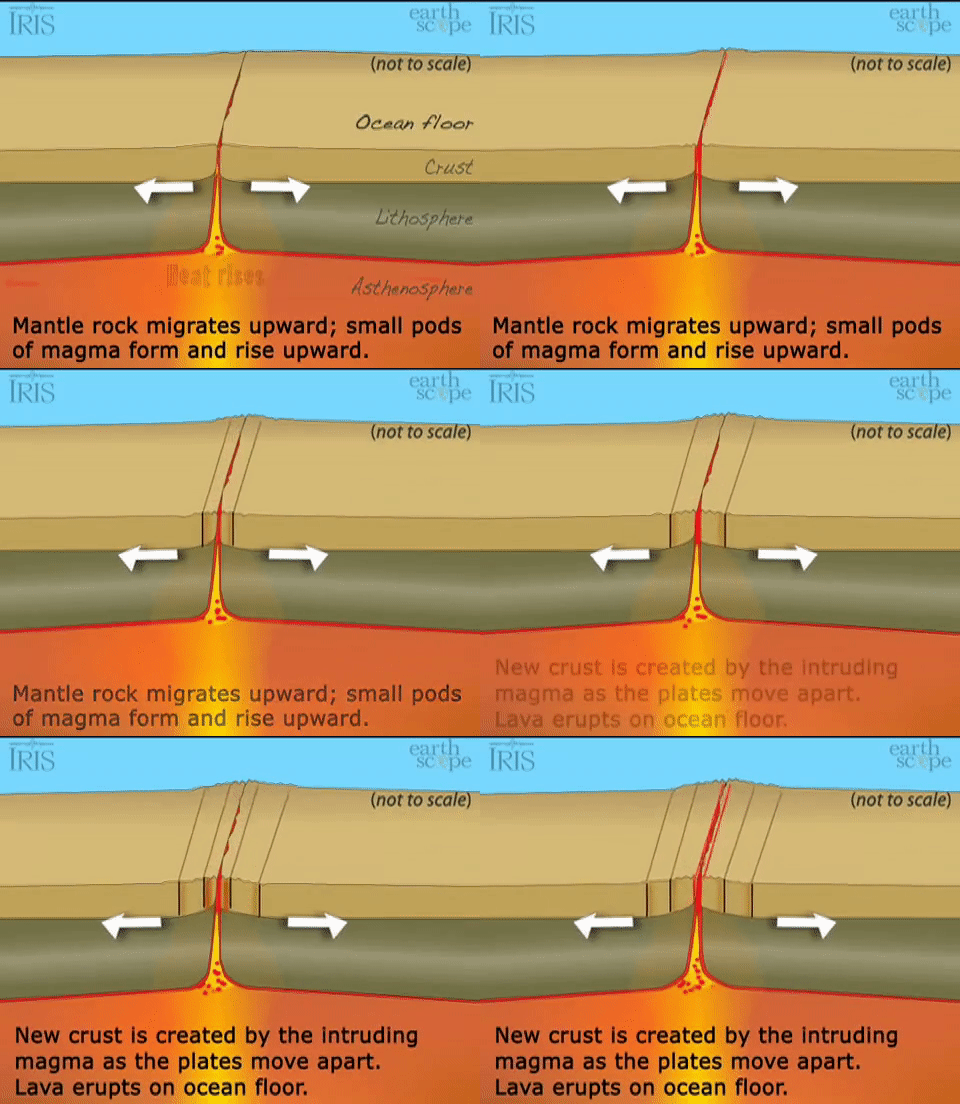
At divergent plate boundaries the plates...
When a divergent boundary occurs beneath oceanic lithosphere, the rising convection current below lifts the lithosphere, producing a mid-ocean ridge.
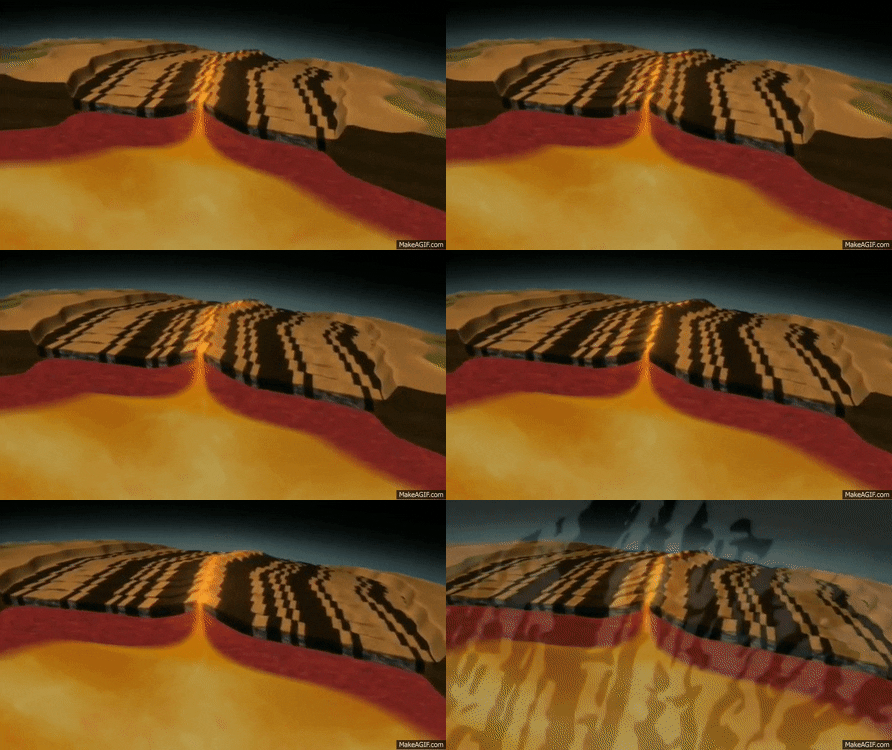
Extensional forces stretch the lithosphere and produce a deep fissure. When the fissure opens, pressure is reduced on the super-heated mantle material below. It responds by melting, and the new magma flows into the fissure. The magma then solidifies and the process repeats itself.
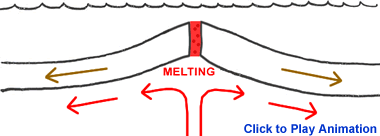
What process causes the formation of a fissure?
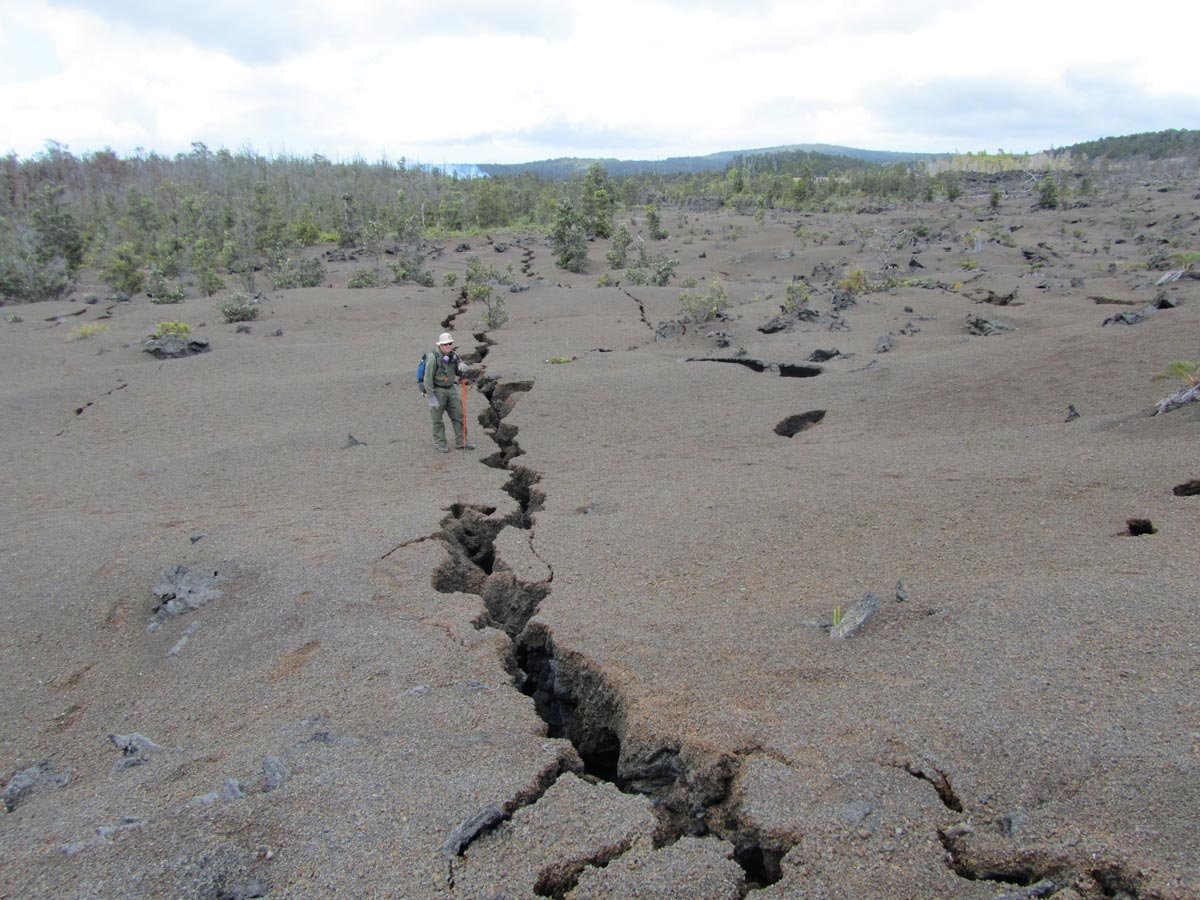
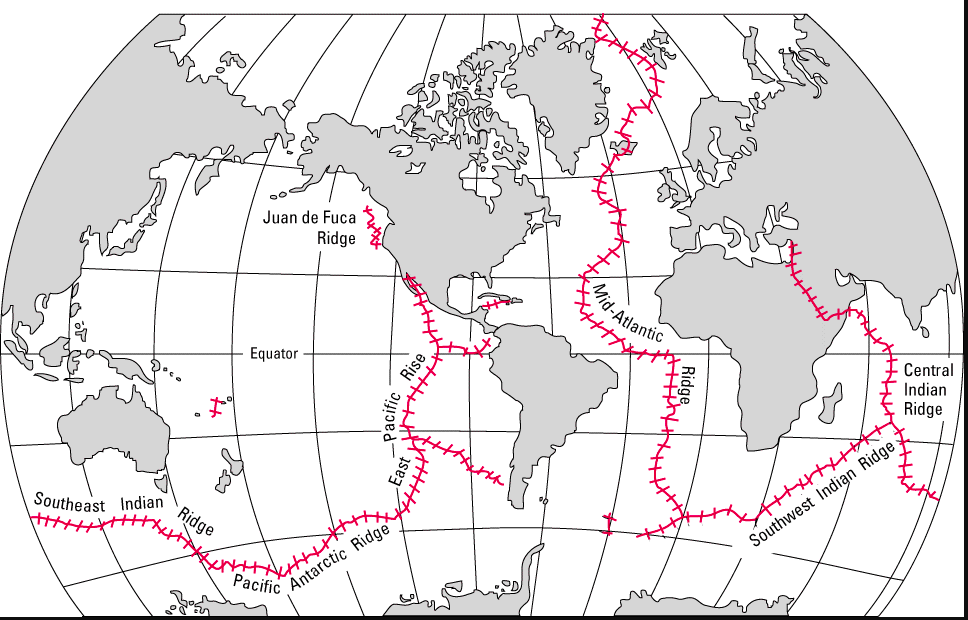
The Mid-Atlantic Ridge is a classic example of a divergent plate boundary. The Ridge is a high area compared to the surrounding seafloor because of the lift from the convection current below.
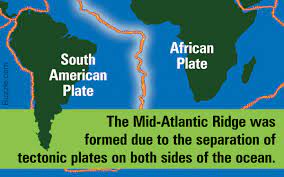
A frequent misconception is that the Ridge is a build-up of volcanic materials. The magma that fills the fissure does not flood extensively over the ocean floor and stack up to form a topographic high. Instead, it fills the fissure and solidifies. When the next eruption occurs, the fissure most likely develops down the center of the cooling magma plug with half of the newly solidified material being attached to the end of each plate.
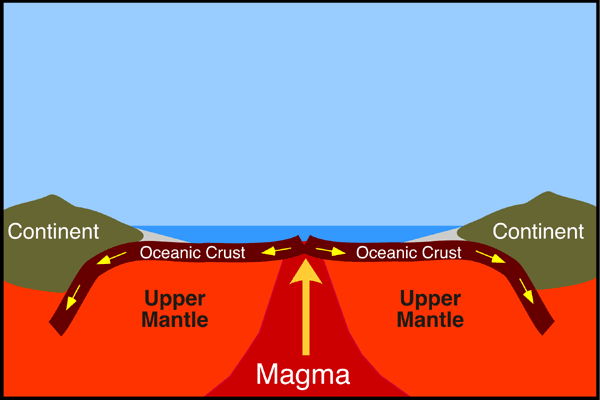
A) What do you believe this sentence means "The magma that fills the fissure does not flood extensively over the ocean floor and stack up to form a topographic high. Instead, it fills the fissure and solidifies"
B) How can you re-explain it to someone like a child who may have a hard time understanding it.
The Interactive Plate Boundary Map below provides satellite images of divergent boundaries between oceanic plates. Two locations are marked: 1) the Mid-Atlantic Ridge exposed above sea level on the island of Iceland, and 2) the Mid-Atlantic Ridge between North America and Africa.
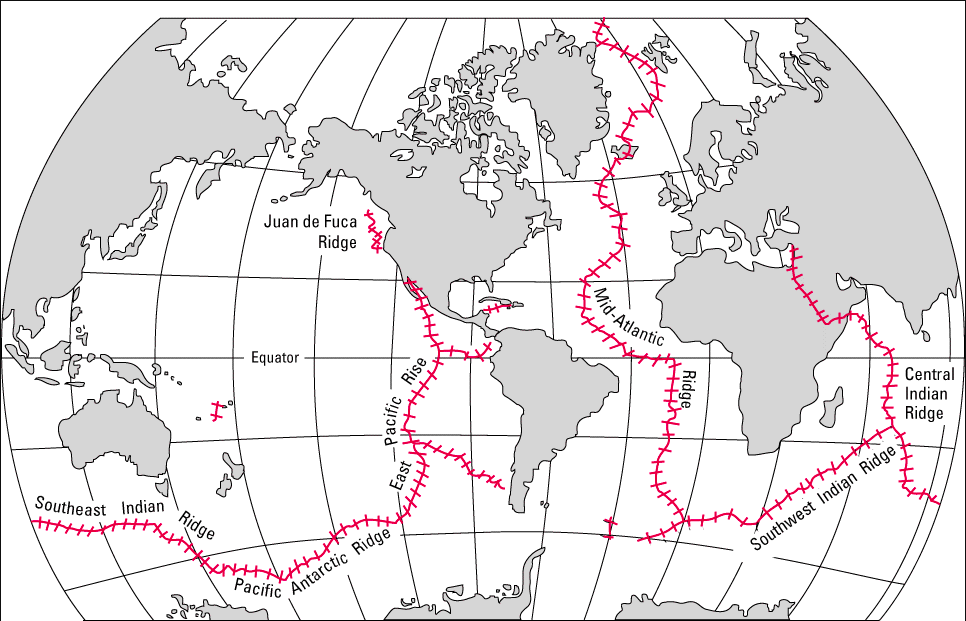
Effects that are found at a divergent boundary between oceanic plates include: a submarine mountain range such as the Mid-Atlantic Ridge; volcanic activity in the form of fissure eruptions; shallow earthquake activity; creation of new seafloor and a widening ocean basin.
Draw a quick sketch of the effects that are found at a divergent boundary between oceanic plates.

When a divergent boundary occurs beneath a thick continental plate, the pull-apart is not vigorous enough to create a clean, single break through the thick plate material. Here the thick continental plate is arched upwards from the convection current's lift, pulled thin by extensional forces, and fractured into a rift-shaped structure.
As the two plates pull apart, normal faults develop on both sides of the rift, and the central blocks slide downwards. Earthquakes occur as a result of this fracturing and movement. Early in the rift-forming process, streams and rivers will flow into the sinking rift valley to form a long linear lake. As the rift grows deeper it might drop below sea level, allowing ocean waters to flow in. This will produce a narrow, shallow sea within the rift. This rift can then grow deeper and wider. If rifting continues, a new ocean basin could be produced.
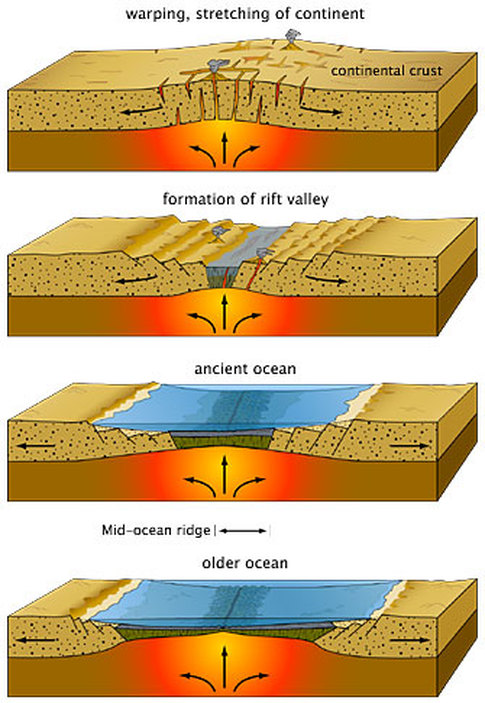
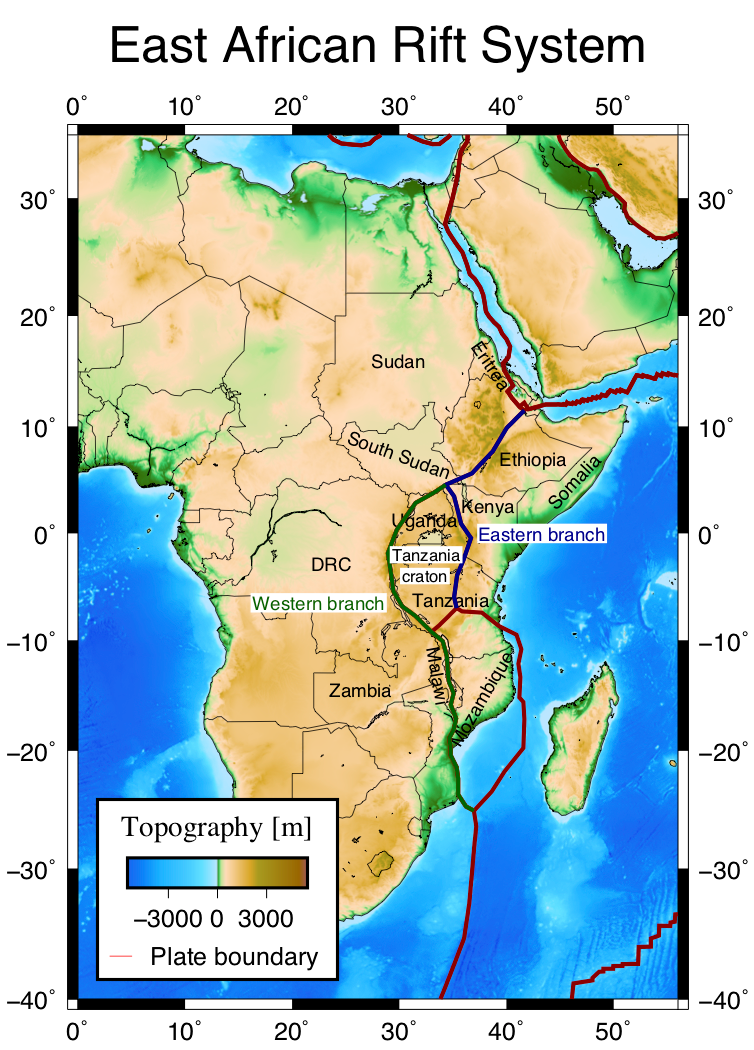
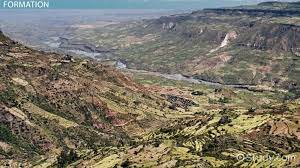
The East Africa Rift Valley is a classic example of this type of plate boundary. The East Africa Rift is in a very early stage of development. The plate has not been completely rifted, and the rift valley is still above sea level but occupied by lakes at several locations. The Red Sea is an example of a more completely developed rift. There the plates have fully separated, and the central rift valley has dropped below sea level.
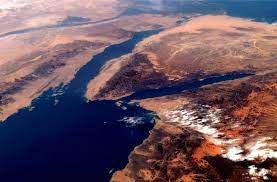
Attach a few images that you gathered from google abou thte East Africa Rift Valley.
What doe you notice in the images.
The Red Sea is an example of a more completely rift. There the plates have fully , and the central rift valley has dropped .
The Interactive Plate Boundary Map provided below helps explore satellite images of divergent boundaries between continental plates. Two locations are marked within the rift valley of East Africa, and another location is marked within the Red Sea.
Effects that are found at this type of plate boundary include: a rift valley sometimes occupied by long linear lakes or a shallow arm of the ocean; numerous normal faults bounding a central rift valley; shallow earthquake activity along the normal faults. Volcanic activity sometimes occurs within the rift.
A) First list the effects of a contential divergent boundary.
B) Draw some images of the effects found at divergent plate boundaries.
What causes divergent boundaries to move and where is the movement or direction of the plates?
Word Bank:
new
old
destructive
constructive
formed
crystalized
Divergent boundaries are considered "
What are the two types of divergent plate boundaries?
1.
2.
Describe oceanic-oceanic divergent plate boundaries
What is seen in red?
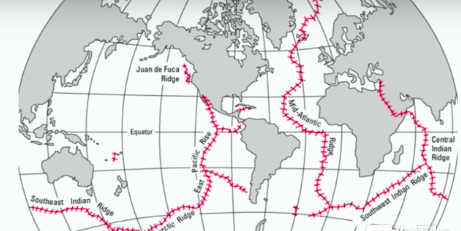
What country does the mid-ocean ridge run right through?
Describe the continental-continental divergent plate boundaries.
How was the East African Rift Valley created?
In what direction does lateral flow carry plate material...
What happens when a fissure is opened up?
A) When two plates are pulled , normal develop on both sides of the rift. The blocks in the middle or center fall . Earthquakes occur as a result of the . Early in the process streams and flow into the rift valley to form a . As a rift grows deeper it might drop below sea level, this allows water to flow in. This will produce a narrow and shallow sea within the rift. Rifting can and a new can be produced.
B) Draw a picture of this process of rifting in step by step images.
