Learning Objectives
Students will be able to
Learn tips for using their checking account effectively, including the use of mobile alerts
Read a checking account agreement and identify the fees associated with a checking account
Understand how overdraft protection works and how to avoid high fees attached to the service
Read a bank statement to verify its accuracy and interpret how their money is being used
Learning Objectives
Students will be able to
Learn tips for using their checking account effectively, including the use of mobile alerts
Read a checking account agreement and identify the fees associated with a checking account
Understand how overdraft protection works and how to avoid high fees attached to the service
Read a bank statement to verify its accuracy and interpret how their money is being used
Answer the question on the first slide in your Student Activity Packet. Then, follow your teacher’s directions on how to answer the follow-up questions.
Make an estimate -- what is the average fee to take money out of a non-network ATM?
Did it surprise you that the charge includes TWO different charges? Why or why not? UCS
Checking accounts are fundamental, as you saw in the last lesson, but it’s important to know how to use your account properly. Watch this video, starting at 0:42, to answer the questions.
Why is it vitally important to understand the fees your bank may charge on your checking account? UCS
Why do the women from the Financial Diet recommend using direct deposit, mobile banking, and financial apps? UCS
Checking account transactions are NOT reported to the credit bureaus and do not affect your credit score. Why is it still important to manage your checking account well? UCS
Overdraft fees, which average $35 per transaction, can devastate your checking account balance. Let’s dive a little deeper into these fees and how you can prevent them. Watch this video and then answer the questions.
What is misleading about the term “overdraft protection”? UCS
True or False: Once you are signed up for overdraft protection, you cannot opt out.
In a previous video, you saw Sharon recommend setting alerts to help prevent overdraft fees. Skim this article for recommendations on three alerts you, too, should set. Then, answer the questions.
In your own words, briefly describe the benefit of each type of alert below UCS:
a. Low Balance:
b. Direct Deposit:
c. Unusual Activity:
While all three of the alerts are highly recommended, which one do you think is most important? Why? UCS
All of the following are reasons to open a checking account EXCEPT…
Name one benefit of having a checking account. UCS
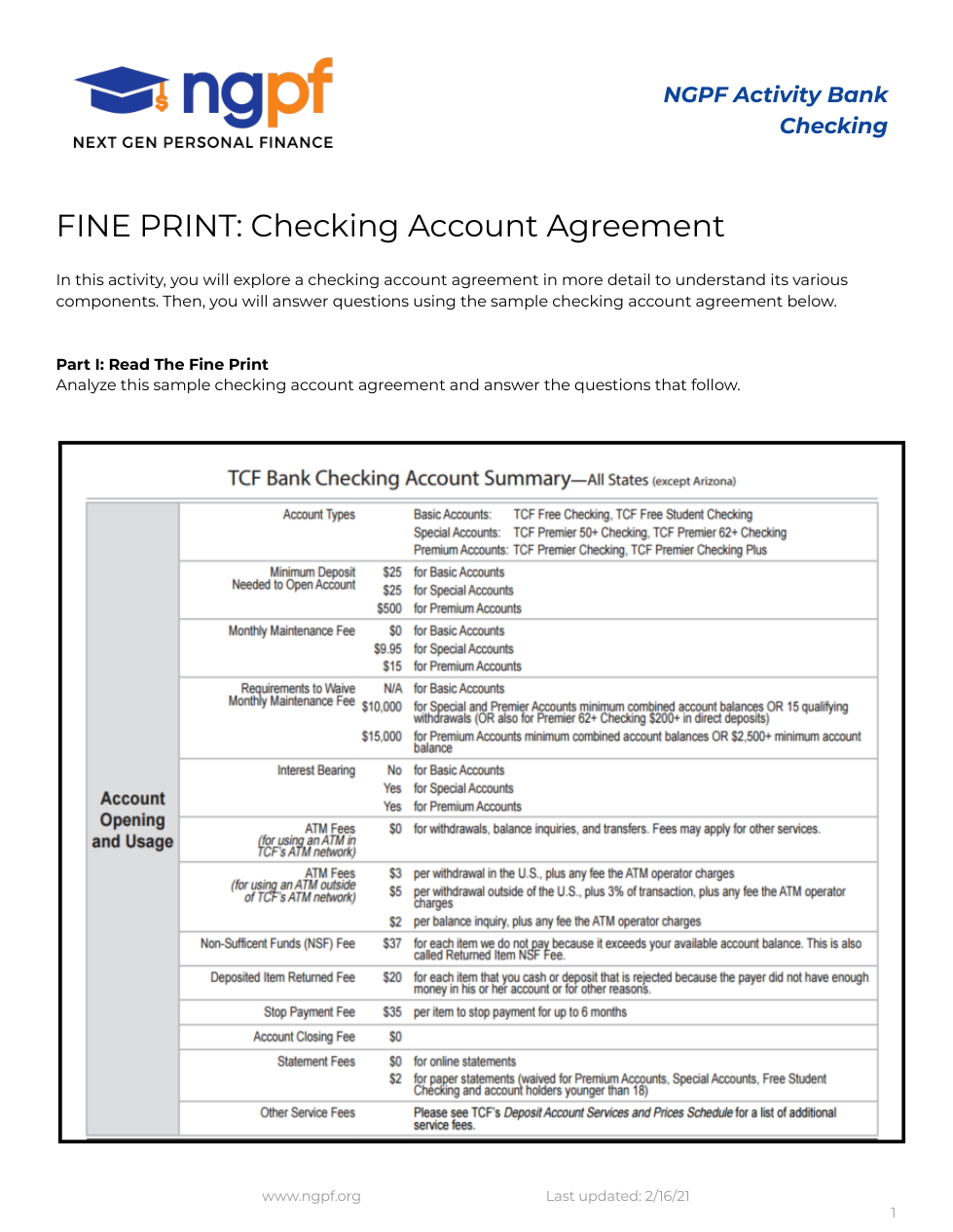
A Student Checking account would be classified as what type of account according to the Agreement? UCS
What is the minimum deposit needed to open each type of account?
Basic Account-
Special Account-
Premium Account-
Assuming you have a TCF Free Student Checking Account, what are 3 possible fees that would end up costing you extra money? UCS
1.
2.
3.
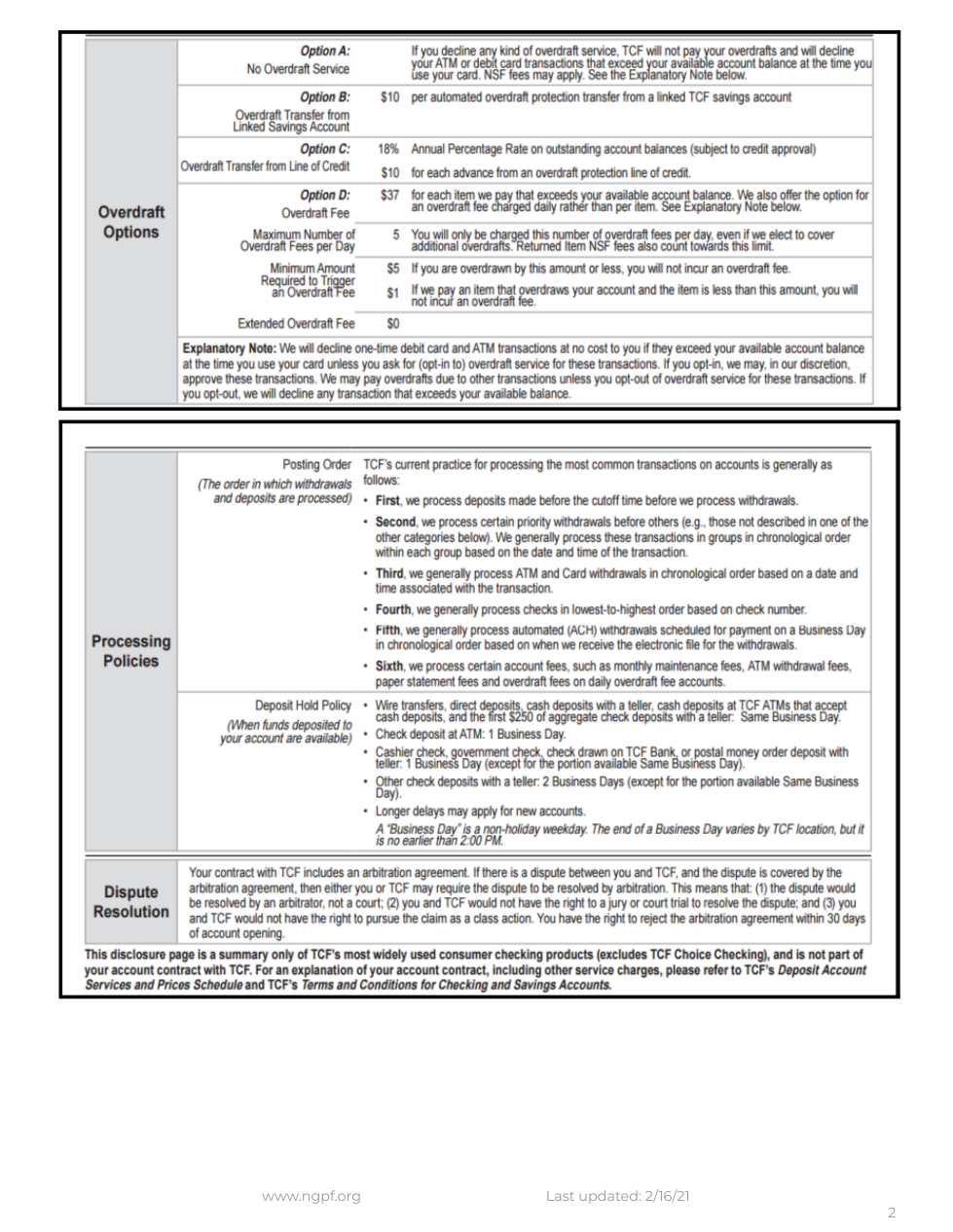
You choose Option A for Overdraft Options. What would happen if you had $30 in your checking account and you tried to take out $45 at the grocery store using your debit card? UCS
You choose Option B for Overdraft Options. Assume that you have $30 in your checking account and $50 in your savings account. What would happen if you tried to take out $45 at the grocery store using your debit card? UCS
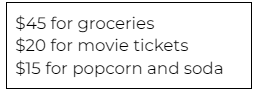
You choose Option D for Overdraft Options. What would happen if you had $10 in your checking account and completed the following debit card transactions on the same day:
Assuming you have a TCF Free Student Checking Account and chose Option D for your overdraft, how many maximum overdraft fees can you incur in one day? UCS
You have the following transactions post to your account on the same day: your paycheck deposit, a check you wrote for your rent, and a debit transaction for groceries. Which would be processed FIRST?
You deposit your birthday check for $50 at the TCF ATM. When will you have access to the money?
What advice would you offer to someone who is considering opening a checking account? What fees and criteria should they pay attention to? Why? UCS
What are some other steps you can do to avoid overdraft fees? UCS
1.
2.