Lakes and Ponds: Match the following terms to their definitions
Draggable item
arrow_right_alt
Corresponding Item
Lake
arrow_right_alt
Body of standing water so deep that no plants can grow on the bottom.
Pond
arrow_right_alt
Body of standing water shallow enough to allow plant growth on the bottom.
1 point
1
Question 2
2.
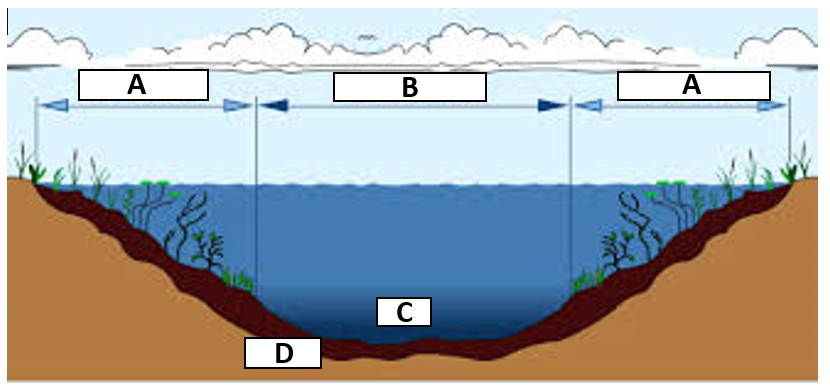
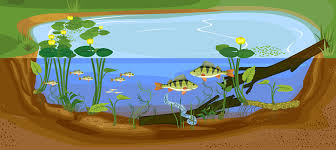
Use the diagram to answer the question below.
Which zone is labeled A?
1 point
1
Question 3
3.
Use the diagram to answer the question below.
Which zone is labeled B?
1 point
1
Question 4
4.
Use the diagram to answer the question below.
Which zone is labeled C?
1 point
1
Question 5
5.
Use the diagram to answer the question below.
Which zone is labeled D?
2 points
2
Question 6
6.
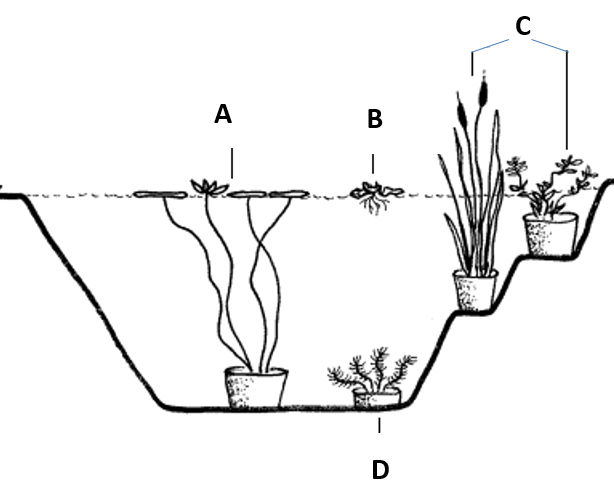
Look at the diagram above. Match the letter to the correct type of plant.
Draggable item
arrow_right_alt
Corresponding Item
A
arrow_right_alt
Floating plants
B
arrow_right_alt
Free- Floating plants
C
arrow_right_alt
Emergent Plants
D
arrow_right_alt
Submerged plants
1 point
1
Question 7
7.
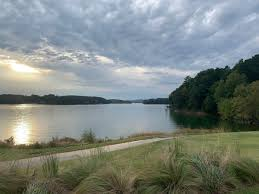
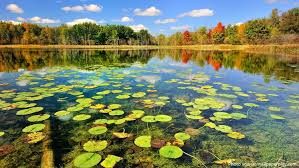
Is this a lake or a pond?
1 point
1
Question 8
8.
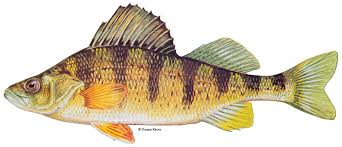
Which of the following categories would a large, swimming fish be classified as?
1 point
1
Question 9
9.
Zooplankton are animal-like microscopic organisms. True or false?
El zooplancton son organismos microscópicos similares a los animales. ¿Verdadero o falso?
1 point
1
Question 10
10.
Areas of aquatic zones that have a lot of light have higher amounts of oxygen available due to photosynthesis.
El zooplancton son organismos microscópicos similares a los animales. ¿Verdadero o falso?
3 points
3
Question 11
11.
Wetlands and Brackish waters.
Match the following wetlands and brackish water zones to their definitions.
Draggable item
arrow_right_alt
Corresponding Item
Fen
arrow_right_alt
Standing shallow bodies of fresh or brackish water with lots of different types of coastal grasses. Cuerpos poco profundos de agua dulce o salobre con muchos tipos diferentes de pastos costeros.
Bog
arrow_right_alt
Body of water where fresh and saltwater mix. Normally found where the mouth of a river meets the ocean.Cuerpo de agua donde se mezclan agua dulce y salada. Normalmente se encuentra donde la desembocadura de un río se encuentra con el océano.
Swamp
arrow_right_alt
Area with very acidic waters and a thick floating carpet of sphagnum moss. Water comes from precipitation.Zona con aguas muy ácidas y una espesa alfombra flotante de musgo sphagnum. El agua proviene de las precipitaciones.
Estuary
arrow_right_alt
Standing shallow freshwater that is a little acidic. Water comes from mineral-rich surface water or groundwater.Agua dulce poco profunda que es un poco ácida. El agua proviene de aguas superficiales o subterráneas ricas en minerales.
Marsh
arrow_right_alt
Stagnant, veryshallow, smelly, body of freshwater with trees and a lot of rotting vegetation. Cuerpo de agua dulce estancado, muy poco profundo, maloliente, con árboles y mucha vegetación en descomposición.
4 points
4
Question 12
12.
Match the following freshwater zones to their definitions.
Draggable item
arrow_right_alt
Corresponding Item
Streams
arrow_right_alt
Small channels of moving water.
Lentic
arrow_right_alt
Large channels of moving water that are made up of many streams.
Lotic
arrow_right_alt
Bodies of standing water such as a lakes, ponds, or wetlands.
Rivers
arrow_right_alt
Channels of moving water such as rivers or streams.
1 point
1
Question 13
13.
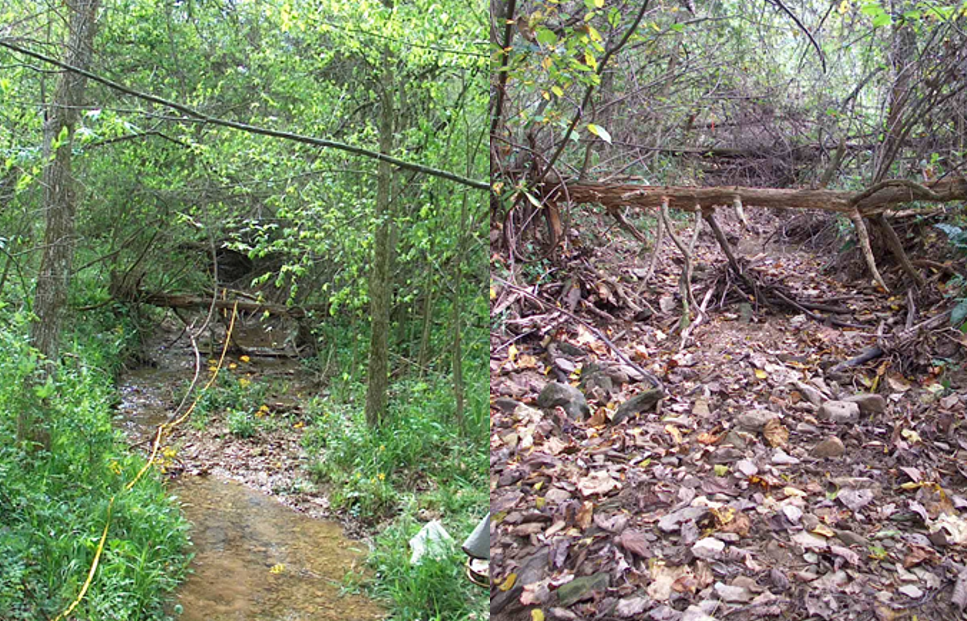
An intermittent stream is...
1 point
1
Question 14
14.
Select all that apply.
Which of the following are characteristics of the upper reaches of a stream or river? ¿Cuáles de las siguientes son características de los tramos superiores de un arroyo o río?
1 point
1
Question 15
15.
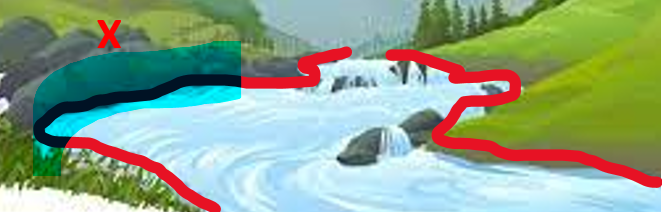
Look at the image below. Which process is occurring at the area marked with an X and highligted in blue? Mira la imagen de abajo. ¿Qué proceso está ocurriendo en el área marcada con una X y resaltada en azul?
1 point
1
Question 16
16.
The area of land along the banks of a stream or river that is full of plants and animals is called...
El área de tierra a lo largo de las orillas de un arroyo o río que está lleno de plantas y animales se llama...
2 points
2
Question 17
17.
Marine zones
Match the following zones to their definitions.
Draggable item
arrow_right_alt
Corresponding Item
Neritic Zone
arrow_right_alt
The top portion of the ocean that extends down to 200 m. Has light. Tiene luz.
Aphotic Zone
arrow_right_alt
The bottom portion of the ocean that extends below 200 m. Has no light. No Tiene luz.
Benthic Zone
arrow_right_alt
The shallow water part of the ocean from the low tide zone to the edge of the continental shelf.La parte de aguas poco profundas del océano desde la zona de marea baja hasta el borde de la plataforma continental.
Photic Zone
arrow_right_alt
The bottom parts of the ocean. The different areas of the ocean floor. Las partes del fondo del océano. Las diferentes áreas del fondo oceánico.
1 point
1
Question 18
18.
In the aphotic zones of the ocean, there are organisms that have bioluminescence (can glow).
En las zonas afóticas del océano, hay organismos que tienen bioluminiscencia (pueden brillar).
1 point
1
Question 19
19.
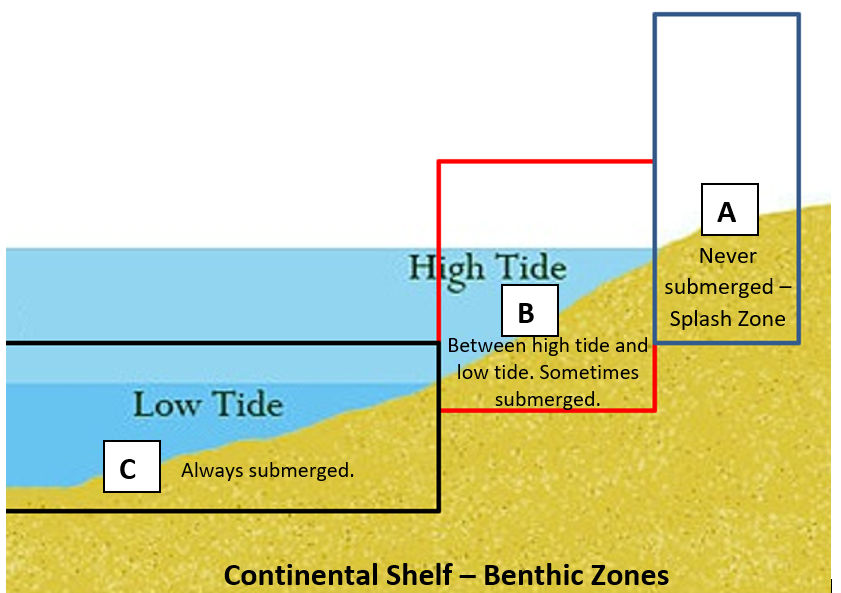
Use the diagram to answer the question.
Match the letter of the zone in the diagram to it's name.
Draggable item
arrow_right_alt
Corresponding Item
B
arrow_right_alt
Supralittoral
C
arrow_right_alt
Littoral
A
arrow_right_alt
Sublittoral
1 point
1
Question 20
20.
Organisms that live in the hadal and hadalpelagic zones (trenches) of the ocean do NOT need special adaptations to survive. Los organismos que viven en las zonas hadal y hadalpelágicas (trincheras) del océano NO necesitan adaptaciones especiales para sobrevivir.
2 points
2
Question 21
21.
Place the pelagic zones of the ocean in order from shallowest area to deepest area.
Coloque las zonas pelágicas del océano en orden de la zona más superficial a la zona más profunda.