Log in
Sign up for FREE
arrow_back
Library

Currents practice

star
star
star
star
star
Last updated almost 3 years ago
31 questions
1
1
1
1
1
1
1
1
1
1
1
1
1
1
1
1
1
1
1
1
1
1
1
1
1
1
1
1
1
1
1
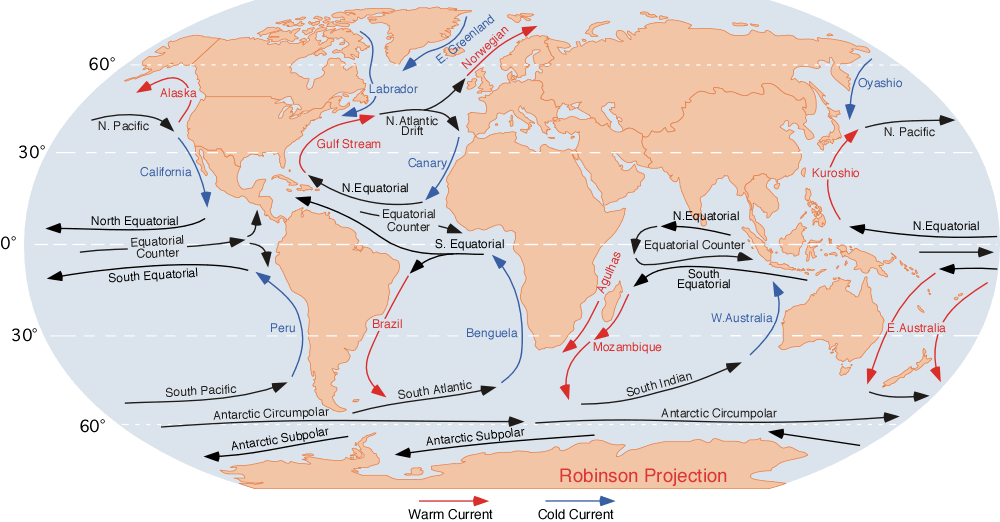
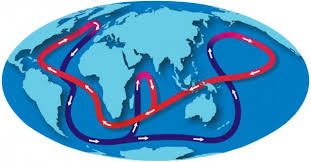
Use the image below to answer the following questions.
Question 1
1.

Question 2
2.

Question 3
3.

Question 4
4.

Question 5
5.

Question 6
6.

Question 7
7.

Question 8
8.

Question 9
9.

Question 10
10.

Question 11
11.

Question 12
12.

Question 13
13.

Question 14
14.

Question 15
15.

Question 16
16.

Question 17
17.

Question 18
18.

Question 19
19.

Question 20
20.

Question 21
21.

Question 22
22.

Question 23
23.

Question 24
24.

Question 25
25.

Question 26
26.

The Global conveyor belt

Question 27
27.

Question 28
28.

Question 29
29.

Question 30
30.

Question 31
31.

The red arrows represent
warm currents
cold currents
The blue arrows represent
warm currents
cold currents
The red arrows are found on which side of the ocean basin?
Western
Eastern
The blue arrows are found on which side of the ocean basin?
Western
Eastern
Western boundary currents are found on the western side of a land mass
True
False
Eastern boundary currents are found on the Easter side of an ocean basin.
True
False
Eastern boundary currents are
cold currents
warm currents
Western boundary currents are
cold currents
warm currents
Warm western boundary currents come from
the equator
the poles
Cold eastern boundary currents come from
the equator
the poles
Downwelling often occures at
Eastern boundary currents
Western boundary currents
Fisheries are often set up in areas where there is
upwelling
downwelling
Upwelling
brings nutrient rich water up to the surface
brings oxygen rich water to the surface
Warm surface waters are
nutrient rich because decaying organisms are found here.
oxygen rich due to an abundance of plant life and aeration from the waves
Areas where downwelling occurs are
good for fishing
bad for fishing
Upwelling occurs often in
Eastern boundary currents
Western boundary currents
It would be better to set up a fishing industry on the
Eastern side of an ocean basin
Western side of an ocean basin
Downwelling
brings oxygen rich water and decomposing materials to the ocean floor
Cold, nutrient rich water to the ocean floor.
Which of the folowing leads to upwelling
Surface ocean water diverges
Winds moving the water moving toward the land/ coastline
Surface ocean water converges
Winds moving the water moving away from the land/ coastline
Which of the folowing leads to downwelling
Winds moving the water moving away from the land/ coastline
Surface ocean water diverges
Winds moving the water moving toward the land/ coastline
Surface ocean water converges
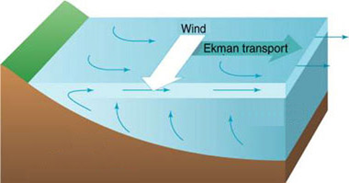
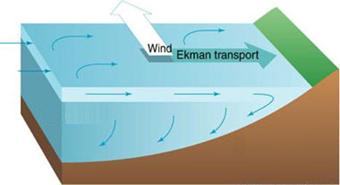
Look at the picture below

What is shown in the picture? Upwelling or Downwellling
Where is this taking place? Northern or Southeren Hemisphere
Upwelling; Northern Hemisphere
Downwelling; Northern Hemisphere
Downwelling; Southern Hemisphere
Upwelling; Southern Hemisphere
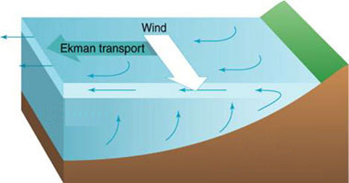
Look at the picture below


What is shown in the picture? Upwelling or Downwellling
Where is this taking place? Northern or Southeren Hemisphere
Downwelling; Northern Hemisphere
Downwelling; Southern Hemisphere
Upwelling; Northern Hemisphere
Upwelling; Southern Hemisphere
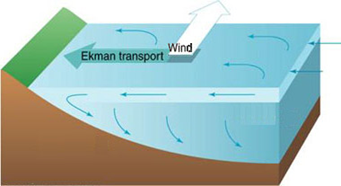
Look at the picture below


What is shown in the picture? Upwelling or Downwellling
Where is this taking place? Northern or Southeren Hemisphere
Downwelling; Southern Hemisphere
Upwelling; Northern Hemisphere
Downwelling; Northern Hemisphere
Upwelling; Southern Hemisphere
Look at the picture below


What is shown in the picture? Upwelling or Downwellling
Where is this taking place? Northern or Southeren Hemisphere
Downwelling; Northern Hemisphere
Upwelling; Northern Hemisphere
Upwelling; Southern Hemisphere
Downwelling; Southern Hemisphere
Which of the following best describes how temperature affects the water density ?
Warmer water is more dense than cold water
Cold water is more dense than warm water
Warm and cold water have the same density
Which of the following best describes how salinity affects the water density ?
Lower the salinity higher the density of water
Salinity does not affect the density of water
higher the salinity higher the density of water
The cold salty water at the poles will ____________________
Sink to the bottom
Stay on the top
The warm water at the equator moves towards poles and the cold water at the poles moves toward the equator. Why is this important
Prevents overheating of the equatorial water and over freezing of the polar water
Moves water around so it is not stagnant
Prevents the movement of the magnetic fields at the pole
As the cold salty water sinks at the pole the warm oxygen rich water from the equator replaces the displacing water. This warm water cools down and sinks to the bottom. Why is this important?
The warm water has more oxygen and as it sinks at the pole it increases the oxygen available at the bottom of the ocean
The cold water has more oxygen as it rise to the surface it increases the amount of oxygen available closer to the ocean surface.
The warm water has more nutrients and as it sinks at the pole it increases the nutrients available at the bottom of the ocean
The cold water has more nutrients as it rise to the surface it increases the amount of nutrients available closer to the ocean surface.
The cold salty nutrient rich water water sinks at the pole and moves toward the equator. As it reaches the equator the cold water warms up and rise to the surface. Why is this important?
The cold water has more oxygen as it rise to the surface it increases the amount of oxygen available closer to the ocean surface.
The warm water has more nutrients and as it sinks at the pole it increases the nutrients available at the bottom of the ocean
The warm water has more oxygen and as it sinks at the pole it increases the oxygen available at the bottom of the ocean
The cold water has more nutrients as it rise to the surface it increases the amount of nutrients available closer to the ocean surface.
What will happen if the temperature differences between the poles and the equator decrease?
The global conveyor belt will keep moving as it is not affected by the temperature of the oceans
The global conveyor belt will slow down and eventually stop.
The global conveyor belt will stop half way
The global conveyor belt will keep moving but the direction of the curents will reverse