Log in
Sign up for FREE
arrow_back
Library

Unit 3 TEST: Aquatic Life Zones

star
star
star
star
star
Last updated almost 3 years ago
22 questions
4
1
1
1
1
2
1
1
1
1
4
4
1
1
1
1
3
1
1
1
1
2
Question 1
1.

Draggable itemarrow_right_altCorresponding Item
arrow_right_alt
arrow_right_alt
arrow_right_alt
arrow_right_alt
arrow_right_alt
Question 2
2.

Question 3
3.

Question 4
4.

Question 5
5.

Question 6
6.

Draggable itemarrow_right_altCorresponding Item
arrow_right_alt
arrow_right_alt
arrow_right_alt
arrow_right_alt
Question 7
7.

Question 8
8.

Question 9
9.

Question 10
10.

Question 11
11.

Draggable itemarrow_right_altCorresponding Item
arrow_right_alt
arrow_right_alt
arrow_right_alt
arrow_right_alt
arrow_right_alt
Question 12
12.

Draggable itemarrow_right_altCorresponding Item
arrow_right_alt
arrow_right_alt
arrow_right_alt
arrow_right_alt
Question 13
13.

Question 14
14.

Question 15
15.

Question 16
16.

Question 17
17.

Draggable itemarrow_right_altCorresponding Item
arrow_right_alt
arrow_right_alt
arrow_right_alt
arrow_right_alt
arrow_right_alt
Question 18
18.

Question 19
19.

Draggable itemarrow_right_altCorresponding Item
arrow_right_alt
arrow_right_alt
arrow_right_alt
Question 20
20.

Question 21
21.

Question 22
22.

Lakes and Ponds: Match the following terms to their definitions
Limnetic
Body of standing water so deep that no plants can grow on the bottom.
Littoral
Body of standing water shallow enough to allow plant growth on the bottom.
Pond
Deep part of a standing body of water that has no light (aphotic). No photosynthesis can occur here.
Lake
Shallow area with rooted plants and waves – light shines through all the way to the bottom.
Profundal zone
Open water part of a standing body of water that has enough light for photosynthesis to occur.
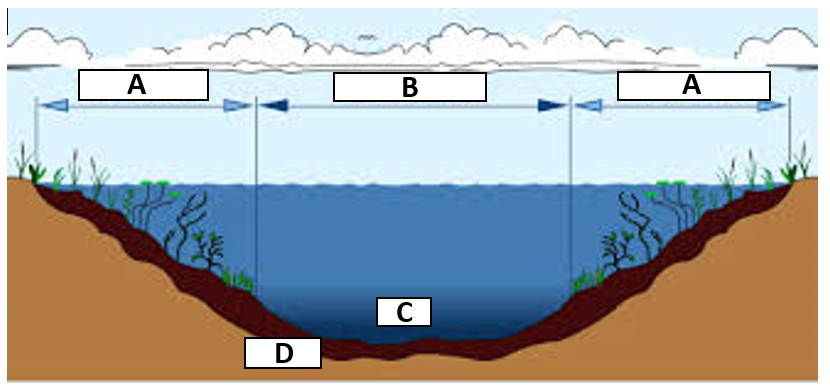
Use the diagram to answer the question below.

Which zone is labeled A?
Limnetic zone
Littoral zone
Benthic zone
Profundal zone
Use the diagram to answer the question below.

Which zone is labeled B?
Limnetic zone
Benthic zone
Profundal zone
Littoral zone
Use the diagram to answer the question below.

Which zone is labeled C?
Limnetic zone
Profundal zone
Littoral zone
Benthic zone
Use the diagram to answer the question below.

Which zone is labeled D?
Profundal zone
Limnetic zone
Benthic zone
Littoral zone

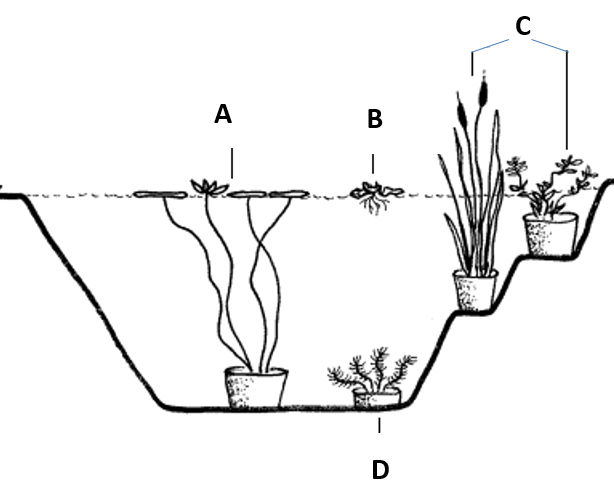
Look at the diagram above. Match the letter to the correct type of plant.
C
Floating plants
D
Free- Floating plants
B
Emergent Plants
A
Submerged plants
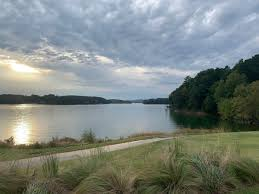
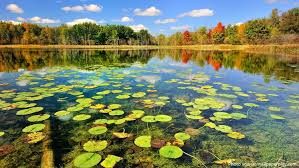
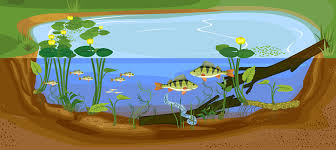
Is this a lake or a pond?

Lake
Pond
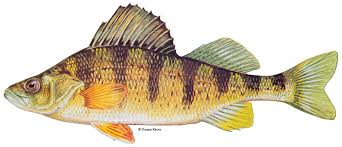
Which of the following categories would a large, swimming fish be classified as?

Plankton
Benthos
Nekton
Periphyton
Zooplankton are animal-like microscopic organisms. True or false?
True
False
Areas of aquatic zones that have a lot of light have higher amounts of oxygen available due to photosynthesis.
True
False
Wetlands and Brackish waters.
Match the following wetlands and brackish water zones to their definitions.
Bog
Standing shallow bodies of fresh or brackish water with lots of different types of coastal grasses.
Swamp
Body of water where fresh and saltwater mix. Normally found where the mouth of a river meets the ocean.
Fen
Area with very acidic waters and a thick floating carpet of sphagnum moss. Water comes from precipitation.
Estuary
Standing shallow freshwater that is a little acidic. Water comes from mineral-rich surface water or groundwater.
Marsh
Stagnant, very shallow, smelly, body of freshwater with trees and a lot of rotting vegetation.
Match the following freshwater zones to their definitions.
Lentic
Small channels of moving water.
Lotic
Large channels of moving water that are made up of many streams.
Rivers
Bodies of standing water such as a lakes, ponds, or wetlands.
Streams
Channels of moving water such as rivers or streams.
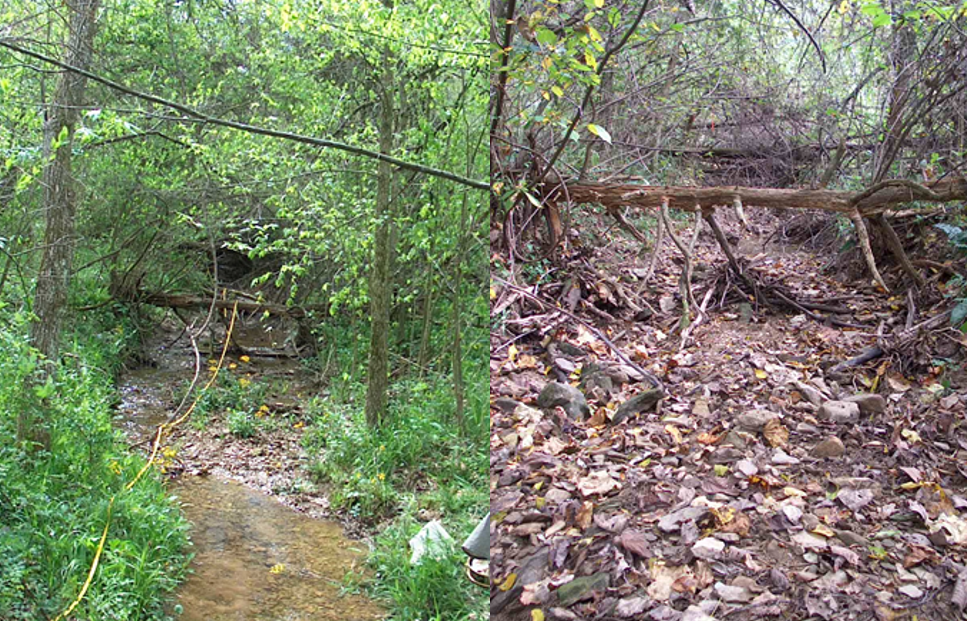
An intermittent stream is...

A stream that contains water at all times except during extreme drought.
A stream channel that carries water only during and immediately after periods of rainfall or snowmelt.
A stream that becomes dry for a period of time for a week or longer every year
Select all that apply.

Which of the following are characteristics of the upper reaches of a stream or river?
Water moves very quickly.
There are many organisms that live here and high amount of species diversity.
Has waterfalls, rapids, riffles and boulders.
The water is clear.
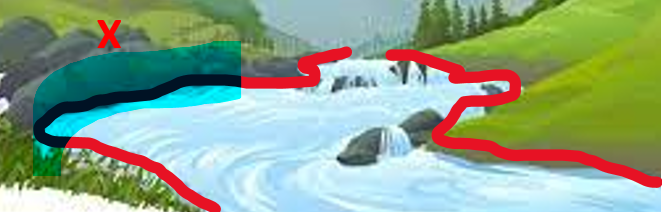
Look at the image below. Which process is occurring at the area marked with an X and highligted in blue?

Erosion
Deposition
Neither
The area of land along the banks of a stream or river that is full of plants and animals is called...
Waterfall
Pool
Riparian Zone
Estuary
Marine zones
Match the following zones to their definitions.
Neritic Zone
The top portion of the ocean that extends down to 200 m. Has light.
Photic Zone
The bottom portion of the ocean that extends below 200 m. Has no light.
Oceanic Zone
The shallow water part of the ocean from the low tide zone to the edge of the continental shelf.
Benthic Zone
Open area of the ocean beginning right after the edge of the continental shelf.
Aphotic Zone
The bottom parts of the ocean. The different areas of the ocean floor.
In the aphotic zones of the ocean, there are organisms that have bioluminescence.

True
False
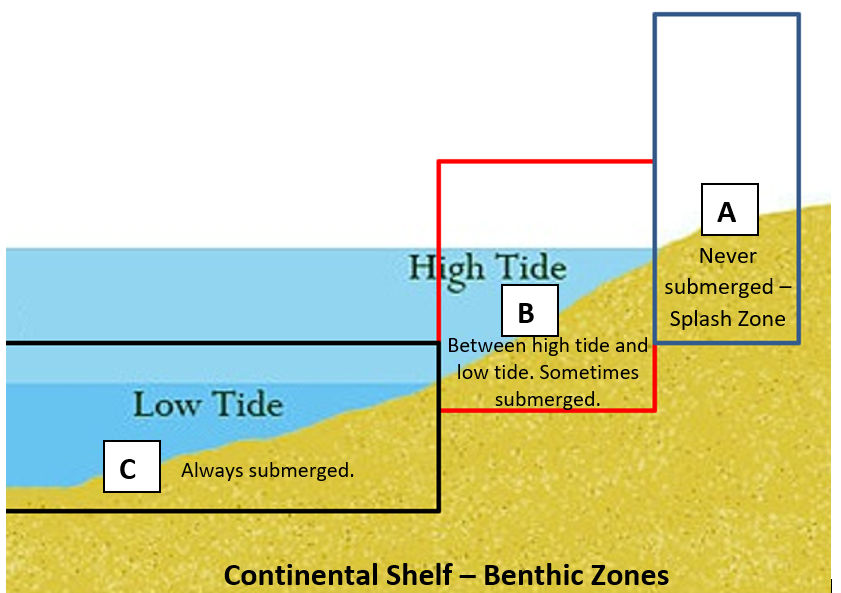
Use the diagram to answer the question.


Match the letter of the zone in the diagram to it's name.
B
Supralittoral
C
Littoral
A
Sublittoral
The majority of organisms that live in the ocean are found in the Neritic and Photic zones beacuse there is more oxygen and light available.
True
False
Organisms that live in the hadal and hadalpelagic zones (trenches) of the ocean do NOT need special adaptations to survive.
True
False
Place the pelagic zones of the ocean in order from shallowest area to deepest area.
Epipelagic
Bathypelagic
Mesopelagic
Hadalpelagic
Abyssopelagic