Octopus
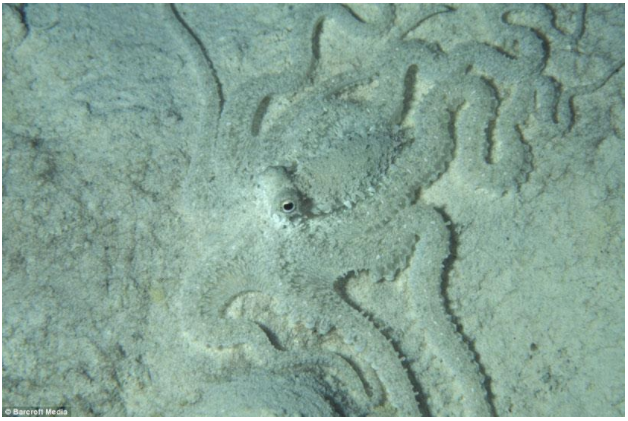
Octopuses range in size from 4 foot long species to some species that can reach over 16 feet long. They can change color and skin texture.
Over time, there may be a change in an organism's traits or behavior that ultimately increases their chance of survival. This change is called an adaptation. In this web quest you will look at different adaptations in marine organisms and explain how these adaptations help these organisms to survive.
Instructions: Explore the organisms below. Some have videos and some do not. Use the information provided, the pictures, and the videos to determine what each organism's adaptation is. Then, Answer questions 24 and 25 and submit.
Octopus
Octopuses range in size from 4 foot long species to some species that can reach over 16 feet long. They can change color and skin texture.
What is the adaptation? How does it help the organism survive?
Sharks
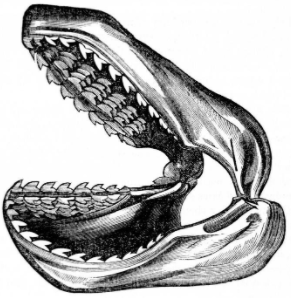
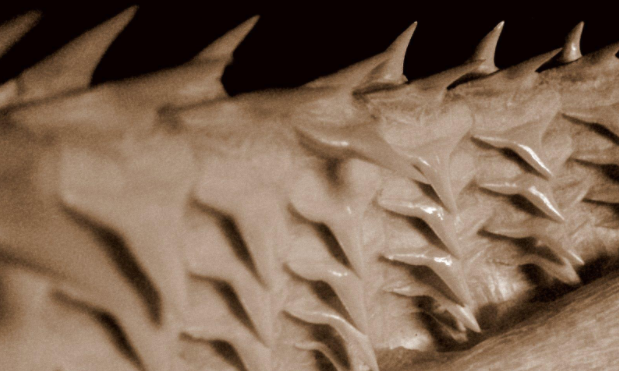
Sharks range in size from 8 inch long species to some that can reach over 46 feet long. They have many rows of teeth (up to 3 inches) folded back in their jaw...up to 35,000 teeth in their lifetime.
What is the adaptation? How does it help the organism survive?
Squid
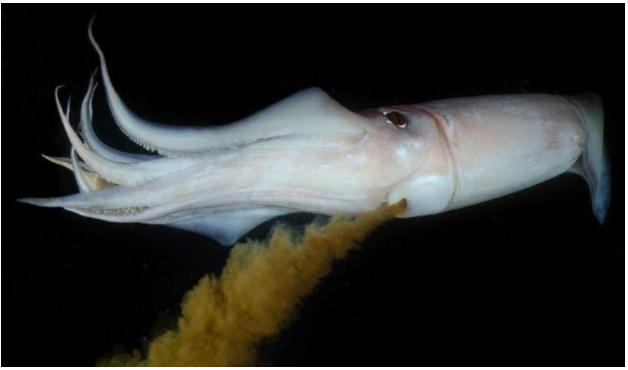
Squids range in size from 1 foot long species to some that can reach over 46 feet long. They have an ink sac in their bodies that can release ink into the water.
What is the adaptation? How does it help the organism survive? (watch the first 25 seconds)
Whale
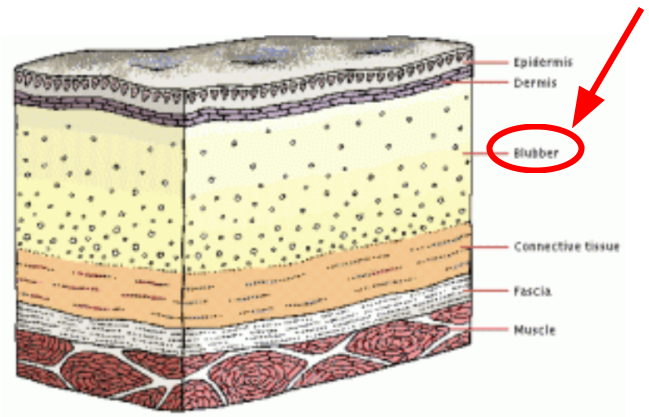
Whales, which are found migrating in all ocean basins, have a thick layer of fat or blubber under their skin. In some species, the layer can be as thick as 12 inches.
Whales range in size from 8.5 feet to 98 feet long.
What is the adaptation? How does it help the organism survive?
Stingray
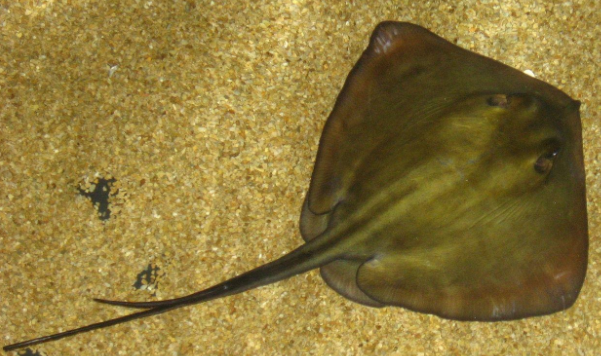
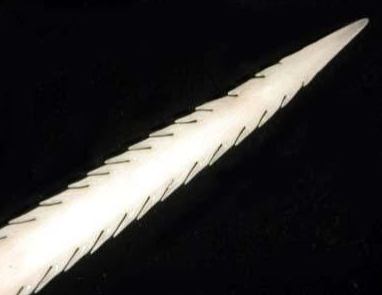
Stingray have short broad bodies with a long thin tail and can ready a length of 14 feet. Halfway down the tail, it has a barb (up to 14 inches in length) that is covered with rows of sharp flat spines and its underside has two grooves with venom glands.
What is the adaptation? How does it help the organism survive?
Leafy Seadragon
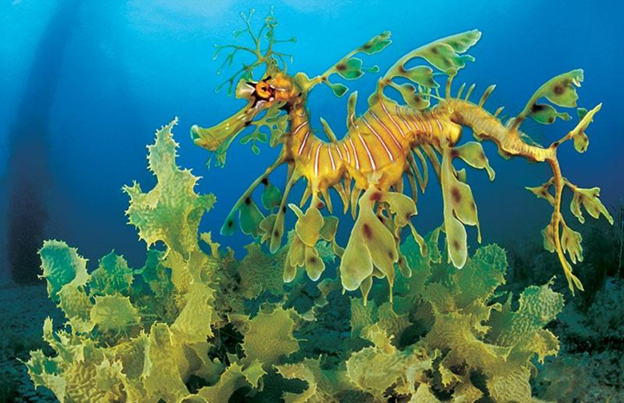
The leafy seadragon is a type of seahorse with long leaf-like protrusions coming from all over the body. They can read a length of 2 feet.
What is the adaptation? How does it help the organism survive?
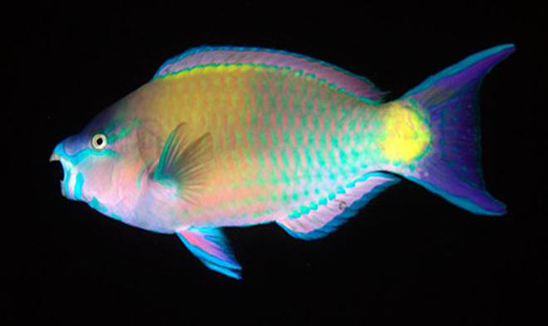
Parrotfish
Parrot fish are a colorful fish that lives in tropical water among the coral reefs. They can grow to over 4 feet long. They have fused teeth that form very hard beaklike plates.
What is the adaptation? How does it help the organism survive?
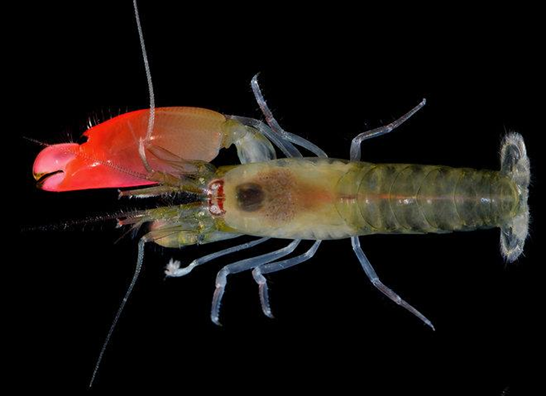
Pistol Shrimp
Pistol shrimp are 1.2-2 inch long shrimp and have asymmetrical claws, the larger of which is capable of producing a loud snapping sound.
What is the adaptation? How does it help the organism survive?
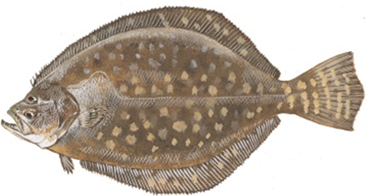
Flounder
The flounder is a fish with a short, broad, flat body and lives on the bottom of the seafloor. It can grow up to 3 feet long. It hatches with normal eyes (an eye on each side of its head) but over time the eye migrates until both eyes are on the top of its head.
What is the adaptation? How does it help the organism survive?
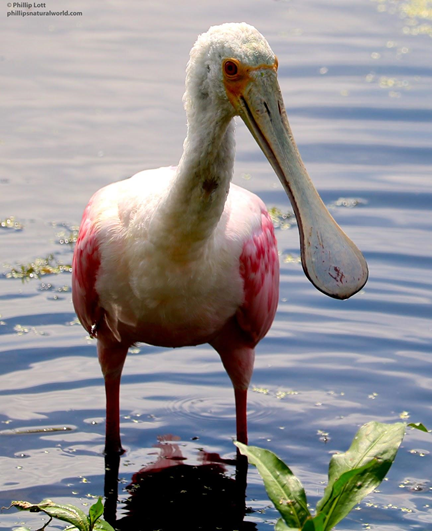
Roseate Spoonbill Bird
This is a large 2.5 foot long wading bird known for its pink plumage and distinctive spoon-shaped bill. It inhabits shallow fresh or coastal waters.
What is the adaptation? How does it help the organism survive?
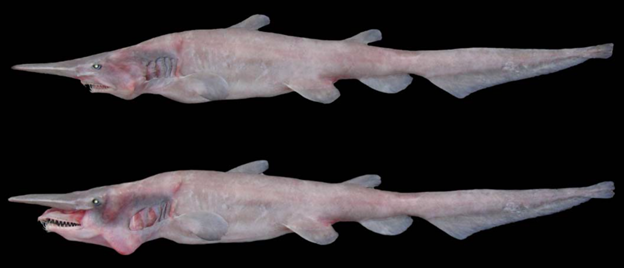
Goblin Shark
This prehistoric shark has been around for 125 million years. They live in the open ocean and can grow up to 16.5 feet long. Goblin sharks have an elongated, flattened snout, and highly protrusible jaws containing prominent nail-like teeth.
What is the adaptation? How does it help the organism survive?
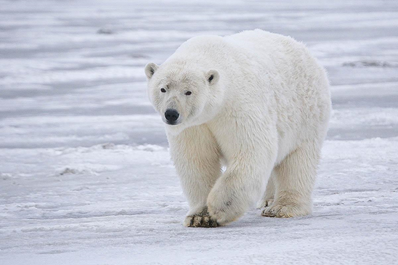
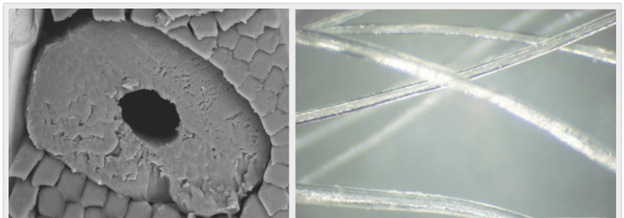
Polar bears live in the arctic circle and can reach heights of over 11 feet tall. They have two layers of hair which are both colorless against their black skin. The plush thick undercoat is close to the body for warmth while the outer long, coarse guard hairs protect the undercoat and are hollow and transparent.
The hair of a polar bear looks white because the air spaces in each hair rePolar Bearflect all colors of light.
What is the adaptation? How does it help the organism survive?
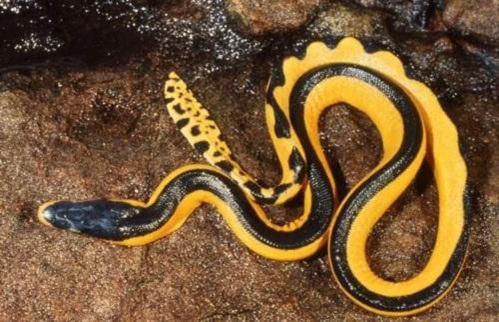
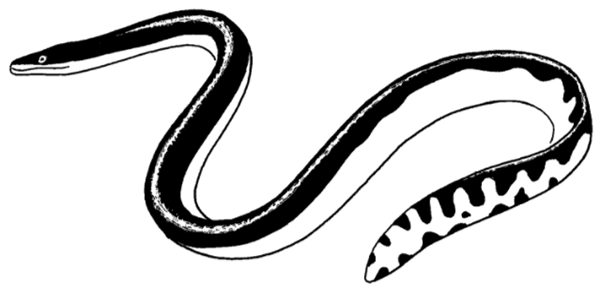
Sea Snake
Also called coral reef snakes are found in warm coastal waters. Their eel-like body shape ends in a paddle like tail, making them 100% aquatic. They reach a length of up to 10 feet and are aggressive and highly venomous.
What is the adaptation? How does it help the organism survive?
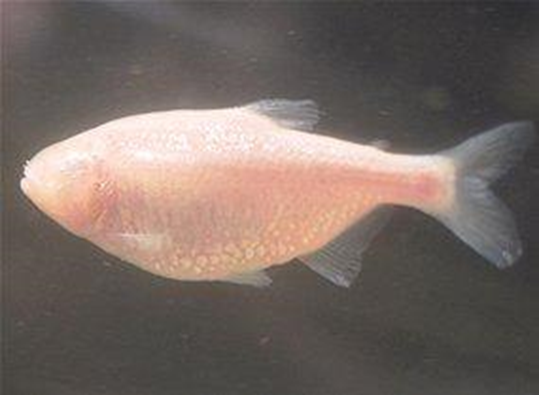
Blind Cave Fish
The blind cave fish are about 4 inches long. These small fish can live in the deep dark water in pitch black caves and have no eyes.
What is the adaptation? How does it help the organism survive?
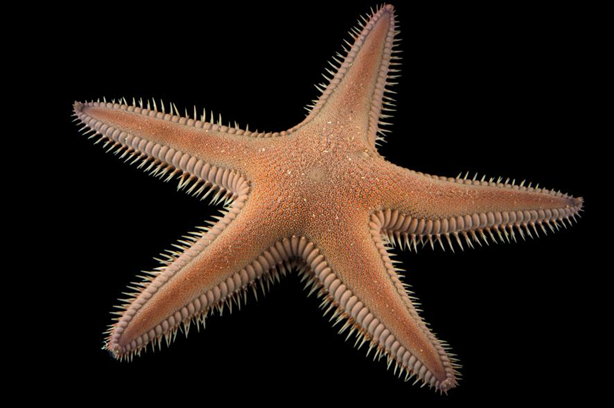
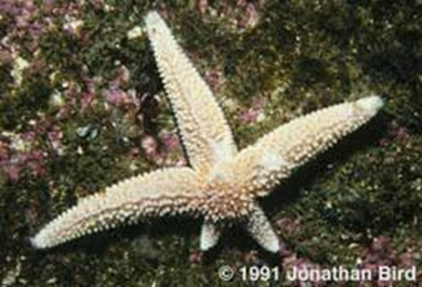
Starfish/Sea Star
Starfish are a bottom dwelling invertebrate that can grow up to 10 inches. Starfish can lose/break off their limbs (arms) and regenerate them.
What is the adaptation? How does it help the organism survive?
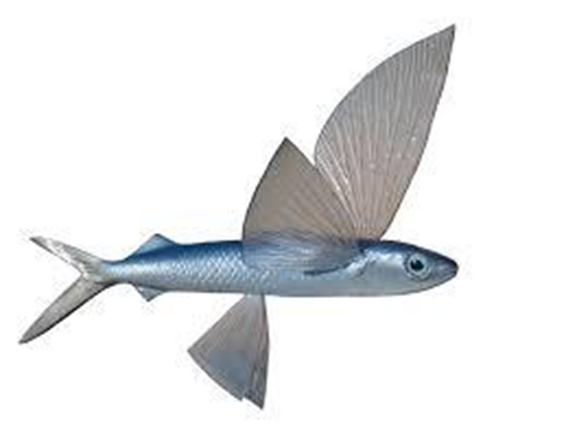
Flying Fish
Flying fish live in the oceanic zone of the open water of tropical waters and can grow up to 18 inches. Their pectoral and pelvic fins are more in the shape of wings than fins.
What is the adaptation? How does it help the organism survive?
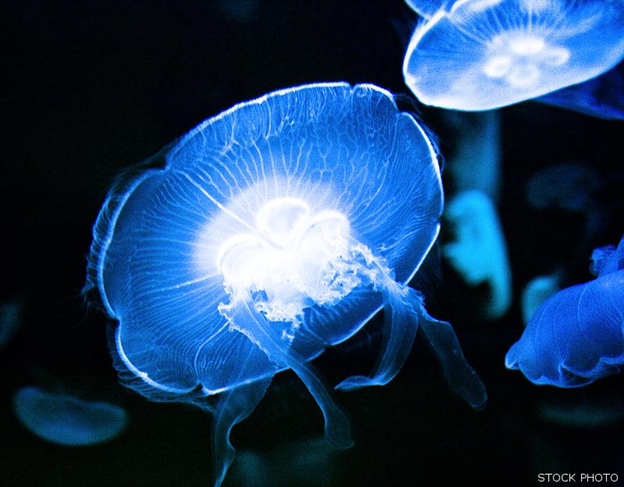
Bioluminescence
Some aquatic organisms are bioluminescent. The can produce light of their own through chemical reactions or through bioluminescent bacteria.
What is the adaptation? How does it help the organism survive?
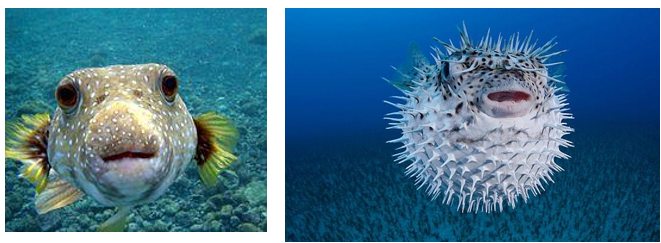
Pufferfish
Pufferfish can range in size from 1 inch to up to 2 feet in length. Puffer fish look harmless (see first picture) but can inflate itself with water, causing its many spines to stick out. Almost all pufferfish contain tetrodotoxin, a substance that makes them foul tasting and often lethal to fish.
What is the adaptation? How does it help the organism survive?
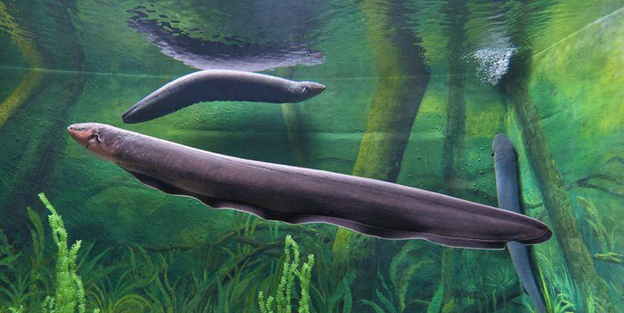
Electric Eel
Electric eel inhabit fresh water areas of South America and can grow up 8 feet long. They have around 6,000 cells (known as electrocyte) that produce electricitywhich is 5 time stronger than the electricity generated in the standard US wall socket.
What is the adaptation? How does it help the organism survive?
https://slate.com/technology/2016/06/watch-these-electric-eels-execute-shocking-leaps-video.html
Pelicans
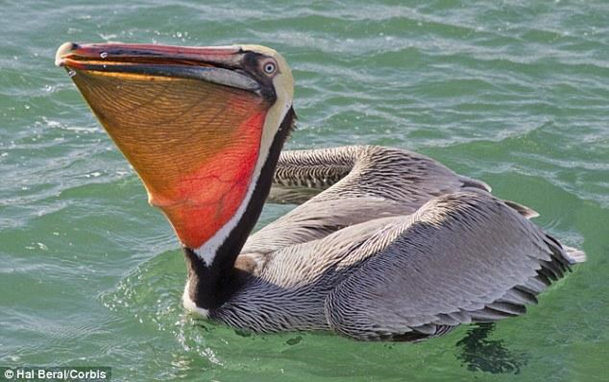
Pelicans live in coastal waters and can grow up to 8ft. They a long beak and a large throat pouch used for catching prey; they drain water from the scooped up contents before swallowing.
What is the adaptation? How does it help the organism survive?
Seals
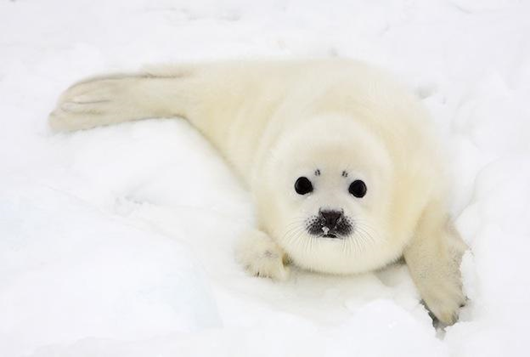
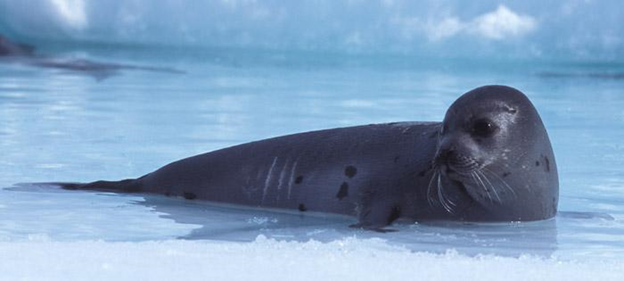
Seals are found in the colder waters of the Northern and Southern Hemisphere and range in size from 3 feet up to 16 feet long. Seals, along with some other marine animals, have monochromatic visions which means they are incapable of seeing in color.
What is the adaptation? How does it help the organism survive?
Dolphins
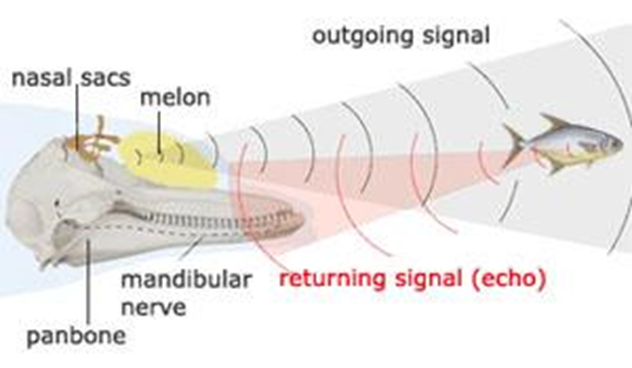
Dolphins are found in all waters, though most prefer warm waters, and can grow up to 10 feet long. Since it is difficult to see objects over a distance underwater, they use echolocation which allows them to detect objects up to 650 feet away from them.
What is the adaptation? How does it help the organism survive?
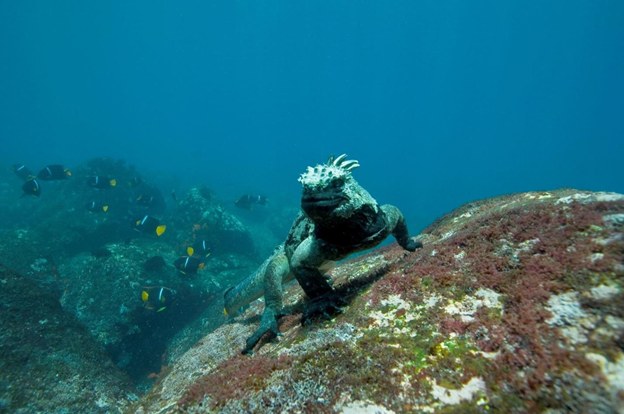
Marine Iguana
Marine iguanas, which can grow up to 5 feet, are found on the Galapagos Islands and feed exclusively on green algae which is grown underwater. These iguanas can hold their breath for 30 minutes.
What is the adaptation? How does it help the organism survive?
Out of all of the organisms above, do any have similar adaptations? If yes, explain which.
Do the organisms with similar adaptations share anything else in common? (Area they live in, habitat, predators, shelter, etc.) Explain.