Watersheds Review
star
star
star
star
star
Last updated about 3 years ago
15 Nsɛmmisa
Hyɛ no nsow a efi ɔkyerɛwfo no hɔ:
1
1
1
1
1
1
1
1
1
1
1
1
1
1
1
Instructions: Review the Watersheds PPT and Flooding PPT. You may use your pollution notes from Tuesday to help as well. Then, answer the questions below.
Instructions: Review the Watersheds PPT and Flooding PPT. You may use your pollution notes from Tuesday to help as well. Then, answer the questions below.
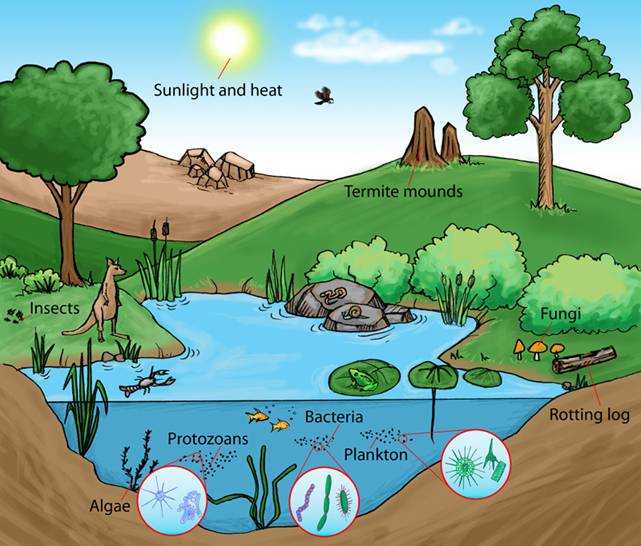
Look at the picture of an ecosysems. Which things are biotic and which are abiotic?
Grass/Trees/Lily Pads
Air
Water
Mushrooms
Snails/insects
Dirt/Soil
Sun/sun's heat
Protozoa/Bacteria/Plankton
Abiotic
Biotic
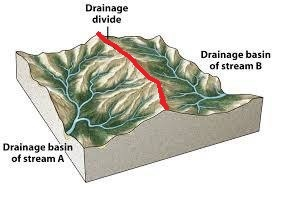
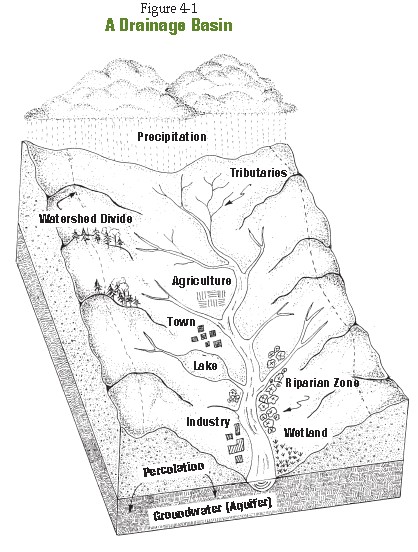
What is the difference between a drainage basin and a watershed?
all the things in it that affect water bodies in a given drainage basin
an area of land in which water, sediments, and dissolved materials are transported or drained into a common outlet
climate, amount of rainfall,
geology and geography of an area (rocks, soil, hills, lowlands, forests), and human ac
human activies (urban and industrial development, agriculture)
Drainage Basin
Watershed
What divides a watershed or drainage basin?
When it rains in a watershed, what can happen to the water? Place these into the correct order.
water flows over the land and infiltrates through dirt/soils
recharging/refilling the groundwater supplies
draining into nearby bayous, streams, or rivers.
What happens if you spill gasoline in your driveway or leave dog poop in your yard?
What will have the LARGEST effect on the quaity of water in a bayou, stream or river?
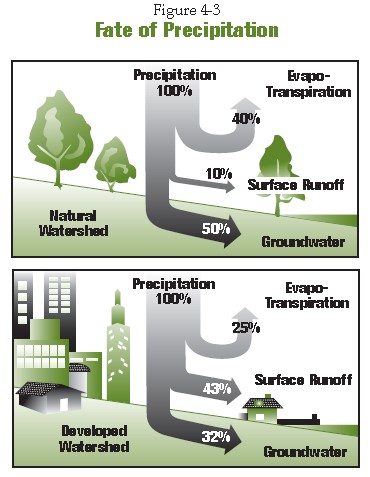
What is the difference between urban city and rural country in watershed infiltration?
High number of impervious surfaces such as concrete that doesn't allow infiltration
Low number of impervious surfaces such as concrete that does allow infiltration
Less green space/less trees and plants to suck up water
More green space/more trees and plants to suck up water and slow water movement
Lots of soil infiltration to filter out pollutants so less pollutants in water supply
Very little soil infiltration to filter out pollutants so more pollutants in water supply
more surface runnoff and flooding and erosion
less surface runnoff aflooding and eroision
1/2 (50%) of all rainfall infiltrates into the soil to become groundwater
1/3 (33%) of all rainfall infiltrates into the soil to become groundwater
City/Urban
Natural/Rural/Country
What effect would these things have on the flooding problem in Houston?
Build retention ponds
Build more roads and parking lots
Do not build homes in a floodplain
Put in more parks with grasses and trees
Do not clean out storm drains
Plant more trees and stop cutting them down
Make more green spaces permeable areas
Make more impermeable areas.
Make canal systems that have a lof of winding curves that can easily become cluttered with debris.
More Flooding
Less Flooding
What are 5 ways that water can enter a stream? (Gaining Stream)
What are 5 ways that water can leave a stream? (Losing Stream)
The presence of macroinvertebrates that are intolerant to pollution in a stream indicates that the stream is healthy.
Taking samples of macroinvertebrates is chemical testing.
Pointsource pollution in which it is easier to identify the source.
Nonpoint source pollution enters streams and bodies of water by surface runoff and flooding.
Dams are only able to increase the level of a stream.