Preskoči na glavni sadržaj
Prijava
Sign up for FREE
arrow_back
Biblioteka

Aquatic Science Semester 1 Finals

star
star
star
star
star
Posljednje ažuriranje about 3 years ago
49
1
1
1
9
1
1
1
1
4
1
1
1
1
1
4
1
1
1
1
1
1
1
1
1
1
1
1
1
1
4
1
5
1
1
1
1
1
1
1
1
1
2
4
1
1
1
1
1
4
Pitanje 1
1.

What are the three phases of water?

Pitanje 2
2.

Which is true about viscosity?

Pitanje 3
3.

What is true about macroinvertebrates?

Pitanje 4
4.
  • Plates move apart

  • Plates Collide

  • Plates slide past each other

  • Can create a volcanic mountain

  • Can create a non-volcanic mountain

  • Can create a trench

  • Can create a fault line

  • Can create a valley

  • Volacanic Arc

  • Transform Boundary

  • Divergent Boundary

  • Convergent Boundary

  • Both Convergent AND Divergent Boundaries

Pitanje 5
5.

Water can NOT get directly back into the ocean by:

Pitanje 6
6.

What happens to the water molecules as they get below 4°C?

Pitanje 7
7.

Which is true about the two layers of the Earth’s crust?

Pitanje 8
8.

Plate tectonics, or the movement of pieces of Earth's crust, is thought to be caused by...

Pitanje 9
9.

Match the following types of living organisms with the correct definition.

Stavka koja se može prevućiarrow_right_altOdgovarajuća stavka

Neuston

arrow_right_alt

On the bottom sands or in the sands; clam

Plankton

arrow_right_alt

floating on the surface; algae

Nekton

arrow_right_alt

Floating in the water column; phyto or zoo___

Benthos

arrow_right_alt

Free swimming; fish

Pitanje 10
10.

What is a floodplain?

Pitanje 11
11.

The temperature of the ocean water increases primarily because of

Pitanje 12
12.

Water combines with carbon dioxide in the air or water to produce carbonic acid causing ocean acidification.

Pitanje 13
13.

When a polar molecule, like soap or salt, is added to water, the:

Pitanje 14
14.

Choose the statement that is TRUE.

Pitanje 15
15.

Match the appropriate word for the amounts of each found on Earth.
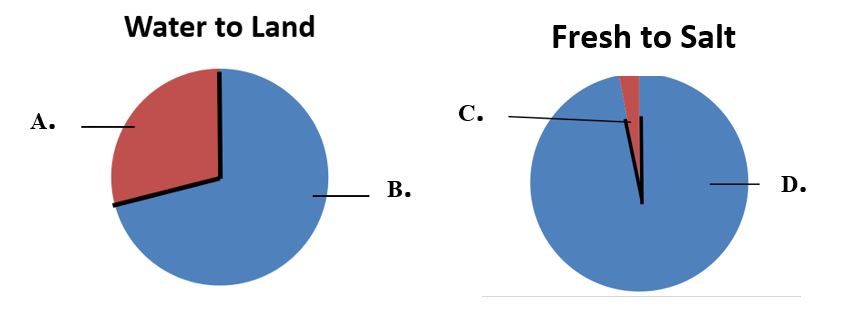
Stavka koja se može prevućiarrow_right_altOdgovarajuća stavka

B

arrow_right_alt

Land

C

arrow_right_alt

Water

D

arrow_right_alt

Fresh water

A

arrow_right_alt

Salt water

Pitanje 16
16.

Choose the statement that is True.

Pitanje 17
17.

What divides a watershed or drainage basin?

Pitanje 18
18.

What happens when these plates collide?

Oceanic-Continental

Pitanje 19
19.

What happens when these plates collide?

Continetal-Continental

Pitanje 20
20.

What happens when these plates collide?

Oceanic-Oceanic

Pitanje 21
21.

Which is true about the two layers of the core of the Earth?

Pitanje 22
22.

The specific heat capacity of water is the amount of heat required to raise the amount of temperature 1 gram of liquid by 1-degree C. It takes a large amount of energy to raise the temperature of water. What would happen if the amount of energy needed to change the temperature of water was very small?

Pitanje 23
23.

Three liquids are measured out equally and timed as they drip down a flat surface. Liquid 1 arrived at the bottom of the surface first. Then Liquid 3, and finally Liquid 2. Which Liquid had the lowest viscosity?

Pitanje 24
24.

Salinity of seawater increases

Pitanje 25
25.

In a natural area/country, what percent of precipitation infiltrates into the ground?

Pitanje 26
26.

A levee is...

Pitanje 27
27.

How are macroinvertebrates different from each other?

Pitanje 28
28.

Which is NOT an evidence that the continents were one giant continent hundreds of millions of years ago?

Pitanje 29
29.

Water molecules are constantly breaking bonds with other water molecules and re-bonding.

Pitanje 30
30.

Stavka koja se može prevućiarrow_right_altOdgovarajuća stavka

B

arrow_right_alt

Crust

C

arrow_right_alt

Mantle

D

arrow_right_alt

Outer Core

A

arrow_right_alt

Inner Core

Pitanje 31
31.

What happens to pollution in a watershed?

Pitanje 32
32.

Match the correct branches of Oceanography

  • Chemical testing of sands

  • Waves caused by an earthquake

  • Formation of snails shells with calcium carbonate

  • Coral reefs dying and warming of oceans

  • Photosynthesis and Cell respiration

  • Biological and Chemical

  • Biological and Physical

  • Geological and Chemical

  • Geological and Physical

Pitanje 33
33.

What makes up a watershed?

Pitanje 34
34.

Which is true about convection currents in the Earth?

Pitanje 35
35.

Cold water fish have different oxygen requirements than warm water fish. What would happen if you put a cold-water fish into a warm water tank.

Pitanje 36
36.

What happens to a non-polar molecule when it is added to water?

Pitanje 37
37.

Water in nature has a neutral pH of 7.

Pitanje 38
38.

Salinity of seawater decreases

Pitanje 39
39.

Why can water have no net charge but have slight charges in different parts of the molecule?

Pitanje 40
40.

What would happen if ice in had a higher density than liquid water?

Pitanje 41
41.

Which of the following will NOT help you to conserve water in your watershed?

Pitanje 42
42.

Which is a gaining stream and which is a losing stream?

Stavka koja se može prevućiarrow_right_altOdgovarajuća stavka

B

arrow_right_alt

Losing stream

A

arrow_right_alt

Gaining stream

Pitanje 43
43.

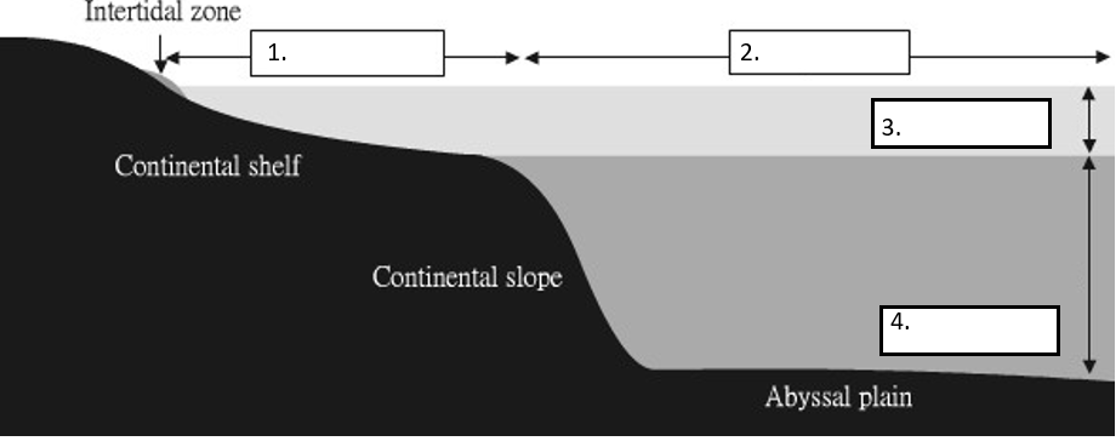
Use the diagram below to lable the ocean zones

Stavka koja se može prevućiarrow_right_altOdgovarajuća stavka

2

arrow_right_alt

Neritic

4

arrow_right_alt

Oceanic

1

arrow_right_alt

Photic

3

arrow_right_alt

Aphotic

Pitanje 44
44.

Which statement is FALSE about the water and density?

Pitanje 45
45.

Which statements are true about freezing and boiling points of water?

Pitanje 46
46.

Choose the statement that is FALSE

Pitanje 47
47.

Why is it important that water is colorless, odorless, and tasteless?

Pitanje 48
48.

Water can NOT get into the atmosphere by

Pitanje 49
49.

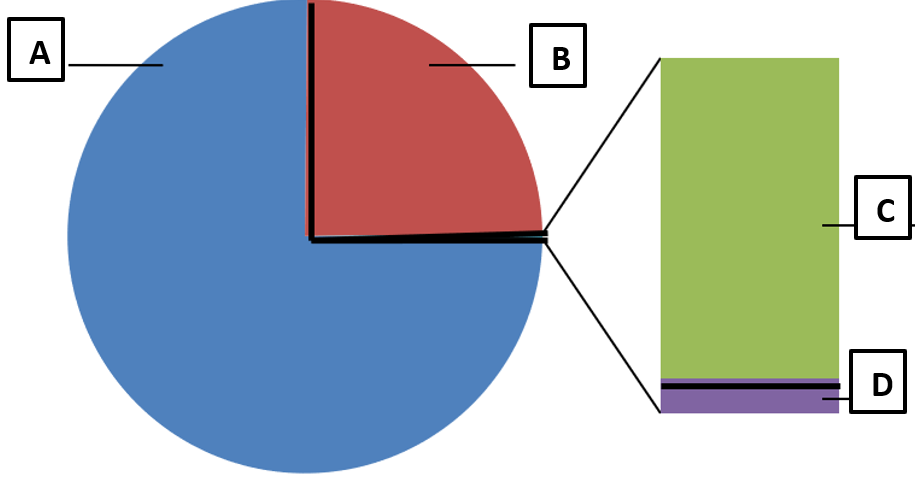
Label the appropriate part for the amounts of each found on Earth.

Stavka koja se može prevućiarrow_right_altOdgovarajuća stavka

C

arrow_right_alt

Glaciers

D

arrow_right_alt

Groundwater

B

arrow_right_alt

Rivers and Lakes

A

arrow_right_alt

Atmosphere