The Most Dangerous Game
star
star
star
star
star
Last updated over 1 year ago
28 questions
Required
1
Rainsford and Whitney are on their way to the Amazon River to hunt......
Required
1
What do we learn about Rainsford through his conversation with his friend Whitney?
Required
1
Read the following excerpt:“ ‘Can’t see it,’ remarked Rainsford, trying to peer through the dank tropical night that was palpable as it pressed its thick warm blackness in upon the yacht.’”.What techniques are being used by the author in the above quotation?
Read the following excerpt:
“ ‘Can’t see it,’ remarked Rainsford, trying to peer through the dank tropical night that was palpable as it pressed its thick warm blackness in upon the yacht.’”.
What techniques are being used by the author in the above quotation?
Required
1
What was the mood set so far in the story?
Required
1
Rainsford swims to Ship-Trap Island because
Required
1
What is the first conflict that Rainsford must face?
Required
1
Rainsford’s first impression of Zaroff leads him to believe that Zaroff is -.
Required
1
Which quote shows why Zaroff began to lose his fascination with hunting?
Required
1
General Zaroff wants to hunt an animal that can
Required
1
Read the following excerpt:“One does not expect nowadays to find a young man of the educated class, even in America, with such a naïve … point of view. It’s like finding a snuff-box in a limousine” (30).What figurative language is used in the above quotation?
Read the following excerpt:
“One does not expect nowadays to find a young man of the educated class, even in America, with such a naïve … point of view. It’s like finding a snuff-box in a limousine” (30).
What figurative language is used in the above quotation?
Required
1
How does Zaroff get the humans that he hunts?
Required
1
At first General Zaroff hopes that Rainsford will
Required
1
Why can we infer that Zaroff hunts with a .22 caliber pistol?
Required
1
Read the following excerpt:“‘And now,’ said the general, ‘I want to show you my collection of heads. Will you come with me to the library” (32).What is particularly foreboding about the above quotation?
Read the following excerpt:
“‘And now,’ said the general, ‘I want to show you my collection of heads. Will you come with me to the library” (32).
What is particularly foreboding about the above quotation?
Required
1
Rainsford refuses to
Required
1
To win the hunting game, Rainsford must survive for
Required
1
What is Rainsford’s reason for participating in the “game” even though he doesn’t want to be part of it?
Required
1
It is suggested that Zaroff doesn’t look directly at Rainsford in the tree because Zaroff –
Required
1
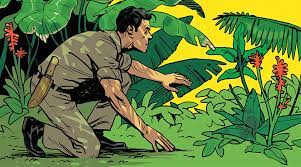
Which detail best helps you visualize Rainsford during the hunt?
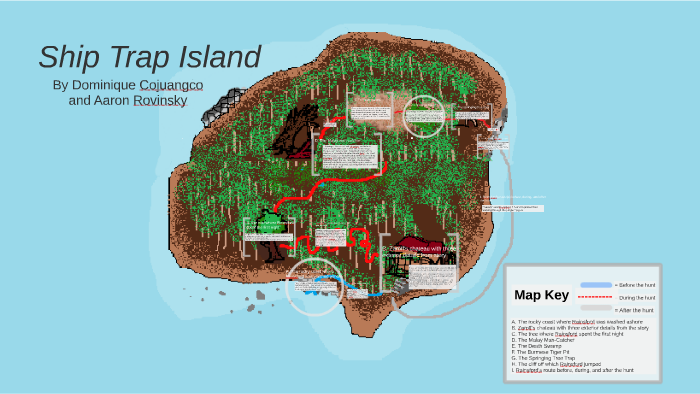
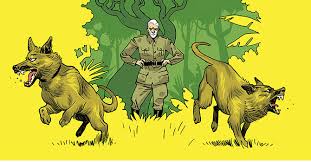
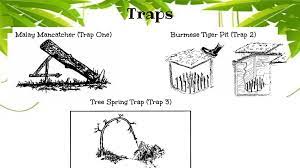
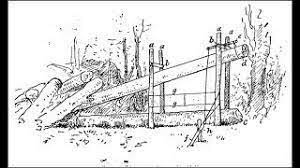
Following the trail with the sureness of a bloodhound came General Zaroff. Nothing escaped those searching black eyes, no crushed blade of grass, no bent twig, no mark, no matter how faint, in the moss. So intent was the Cossack on his stalking that he was upon the thing Rainsford had made before he saw it. His foot touched the protruding bough that was the trigger. Even as he touched it, the general sensed his danger and leaped back with the agility of an ape. But he was not quite quick enough; the dead tree, delicately adjusted to rest on the cut living one, crashed down and struck the general a glancing blow on the shoulder as it fell; but for his alertness, he must have been smashed beneath it. He staggered, but he did not fall; nor did he drop his revolver. He stood there, rubbing his injured shoulder, and Rainsford, with fear again gripping his heart, heard the general's mocking laugh ring through the jungle.
"Rainsford," called the general, "if you are within sound of my voice, as I suppose you are, let me congratulate you. Not many men know how to make a Malay mancatcher. Luckily for me I, too, have hunted in Malacca. You are proving interesting, Mr. Rainsford. I am going now to have my wound dressed; it's only a slight one. But I shall be back. I shall be back."
When the general, nursing his bruised shoulder, had gone, Rainsford took up his flight again. It was flight now, a desperate, hopeless flight, that carried him on for some hours. Dusk came, then darkness, and still he pressed on. The ground grew softer under his moccasins; the vegetation grew ranker, denser; insects bit him savagely.
Then, as he stepped forward, his foot sank into the ooze. He tried to wrench it back, but the muck sucked viciously at his foot as if it were a giant leech. With a violent effort, he tore his feet loose. He knew where he was now. Death Swamp and its quicksand.
His hands were tight closed as if his nerve were something tangible that someone in the darkness was trying to tear from his grip. The softness of the earth had given him an idea. He stepped back from the quicksand a dozen feet or so and, like some huge prehistoric beaver, he began to dig.
Rainsford had dug himself in in France when a second's delay meant death. That had been a placid pastime compared to his digging now. The pit grew deeper; when it was above his shoulders, he climbed out and from some hard saplings cut stakes and sharpened them to a fine point. These stakes he planted in the bottom of the pit with the points sticking up. With flying fingers he wove a rough carpet of weeds and branches and with it he covered the mouth of the pit. Then, wet with sweat and aching with tiredness, he crouched behind the stump of a lightning-charred tree.
He knew his pursuer was coming; he heard the padding sound of feet on the soft earth, and the night breeze brought him the perfume of the general's cigarette. It seemed to Rainsford that the general was coming with unusual swiftness; he was not feeling his way along, foot by foot. Rainsford, crouching there, could not see the general, nor could he see the pit. He lived a year in a minute. Then he felt an impulse to cry aloud with joy, for he heard the sharp crackle of the breaking branches as the cover of the pit gave way; he heard the sharp scream of pain as the pointed stakes found their mark. He leaped up from his place of concealment.
Then he cowered back. Three feet from the pit a man was standing, with an electric torch in his hand.
"You've done well, Rainsford," the voice of the general called. "Your Burmese tiger pit has claimed one of my best dogs. Again you score. I think, Mr. Rainsford, I'll see what you can do against my whole pack. I'm going home for a rest now. Thank you for a most amusing evening."
At daybreak Rainsford, lying near the swamp, was awakened by a sound that made him know that he had new things to learn about fear. It was a distant sound, faint and wavering, but he knew it. It was the baying of a pack of hounds.
Rainsford knew he could do one of two things. He could stay where he was and wait. That was suicide. He could flee. That was postponing the inevitable. For a moment he stood there, thinking. An idea that held a wild chance came to him, and, tightening his belt, he headed away from the swamp.
The baying of the hounds drew nearer, then still nearer, nearer, ever nearer. On a ridge Rainsford climbed a tree. Down a watercourse, not a quarter of a mile away, he could see the bush moving. Straining his eyes, he saw the lean figure of General Zaroff; just ahead of him Rainsford made out another figure whose wide shoulders surged through the tall jungle weeds; it was the giant Ivan, and he seemed pulled forward by some unseen force; Rainsford knew that Ivan must be holding the pack in leash.
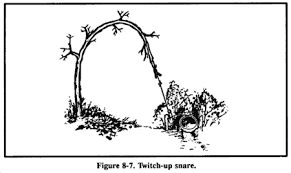
They would be on him any minute now. His mind worked frantically. He thought of a native trick he had learned in Uganda. He slid down the tree. He caught hold of a springy young sapling and to it he fastened his hunting knife, with the blade pointing down the trail; with a bit of wild grapevine he tied back the sapling.
Then he ran for his life. The hounds raised their voices as they hit the fresh scent. Rainsford knew now how an animal at bay feels.
He had to stop to get his breath. The baying of the hounds stopped abruptly, and Rainsford's heart stopped too. They must have reached the knife.
He shinned excitedly up a tree and looked back. His pursuers had stopped. But the hope that was in Rainsford's brain when he climbed died, for he saw in the shallow valley that General Zaroff was still on his feet. But Ivan was not. The knife, driven by the recoil of the springing tree, had not wholly failed.
Rainsford had hardly tumbled to the ground when the pack took up the cry again.
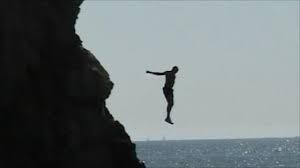
"Nerve, nerve, nerve!" he panted, as he dashed along. A blue gap showed between the trees dead ahead. Ever nearer drew the hounds. Rainsford forced himself on toward that gap. He reached it. It was the shore of the sea. Across a cove he could see the gloomy gray stone of the chateau. Twenty feet below him the sea rumbled and hissed. Rainsford hesitated. He heard the hounds. Then he leaped far out into the sea. . . .
Required
1
How does Ivan die?
How does Ivan die?
Required
1
Read the following excerpt:“’Nerve, nerve, nerve!’ he panted, as he dashed along. A blue gap showed between the trees dead ahead. Ever nearer drew the hounds. Rainsford forced himself on toward that gap. He reached it. It was the shore of the sea. …Rainsford hesitated. He heard the hounds. Then he leaped far out into the sea” (39).The above paragraph is filled with short, choppy, simple sentences. Why is the author using this syntactical structure?
Read the following excerpt:
“’Nerve, nerve, nerve!’ he panted, as he dashed along. A blue gap showed between the trees dead ahead. Ever nearer drew the hounds. Rainsford forced himself on toward that gap. He reached it. It was the shore of the sea. …Rainsford hesitated. He heard the hounds. Then he leaped far out into the sea” (39).
The above paragraph is filled with short, choppy, simple sentences. Why is the author using this syntactical structure?
Required
1
Which detail in the story helps you visualize Rainsford’s fear and confusion?
Required
1
How has Rainsford changed and become a DYNAMIC CHARACTER?
Required
1
What is meant by “I am still a beast at bay”?
Required
1
The final conflict in the story consists of Rainsford’s
Required
6
Place the following events in the correct order.
- Rainsford is given hunting clothes, food, and a knife.
- Rainsford hides in Zaroff’s bedroom.
- Rainsford knocks on the château’s door.
- Rainsford sails toward Rio.
- Rainsford reaches Ship-Trap Island.
- Rainsford demands to leave the island.
Required
1
Read the following excerpt:“All he knew is that he was safe from his enemy, sea” (24).Why is the above quotation ironic?
Read the following excerpt:
“All he knew is that he was safe from his enemy, sea” (24).
Why is the above quotation ironic?
Required
1
Which line in the story is the resolution?