1.7 - Organelles in Cells
star
star
star
star
star
Last updated over 1 year ago
21 Nsɛmmisa

1
1
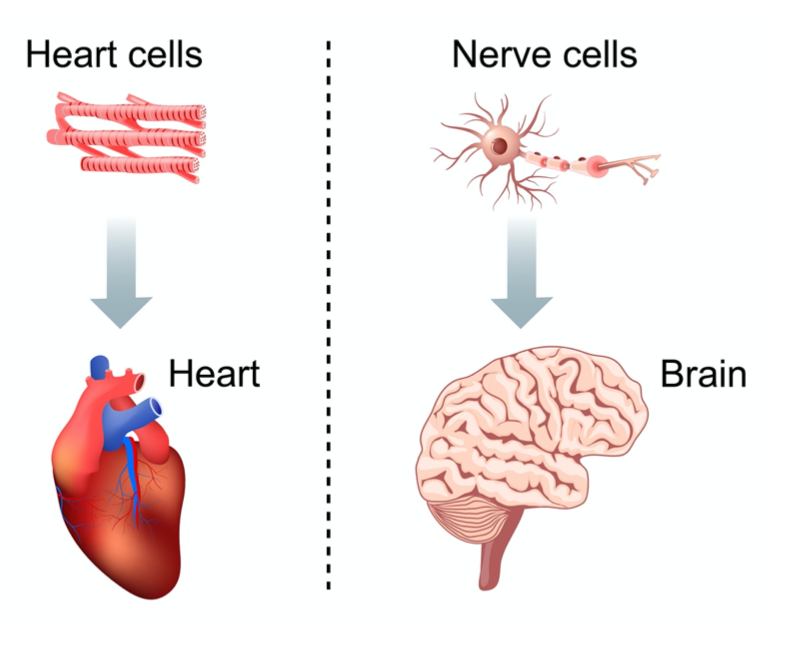
Multicellular organisms such as plants and animals have developed a variety of cells within their bodies that carry out specific functions. Each cell has smaller organelles inside of them. Specialized cells work together to form tissues that make up organs such as the heart and brain. Organs work together in organ systems such as the circulatory system and nervous system.
Prokaryotic and Eukaryotic Cells
Scientists divide organisms into two main groups based on their cell structure. Cells that have DNA that is not inside a nucleus and that do not have any membrane-bound organelles are called prokaryotes (bacteria). Cells that do enclose the DNA inside a nucleus and have other membrane-bound organelles are called eukaryotes.
Specialized cells grouped together form . Tissue comes together to make . A group of organs work together in . An example of an organ system is the and the nervous system.
Complete the chart using the word bank.
Word Bank:
Biosphere
Organism
Atom
Organelles
Community
Organ System
Tissue
Organelles carry out special functions in eukaryotes.
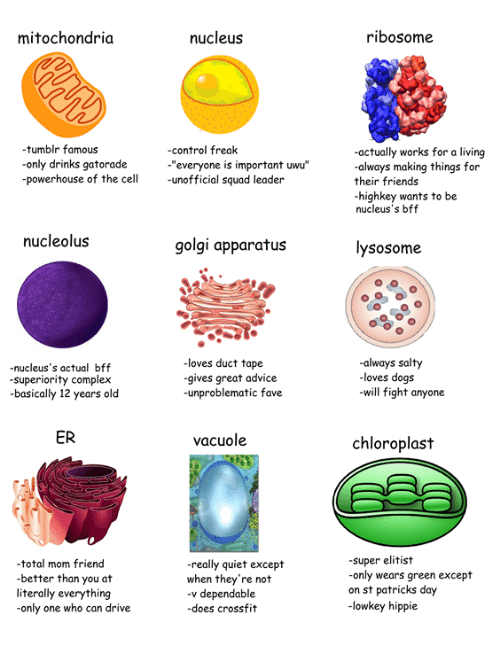
Just as the body has organs that carry out different functions, each cell in the body has special structures that carry out particular functions. These structures are called organelles. Each organelle is surrounded by a membrane. The membrane keeps it separate from other cell components. An organelle performs a specific function to help meet the basic needs of the cell. Together, the sum of these contributions ensures the survival of the cell.
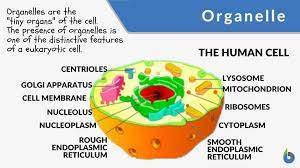
Organelles are located
Not all cells contain organelles. Eukaryotic cells contain membrane-bound organelles; prokaryotic cells, such as the bacterium on the left, do not.
Cytoplasm
However, all cells have a cell membrane that surrounds the cytoplasm. The cytoplasm is a dense, gel-like liquid that contains all the structures, which includes organelles, needed for the basic life functions of the cell. In prokaryotes, these components are not separated into organelles but coexist in the cytoplasm.
Cells must take in substances from their environment and use them to perform basic functions of life, including growth, repair, and reproduction. The cytoplasm provides a site for chemical processes to perform these life functions. In eukaryotic cells, some of these processes occur inside the organelles, which are located in the cytoplasm. However, because each organelle has a membrane that surrounds and defines it, these organelles are separate from the cytoplasm.
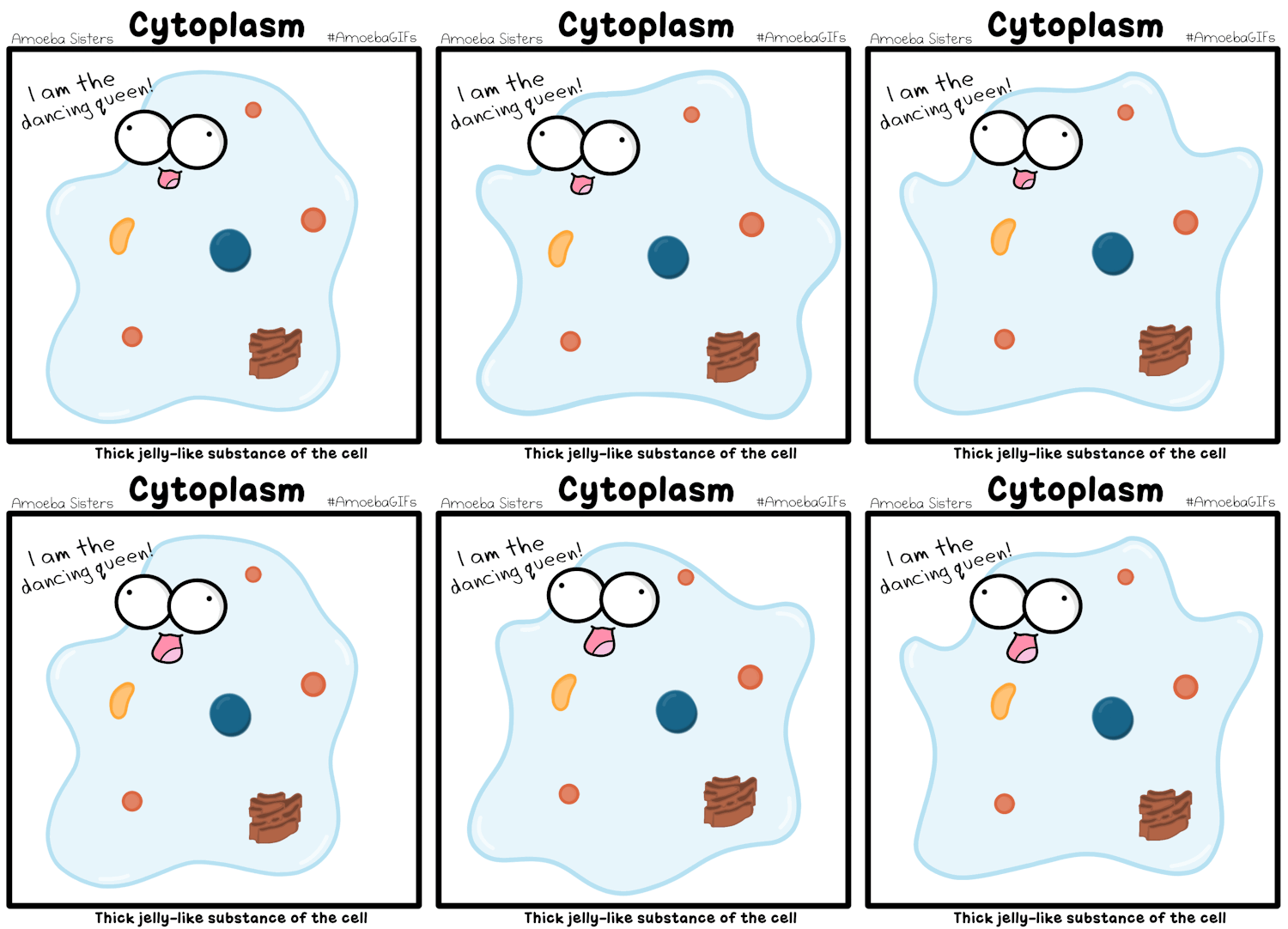
The cytoplasm contains many of the structures needed for basic life functions. For example, the cytoplasm contains DNA, the nucleus (nucleoid if its a prokaryote), and also contains
Organelles are surrounded by the cytoplasm in which they live in... but they are separated/protected from the cytoplasm by having
The cytoplasm provides a
Cell Membrane and Cell Wall
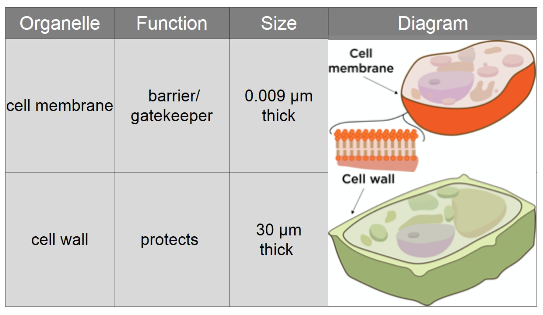
All cells have a cell membrane that surrounds the cytoplasm, holds the cell together, and acts as a boundary between the cytoplasm and the external environment. Only certain substances can enter and leave the cell through this membrane. Plants, bacteria, algae, fungi, and some archaea have an added layer called a cell wall for protection and structure. Animals and protozoa do not have cell walls.
Nucleus and DNA
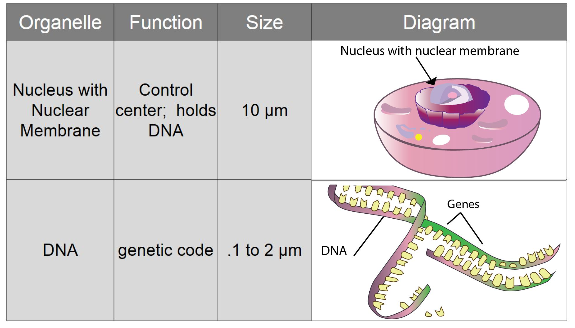
In eukaryotes, the cell nucleus is an organelle found near the center of the cell that acts as a control center for the cell. Chromosomes, which contain DNA, are located inside the nucleus. The genetic information in DNA directs the main functions of the cell, including protein synthesis, reproduction, and heredity. A nuclear membrane allows movement in and out of the nucleus. In prokaryotes, a single circular strand of DNA floats in the cytoplasm.
Mitochondria
Only eukaryotic cells have mitochondria in their cytoplasm. Mitochondria contain their own DNA and are the sites where sugars (glucose) are broken down for energy production in eukaryotes. This process is called cellular respiration. Mitochondria are the organelles that produce ATP, or the energy currency of the cell. The mitochondria are equipped with structures that capture this energy and store it in a form the cell can use for energy-requiring processes.
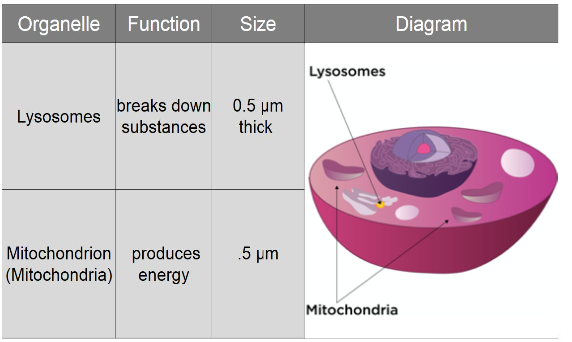
The nucleus is found in the of the cell. The nucleus acts as the for the cell and its activity.
Chromosomes are located in the nucleus and they contain...
Some of the main functions of DNA include
What happens in the mitochondria?
Match the items next to their function
Allowing movement in and out of the nucleus
Making proteins and controling reproduction and heridity
The Nucleus' job
The Nuclear Membrane's job
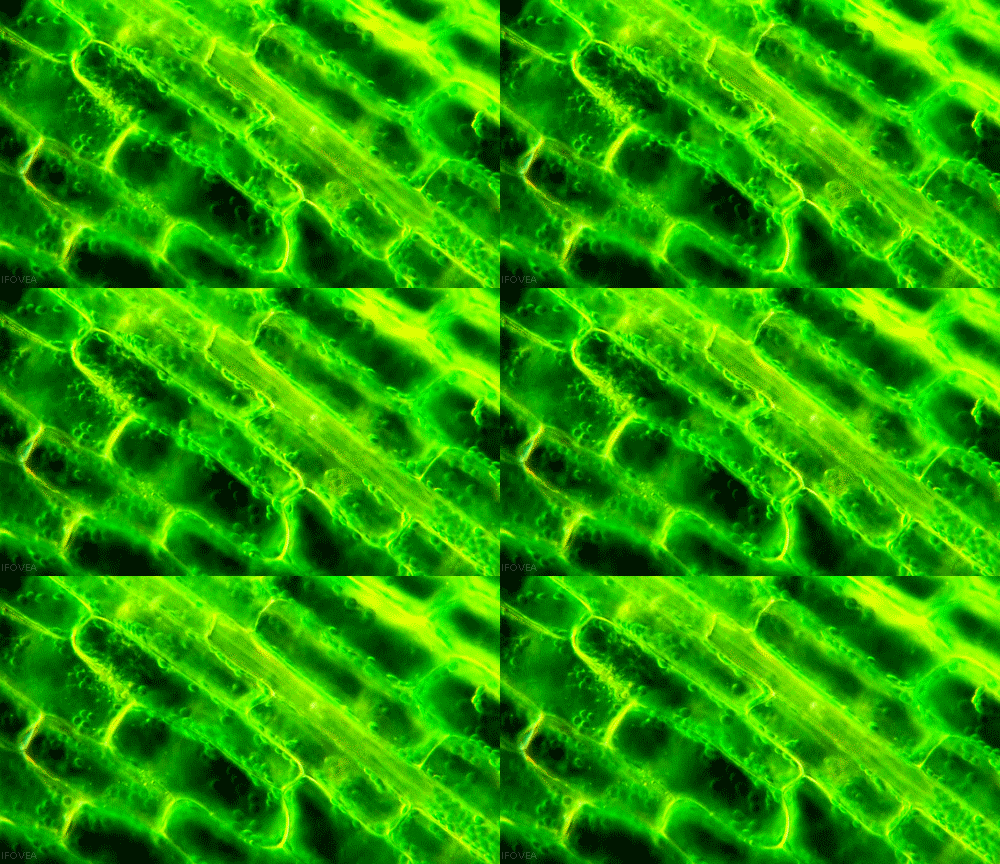
Plant cells are different from animal cells.
So far, you have learned about the similarities in all eukaryotic cells. However, there are two groups of eukaryotic cells that demonstrate significant differences: animal cells and plant cells. The image on the left highlights three structures that distinguish plant cells from animal cells.
● Cell wall: First, plants have a cell wall that is absent in animal cells. The cell wall is a rigid structure that encloses the cell membrane. Because it is rigid, the cell wall can provide structural support for a plant.
● Chloroplasts: Next, plant cells contain organelles known as chloroplasts, which are needed for a plant cell to carry out photosynthesis. In their natural state, these organelles are green in color. The color is due to the presence of the green pigment called chlorophyll. This pigment absorbs the light that provides the energy for conducting photosynthesis. Chloroplasts and chlorophyll are absent in animal cells. Because of this, animal cells cannot carry out photosynthesis.
● Vacuole: Finally, plant cells often contain a large vacuole, which is an organelle used for storage. Most animal cells have multiple vacuoles that are considerably smaller than the one large vacuole found in plant cells.
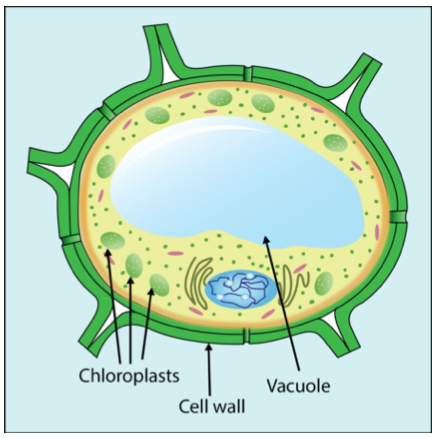
Chloroplasts are needed for plant cells to carry out . Chloroplasts are in color. The green pigment light and is called . This light that provides energy for conducting photosynthesis.
Which statement is the most correct
Label the diagram and then create your own diagram of a plant cell.
Complete the diagram
Complete the diagram
Prokaryotes
Eukaryotes
Organelles have ______.
Which organisms have a cell wall?
Mitochondira contain their own . So not all of the DNA is in the nucleus, some is in the mitochondria. In the mitochondria, sugar such as is broken down for energy. This process is called "" . Glucose is broken down to produce ATP, which is the energy of the cell.