Log in
Sign up for FREE
arrow_back
Library

Earth's Relationship to Sun & Moon (S4.D.3.1) 9/1/2022

star
star
star
star
star
Last updated over 3 years ago
17 questions
Required
10
Required
10
Required
10
Required
10
Required
10
Required
10
Required
10
Required
10
Required
10
Required
10
Required
1
Required
1
Required
1
Required
1
Required
1
Required
1
Required
1
Question 1
1.

1. The rotation of Earth on its axis causes _______ and _______. The revolution of the Earth around the sun causes the ______.

Question 2
2.

How would the seasons be different if the Earth was tilted the other way?

Question 3
3.

What will happen to the number of daylight hours if the Earth’s rotation increased? Decreased?

Question 4
4.

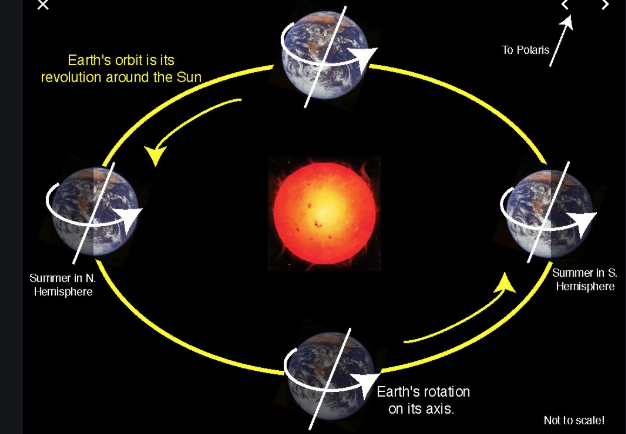
In the diagram above, what season is it in North America?

Question 5
5.

Look at the diagram of the seasons above. We live in the ______________hemisphere, and the Northern hemisphere is on __________.

Question 6
6.

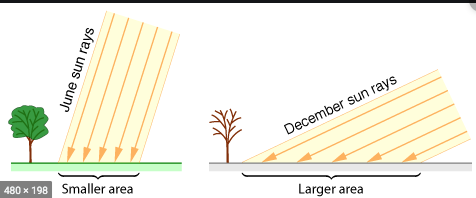
Look at the angle of sunlight in these pictures. Why is it hotter in summer?

Question 7
7.

The northern hemisphere is experiencing what season?

Question 8
8.

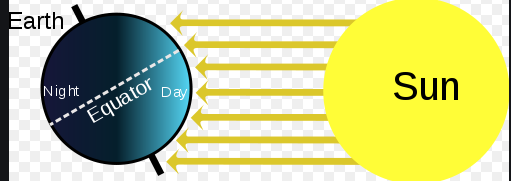
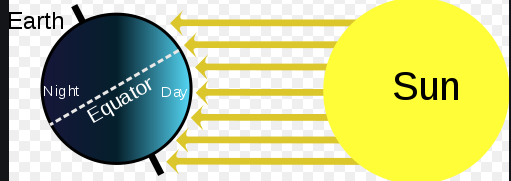
Where would there be more than 10 hours of daylight?

Question 9
9.

Look at the images of the seasons. FInd the northern hemisphere (top half of the Earth). WInter is on the right in one picture but on the left in the other. WHY? Look closely :-)

Question 10
10.

Look at the diagram. Earth's Rotation causes ______________ and Revolution causes the _________________.

Question 11
11.

The moon has eight different ______________ (shapes).

Question 12
12.

The moon does not make it's own light. Instead it is lit up in the sky because of the __________.

Question 13
13.

We always see a different side (or face) of the moon.

Question 14
14.

When the moon is a new moon, we see....

Question 15
15.

When the moon is at first quarter or third quarter, we see ___________ of the face of the moon.

Question 16
16.

The moon orbits the Earth once every _______________.

Question 17
17.

It takes Earth about 365 days to make one _____________________ around the sun, but only 24 hours to make one _________________________ on its axis. This is equal to about a year.