Launch
How does the pattern change from one figure to the next?
How can I use a mathematical representation to show how I see a pattern?
Develop Understanding
Today's Learning Goal:
Surface features of an arithmetic sequence, including constant rate of change, and characteristics of tables, graphs, and equations.
Today's Materials:
Laptop
Pencil
Guided Note Sheet
Please complete the Jump Start (activator). You have 5 minutes before we review. This is independent it should be silent.
Develop Understanding
Today's Learning Goal:
Surface features of an arithmetic sequence, including constant rate of change, and characteristics of tables, graphs, and equations.
Today's Materials:
Laptop
Pencil
Guided Note Sheet
Please complete the Jump Start (activator). You have 5 minutes before we review. This is independent it should be silent.
If the inside blue triangle has a side length of 3 on each side there will be 15 green colored tiles surrounding it.
Now, imagine we can't count the side lengths and it is
Remember to group based on the patterns and create a mathematical expression to represent your grouping strategy using
How does the pattern change from one figure to the next?
How can I use a mathematical representation to show how I see a pattern?
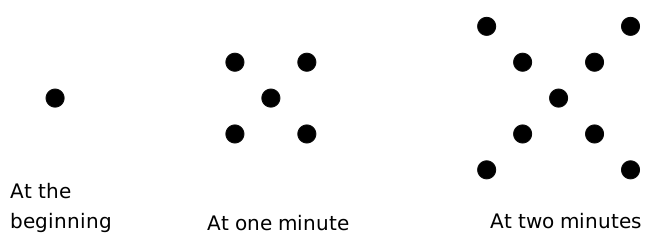
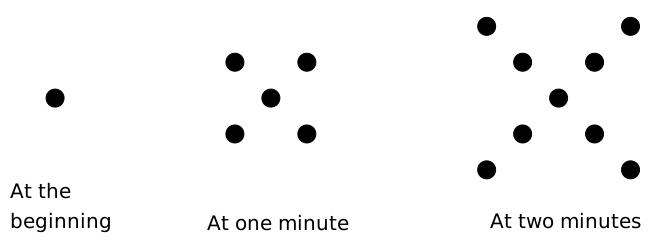
Show and/or explain the way you see the pattern growing in the sequence of figures given.
Assuming the pattern continues in the same way, how many dots are there at 3 minutes?
Assuming the pattern continues, how many dots are there at 100 minutes?
Watch me while I...Create representations to solve the same problem.
Table (numerical)
Graph (Graphical)
Equations
Now lets try one together...
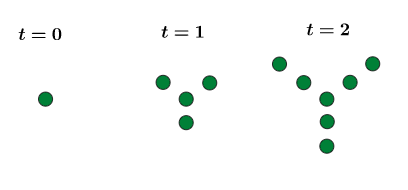
Create the next image in the pattern.
Create a table, graph, and equations from the values based on the pattern.
How many dots will there be at t=50?
Now independently give this a try...
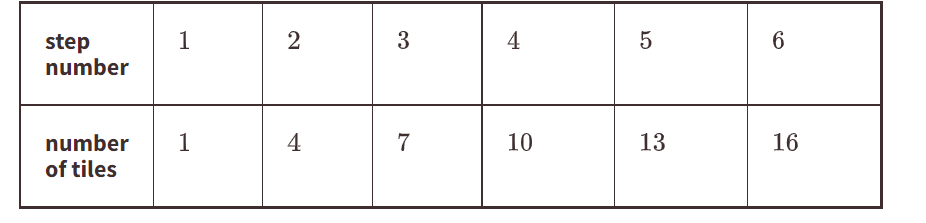
Create a table and graph to represent the situation.
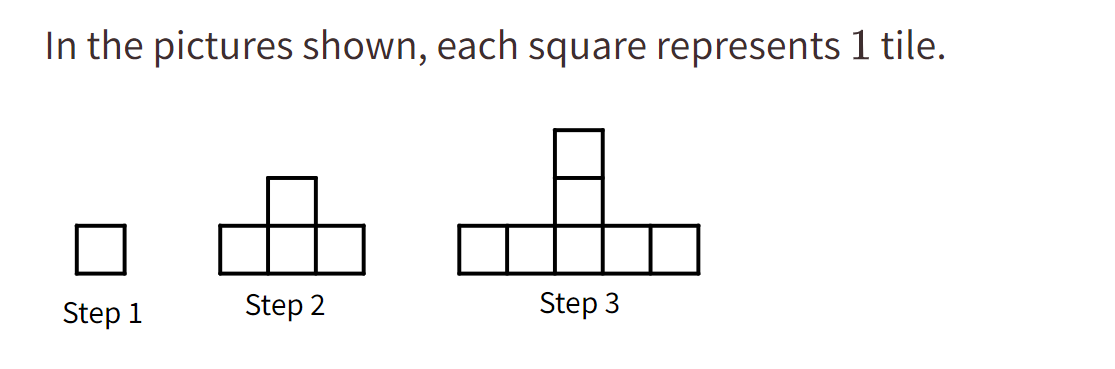
The students in a class were asked to find the number of tiles in a figure by describing how they saw the pattern of tiles changing at each step. Match each student’s way of describing the pattern with the appropriate equation below. Note that “
| Draggable item | arrow_right_alt | Corresponding Item |
|---|---|---|
| arrow_right_alt | Dan explained that the middle tower is always the same number as the step number. He also pointed out that the two arms on each side of the tower contain one less block than the step number. | |
| arrow_right_alt | ||
| arrow_right_alt | No Match |
Closure: Reflection 5 mins
What representation (table, graph, equations, etc.) did you find most helpful in understanding this problem? Explain your reasons in 2-4 sentences.
What representation is new or confusing? How might it be helpful in working with problems of this type?Explain your reasons in 2-4 sentences.
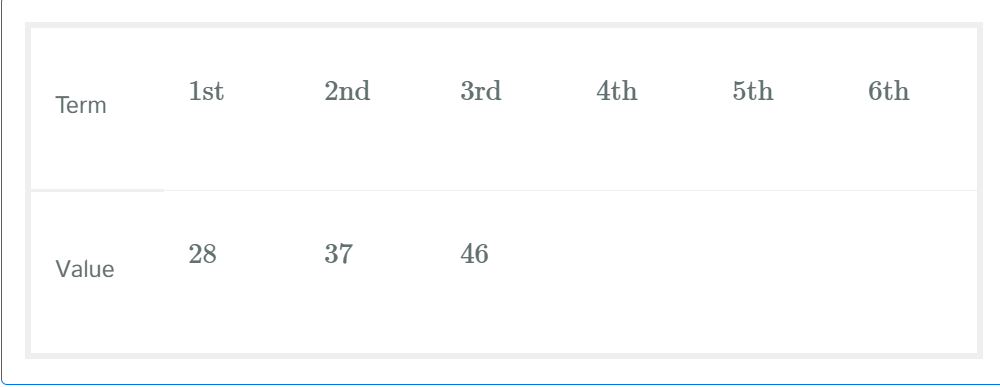
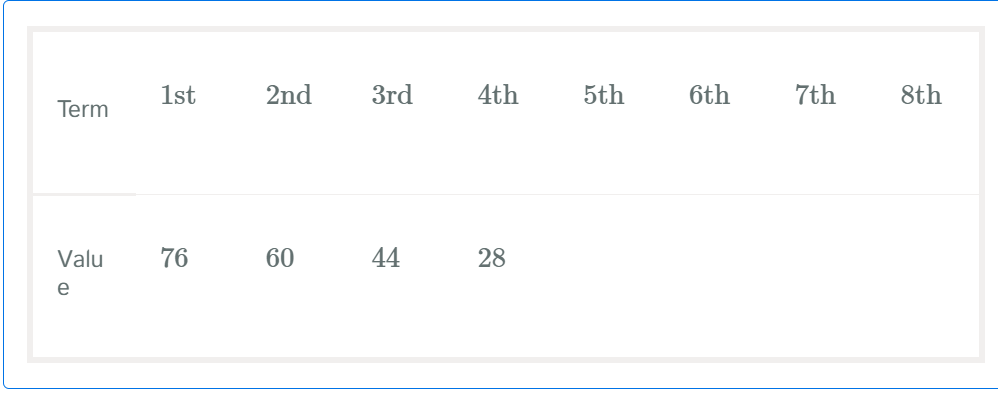
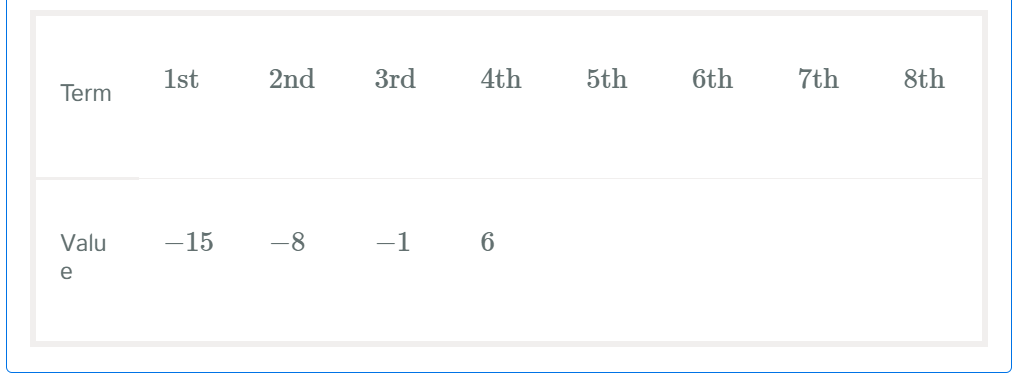
Evaluate the expression.
Sarah counted the number of tiles at each step and made a table. She explained that the number of tiles in each figure was always 3 times the step number minus 2 .
Choose either Dan or Sarah's and explain how you are sure the equation matches the description.