Marrs 6th Grade Science Unit One Thermal Energy Test
star
star
star
star
star
Last updated over 3 years ago
11 questions
Answer all questions as completely as you can.
Required
1
An effective solar oven maximizes the amount of energy transferred to the food inside the oven. As a designer, describe at least one choice you could make that might help you achieve this goal.
Required
1
Consider the size of a solar oven as a design criterion. What are the advantages of a solar oven that is small enough to fit inside a backpack? What are the disadvantages?
Required
1
Consider the weight of a solar oven as a design criterion. What are the advantages of a lightweight solar oven? What are the disadvantages?
Required
1
How would changing the window size affect the performance of the solar oven?
Required
1
How would changing the box height affect the performance of the solar oven?
Required
1
How did changing the box thickness affect the performance of the solar oven?
Required
1
How did adding reflectors affect the performance of the solar oven?
Required
1
1. Christine put five ice cubes in a glass. After 20 minutes, most of the ice had melted to form “ice water.” There were still some small pieces of ice floating in the water. Christine measured the temperature of the ice water and then added five more ice cubes to the glass. She measured the temperature three minutes later. What do you predict happened to the temperature of the “ice water” three minutes after she added more ice?
Required
1
Explain what happens to the temperature of “ice water” (from the previous question) when more ice is added.

Required
1
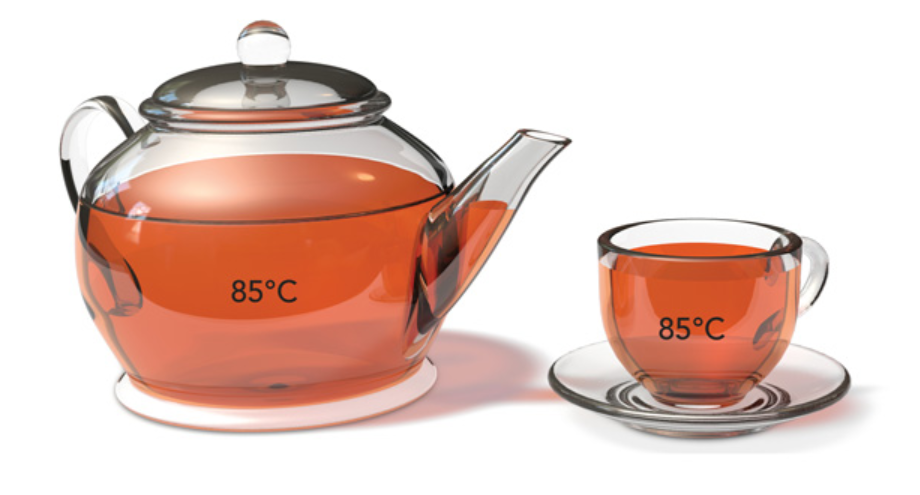
If you wanted to cool both the pot and the cup of tea to 80 degrees Celsius, whichone would take longer to cool down? Why would one take longer?
Required
1
Describe the process of heat transfer between the sun and a solar oven like the one we made in class. Use the terms conduction, convection, and radiation.