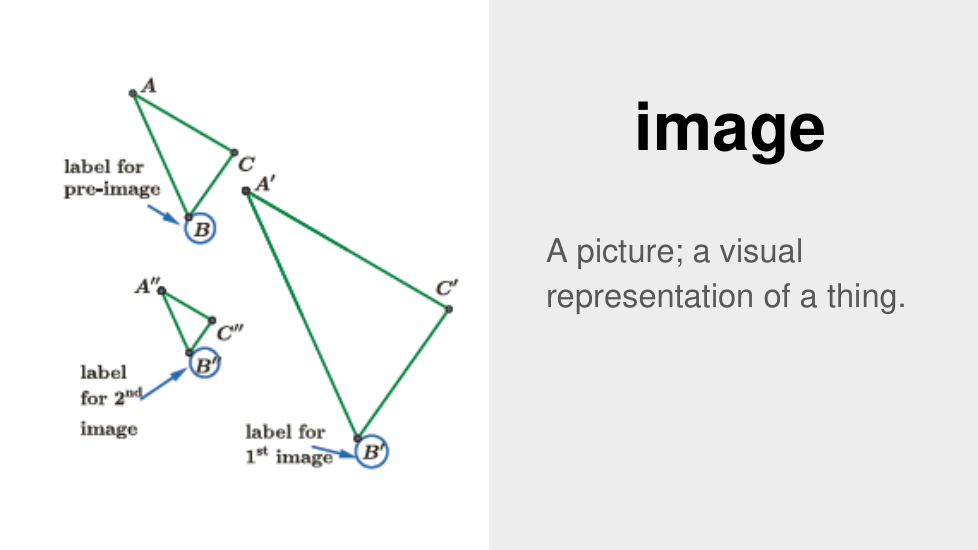
Imagen:
una imagen, una representación visual de una cosa.
ishusho
Ishusho; ishusho yerekana ikintu.
Review weekly
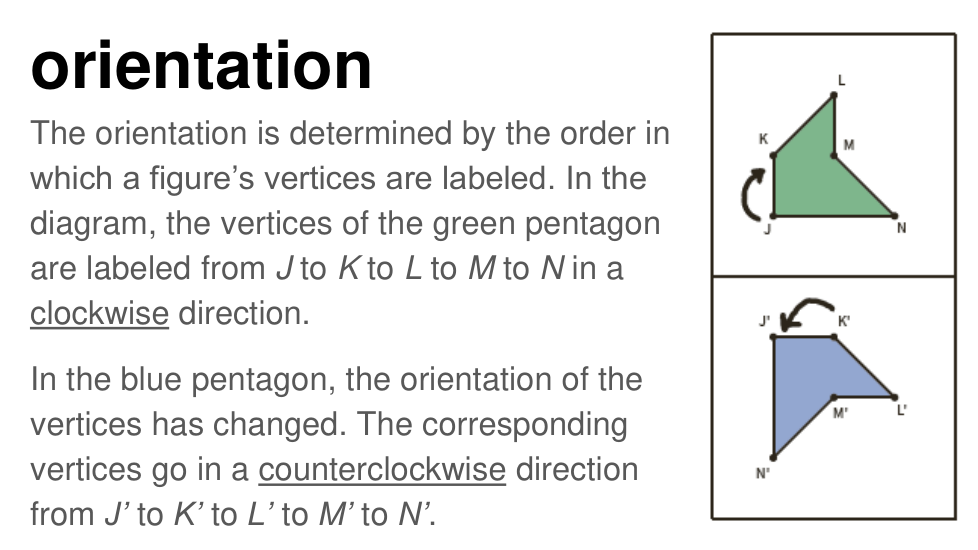
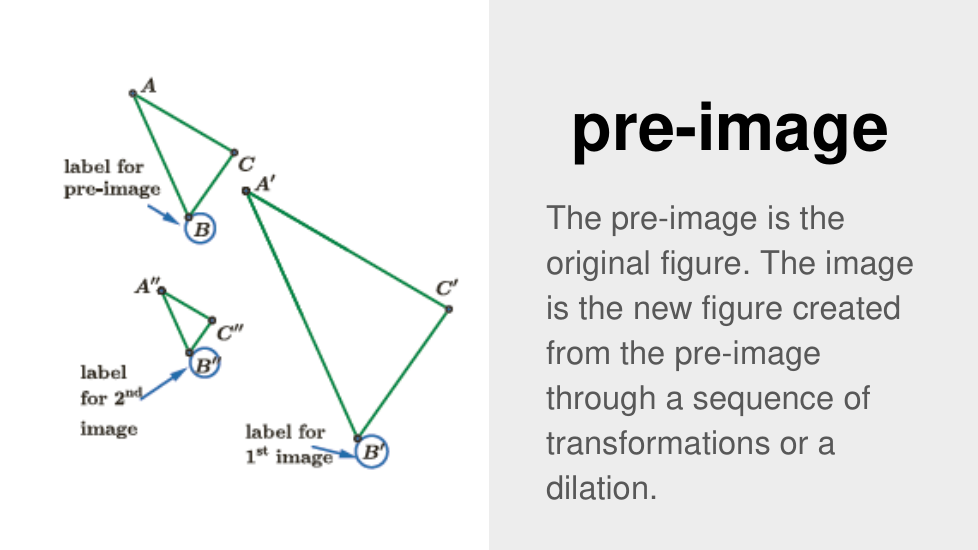
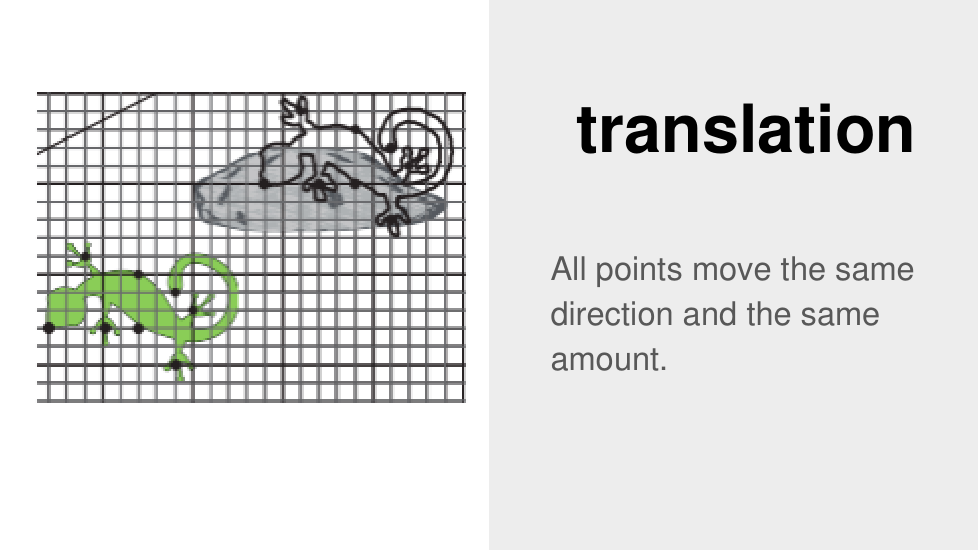
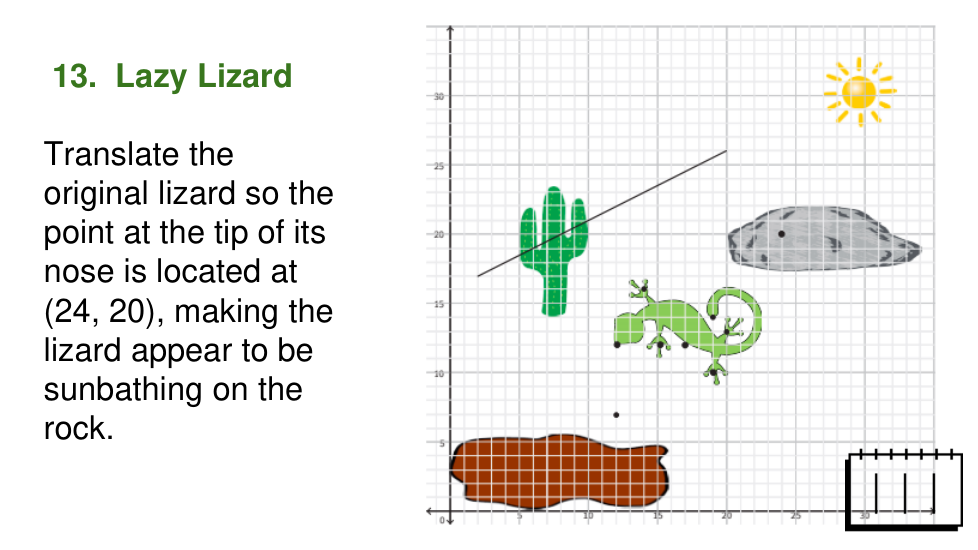
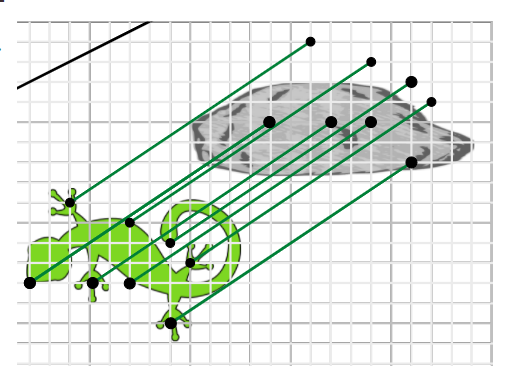
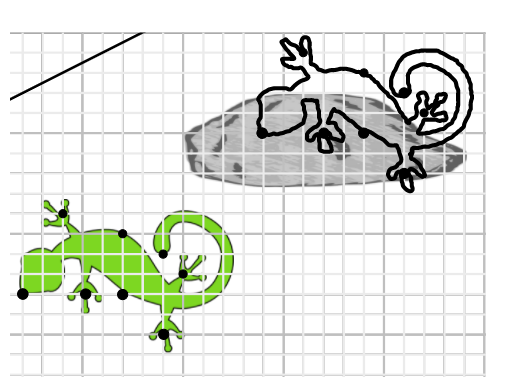
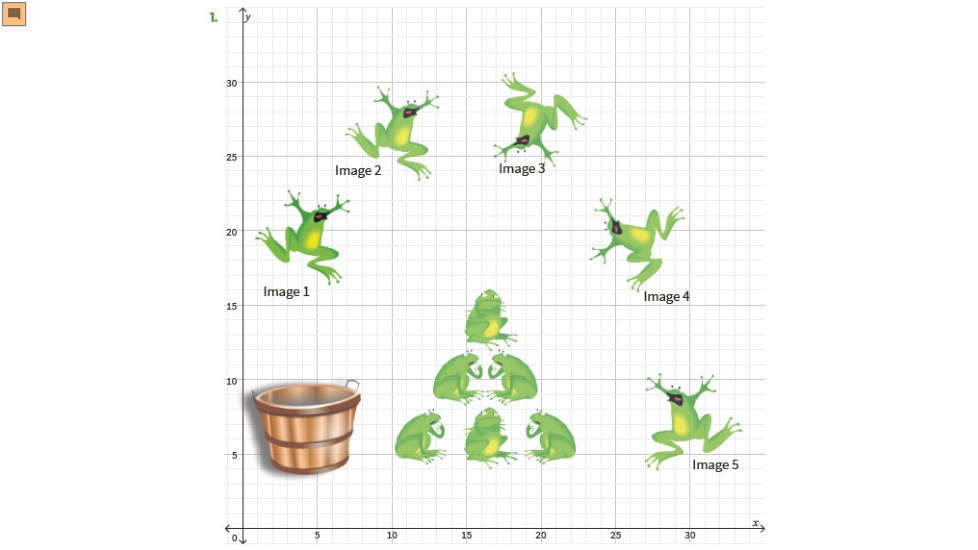
Traduce el lagarto original de modo que la punta de la nariz quede en (24, 20), haciendo que el lagarto parezca estar tomando el sol en la roca.
Sobanura umuserebanya wumwimerere kugirango ingingo iri hejuru yizuru ryayo iherereye (24, 20), bigatuma umuserebanya usa nkuwiyuhagira izuba kurutare.
You can also use the link, https://www.geogebra.org/m/mvauwQxD to create the transformation. You will need to take a picture/screenshot of you results and post the image on your whiteboard.
También puede usar el enlace https://www.geogebra.org/m/mvauwQxD para crear la transformación. Deberá tomar una foto/captura de pantalla de sus resultados y publicar la imagen en su pizarra.
Urashobora kandi gukoresha umurongo, https://www.geogebra.org/m/mvauwQxD kugirango uhindure impinduka. Uzakenera gufata ifoto / ishusho y'ibisubizo byawe hanyuma ushireho ishusho kurubaho rwawe.
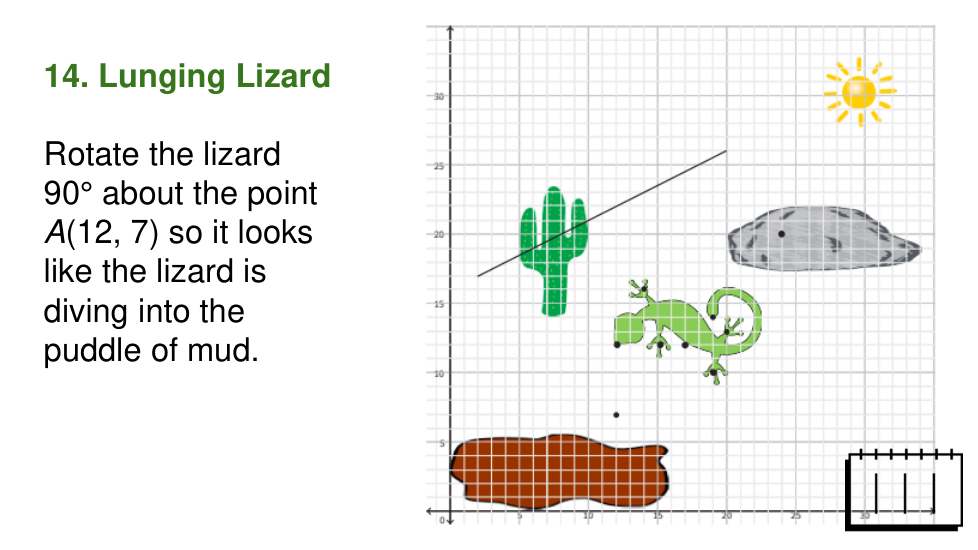
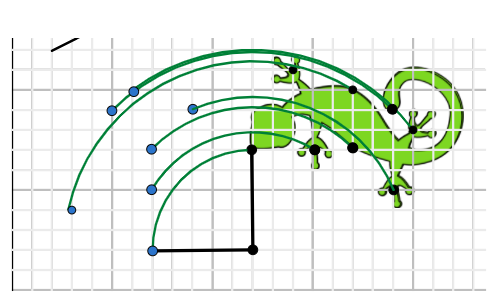
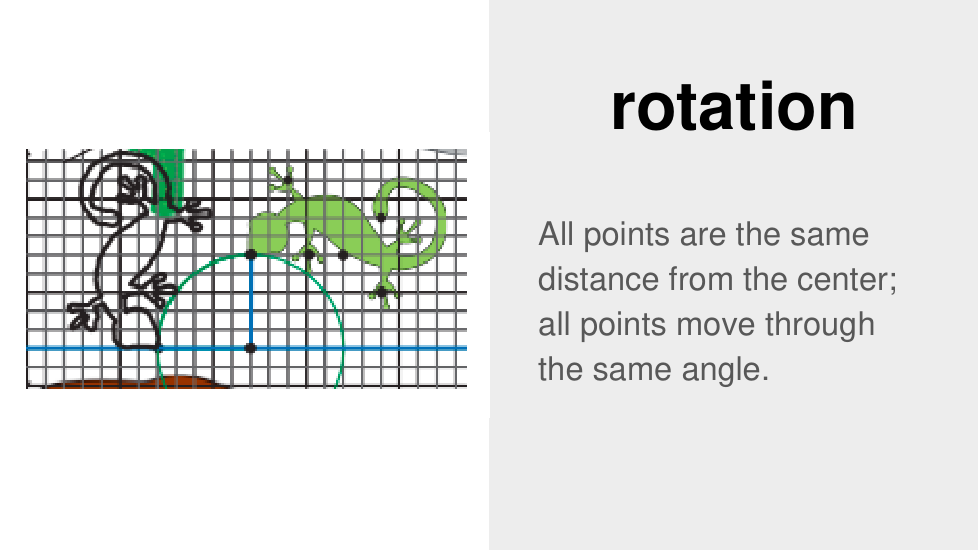
Gira la lagartija 90 grados sobre el punto A (12, 7) para que parezca que la lagartija se sumerge en el charco de lodo.
Kuzenguruka umuserebanya 90o hafi ya A (12, 7) kuburyo bisa nkaho umuserebanya urimo kwibira mu kidiba cyondo.
You can also use the link, https://www.geogebra.org/m/mvauwQxD to create the transformation. You will need to take a picture/screenshot of you results and post the image on your whiteboard.
También puede usar el enlace https://www.geogebra.org/m/mvauwQxD para crear la transformación. Deberá tomar una foto/captura de pantalla de sus resultados y publicar la imagen en su pizarra.
Urashobora kandi gukoresha umurongo, https://www.geogebra.org/m/mvauwQxD kugirango uhindure impinduka. Uzakenera gufata ifoto / ishusho y'ibisubizo byawe hanyuma ushireho ishusho kurubaho rwawe.
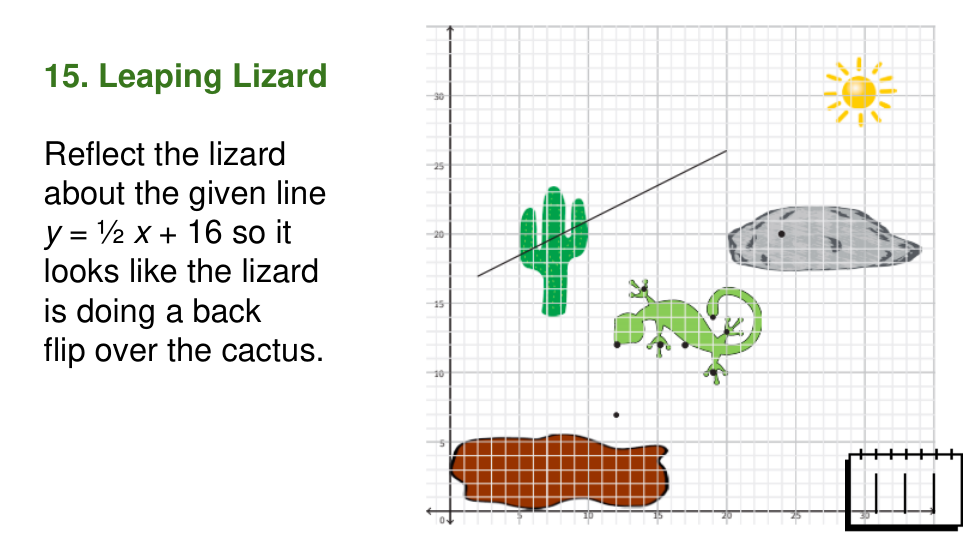
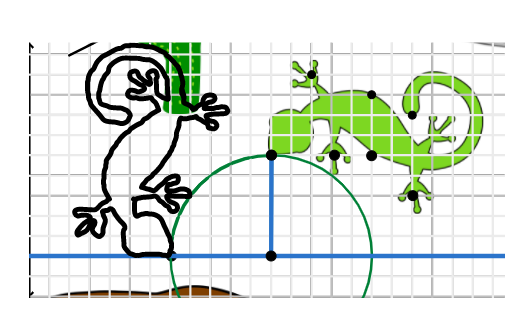
Refleja la lagartija sobre la línea dada y = 1/2 x + 16 para que parezca que la lagartija está dando una voltereta hacia atrás sobre el cactus.
Erekana umuserebanya kubyerekeye umurongo watanzwe y = 1 / 2x + 16 kuburyo bisa nkaho umuserebanya ukora flip inyuma kuri cactus.
You can also use the link, https://www.geogebra.org/m/mvauwQxD to create the transformation. You will need to take a picture/screenshot of you results and post the image on your whiteboard.
También puede usar el enlace https://www.geogebra.org/m/mvauwQxD para crear la transformación. Deberá tomar una foto/captura de pantalla de sus resultados y publicar la imagen en su pizarra.
Urashobora kandi gukoresha umurongo, https://www.geogebra.org/m/mvauwQxD kugirango uhindure impinduka. Uzakenera gufata ifoto / ishusho y'ibisubizo byawe hanyuma ushireho ishusho kurubaho rwawe.
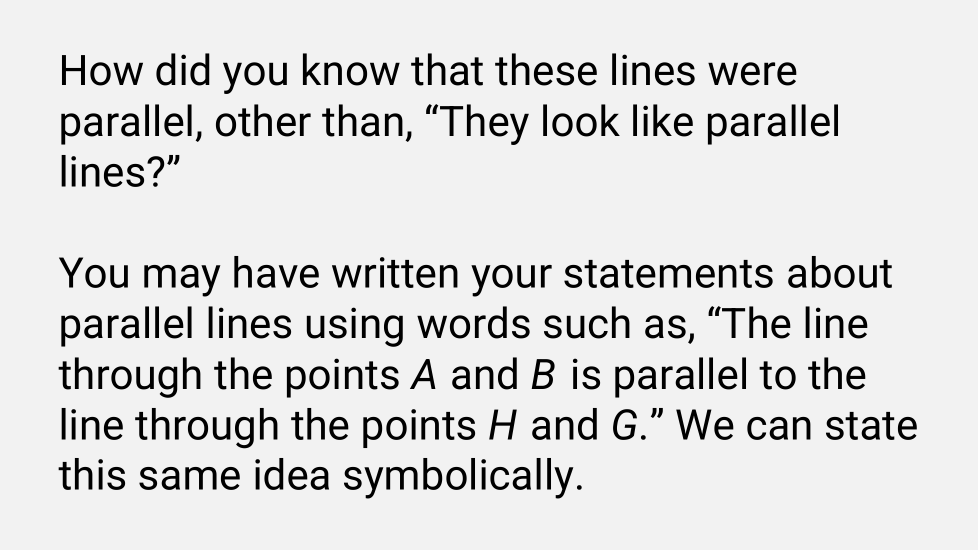
¿Cómo supiste que estas líneas eran paralelas, además de “Parecen líneas paralelas”?
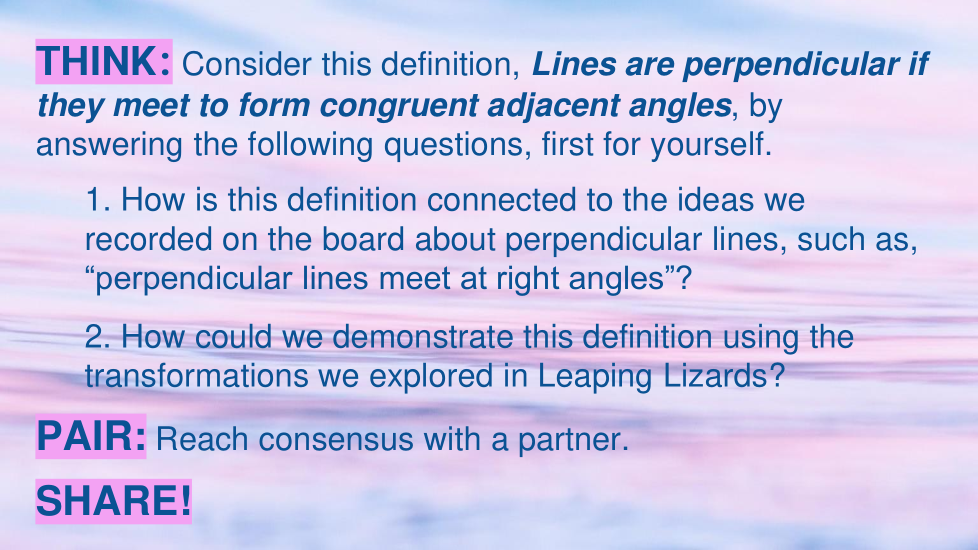
¿Cómo se conecta esta definición con las ideas sobre las líneas perpendiculares, como "las líneas perpendiculares se encuentran en ángulo recto"?
¿Cómo podríamos demostrar esta definición usando las transformaciones que exploramos en Leaping Lizards?
Using your answers from 18 & 19, come up with a short paragraph that answers both questions with your partner.
Usando sus respuestas de 18 y 19, elabore un breve párrafo que responda a ambas preguntas con su compañero.
Notes
notas
Notes
notas
Notes
notas
Notes
notas
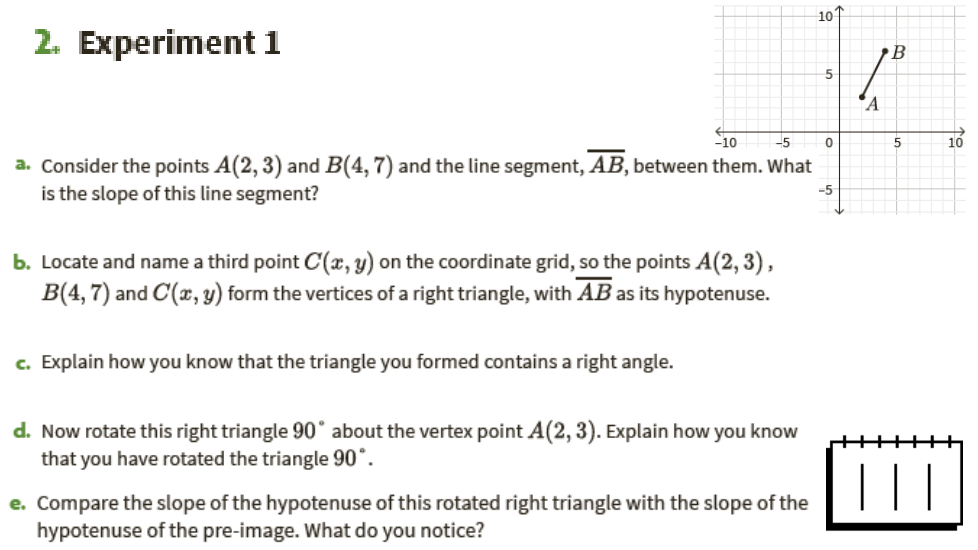
What is the slope of the line segment when you consider the points A(2, 3) and B(4, 7) and the line segment
¿Cuál es la pendiente del segmento de recta cuando consideras los puntos A(2, 3) y B(4, 7) y el segmento de recta
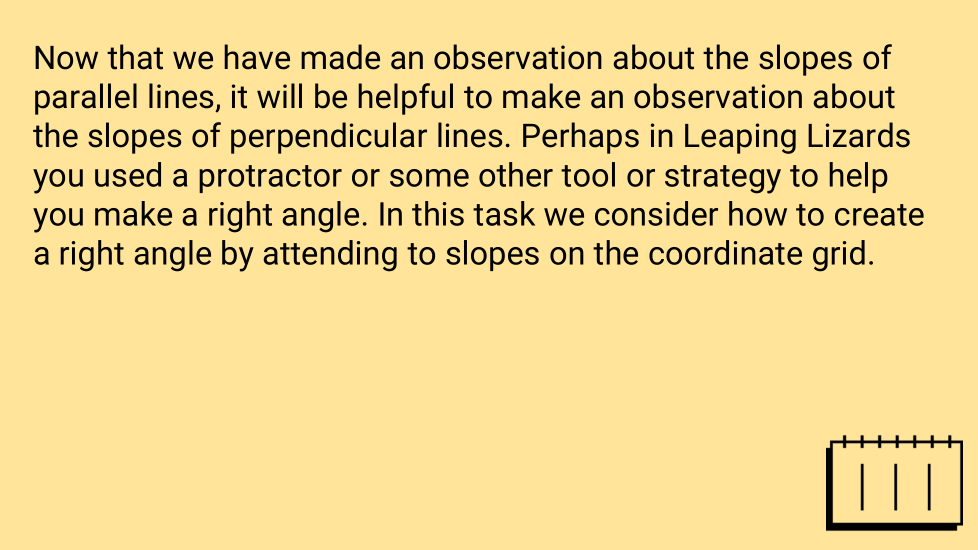
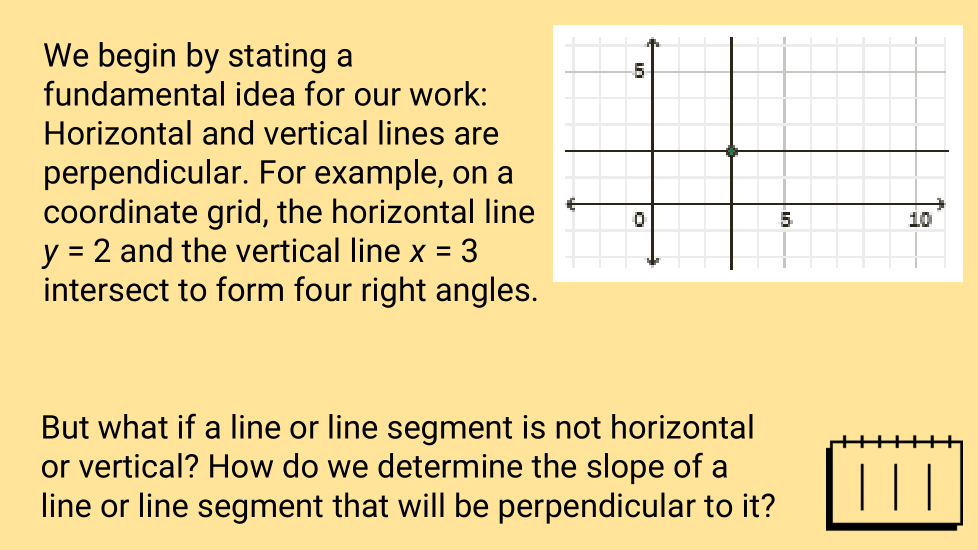
When working with lines on a coordinate grid,
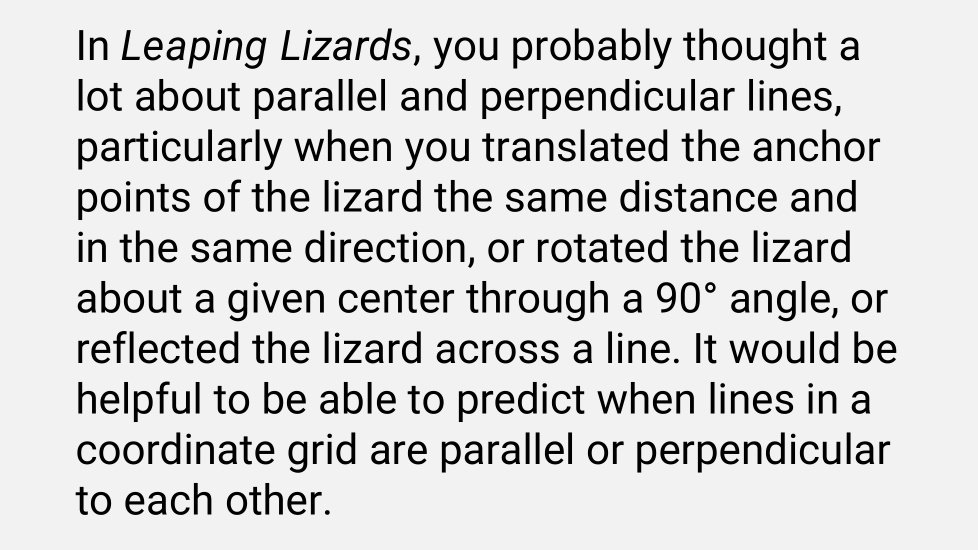
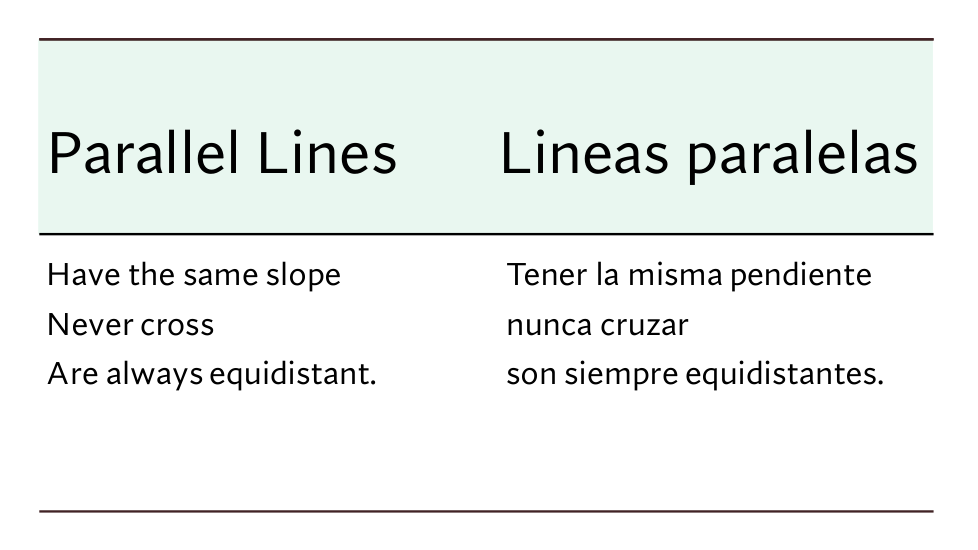
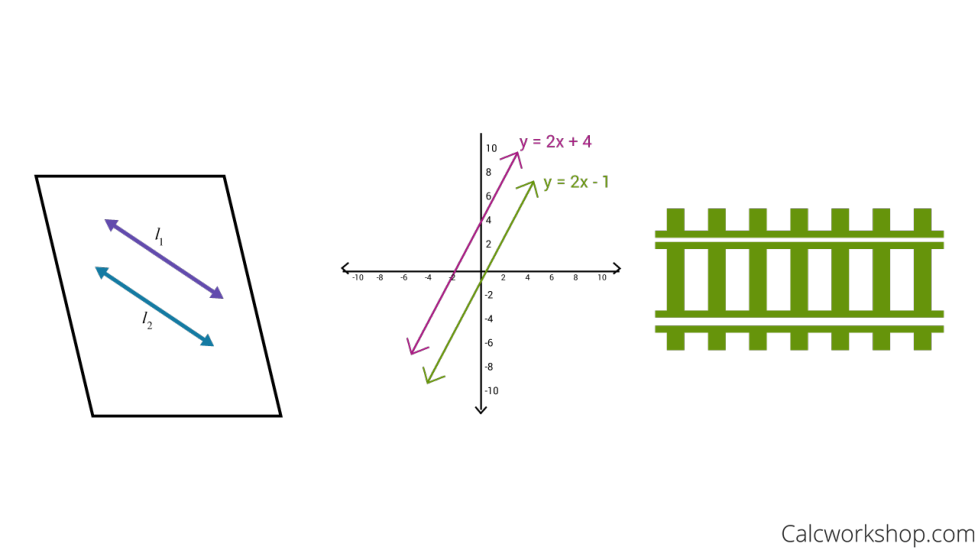
I know the lines are parallel if they have the same slope, or are both vertical or both horizontal.
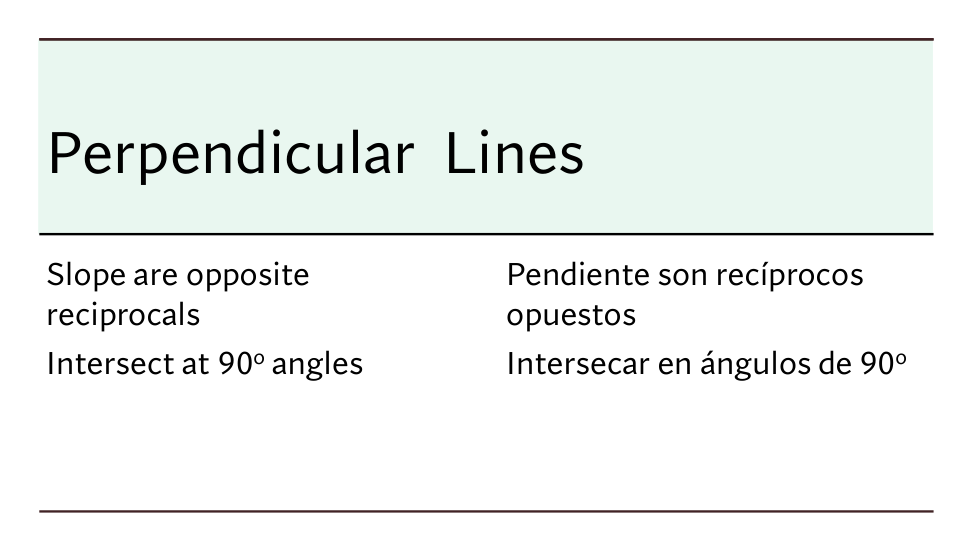
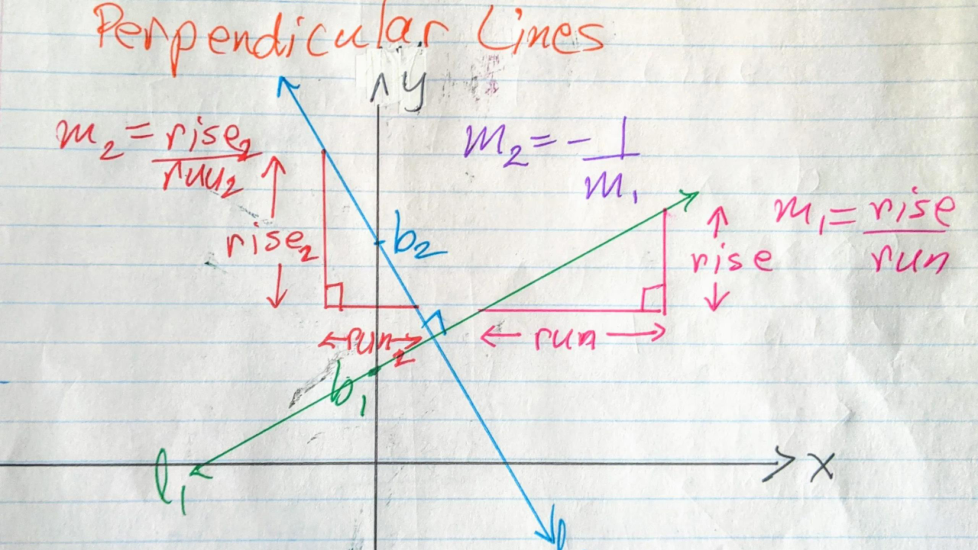
I know the lines are perpendicular if they have opposite reciprocal slopes, or one is vertical and the other is horizontal.
I can indicate two lines are parallel using the following notation:
In representing parallel lines on a coordinate grid, we have drawn images to represent the following undefined terms: point, line, and plane. These are abstract ideas, rather than concrete objects because:
Unlike a dot, a point is a location with no size.
Unlike a straight stroke of ink, a line has no width, so it is only 1-D.
Unlike a piece of paper, a plane has no thickness, so it is only 2-D.
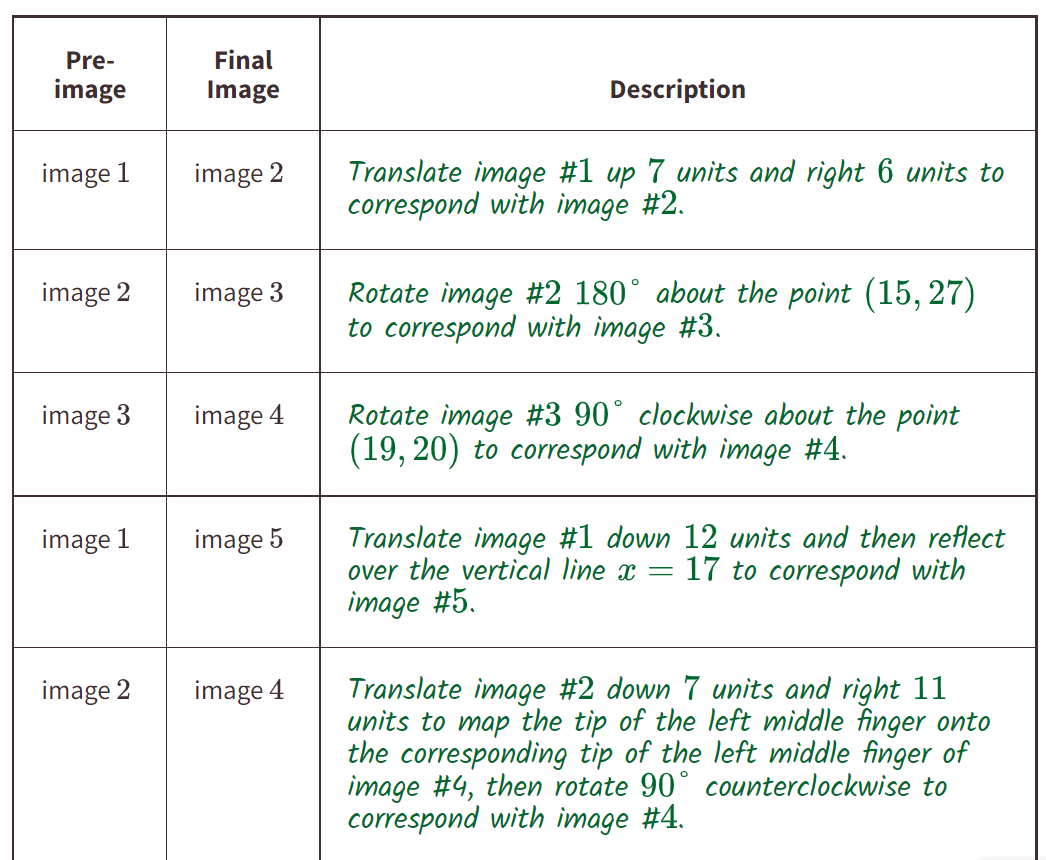
Si decide que la transformación es una rotación, deberá proporcionar el centro de rotación, la dirección de la rotación (sentido horario o antihorario) y la medida del ángulo de rotación.
Si decide que la transformación es un reflejo, deberá dar la ecuación de la línea de reflexión.
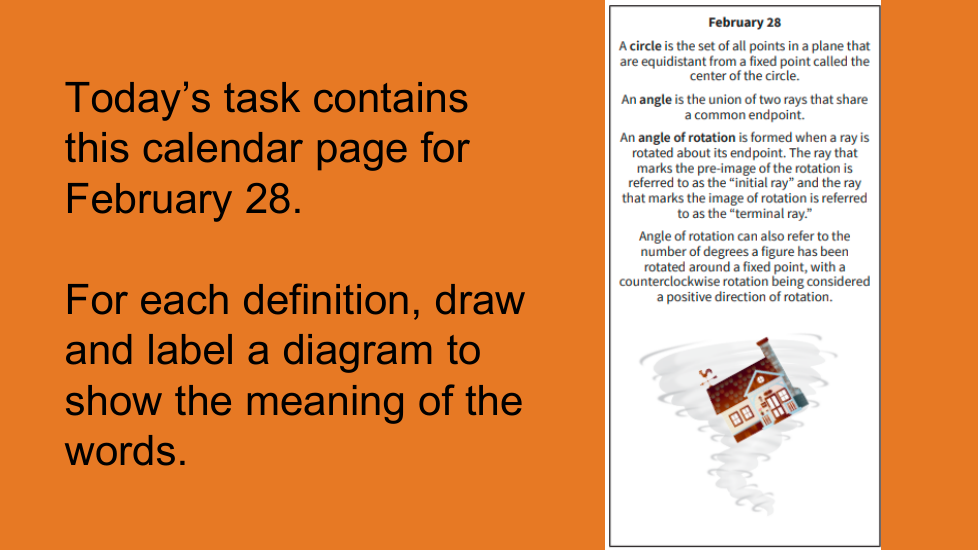
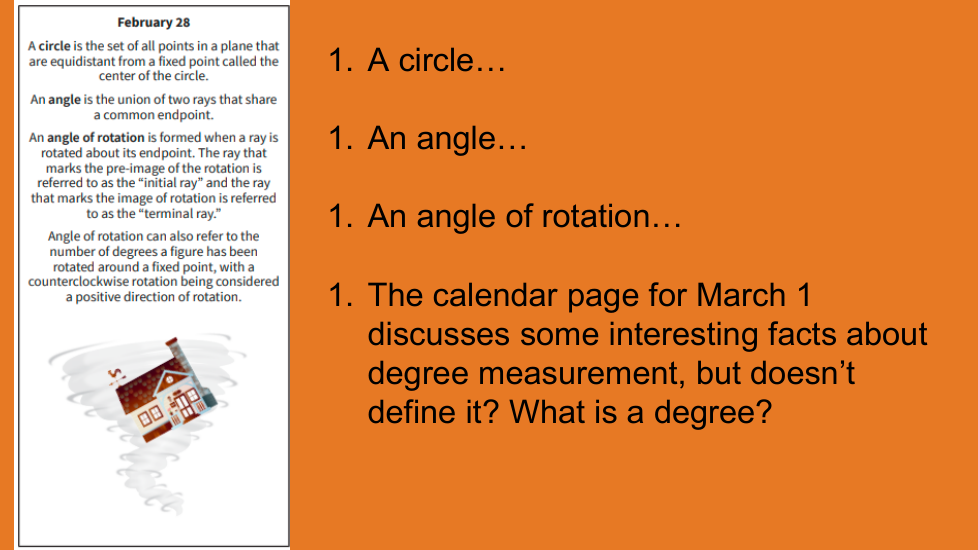
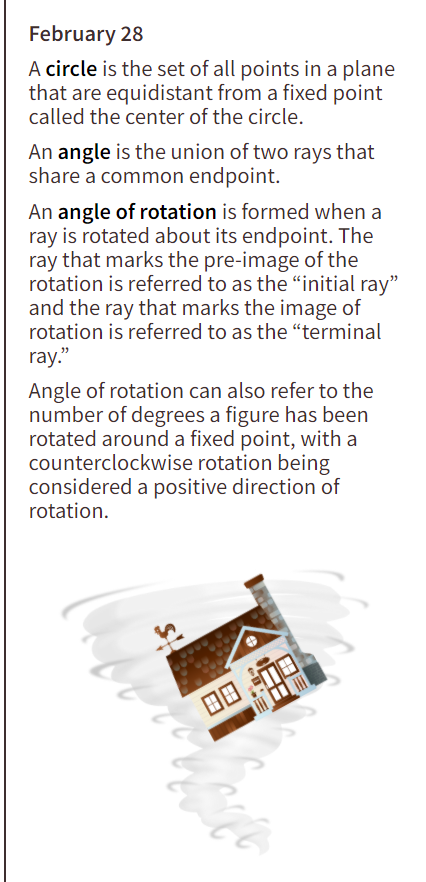
Un circulo
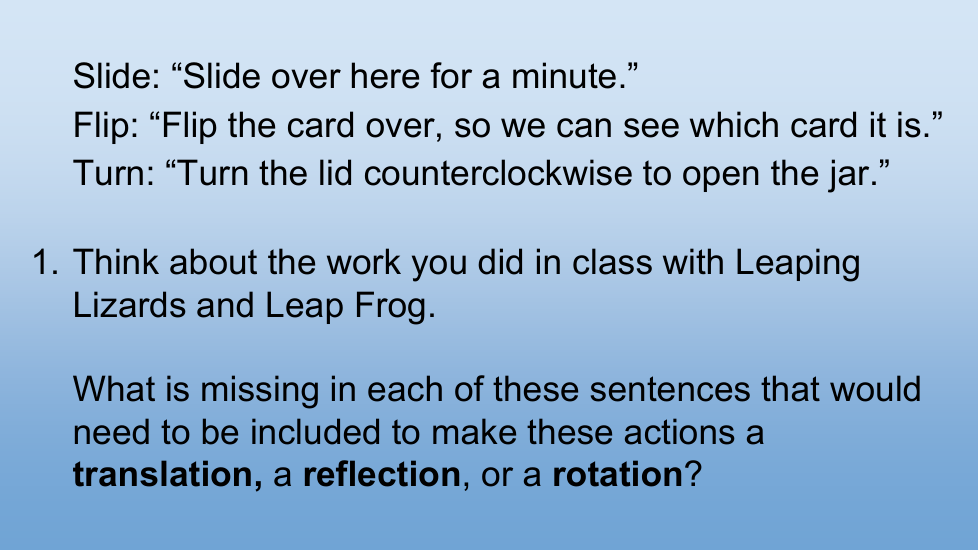


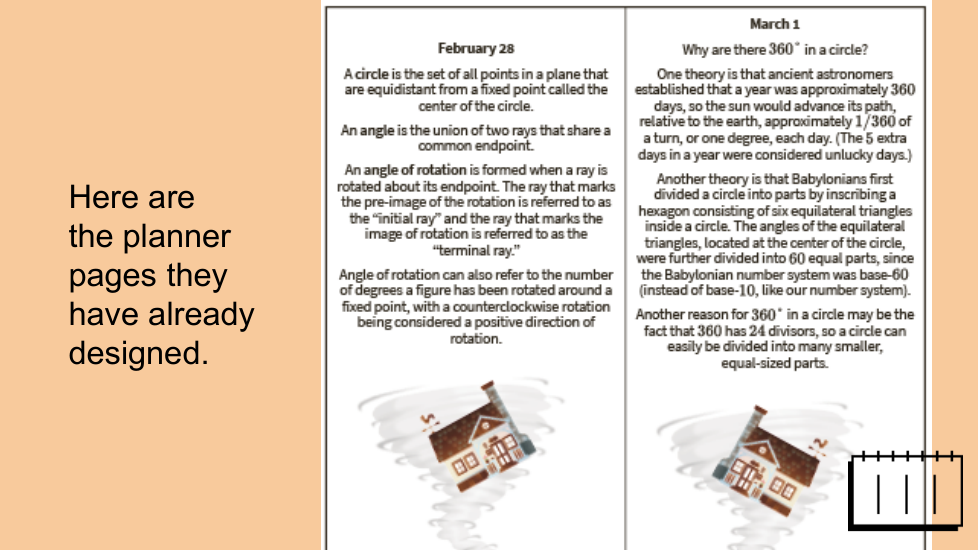
The essential elements of each definition are as follows:
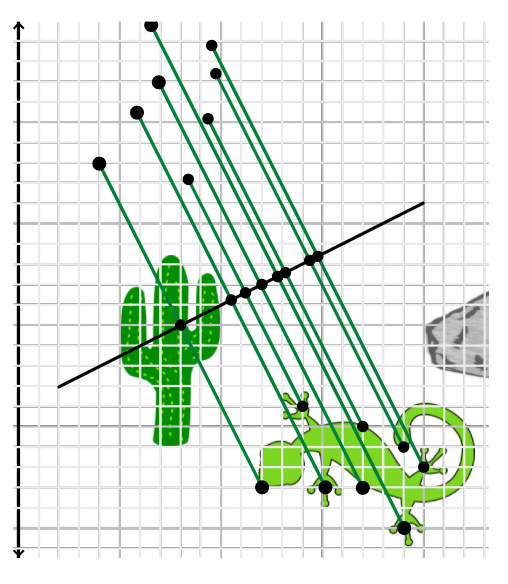
Translation: Translations locate points at the same distance and direction along lines that are parallel to each other.
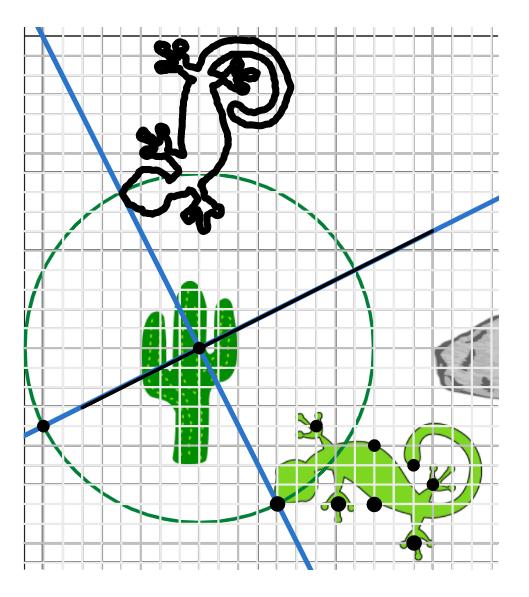
Rotation: Rotations locate points in the same direction along concentric circles and through the same angle of rotation.
Reflection: Reflections locate points across a specified line of reflection so that the line of reflection is the perpendicular bisector of each line segment connecting corresponding pre-image and image points.
What we noticed about all three transformations:
Corresponding points within pre-image and image figures retain their distance and angle measure so the pre-image and image are the same size and shape, and therefore, they are congruent figures; like functions, these transformations take an input (pre-image) and create a unique output in the plane (image).
What we noticed about each transformation:
Translations: All points move the same direction and the same amount.
Rotations: All points are the same distance from the center; all points move through the same angle.
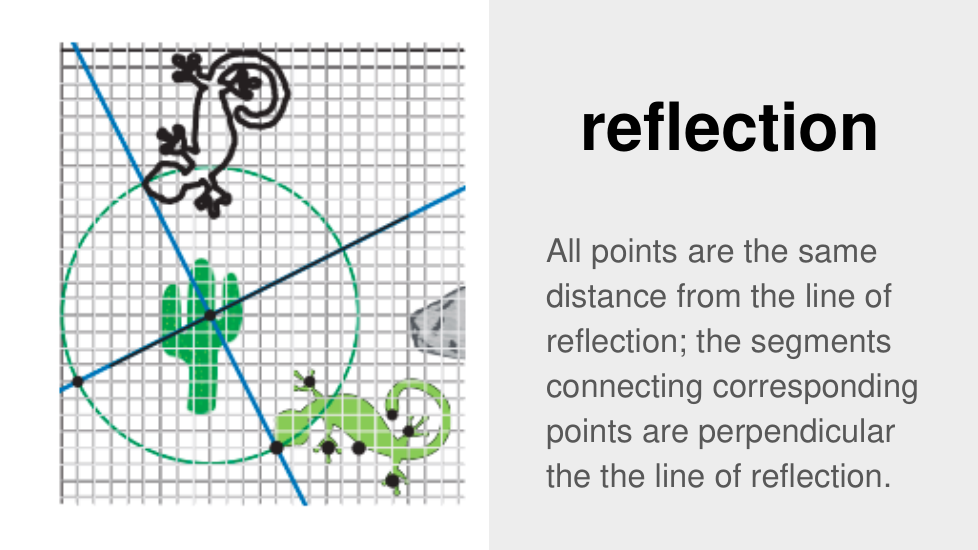
Reflections: All points are the same distance from the line of reflection; the segments connecting corresponding points are perpendicular to the line of reflection.
Lo que notamos sobre las tres transformaciones:
Los puntos correspondientes dentro de las figuras de la preimagen y la imagen conservan su distancia y la medida del ángulo, por lo que la preimagen y la imagen tienen el mismo tamaño y forma y, por lo tanto, son figuras congruentes; Al igual que las funciones, estas transformaciones toman una entrada (imagen previa) y crean una salida única en el plano (imagen).
Lo que notamos sobre cada transformación:
Traslaciones: Todos los puntos se mueven en la misma dirección y en la misma cantidad.
Rotaciones: Todos los puntos están a la misma distancia del centro; todos los puntos se mueven en el mismo ángulo.
Reflexiones: Todos los puntos están a la misma distancia de la línea de reflexión; los segmentos que conectan los puntos correspondientes son perpendiculares a la línea de reflexión.
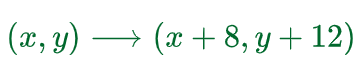
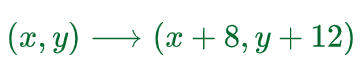
Use this notation to describe a translation:
Utilice esta notación para describir una traducción:
Locate and name a third point C(x, y) on the coordinate grid, so the points A(2, 3), B(4, 7) and C(x, y) form the vertices of a right triangle, with a hypotenuse of
Localiza y nombra un tercer punto C(x, y) en la cuadrícula de coordenadas, de modo que los puntos A(2, 3), B(4, 7) y C(x, y) formen los vértices de un triángulo rectángulo, con un hipotenusa de
Explain how you know that the triangle you formed contains a right angle.
Explica cómo sabes que el triángulo que formaste contiene un ángulo recto.
Now rotate this right triangle 90o about the vertex point A(2, 3). Explain how you know that your have rotated the triangle 90o.
Ahora rota este triángulo rectángulo 90o sobre el punto de vértice A(2, 3). Explica cómo sabes que has rotado el triángulo 90o.
Compare the slope of the hypotenuse of this rotated right triangle with the slope of the hypotenuse of the pre-image. What do you notice?
Compara la pendiente de la hipotenusa de este triángulo rectángulo rotado con la pendiente de la hipotenusa de la imagen previa. ¿Que notaste?
a. The slope of the original hypotenuse: 2
a. La pendiente de la hipotenusa original: 2
b. Posibles ubicaciones para el punto C: (4, 3) o (2, 7)
c.Las piernas se encuentran a lo largo de líneas horizontales o verticales.
d.El cateto horizontal del triángulo rectángulo ha girado para convertirse en un cateto vertical, y el cateto vertical ha girado para convertirse en un cateto horizontal.
e. La pendiente de la hipotenusa del triángulo rotado es -1/2 . Las pendientes de la hipotenusa del triángulo original y del triángulo rotado son recíprocas opuestas. Su producto, 2 x -1/2 es -1.
Si decide que la transformación es una traslación, deberá describir el "ascenso" y el "desplazamiento" entre los puntos previos a la imagen y sus puntos de imagen correspondientes.
Si decide que se necesita una combinación de transformaciones para pasar de la imagen previa a la imagen final, describa cada transformación en el orden en que se completarían.