

Learning Intention: Students will examine how geography and climate played a role in the migration of Native Americans by analyzing various sources.

Mood Check In: Where are you currently?

The kinds of food the Native Americans ate, the clothing they wore, and the shelters they had depended upon the seasons. Their foods changed with the seasons. In winter, they hunted birds and animals and lived on stored foods from the previous fall. In spring, they hunted, fished and picked berries. In summer, they grew crops (beans, corn, and squash). In fall, they harvested crops and hunted for foods to preserve and keep for the winter.
The Native Americans used natural resources in every aspect of their lives. They used animal skins (deerskin) as clothing. Shelter was made from the material around them (saplings, leaves, small branches, animal fur). Native peoples of the past farmed, hunted, and fished. They used natural resources such as rock, twine, bark, and oyster shell to farm, hunt, and fish.
Question: How does the climate affect the Native Americans way of life?
Let's generate our claim!
1. Within your group, you will analyze various primary sources to generate claims.
2. Make sure to analyze each primary source carefully!
3. You must generate a statement and draw a conclusion based on what you read, saw, or heard.
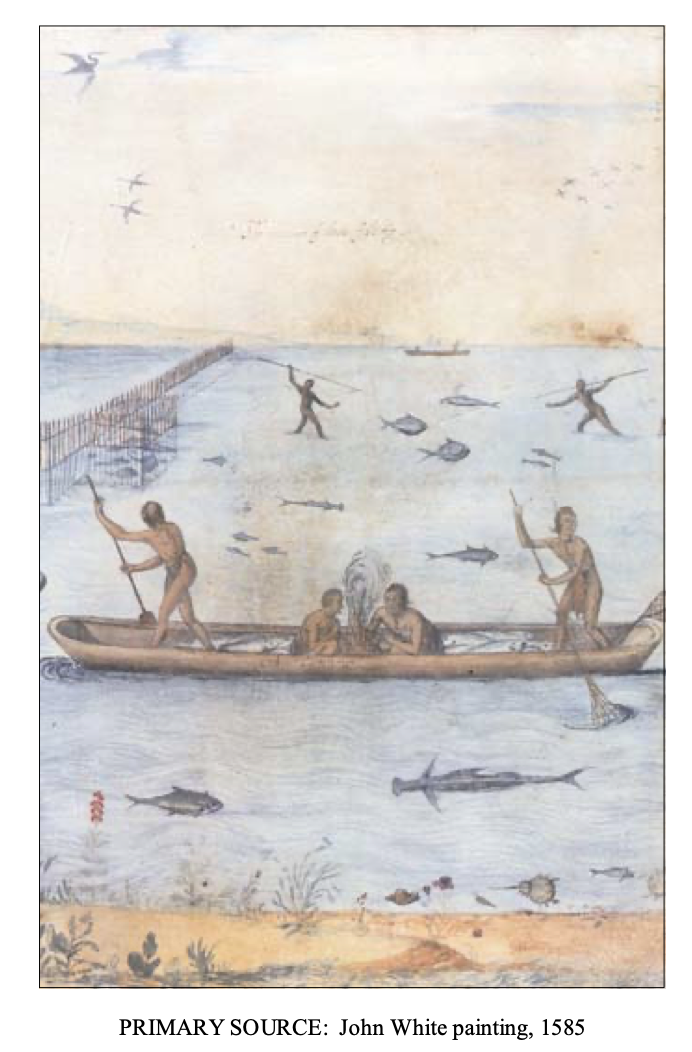
Generate a claim based on the primary source.
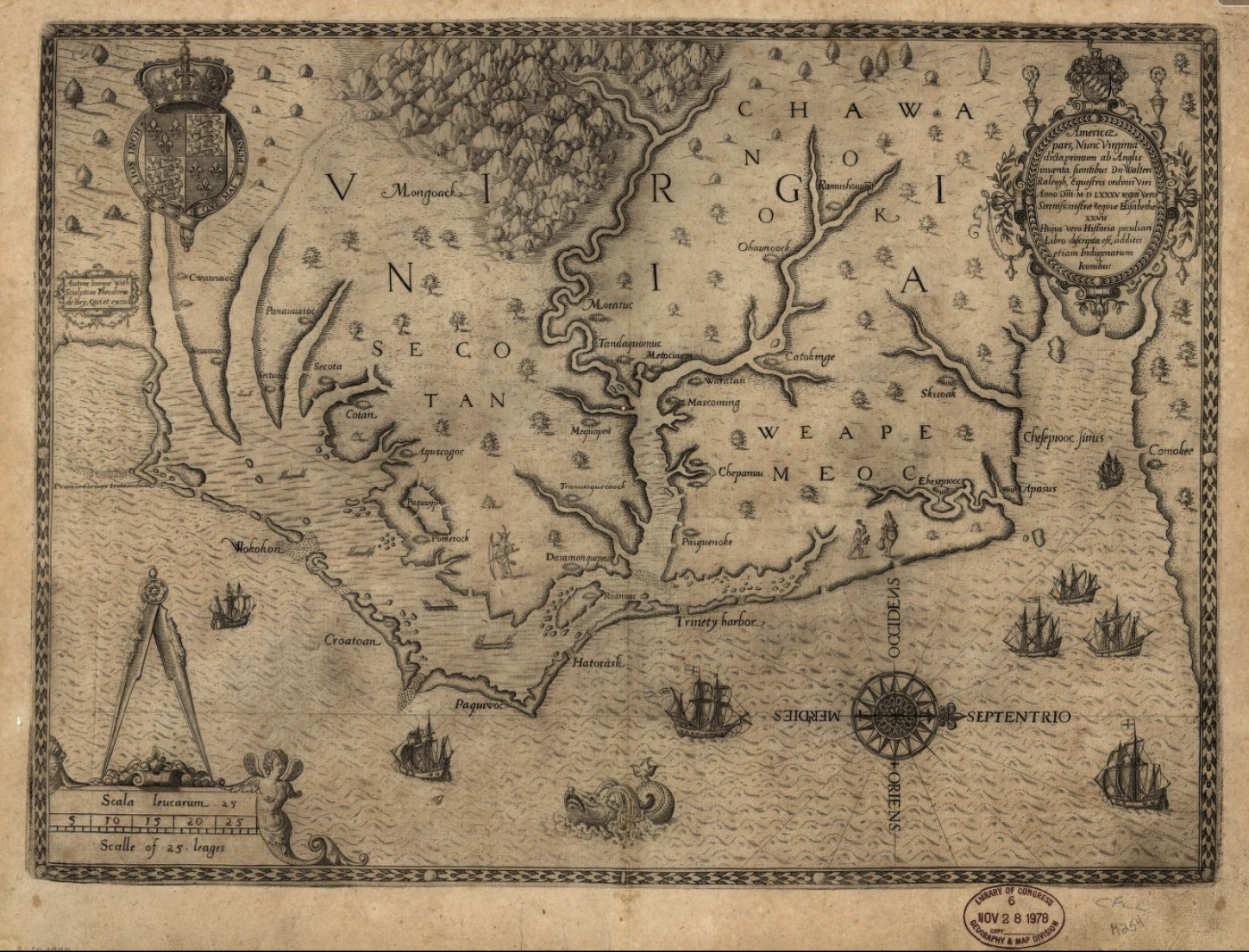
How does the features on the map reveal the climate in the area?
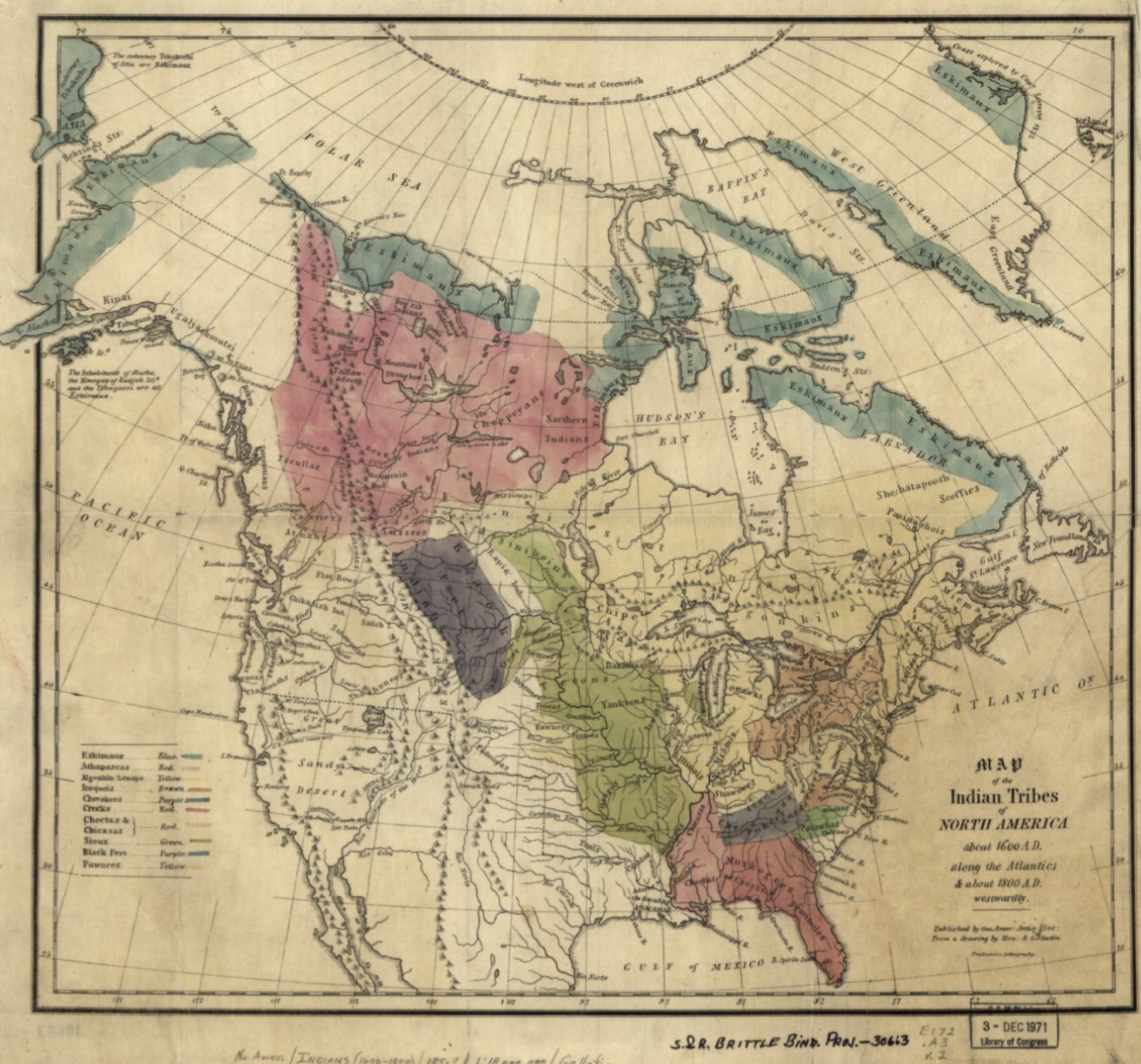
How does the map reveal migration due to climate?
Ways of Life
Scholars classify Native Americans into several culture areas, regions in which groups of people have a similar way of life. Though these cultures were very different from one another, many shared some basic traits.
Meeting Basic Needs
Early Native American societies developed a variety of ways to meet their needs. In many areas, women collected roots, wild seeds, nuts, acorns, and berries. Men hunted for game and fished. Wild game was plentiful in regions like the Pacific Coast and the Eastern Woodlands.
In many culture areas, agriculture allowed people to grow and store food. Native Americans learned to grow crops suited to the climate in which they lived. They used pointed sticks for digging. Bones or shells served as hoes. Some used fertilizer, such as dead fish, to make the soil more productive. Where Native Americans lived by farming, their population was much larger than in nonfarming areas.
Trade was a common activity in all the North American cultures. In some areas, items such as seashells or beads were used as currency. Shells, flint for making fires, copper, and salt were all important trade items.
Shared Beliefs
Many Native Americans felt a close relationship to the natural world. They believed that spirits dwelled in nature and that these spirits were part of their daily lives.
Traditions reflected these beliefs. For example, the Indians of the Southeast held the Green Corn Ceremony in late summer. The ritual, which could last for more than a week, was a form of natural and spiritual renewal at the end of the growing season. The Pueblo Indians revered spirits known as kachinas. To teach their children about these benevolent spirits, the Pueblos carved kachina dolls.
How did the climate affect the way of life for Native American societies?