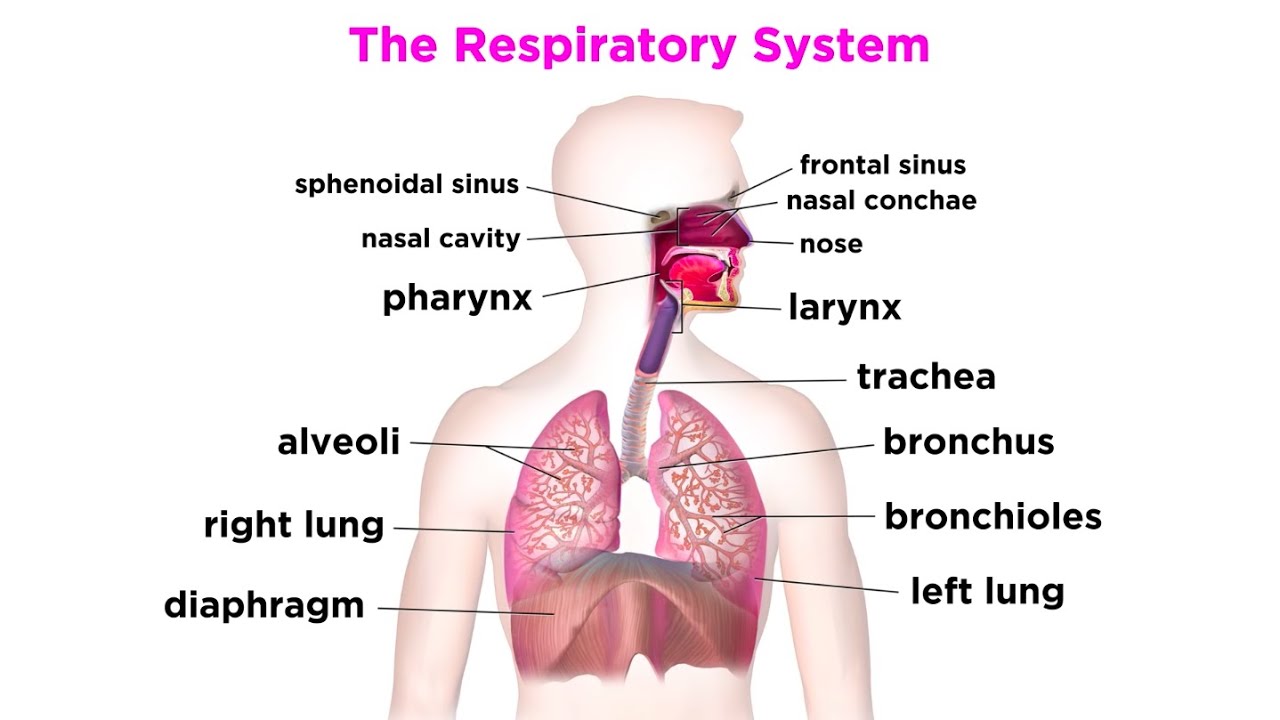
When you breathe, oxygen goes into your _______ (oral cavity) and nose (nasal cavity). Then oxygen heads down the _______. Next oxygen will then head to the voice box also known as the _______
Word Bank:
larynx
pharynx
mouth
Question 6
6.
After coming form the larynx, oxygen then heads into your _______. The windpipe is also known as the _______. The trachea has _______ that move back and forth as someone talks or _______. The trachea is guiding fresh oxygen to the _______.
Word bank:
rings
trachea
sings
lungs
windpipe
Question 3
3.
Question 4
4.
Word Bank:
alveoli
bronchi
right
lungs
bronchioles
The trachea splits into a pair of _______. There is a left and _______ one. The bronchi branch into smaller _______. They are inside of your _______ where oxygen has to eventually go. Bronchioles divide into smaller _______.
Question 2
2.
Question 10
10.
Question 8
8.
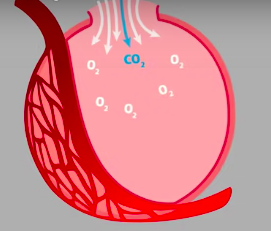
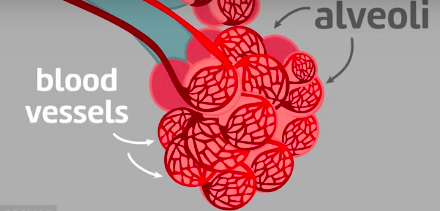
Alveoli are _______ air _______ in the lungs that are _______ by tiny blood _______.
Word Bank:
vessels
microscopic
sacs
surrounded
Question 17
17.
Word Bank:
vessels
dioxide
alveoli
oxygen
When we breathe, _______ diffuses out of the alveoli into the blood _______. Carbon _______ moves (diffuses) from the blood to the _______.
Question 16
16.
Question 14
14.
Question 12
12.
The walls of _______ have membranes too. Oxygen and carbon dioxide can _______ through it.
Word Bank
Alveoli
diffuse
Gas exchange occurs at the site of the
trachea
bronchioles
alveoli
bronchi
Terrace
Lungs contract and expand and are controlled by the
diaphragm
frying pan
cool guy name Stan
chicken man
Energy comes from __________, which is a simple sugar we get from food. Glucose is taken into the bloodstream and into cells to produce ATP by the mitochondria.
glucose
sucrose
mucous
candy
Diffusion is when gas particles, like oxygen or carbon dioxide, move from
high concentration to lower concentration
lower concentration to higher concentration
instantaneous combustible carbonate rubicon
Diffusion can occur through a membrane if the particles are ______ to get through it.