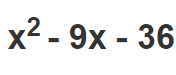
Factor completely:
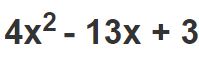
Factor completely:
Find the y-intercept for
What is the equation of the axis of symmetry of:
What is the vertex of:
Identify where the function:
is decreasing. (input your answer in interval form)
Factor completely:
Factor completely:
is a perfect square trinomial, what is the value of c?
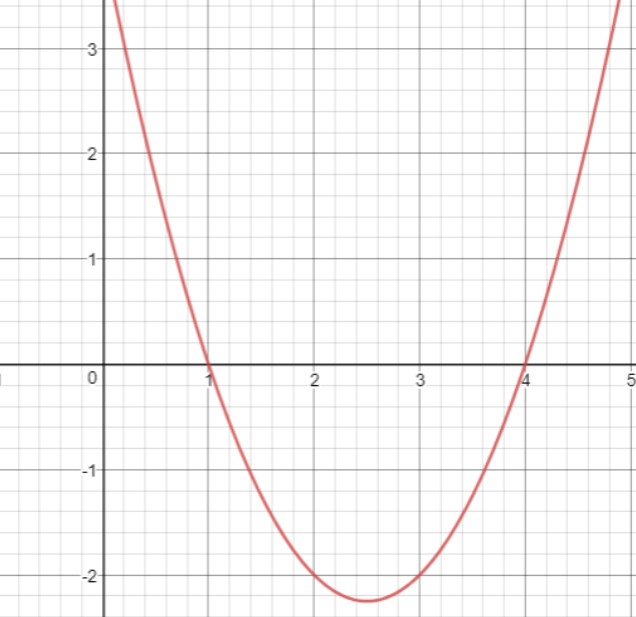
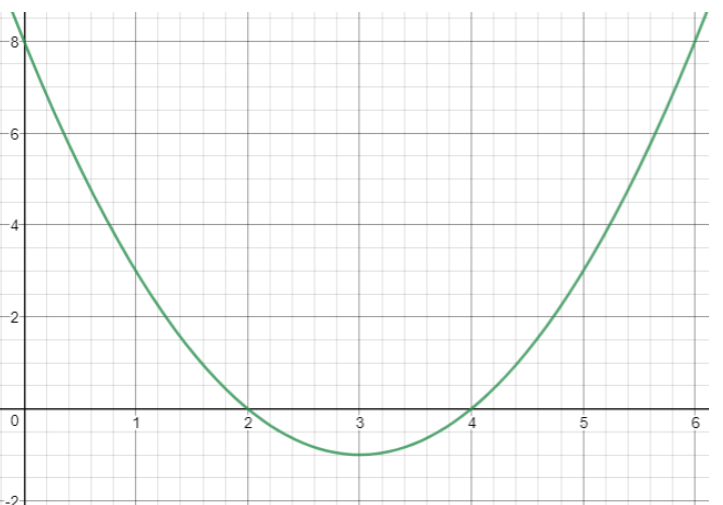
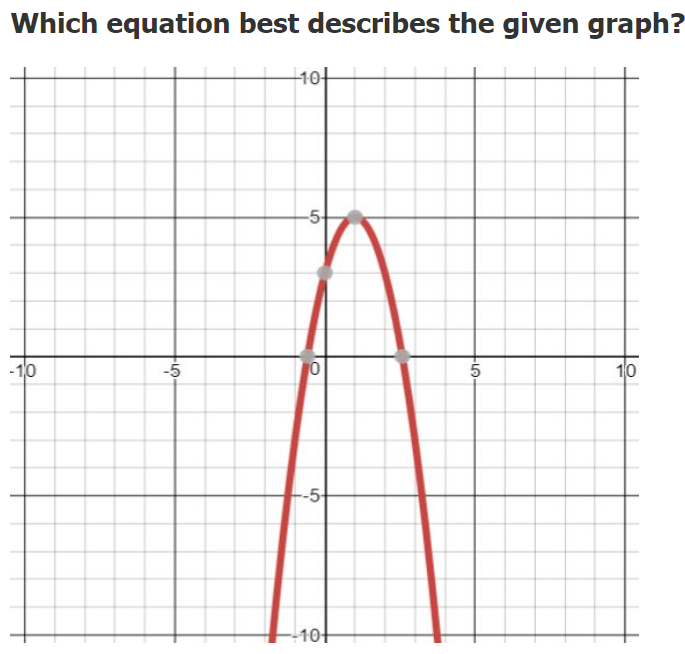
Select the apparent factors of the quadratic function shown.
After completely factoring:
which of the following are all the factors:
After completely factoring:
which of the following are all the factors:
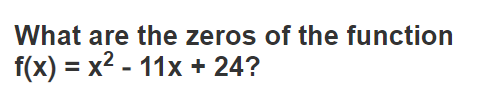
Solve:
(put your answer in set notation using { } )
Input your answer in set notation using {}
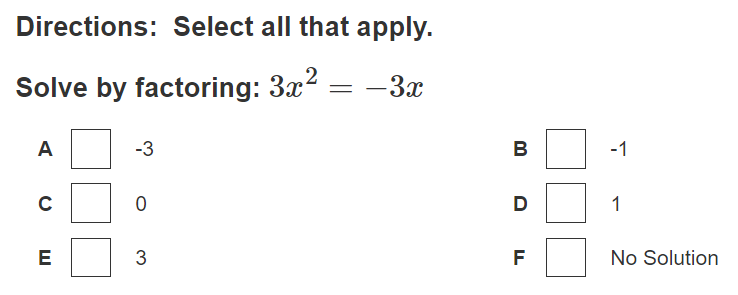
Solve by factoring:
Input your answer in set notation using {}
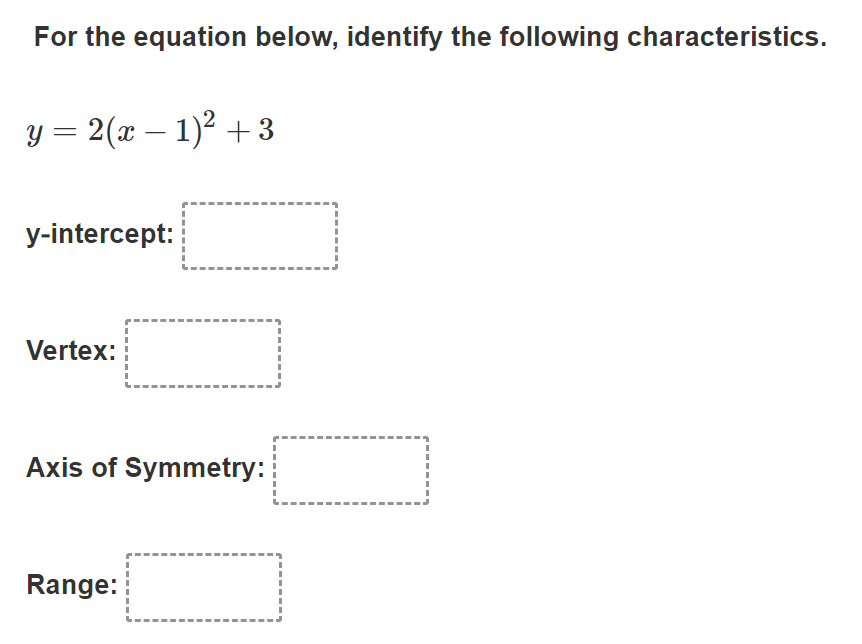
For the equation:
What is the y-intercept?
(as a point (x,y) )
For the equation:
What is the vertex?
(as a point (x,y) )
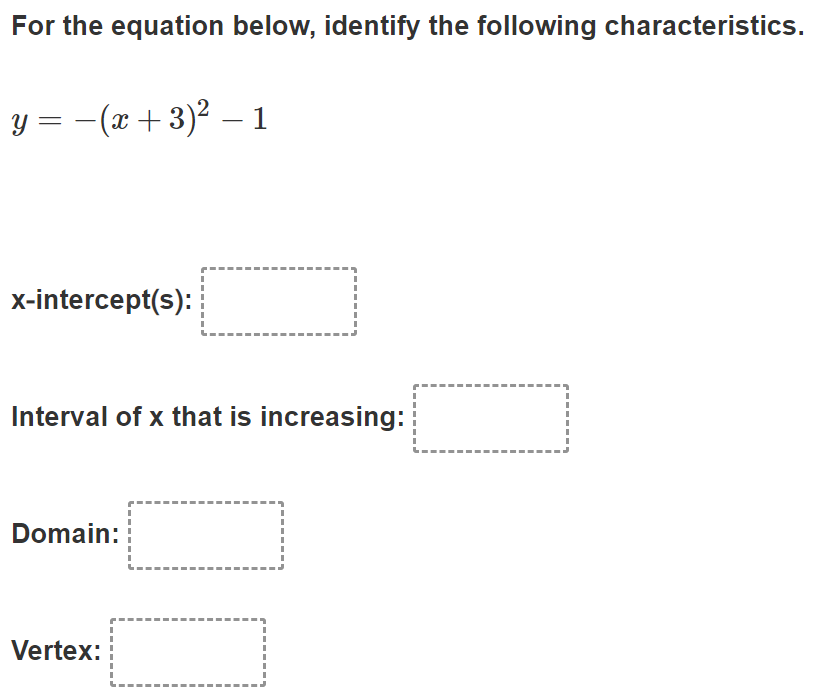
For the equation:
What are the x-intercept(s)?
(input as a point (x,y) and separate by a comma if necessary, or if there are no real solutions, type: none)
For the equation:
Increasing interval:
(in interval notation)
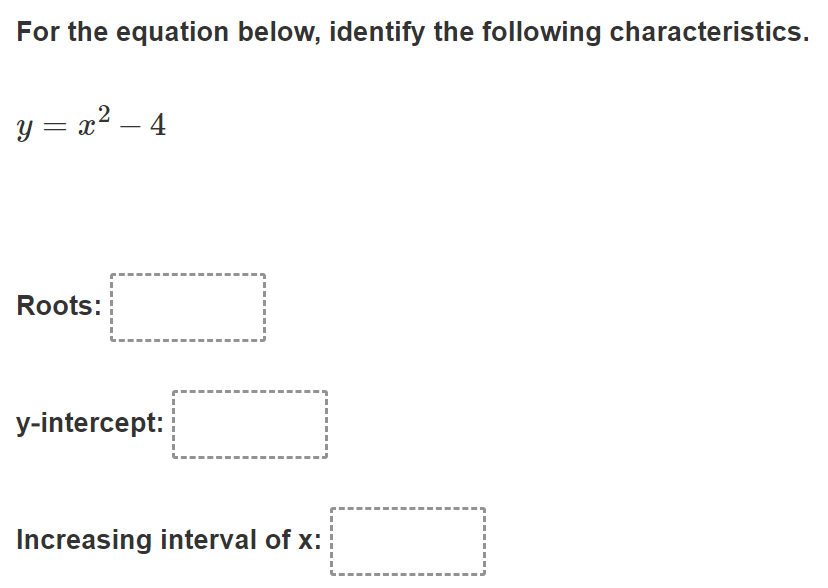
Roots: (in set notation using {}
(note graph this in show your work if necessary)
What is the y-intercept? (as a point (x,y) )
Increasing interval? (in interval notation)
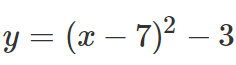
Given the equation:
Choose all of the appropriate transformations of this function
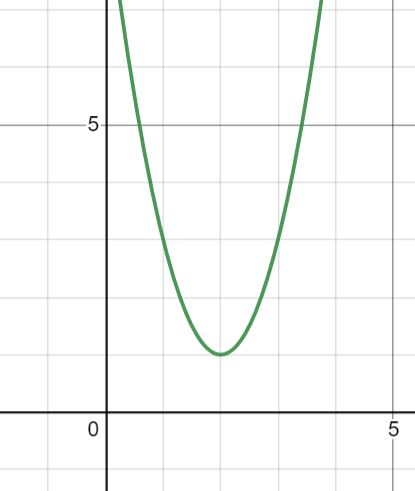
Given the graph, h=?
Given the graph, k=?
Given the graph above, choose all of the appropriate transformations:
For the equation:
What is the axis of symmetry?
(this is an equation)
For the equation:
What is the range?
(in interval notation)
For the equation:
domain: (in interval notation)
For the equation:
range: (interval notation)--(the 'paper' says vertex...but I'm looking for range here)