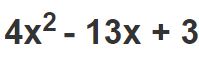
Factor completely! Look GCF's and include them in your answer!!
Factor completely! Look GCF's and include them in your answer!!
Find the value of C that will make this a perfect square trinomial:
Find the value of C that will make this a perfect square trinomial:
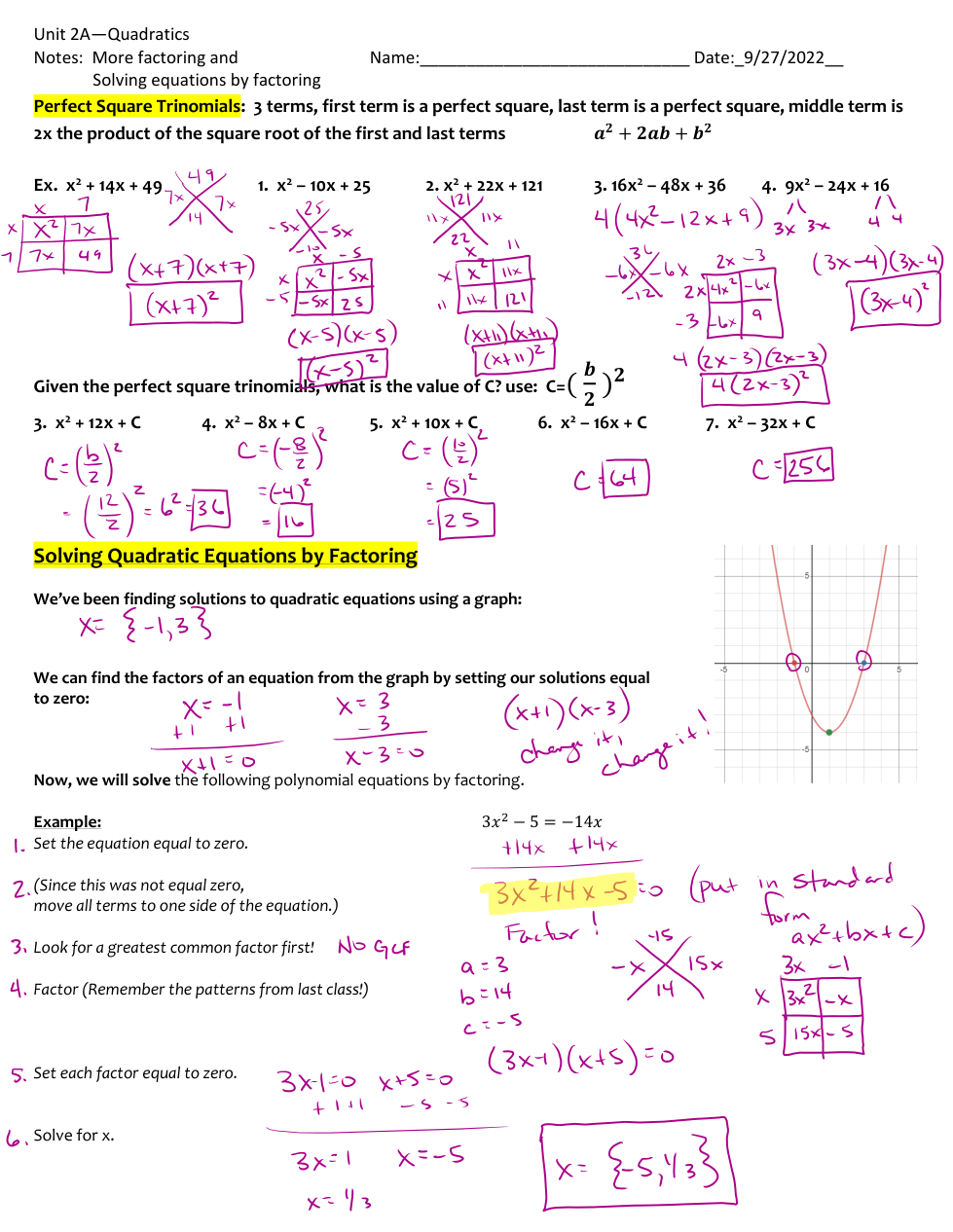
STEPS
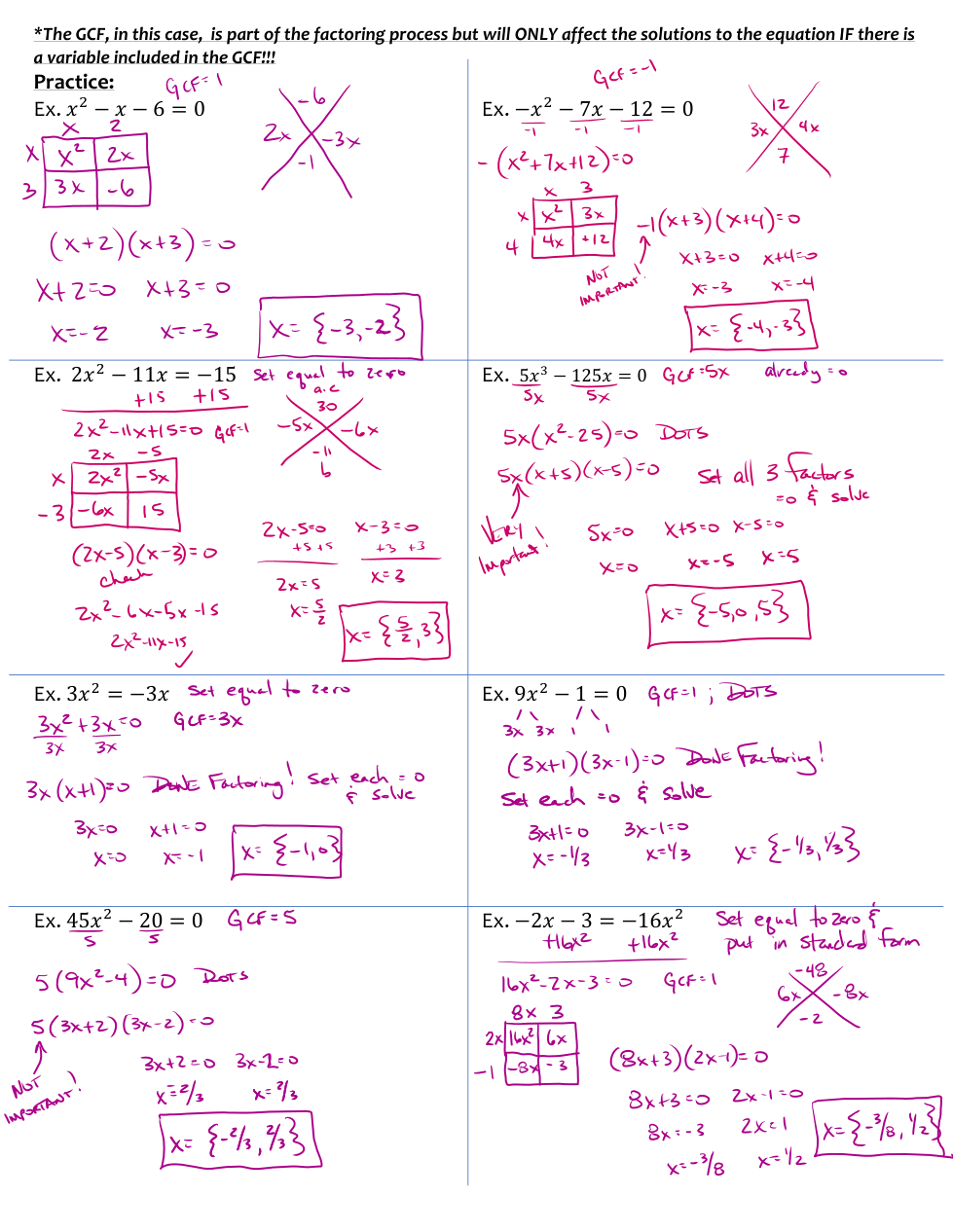
-Set = to zero (if necessary) then solve.
-Look for GCFs first! then factor completely.
-Set each factor equal to zero and solve each equation.
-Input your answer with set notation:
{x,x} (no spaces, and no x=)
(use fractions not decimals!!!)
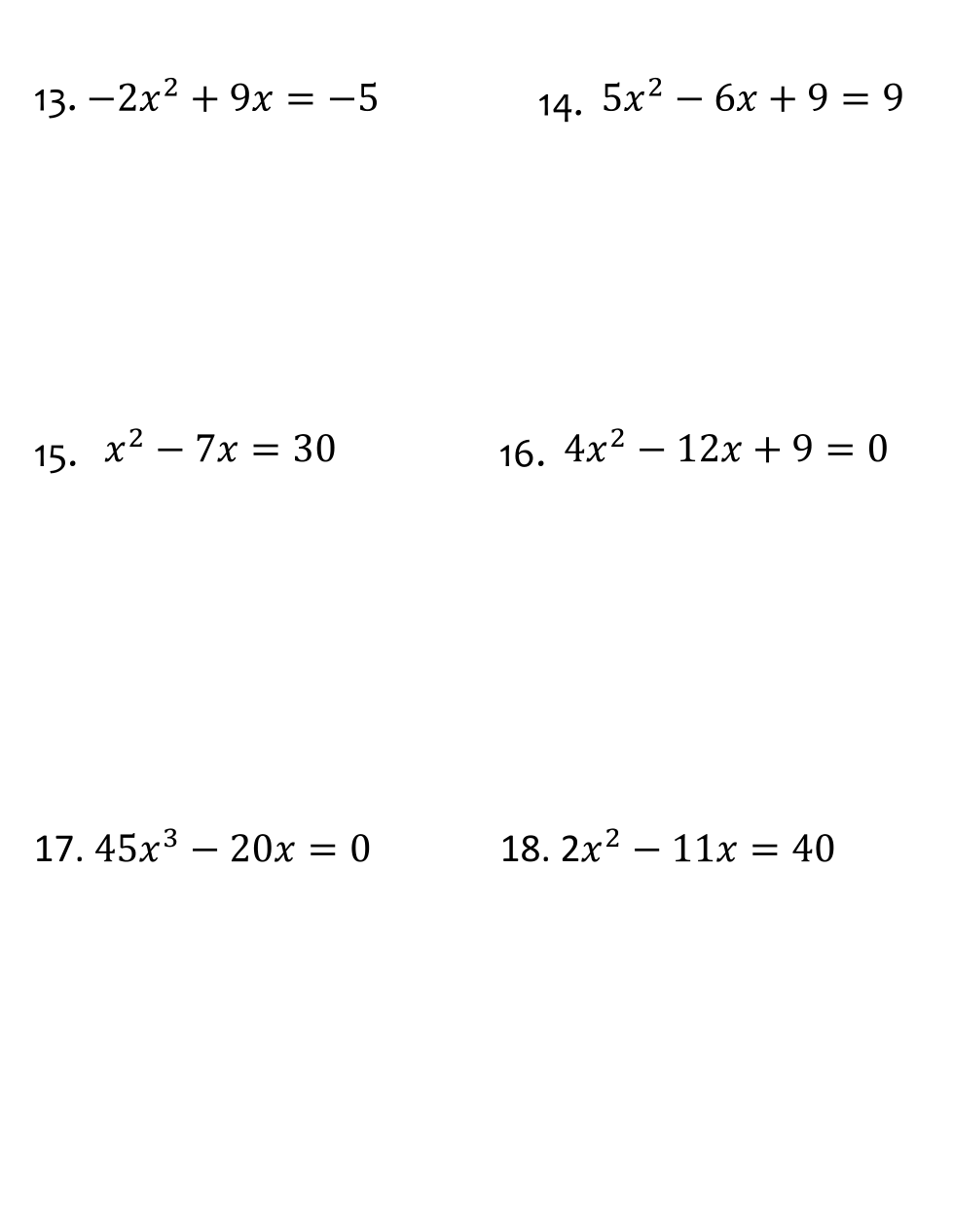
Solve. Input your answer as {x,x} (for however many solutions...low to high please!)
Solve. Input your answer as {x,x} (for however many solutions...low to high please!)
Factor completely:
Factor completely:
Factor completely:
Factor completely:
upload your pages of work here--page 1
upload your pages of work here--page 2
upload your pages of work here--page 3
upload your pages of work here--page 4
Input your answer with set notation:
{x,x} (no spaces, and no x=)
(use fractions not decimals!!!)
-Input your answer with set notation:
{x,x} (no spaces, and no x=)
(use fractions not decimals!!!)
-Input your answer with set notation:
{x,x} (no spaces, and no x=)
(use fractions not decimals!!!)
-Input your answer with set notation:
{x,x} (no spaces, and no x=)
(use fractions not decimals!!!)
-Input your answer with set notation:
(use fractions not decimals!!!)
NOTE: you will get 3 roots here, so input them (in order small to big) like this: {x,x,x}
-Input your answer with set notation:
{x,x} (no spaces, and no x=)
(use fractions not decimals!!!)
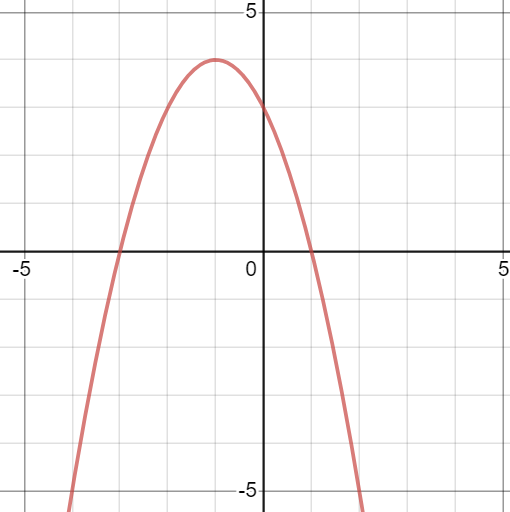
Given the graph--
a=
Given the graph--
Vertex=
Given the graph--
Write the equation in vertex form:
use f(x)= please
Given the graph--
axis of symmetry: (remember this should be input as an equation!! Not just a number!)
Given the graph--
y-intercept: (this should be input as a point (x,y)..no spaces please!)
Given the graph--
What are the real roots of this function? (input using {x,x} or write none if none..no spaces please)
Given the graph--
What are the factors of the equation? (remember to "change it, change it")
Given the graph--
Domain: (in interval form)
Given the graph--
Range: (in interval form)
Given the graph--
Increasing interval: (in interval form)
Given the graph--
Decreasing interval: (in interval form)
Given the graph--
End Behavior-
Given the graph--
End Behavior-
Given the graph--
What transformation has occured?