Cycles REDemption

Last updated 7 months ago
5 questions

The Hydrologic (Water) Cycle

Water is important - it is the largest component of living things! for example, the human body is made up of about 70% water, and jellyfish are about 95% water. Water has a role in many important cycles and processes on earth- including photosynthesis, digestion, and cellular respiration. It is also provides a habitat for many species of plants, animals, and microorganisms. The major reservoirs of water on Earth are the oceans. Oceans cover about three-quarters of Earth’s surface and contain about 97% of its water.

So, let's get into the water cycle!

BLUE words are vocabulary words and RED words are the definitions.
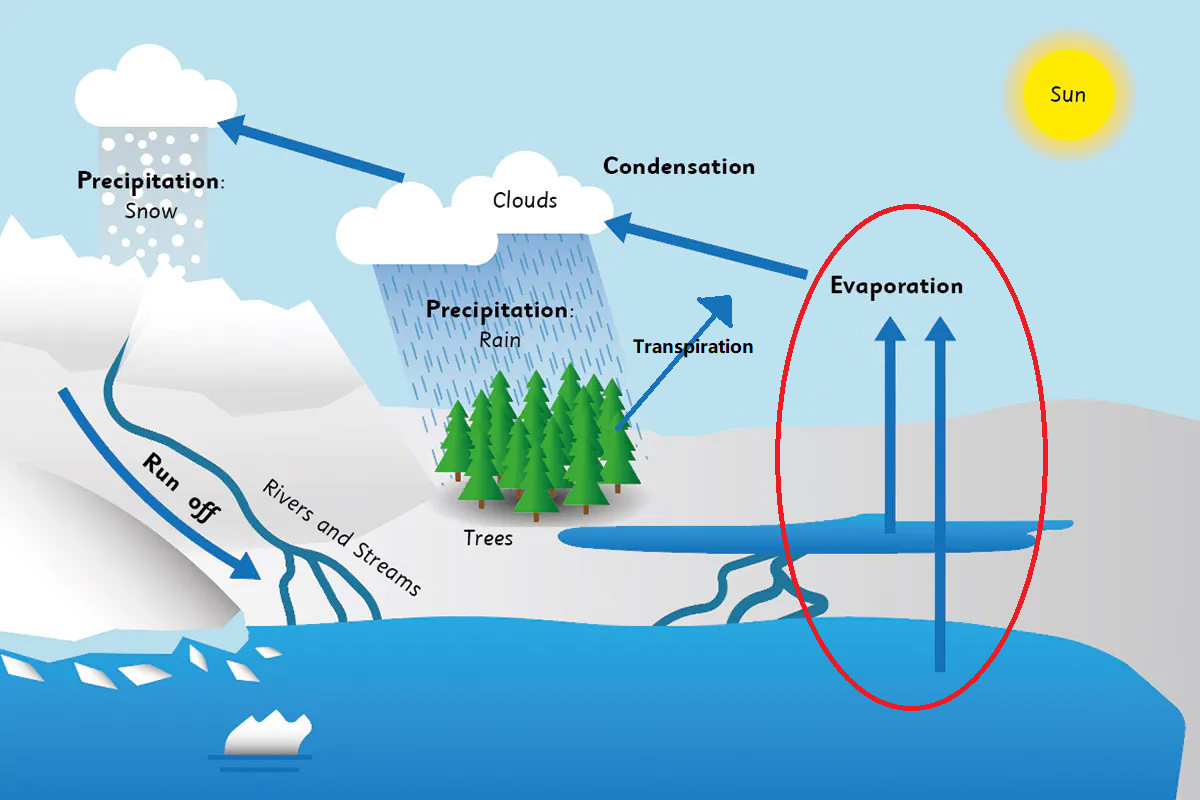
1. We start with evaporation. Evaporation is the process of liquid water turning into vapor (water as a gas) due to heat. Just like when you boil water and you get steam! Evaporation on earth is caused by the sun's heat.
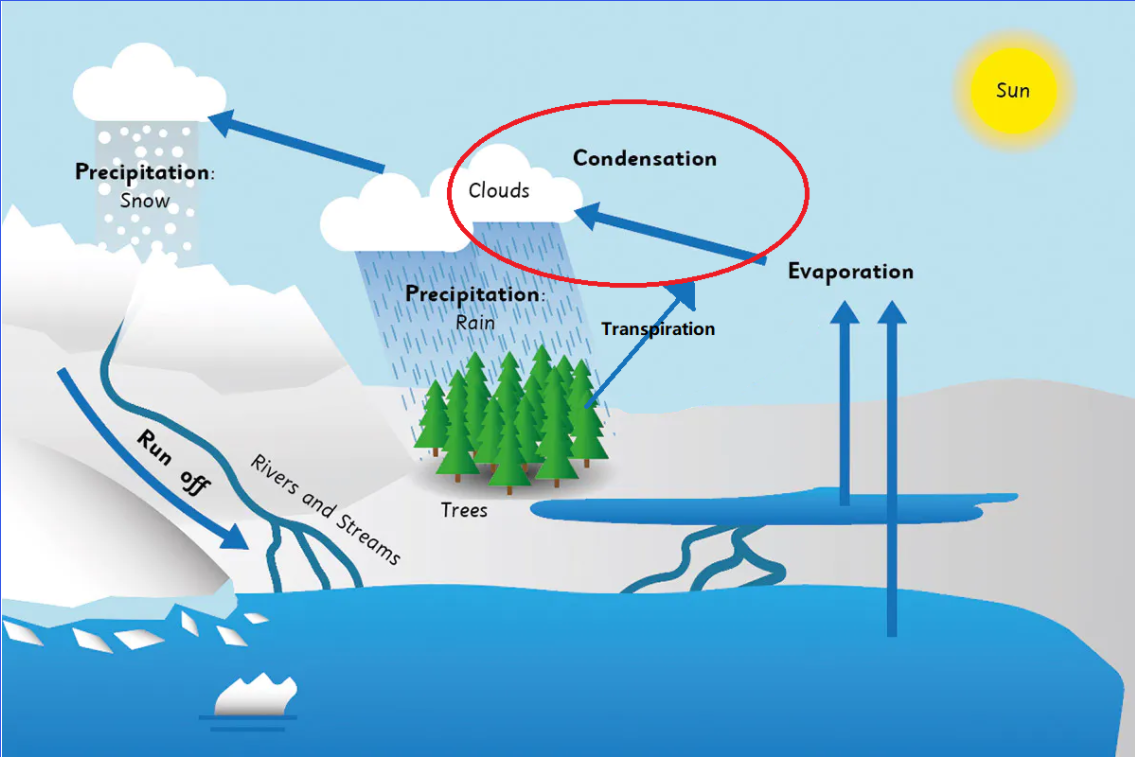

2. As the water vapor from evaporation turns back into liquid water this is called condensation. Clouds are the best examples of condensation!
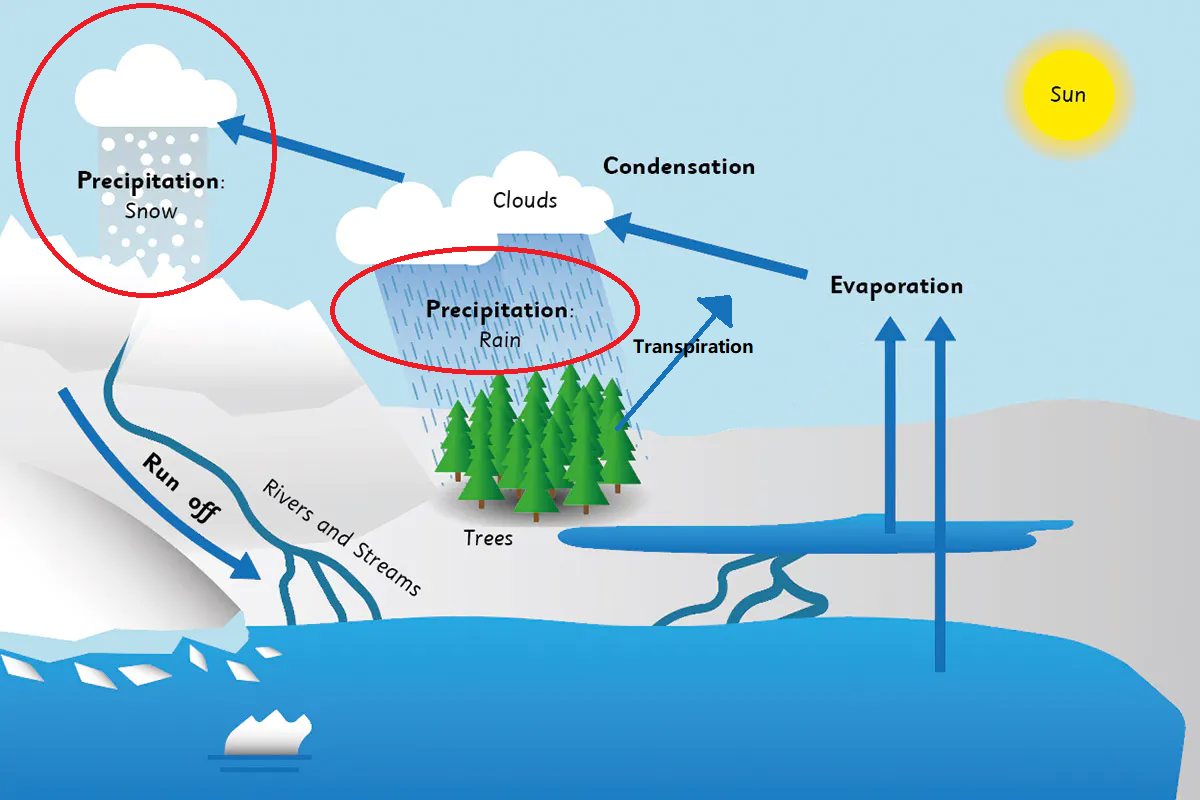
3. When water vapor (gas) cools, it condenses and falls to Earth this is called precipitation. Examples of perciptation are rain, sleet, and snow. You may be asking, what causes water to fall from the sky? The pull of gravity is what draws the water back to Earth - without gravity water would be floating all around us.
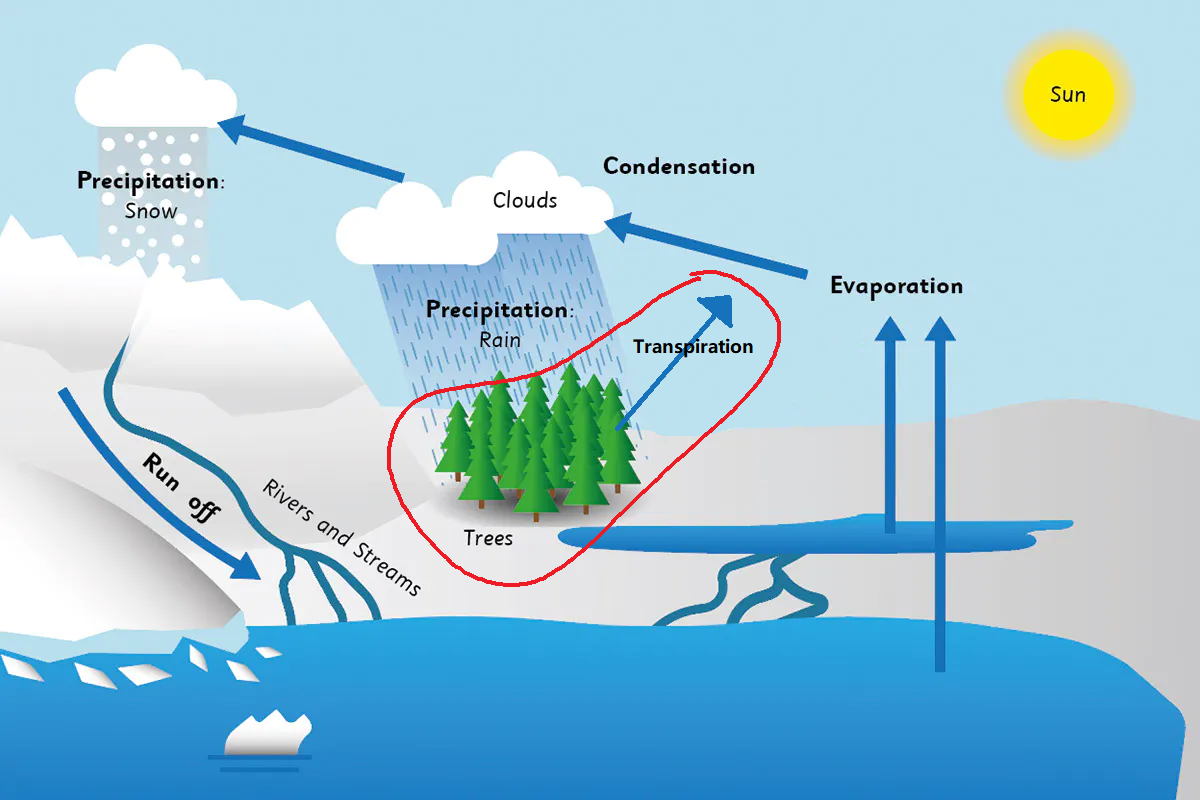
4. Water is absorbed by the roots of the trees and used in photosynthesis, but water is also lost from their leaves through the process of transpiration. During transpiration, plants "sweat" through little holes in their leaves called stomata which releases water back into the atmosphere.
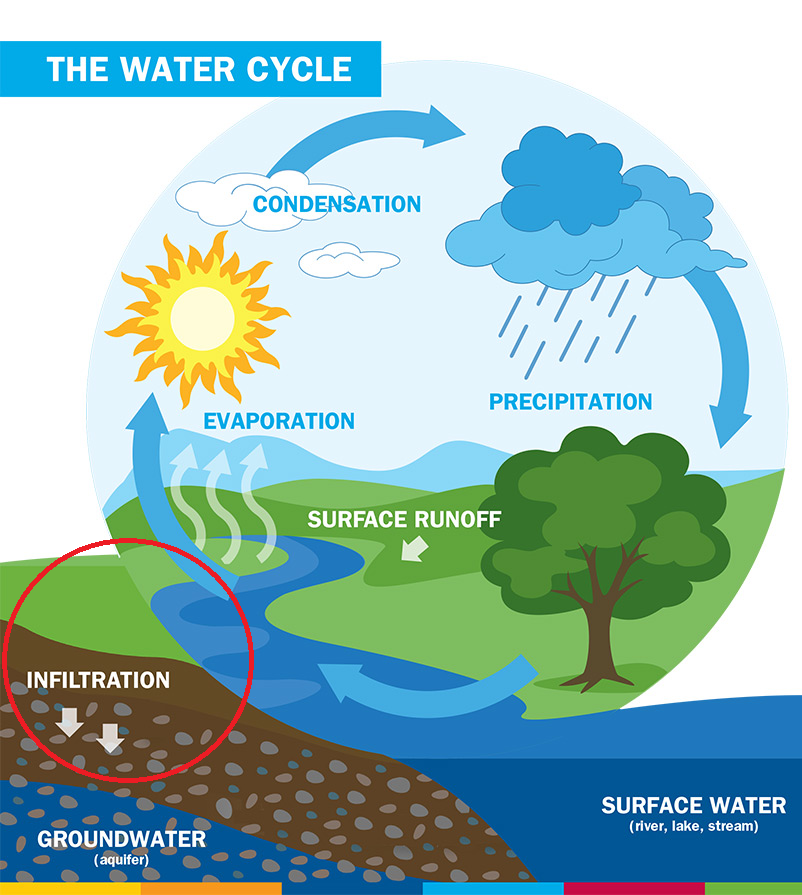
5. Water from the land enters the ocean through infiltration; water percolates (filtered) from the surface down to the water table. This water-saturated zone of soil and rock is called an aquifer, and water seeps from the aquifer to the ocean.
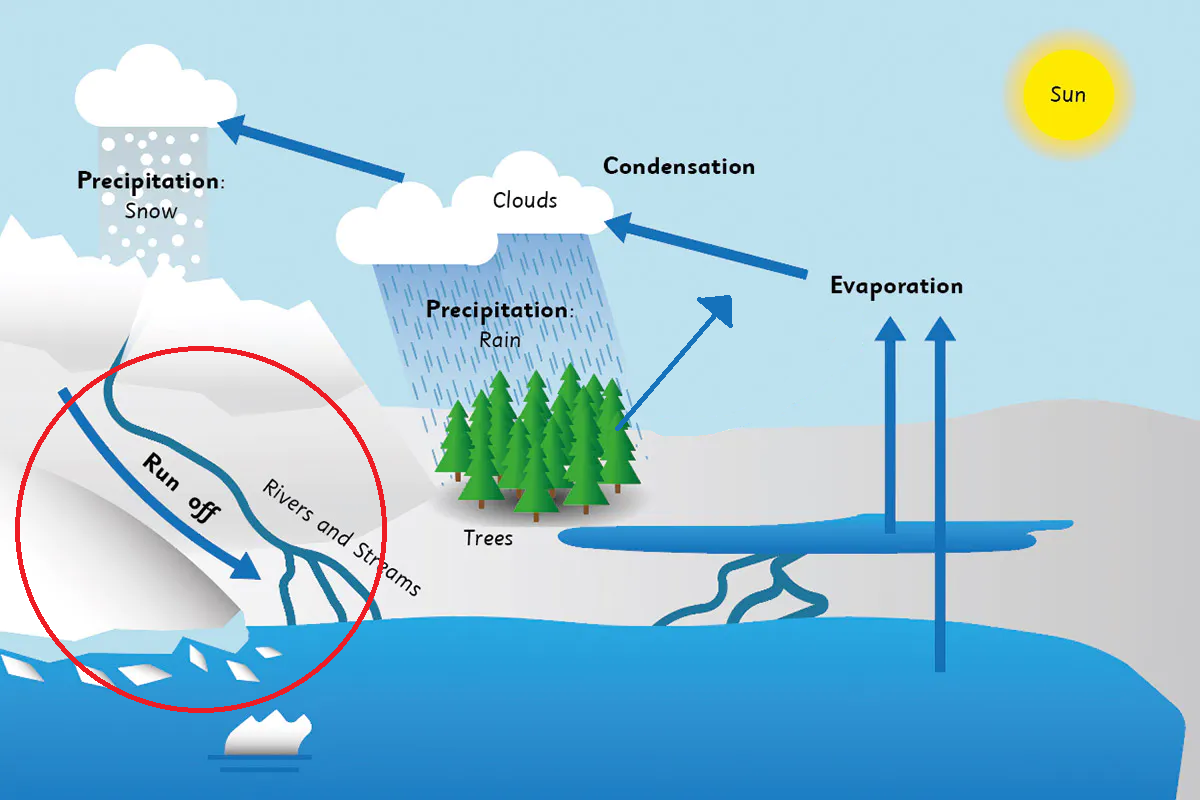
6. Water also reaches the ocean as runoff from the surface. Runoff from the surface includes flow from rivers as well as melting snow and glaciers.
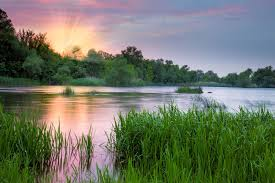

Surface water includes all water on top of the ground -rivers, creeks, streams, wetlands, lakes and oceans
Using the reading to answer the questions below:


Energy flows from the sun into the earth, but nutrients, things organisms need to survive, like carbon and nitrogen, do not enter the earth from an outside source. That means that the same nutrients have been used to support life on earth for billions of years. When nutrients, like carbon are recycled, they are passed back and forth between the living and nonliving parts of an ecosystem in processes called biogeochemical cycles. If we are specifically talking about the recycling of carbon on earth – it is called the “Carbon Cycle”

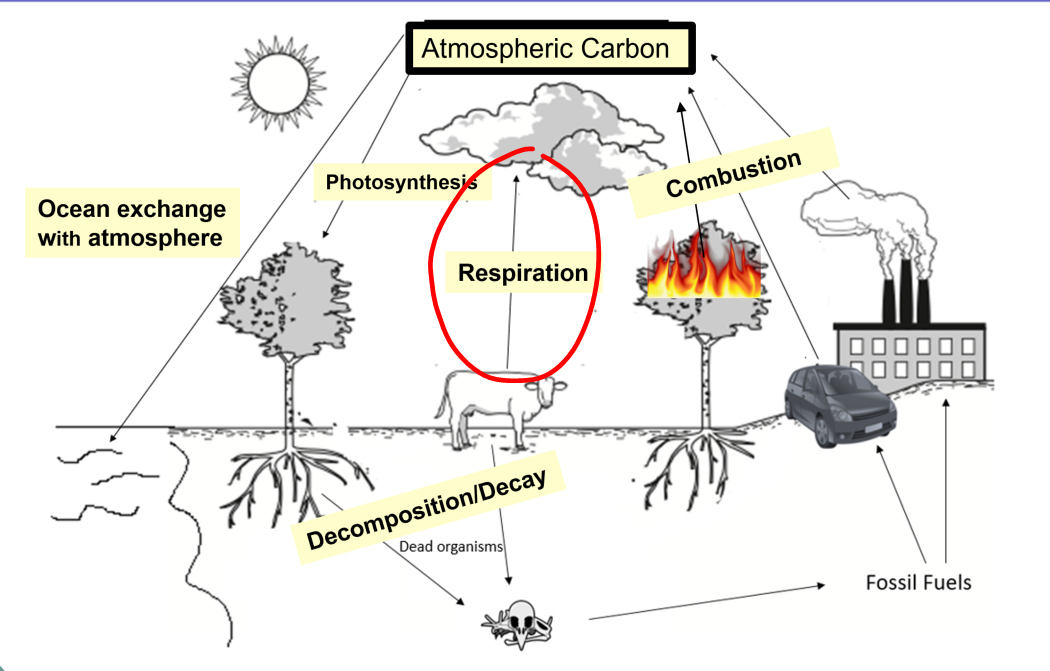
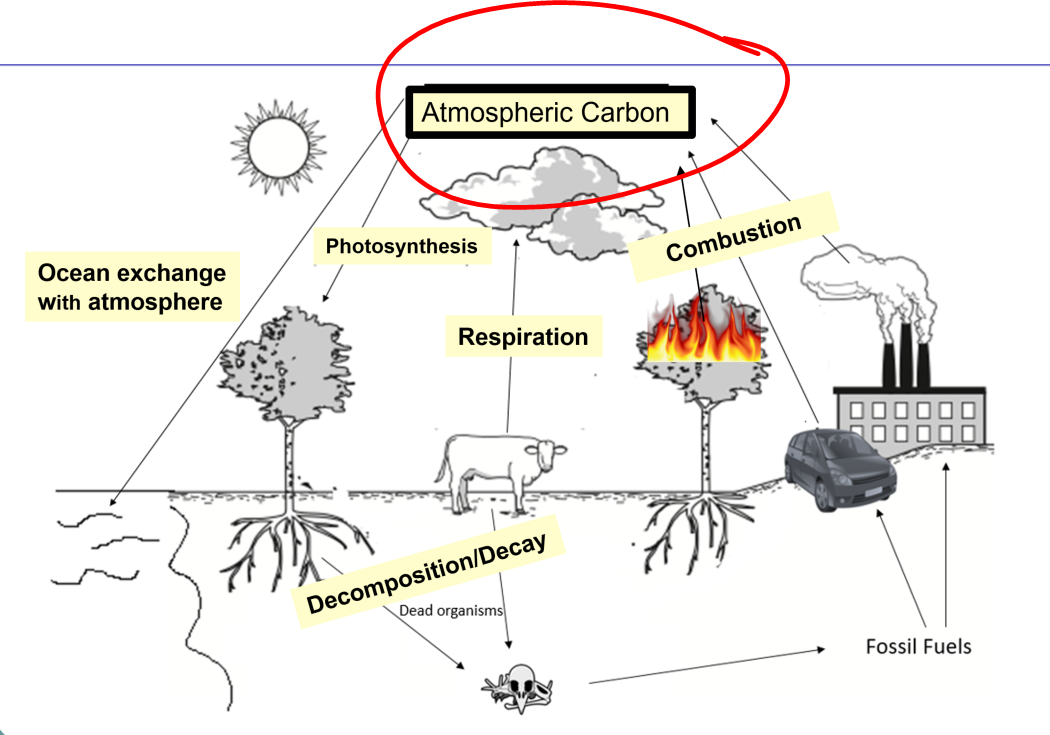
The carbon cycle begins with the atmosphere, which is Earth’s major reservoir (storage) of carbon, in the form of carbon dioxide (CO2). We call the carbon dioxide that surrounds our earth, atmospheric carbon.


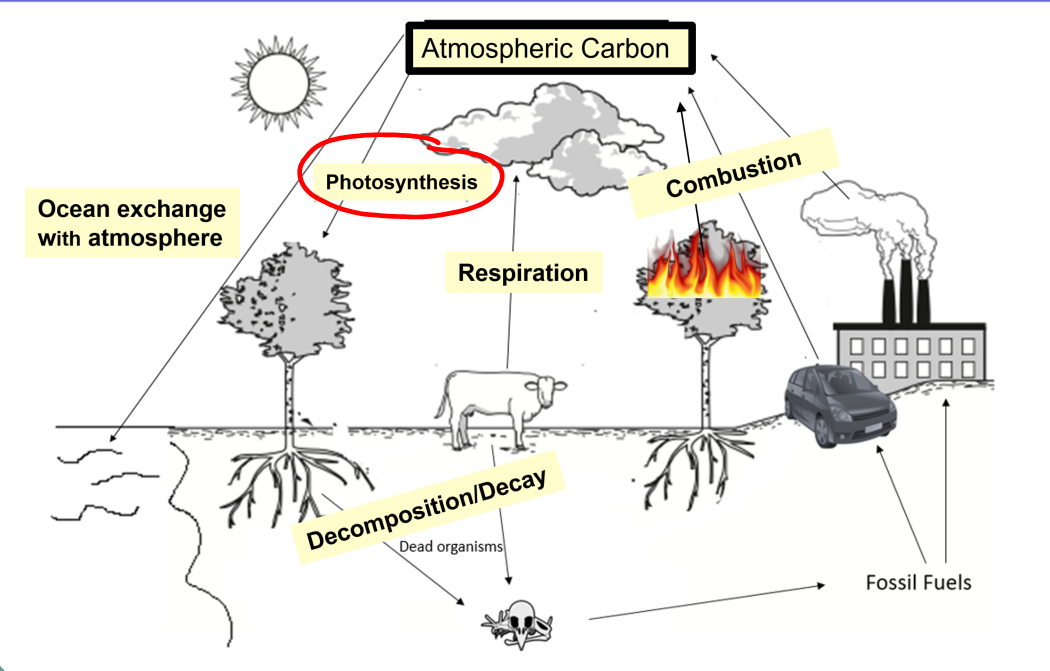
Carbon enters the biotic (living) part of the ecosystem through photosynthesis. During photosynthesis, producers, such as plants, take in carbon dioxide and sunlight to make the sugar they need to survive.


Next, consumers, such as animals and humans, eat the plants to get the carbon they need. When an animal eats a plant the carbon goes to the primary consumer (the animal). When an animal eats another animal consumption, (a primary consumer is eaten by the secondary consumer) carbon goes to a secondary consumer. When these same consumers breathe out during respiration, carbon dioxide is returned to the atmosphere.


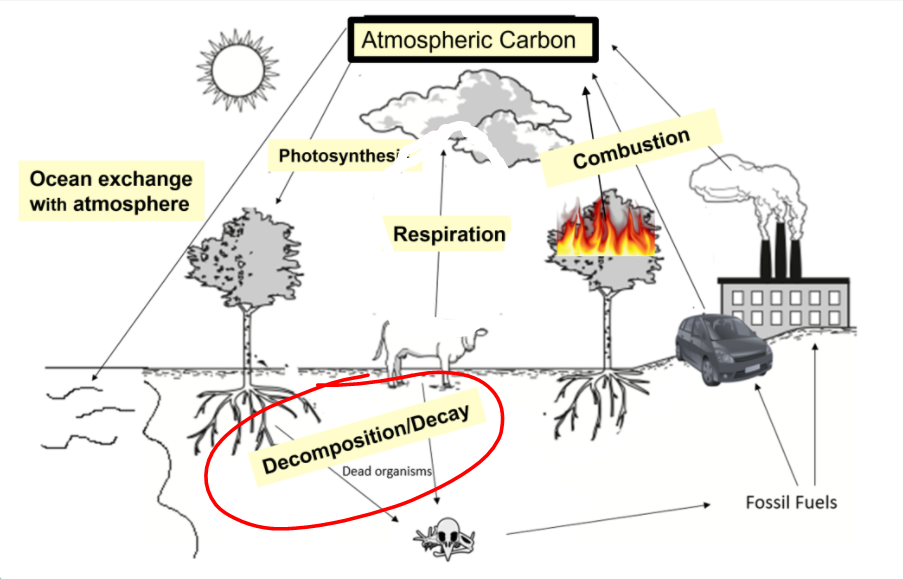
All living things eventually die- plants and animals included. When this happens, the dead organism is broken down and their nutrients are returned to the soil through the process of decomposition/decay. Important organisms such as decomposers or detritus feeders . Detritus feeders are small organisms that live on decaying matter such as fallen leaves, dead bodies, and animal waste – for example: earthworms, mites, centipedes, and insects.


When fossil fuels are burned, such as when you drive a car, this is called combustion. Combustion releases carbon dioxide back into the atmosphere. Carbon can also be released from the combustion/burning of wood and plants that occurs during forest fires.

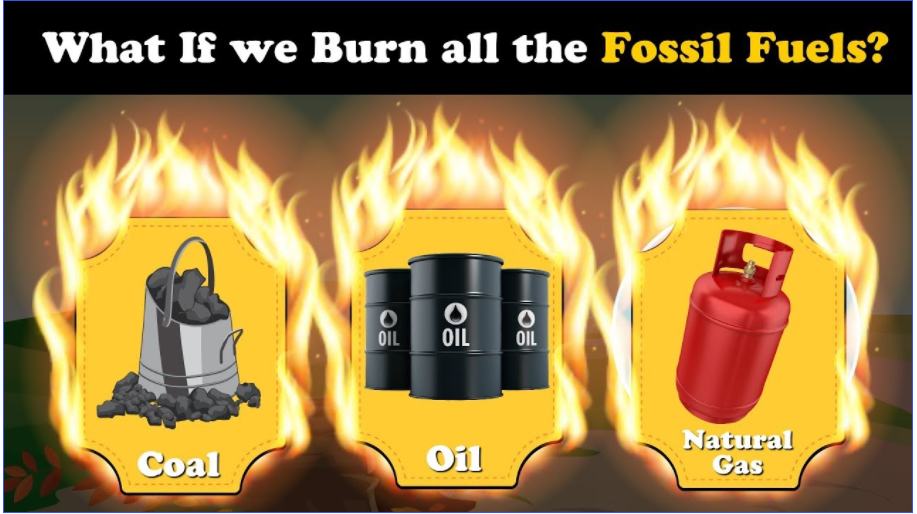
Sometimes the carbon that is found trapped below the earth’s surface is converted into fossil fuel, such as oil. High pressure and temperature transform carbon-containing organic matter into coal, oil, and natural gas. These fossil fuels are then used to power factories, generate electricity, and power cars that run on gasoline.


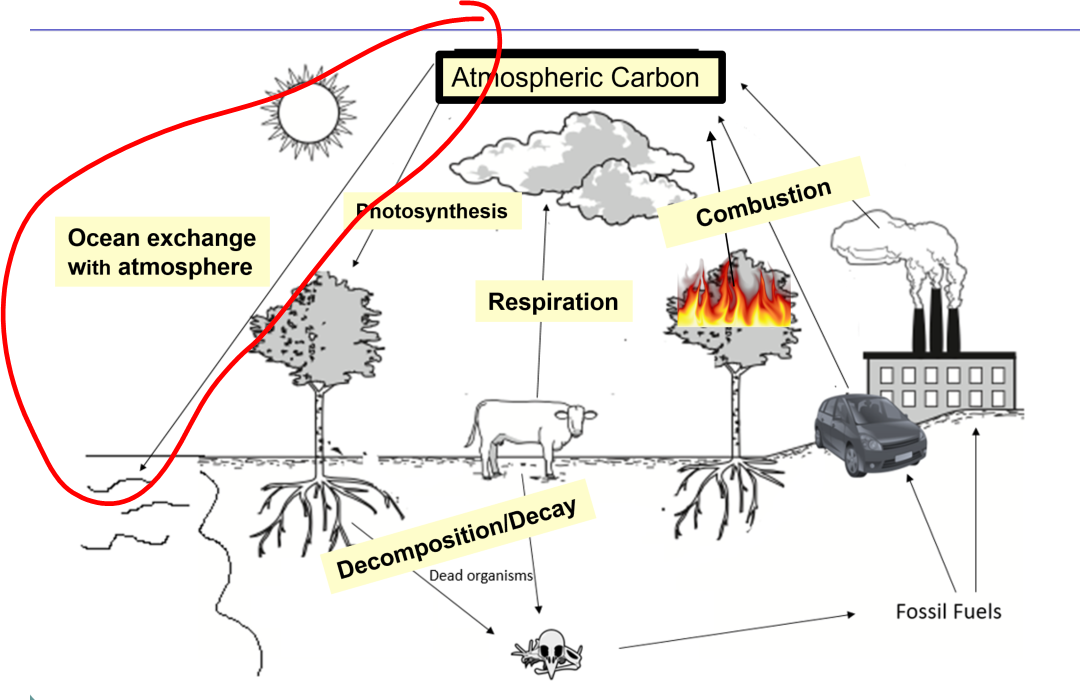
A final step of the carbon cycle is exchange with oceans. During ocean exchange, carbon dioxide from the air dissolves into the ocean which is then incorporated into the shells of mollusks and other sea creatures. When these shells decay, their carbon dissolves back into the water and can even return to the atmosphere.
Using the reading to answer the questions below:

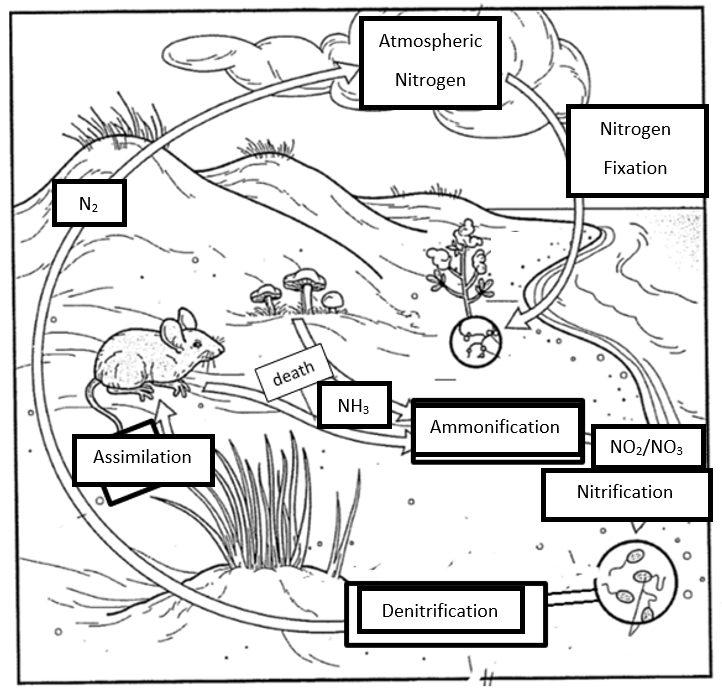
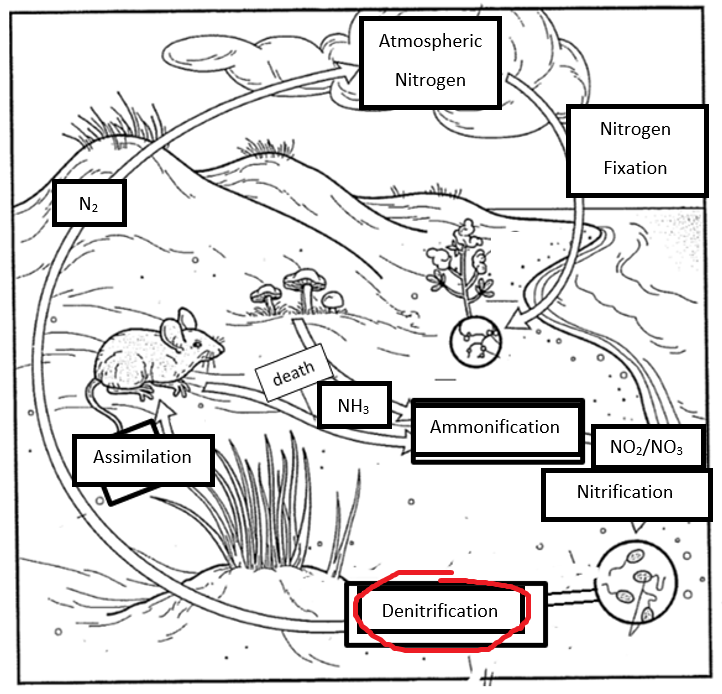
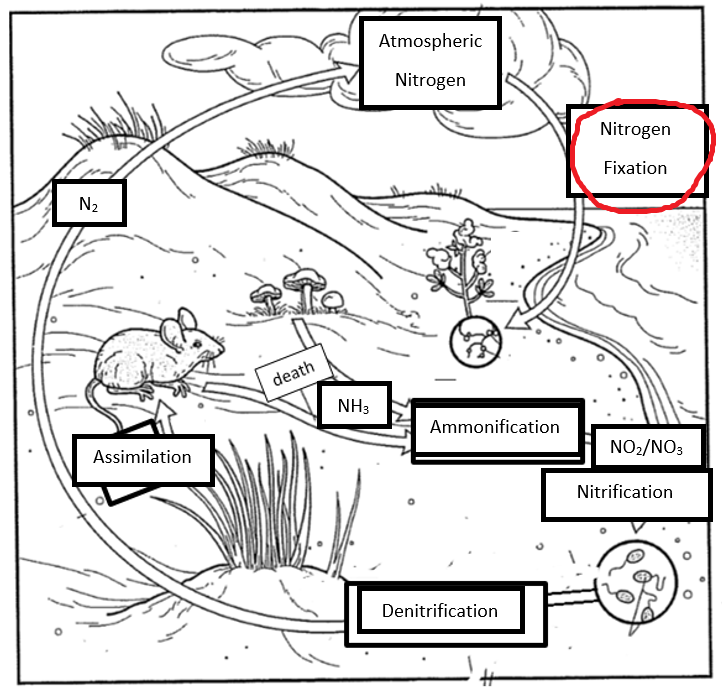
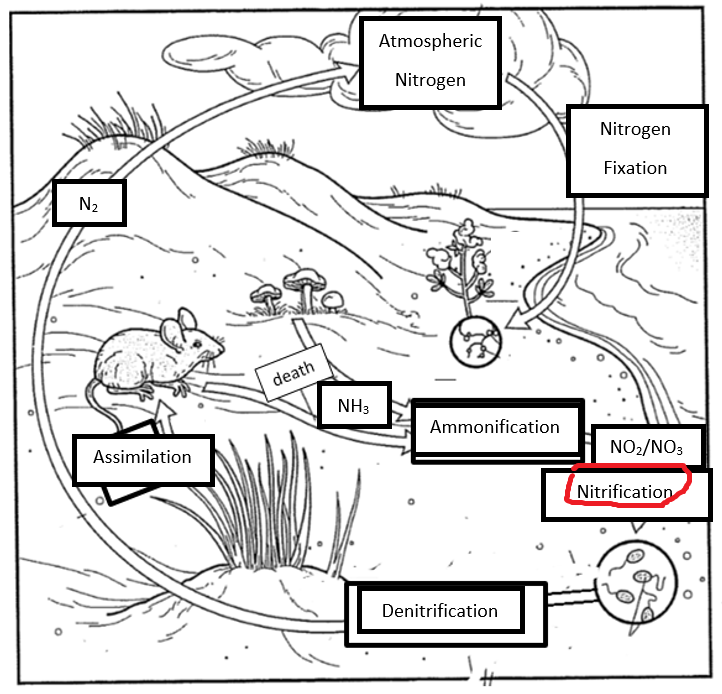
Nitrogen is important to life because it is used to build the proteins and DNA that are found in every living thing. This means that without nitrogen, you would not be alive! As you can imagine, an important process in ecosystems is the recycling of nitrogen through its biotic (living) and abiotic (nonliving) parts.
If you look closely at the diagram provided above, you will notice that there are many ways in which nitrogen cycles through nature.

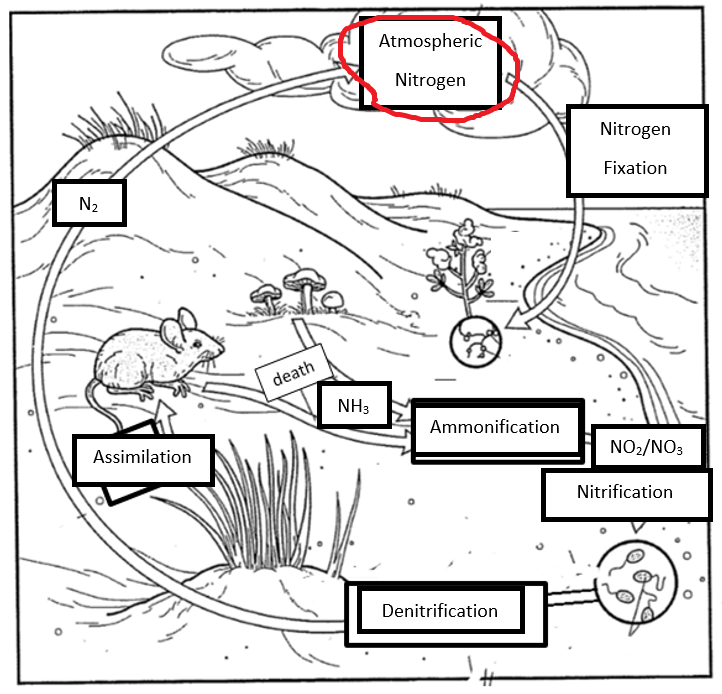
Atmosphereic Nitrogen: The nitrogen cycle starts where the biggest supply of nitrogen is found, in the atmosphere. Approximately 78% of the air you breathe is made of nitrogen gas. Unfortunately, like almost every other organism, we cannot actually use nitrogen gas directly – that’s where bacteria come into play.

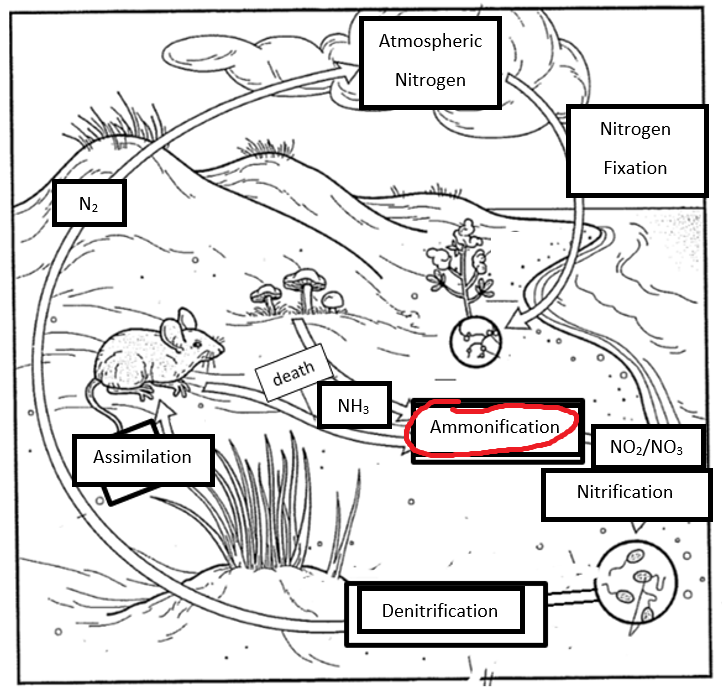
Ammonification: Nitrogen gas from the atmosphere is fixed into organic nitrogen by nitrogen-fixing bacteria. This organic nitrogen enters terrestrial food webs. It leaves the food webs as nitrogenous wastes in the soil. Neither plants nor animals can get nitrogen directly from the atmosphere. Ammonification occurs when bacteria found in the roots of plants change nitrogen gas into a form that plants can use called ammonia. Ammonia can then be taken in by plants, so they get the nitrogen they need to survive. Ammonification of this nitrogenous waste by bacteria and fungi in the soil converts the organic nitrogen to ammonium ion—NH4+

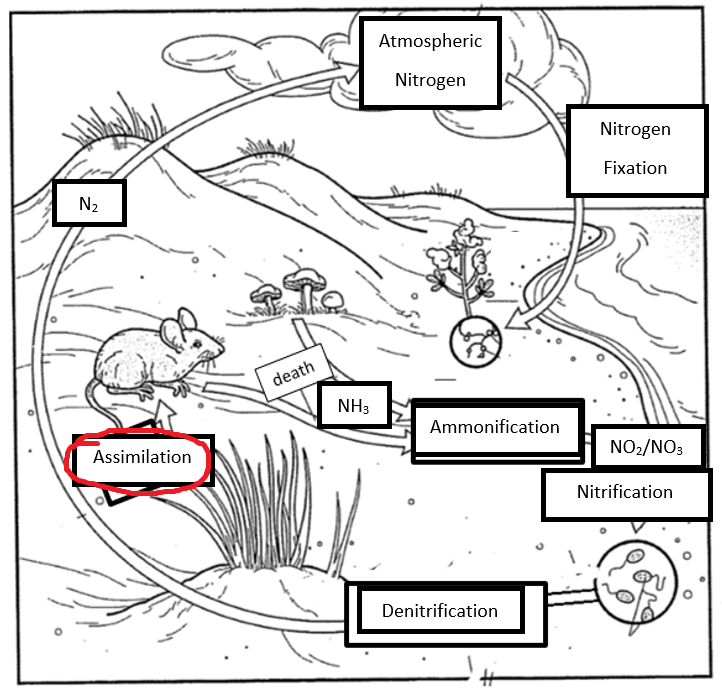
In order to get the nitrogen they need to survive, animals must eat plants (we call these animals herbivores). Animals that do not eat plants, must eat the herbivores to get the nitrogen they need. The process of plants and animals taking in nitrogen is called assimilation. Think of assimilation as plants and animals "eating" nitrogen.

Once a plant or animal dies, it decomposes. As the decomposition occurs, the nitrogen found in the dead organism is returned to the soil. Then, a different type of bacteria, changes the useable nitrogen in the soil, back to nitrogen gas through a process of called denitrification. And the cycle starts all over again.

Nitrogen enters the living world by way of bacteria and other single-celled prokaryotes, which convert atmospheric nitrogen — N2—into biologically usable forms in a process called nitrogen fixation. Some species of nitrogen-fixing bacteria are free-living in soil or water, while others are beneficial symbionts that live inside of plants.

Prokaryotes play several roles in the nitrogen cycle. Nitrogen-fixing bacteria in the soil and within the root nodules of some plants convert nitrogen gas in the atmosphere to ammonia. Nitrifying bacteria convert ammonia to nitrites or nitrates. Ammonia, nitrites, and nitrates are all fixed nitrogen and can be absorbed by plants.
PHOSPHORUS CYCLE
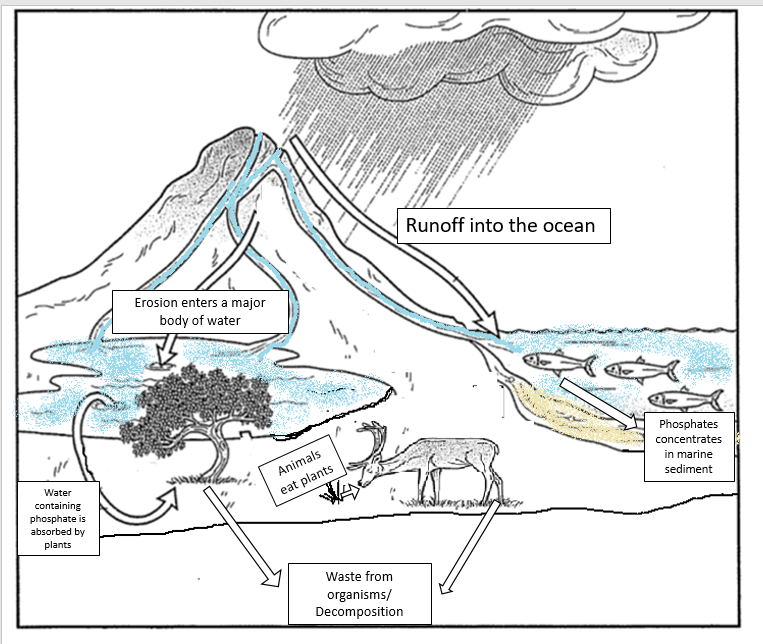
Although nitrogen and carbon exist as gases, other elements collect in rocks and soil and are not found as a gas – such as Phosphorus. Phosphorus is important to life because it is found in DNA (your genetic information) and ATP (which is what all living things get energy from!). Without Phosphorus life would not be possible! Today we will be following the steps of the Phosphorus cycle.


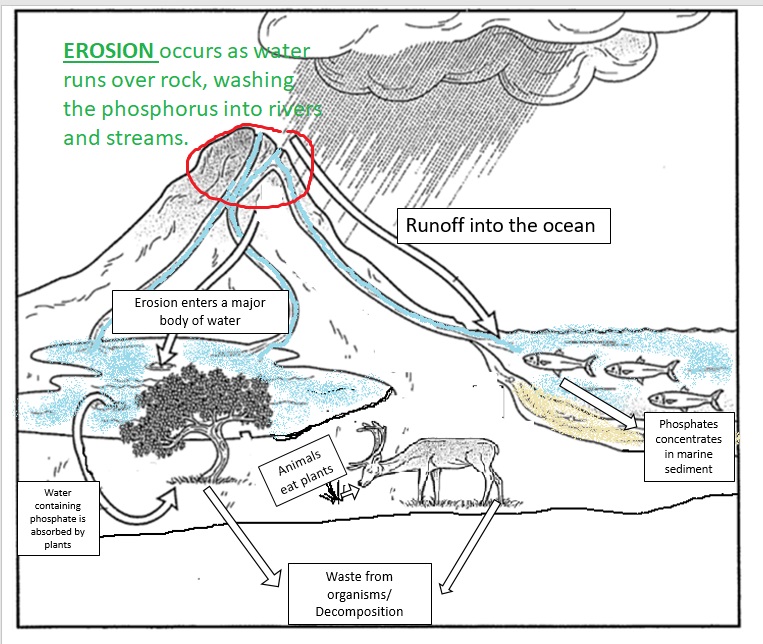
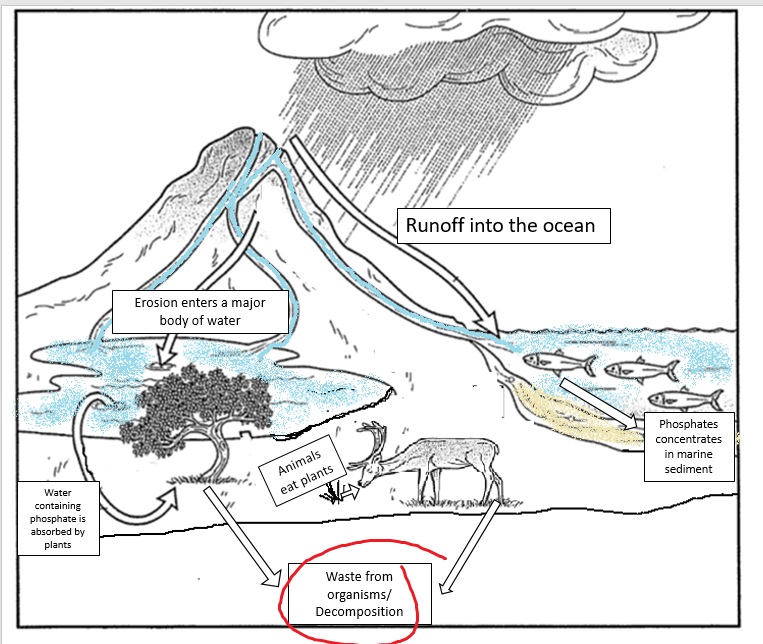
The main phosphorus reservoir (place where phosphorus collects) is rock and soil so this is where the cycle begins – in the picture the main reservoir is the volcano.


Erosion occurs as water runs over rock, washing the phosphorus into rivers and streams.


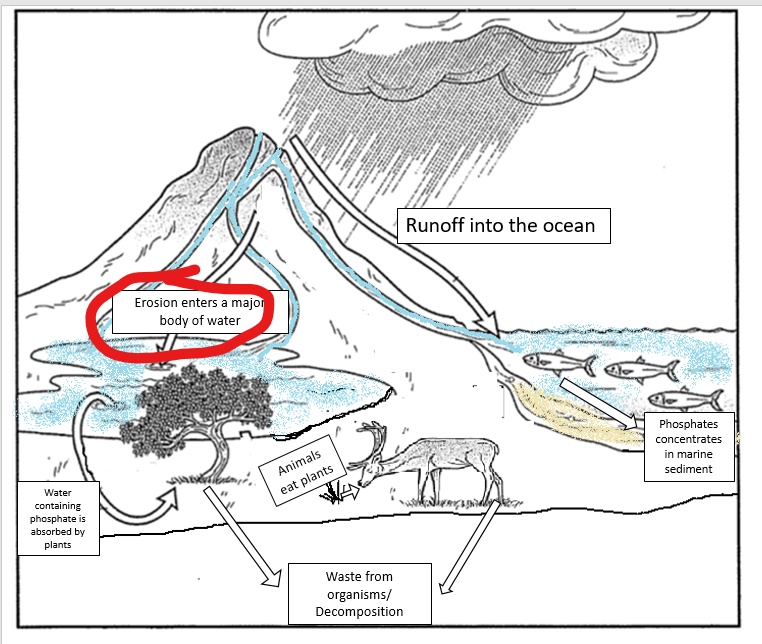
Then, phosphorus mixes with oxygen to form phosphate and enters a major body of water, depicted here as a lake.

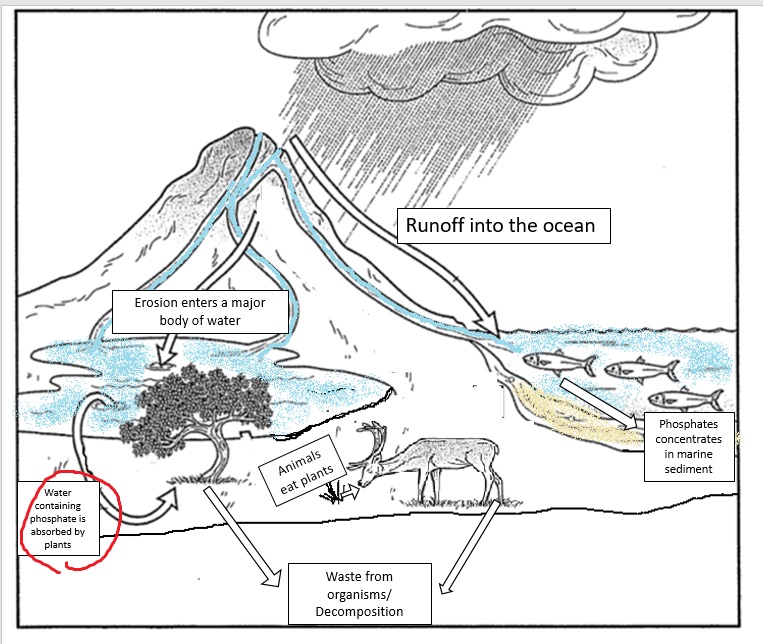
Next, the water containing phosphate is absorbed (taken in) by the plants and are used to make DNA & ATP.

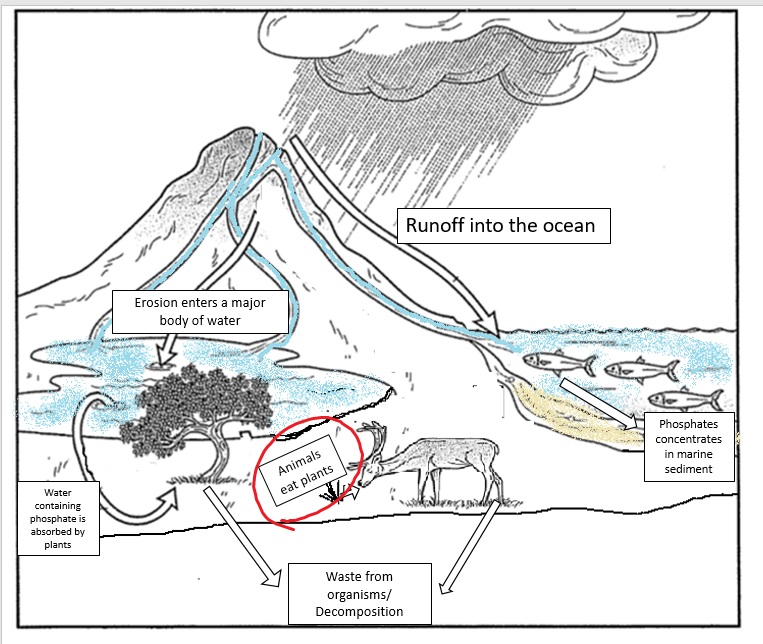
In order for animals to get the phosphate they need, they must consume (eat) plants.

When plants and animals release waste or die, the phosphate in their bodies decompose and the phosphate is returned to the soil or water – at this point it can be reabsorbed by plants once again!

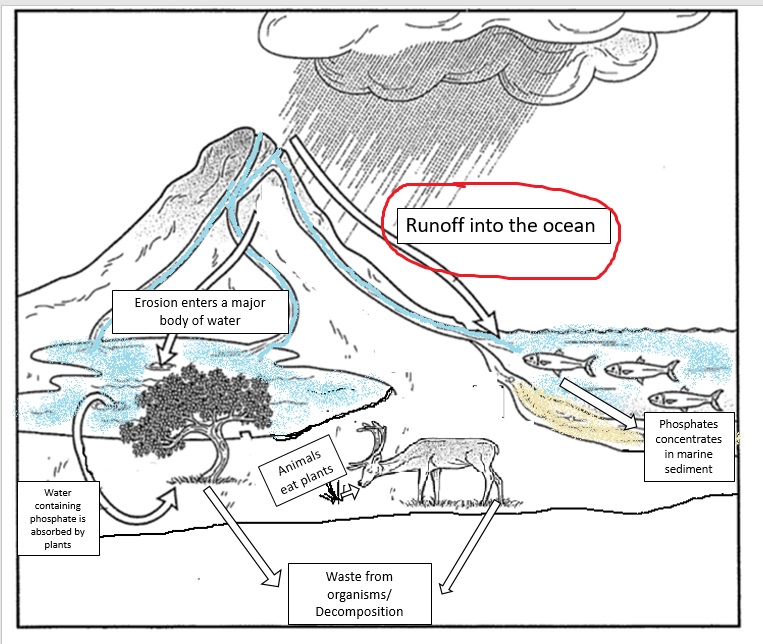
Large amounts of phosphate is carried by rivers and streams as runoff to the ocean.

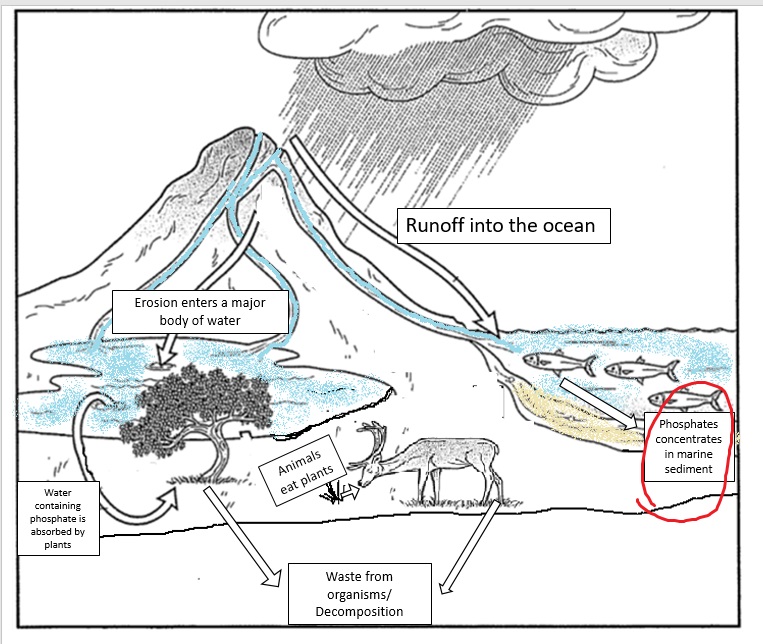
This phosphate then concentrated (settles) in marine sediment - creating "ocean rocks". Just like on land, aquatic plants then absorb the Phosphorus and the animals eat the plants to get the Phosphorus they need.

As we have seen, the atmosphere is not involved in the phosphorus cycle because it is not found in a gaseous form. This is very different from the carbon and water cycle were the atmosphere is a main part of each cycle.
1

Which process in the nitrogen cycle releases nitrogen gas into the atmosphere?

1

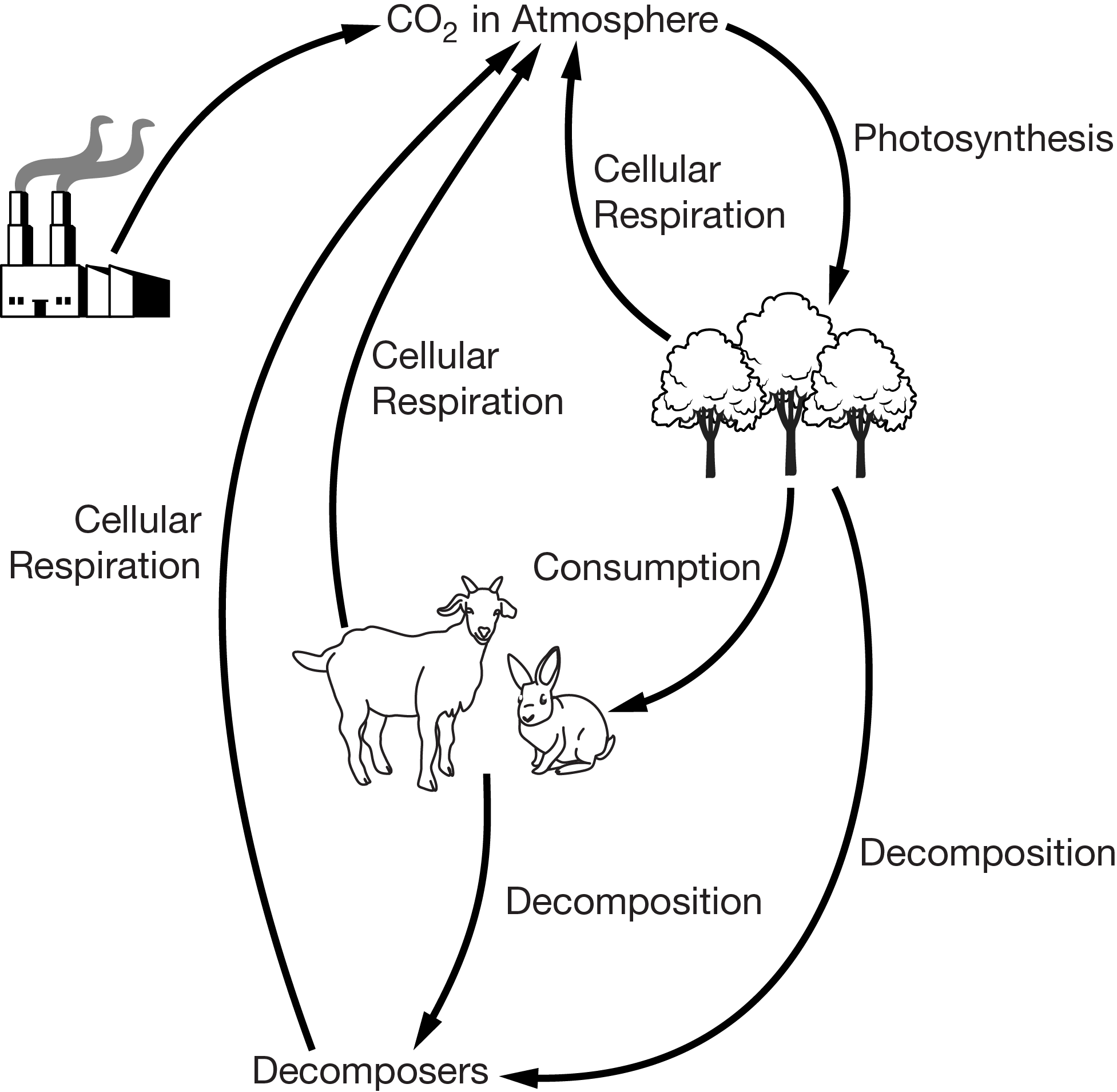
The diagram below shows a simplified carbon cycle.

Which of the following major storage reservoirs of carbon, stored in the form of carbon dioxide, is not represented in this diagram?

1

The diagram below shows a simplified carbon cycle.

Which of the following major storage reservoirs of carbon, stored in the form of carbon dioxide, is not represented in this diagram?

1

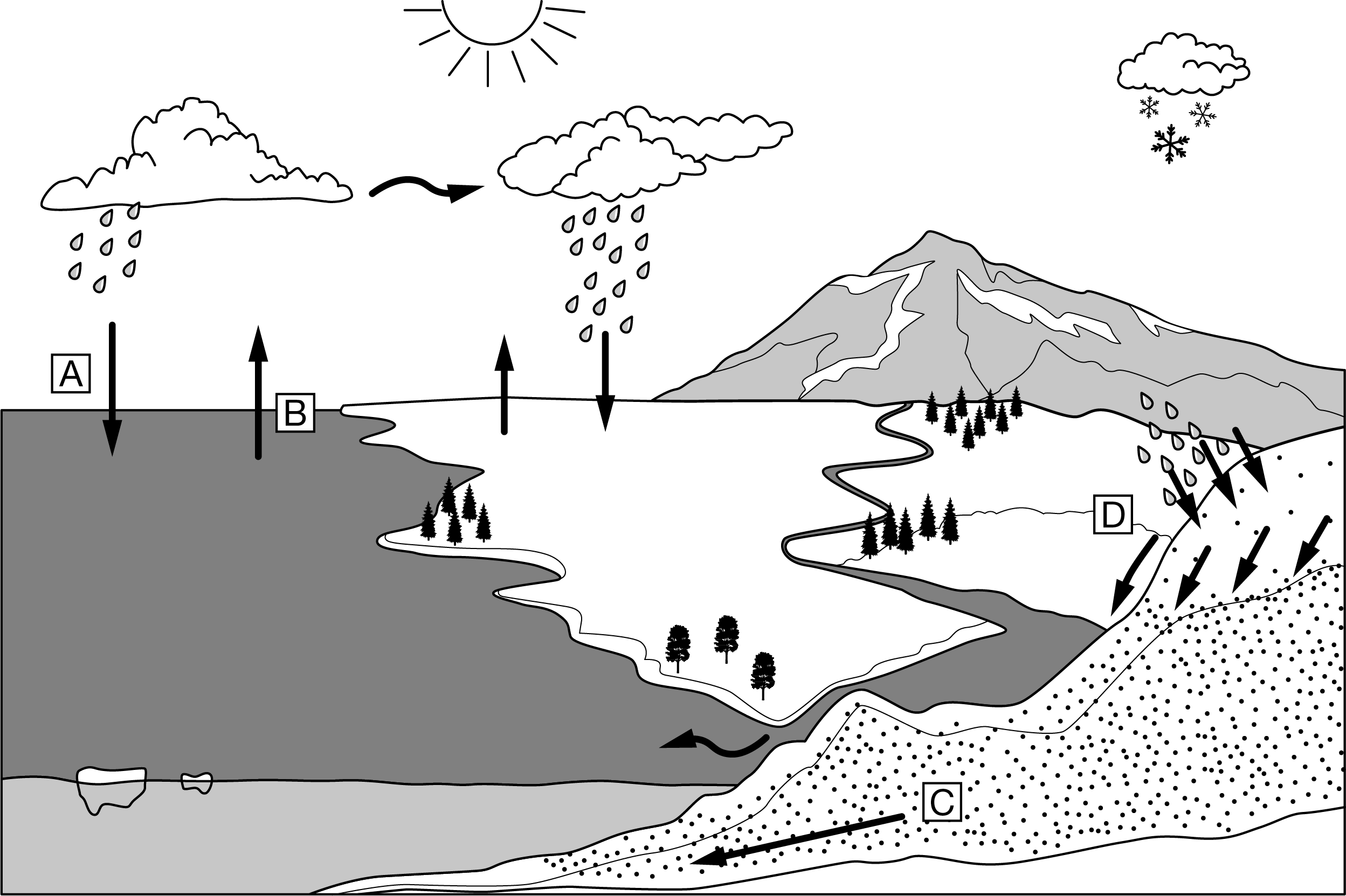
Which letter correctly identifies the part of the hydrologic cycle that is most directly affected by impervious building materials, such as concrete and asphalt?

1

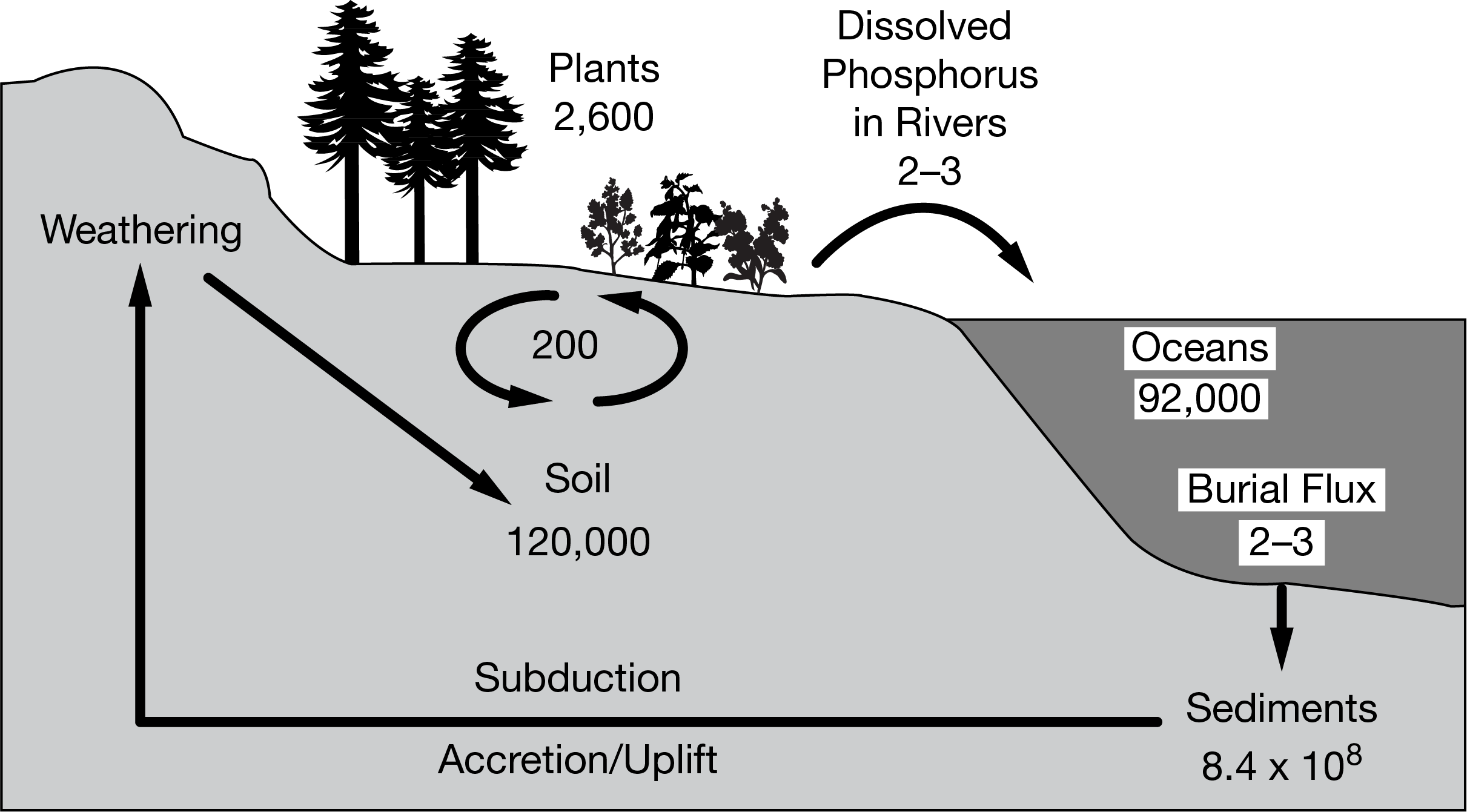
The diagram shows the amount of phosphorus measured in teragrams (1 teragram = 1×10¹² grams), in the various reservoirs of the phosphorus cycle.

Based on the diagram, which of the following reservoirs contains the most phosphorus?