What is the optimal temperature for enzyme X?
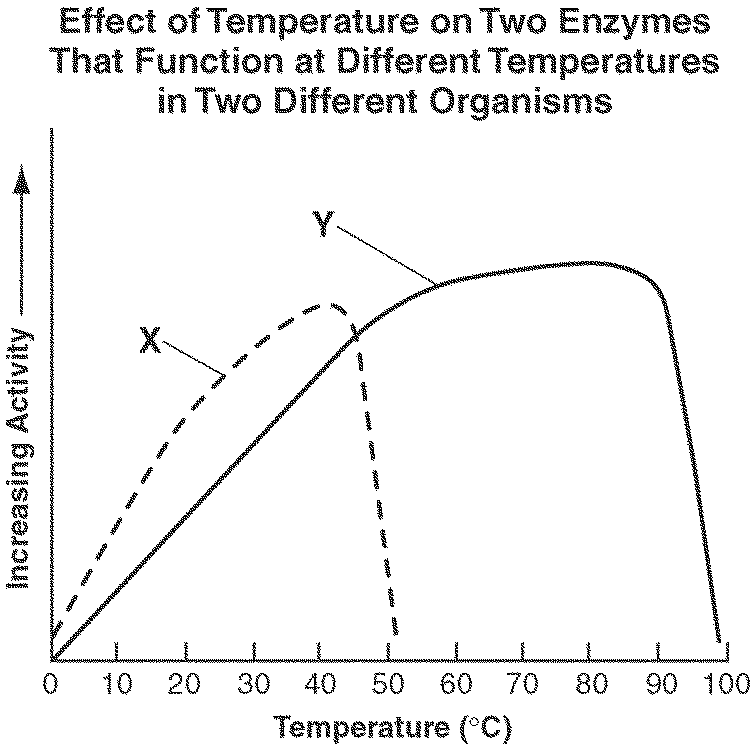
What is the optimal temperature for enzyme X?
Identify the reactant(s). CO2+ H2O --> H2CO3.
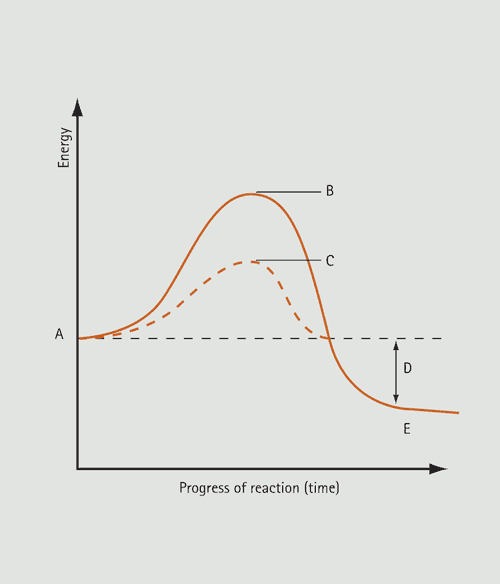
What is the term used to describe the energy needed to get a reaction started?
How do enzymes help chemical reactions take place?
What is the optimal temperature for enzyme X?
At a temperature of 30°C, which enzyme is more active?
Which of the following is NOT correct about enzymes?
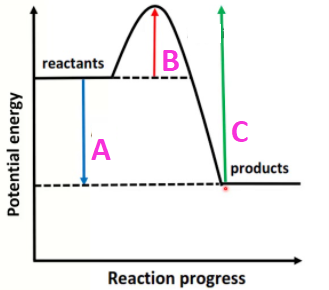
What does letter B represent?
Which letter represents a reaction with an enzyme present?
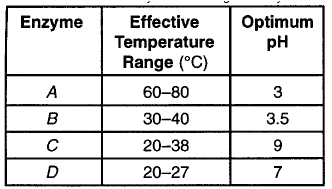
Use the table above. If Enzyme C is functioning at 25°C and pH of 7, under which condition would the rate of enzyme action probably increase the most?
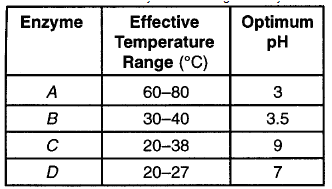
At which temperatures would Enzyme C be denatured?

Which 2 enzymes can function in a neutral pH?
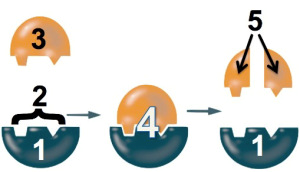
Using the diagram below, match (click & drag) each description to the correctly labeled number.
| Draggable item | arrow_right_alt | Corresponding Item |
|---|---|---|
enzyme-substrate complex | arrow_right_alt | 1 |
substrate | arrow_right_alt | 2 |
products | arrow_right_alt | 3 |
active site | arrow_right_alt | 4 |
enzyme | arrow_right_alt | 5 |