Log in
Sign up for FREE
arrow_back
Library

Science Test 2 9/23/2022

star
star
star
star
star
Last updated over 3 years ago
25 questions
Required
4
Required
4
Required
4
Required
4
Required
4
Required
4
Required
4
Required
4
Required
4
Required
4
Required
4
Required
4
Required
4
Required
4
Required
4
Required
4
Required
4
Required
4
Required
4
Required
4
Required
4
Required
4
Required
4
Required
4
Required
4
Question 1
1.

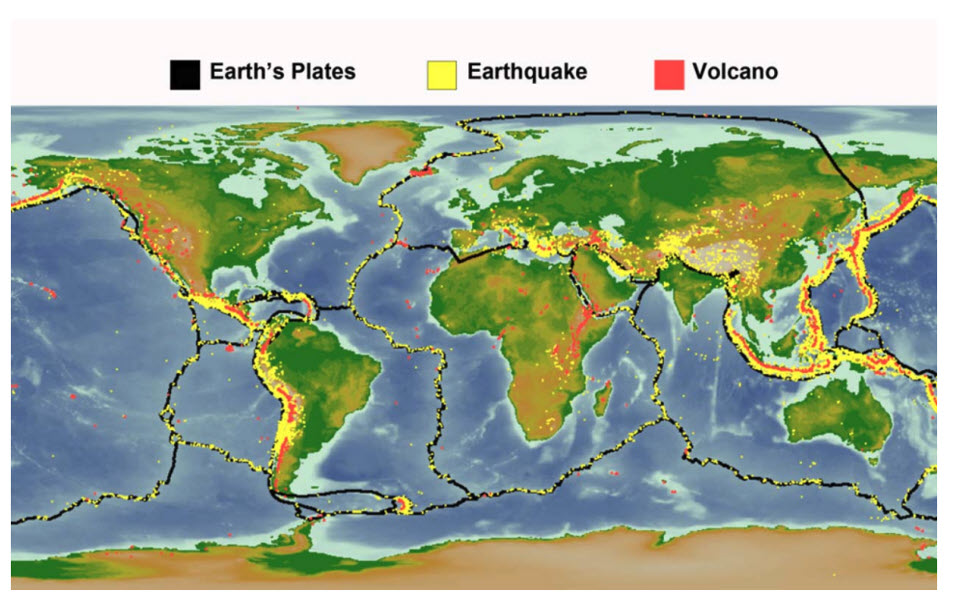
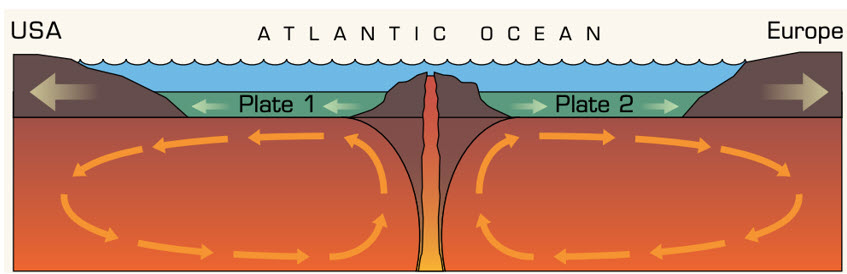
Use this image to help answer question 1
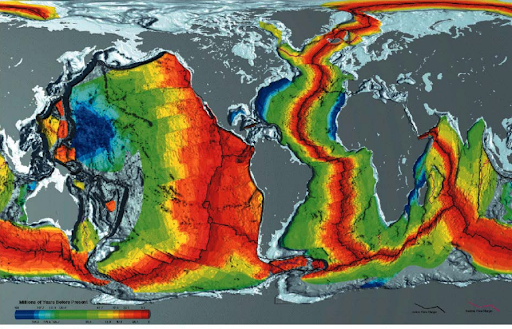
What evidence tells us that in the middle of the Atlantic Ocean there is a divergent oceanic plate boundary? Select all that apply.
Question 2
2.

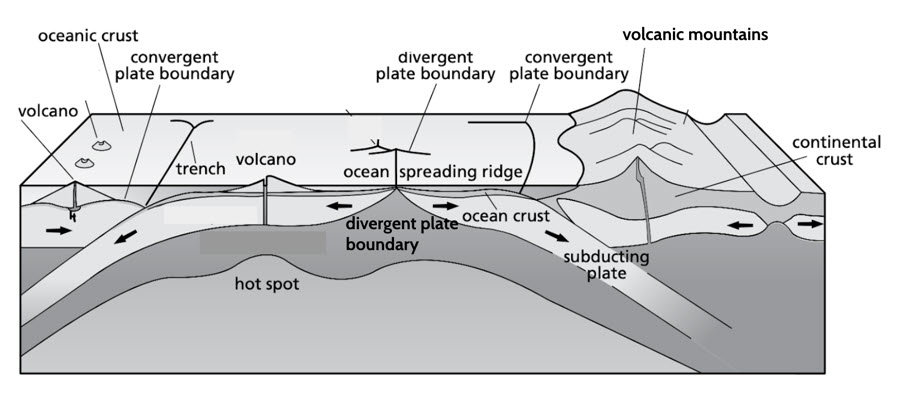
Use this image to help answer question
2.Using the diagram, explain where new plate material can come from. Select all that apply. There are 2 correct answers.

Question 3
3.

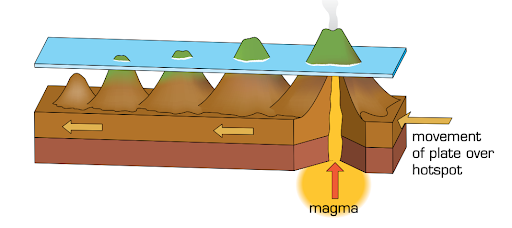
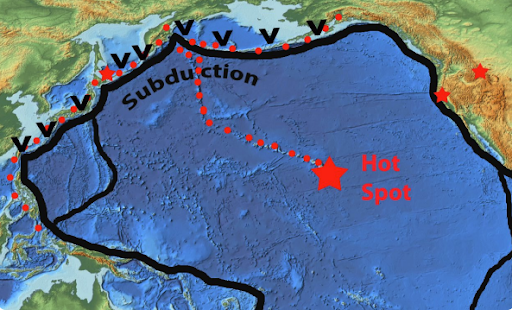
Use this image to help answer question 3


3. Hotspots can form island chains because the plate moves on Earth’s surface, but the hotspot beneath the surface remains fixed. Scientists can look at the position of the island chains and determine the direction the plate moves. The Hawaiian Islands sit on the Pacific plate. In what direction do you think it is moving? Select all that apply.

Question 4
4.

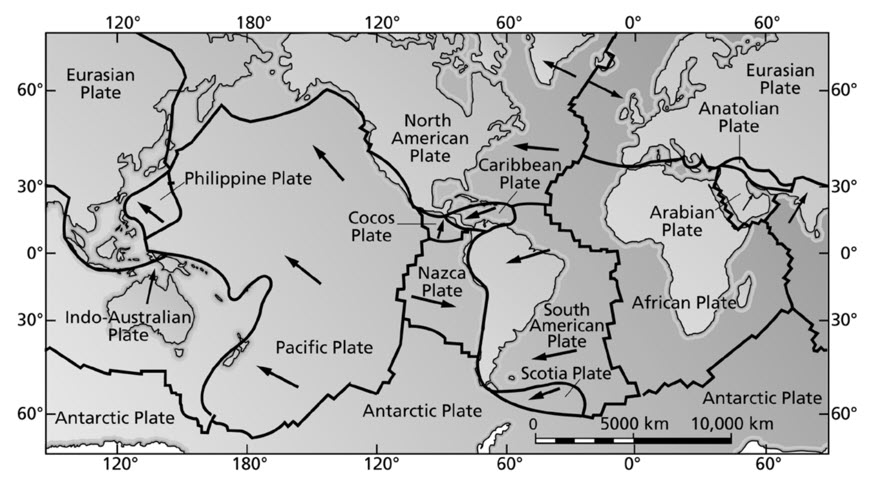
Use this image to help answer questions 4-7
The Pacific Plate is sliding past the North American Plate bringing a part of California with it. What would you expect to find where these plates meet?

Question 5
5.

The Nazca Plate is converging with the South American Plate. What features would you expect to find along the coast of South America where the plates are converging?

Question 6
6.

The Nazca Plate is also converging with the South American Plate. What features would you expect to find on the ocean floor where the plates are converging?

Question 7
7.

The Pacific Plate and the Nazca Plate appear to be moving away from each other. What features would you expect to find on the ocean floor?

Question 8
8.

How are volcanoes formed? Select all that apply.

Question 9
9.

If scientists discovered a new planet very much like Earth, where would you predict that planet would have the greatest concentration of volcanoes?

Question 10
10.

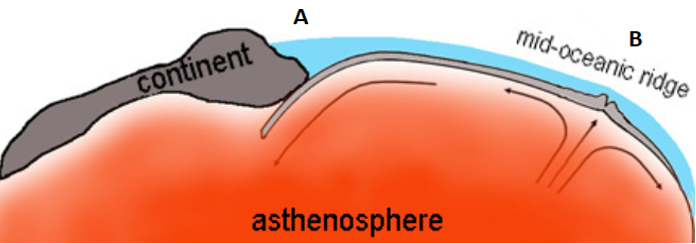
Use this image to answer questions 10 and 11

What plate motion is happening at point B?

Question 11
11.

What plate motion is happening at point A?

Question 12
12.

Two of Earth’s plates pressed together for many millions of years. What happened if they pressed together in a place where oceanic plate material meets continental plate material?

Question 13
13.

Henri claimed that when two plates press together, one effect is that a mountain can form. Which of the following statements provide evidence for Henri’s claim?

Question 14
14.

Use this image to help answer question 14
How and where do volcanoes form?

Question 15
15.

Use this image to help answer question 15

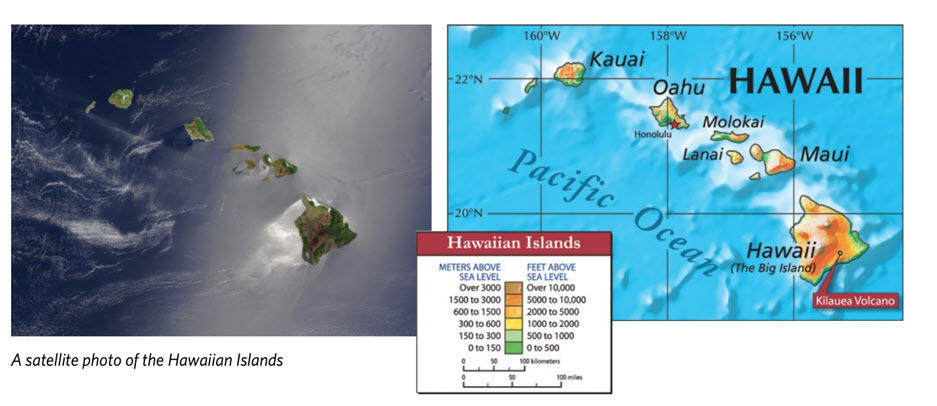
The Hawaiian Islands are a typical example of a hotspot. Only the Big Island, Hawaii, has active volcanoes. Why is Big Island active while the other islands are not active? Select all that apply.

Question 16
16.

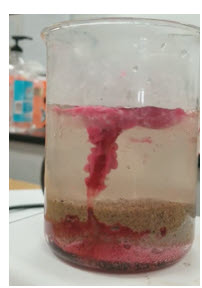
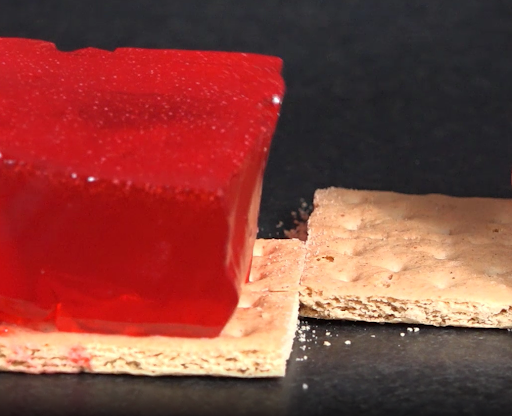
Use this image to help answer question 16 and 17


In your volcano model (simulation) the wax at the bottom of the beaker represented the rock beneath the Earth’s surface, the sand was the layer of rock just above the layer represented by the wax and the water represented the surface of the Earth. Why did the wax move to the surface of the water?

Question 17
17.

All models have limitations. How is this model unlike the real world? Select all that apply.

Question 18
18.

The Appalachian Mountains are about 450 million years old and about 2000 meters tall. The Himalayan Mountains are about 20 million years old and 8800 meters tall. Which statement best explains why these two mountain ranges have different characteristics?

Question 19
19.

Which of the following is TRUE about when mountains have developed on Earth?

Question 20
20.

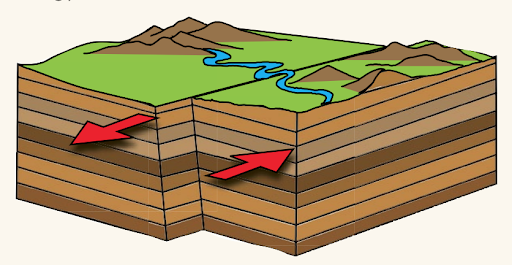
Use this image to help answer question 20

What happens when two plates move alongside each other?

Question 21
21.

Use this image to help answer question 21


Which is not a feature of two oceanic plates that move away from each other?

Question 22
22.

Use this image to help answer question 22
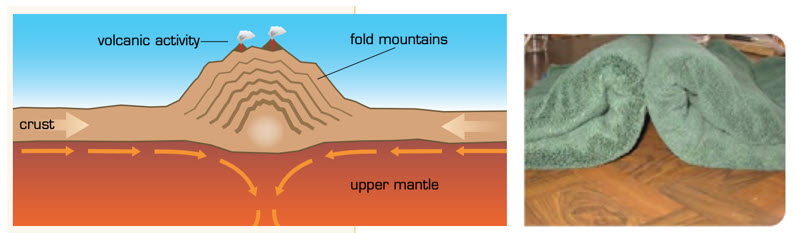
The Himalayan mountains are formed where two continental plates collide. What happens at these types of boundaries?

Question 23
23.

Use this image to help answer question 23

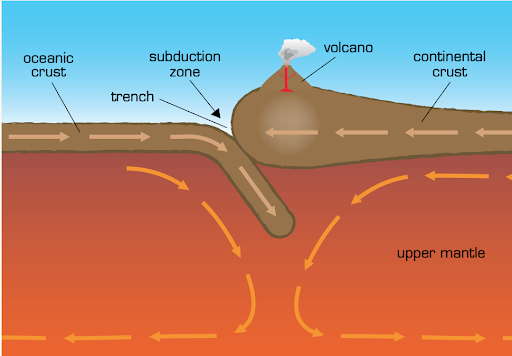
Mount St. Helens is located where an oceanic plate moves toward a continental plate. What happens at these types of boundaries? Select all that apply.

Question 24
24.

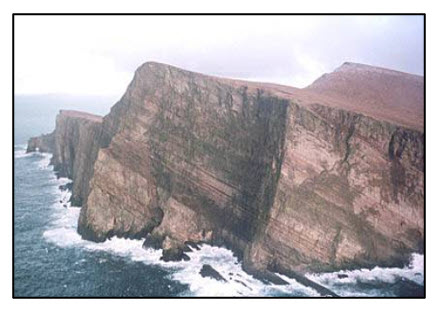
Use this image to help answer question 24

The solid rock of the cliff in this photograph is part of a continent. What is the relationship between the continent and Earth’s plates?

Question 25
25.

What are ways that plates can move in relation to other plates? Select all that apply