3-4 Practice
star
star
star
star
star
Last updated over 3 years ago
19 Nsɛmmisa
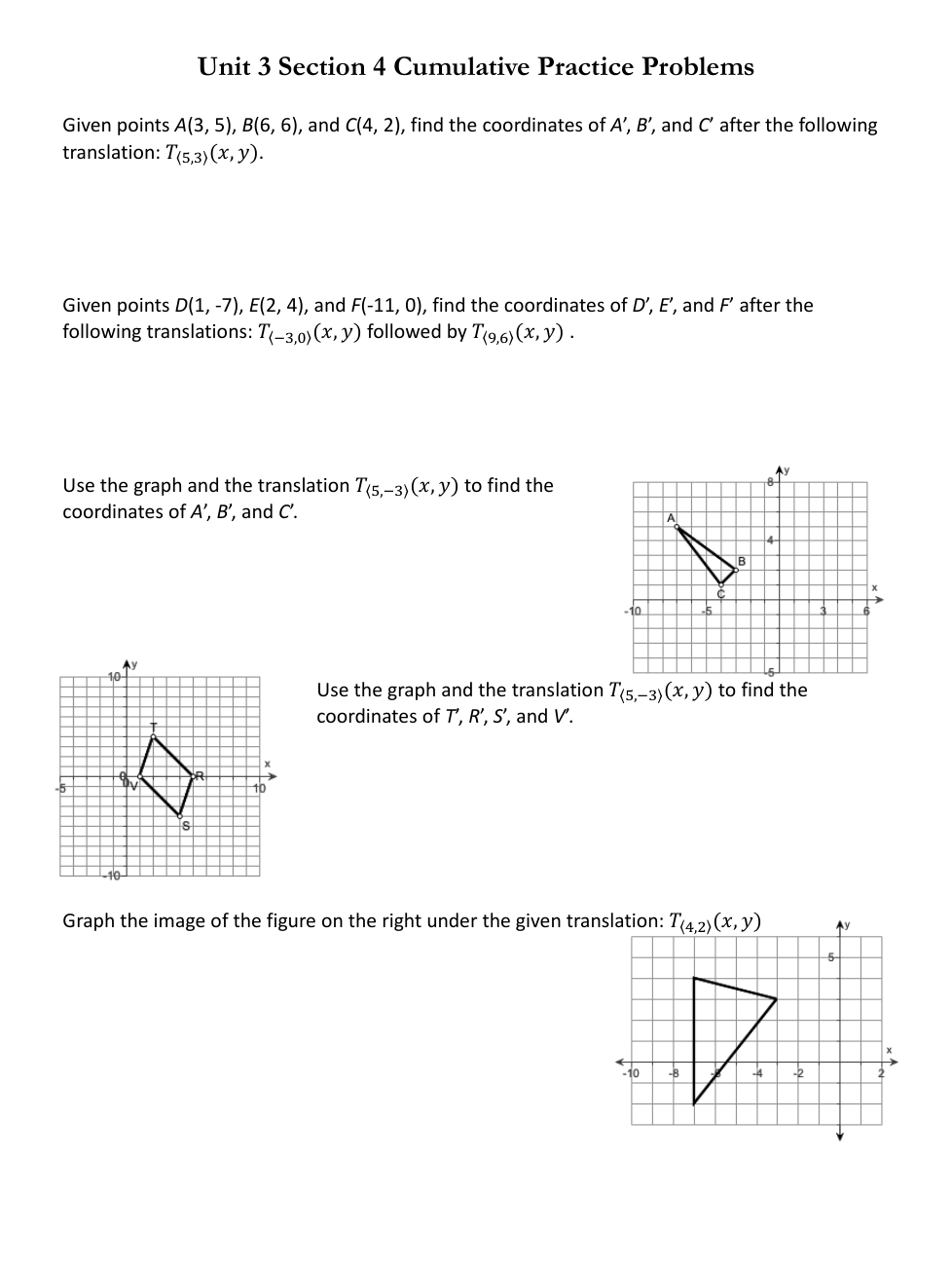
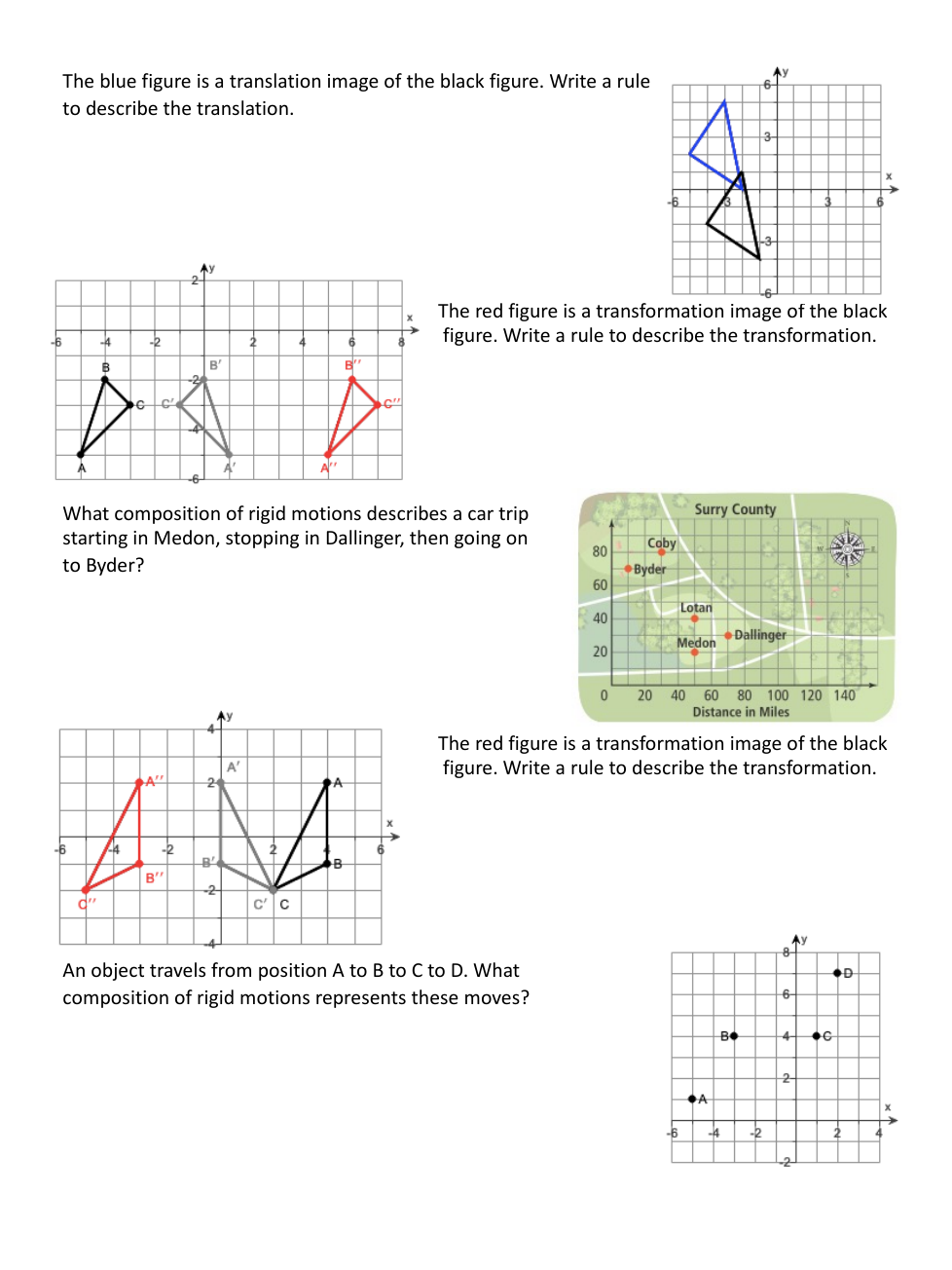
The blue figure is a translation image of the black figure. The translation rule is T<
What are the coordinates of A' after the translation:
What are the coordinates of B' after the translation:
What are the coordinates of C' after the translation:
What are the coordinates of D' after the translation:
What are the coordinates of E' after the translation:
What are the coordinates of F' after the translation:
What are the coordinates of A' after the translation:
What are the coordinates of B' after the translation:
What are the coordinates of C' after the translation:
What are the coordinates of T' after the translation:
What are the coordinates of R' after the translation:
What are the coordinates of S' after the translation:
What are the coordinates of V' after the translation:
Graph the image of the figure under the translation:
The red figure is a transformation image of the black figure. To transforming ABC to A"B"C", first you should reflect ABC across the line
Fill in the blanks to write the composition of rigid motions that describes the car trip staring in Medon, stopping in Dallinger, then going on to Byder:
T<
The red figure is a transformation image of the black figure. To transforming ABC to A"B"C", first you should reflect ABC across the line
Fill in the blanks to write the composition of rigid motions that describes an object traveling from A to B to C to D:
T<