Log in
Sign up for FREE
arrow_back
Library

Unit 1.3 Homework: The Road to Revolution (1763-1775) - Truong

star
star
star
star
star
Last updated almost 2 years ago
10 questions
Note from the author:
Required
1
IITE.01
Required
1
IIWD.01
Directions: Please prepare for class and work on two years of independent reading growth by reading this text independently to gather context and historical knowledge. Slides can be accessed here.

Thursday, 9/29 Classwork: Causes of the American Revolution

1
Question 1
1.
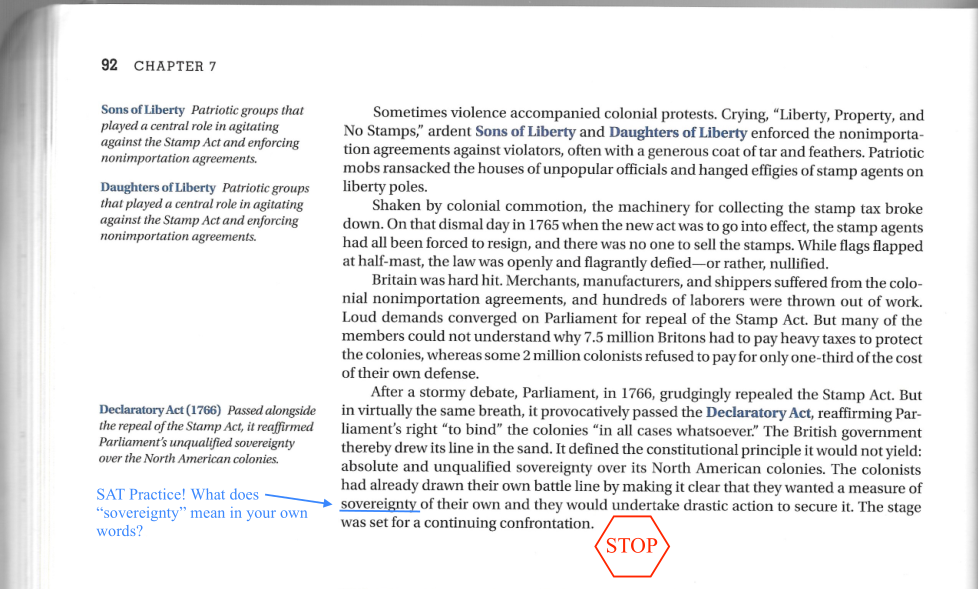
The American Revolution arose from growing tensions between Great Britain and residents of its 13 North American colonies over the political and economic _______ [independence] of the local colonial governments.

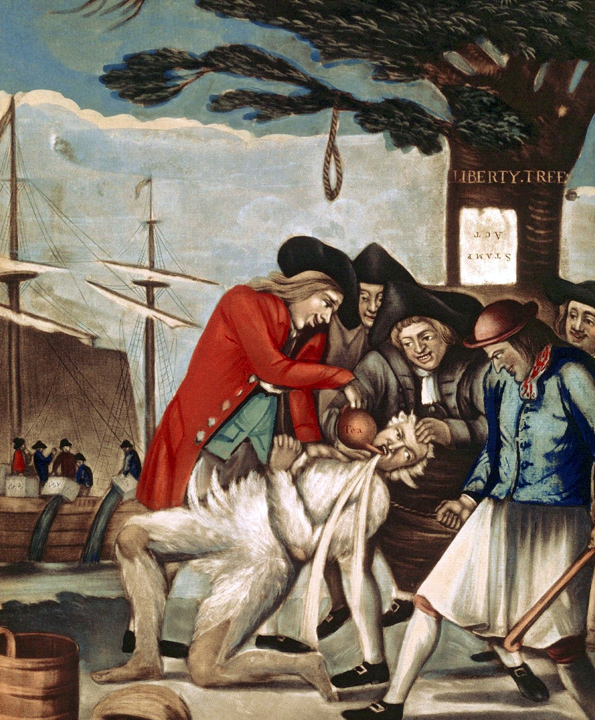
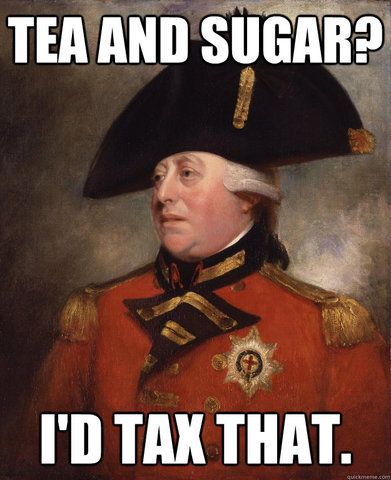
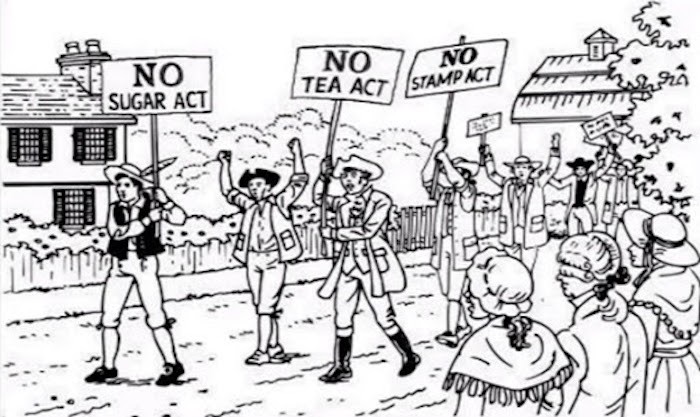
After the French and Indian War, or Seven Years’ War (1756-1763), the British government raised new _______ in an attempt to pay for the expensive conflict, - most notably the Stamp Act of 1765, the Townshend Acts of 1767 and the Tea Act of 1773. Their attempt were met with heated protest among many colonists, who resented their lack of _______ in Parliament and demanded the same rights as other British subjects.
0
Question 2
2.

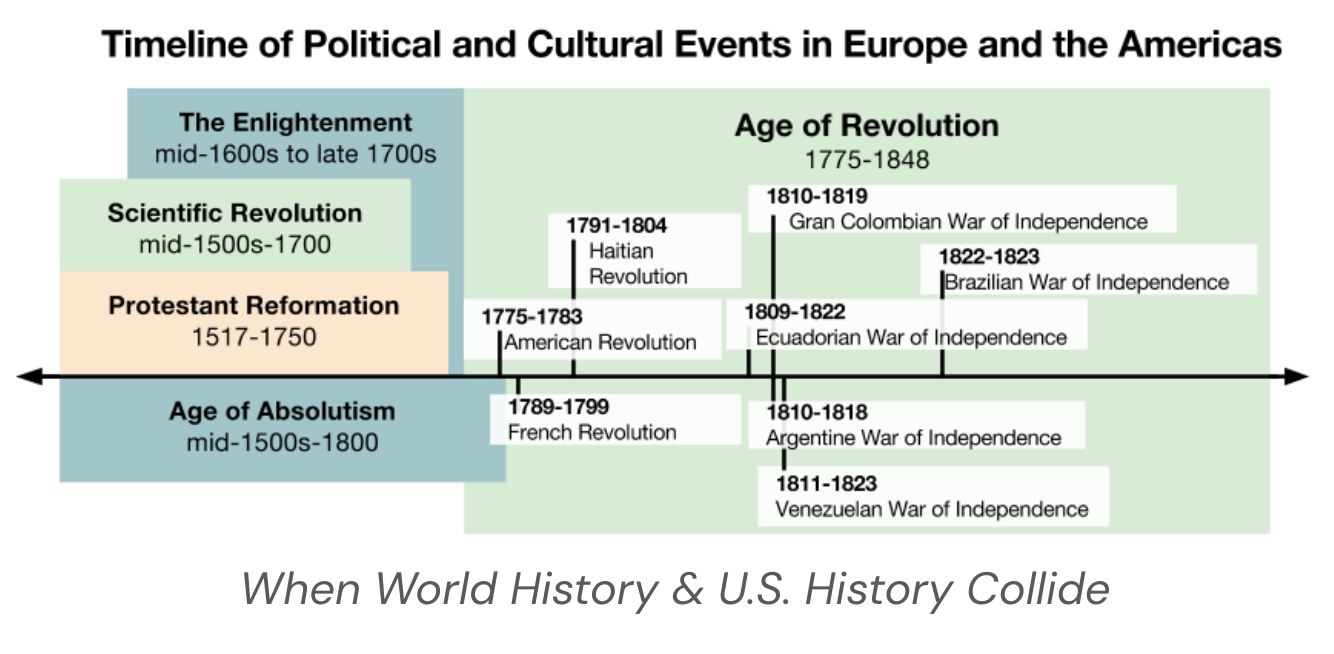
How much do you recall from these topics in World History?

It's okay to say "I don't recall much!" Ms. Truong is just trying to get a sense of your prior knowledge.

Today, we are going to review the EdPuzzle that was due yesterday! If you didn't complete it, pull it up here and follow along.

  • If you came unprepared without your Chromebook, just pay attention to the video, and complete the video on your own time.
  • You may not go to your locker to grab a Chromebook.

Homework Due Friday, 9/30/2022 at 7 AM: The Road to Revolution

Required
1
Question 3
3.

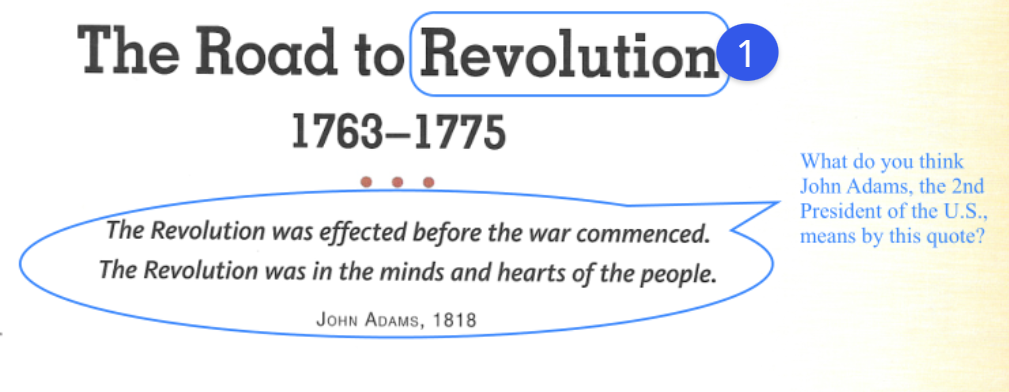
What do you think a "revolution" is? Explain this term in your own words using at least one complete sentence.

Required
1
RTS.01
Required
1
Required
1
RAG.01
Question 7
7.

Question 8
8.

Required
1
IISM.01
0
Question 10
10.

Any questions/concerns from class that Ms. Truong should know about when she returns from PTO?

Question 4
4.

Question 5
5.

Draggable itemarrow_right_altCorresponding Item
arrow_right_alt
arrow_right_alt
Question 6
6.

Which choice provides the best evidence for the answer to the previous question?

"Both the Sugar Act and the Stamp Act provided for trying offenders in the hated admiralty courts, where juries were not allowed."
"After bitter protests from the colonies, the duties [taxes] were lowered substantially, and the agitation died down."
"Yet the Americans were angrily aroused at what they regarded as Grenville's fiscall aggression. The new laws did not merely pinch their pocketbooks."
"Could its real purpose be to whip rebellious colonists themselves into line? Many Americans...began to sniff the strong scent of a conspiracy to strip them of their historic liberties."
As used in line 7 of the last paragraph, "sovereignty" most nearly means

dominion.
independence.
government.
tyranny.
Question 9
9.

That's all due for Friday, 9/30! Don't forget to click "Submit" by 7 AM.
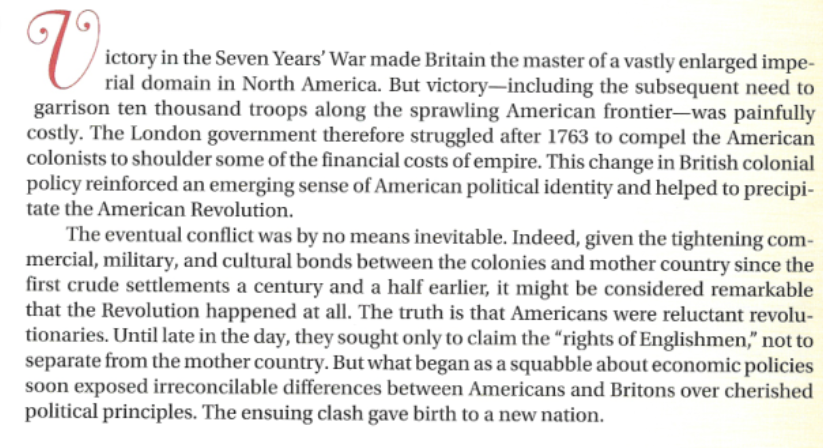
Over the course of the first two paragraphs, the narrator's focus shifts from

political to economic perks of being a British colony.
the pros to the cons of British rule.
the causes to the effects of the American Revolution.
present conflicts to future conflicts in the U.S.
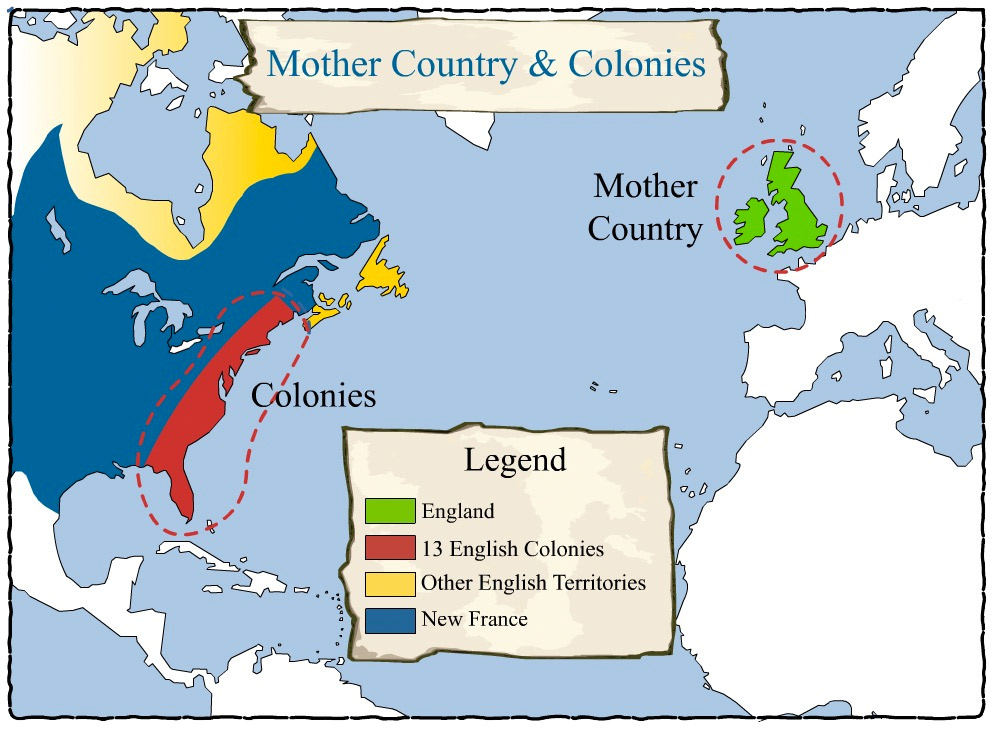
Identify the Mother Country and the Colony.
France
The 13 Colonies (Present Day U.S.)
England (aka Great Britain)
Present Day Canada
Based on the text, with which claim about the Stamp Act would the colonists most likely agree that the Stamp Act

was unfair because it only applied to the colonists.
swayed most colonists to support independence from Great Britain.
was burdensome, but not as much as the Sugar Act.
was an unnecessary tax intended to keep the colonists subordinate to Great Britain.
Which choice best summarizes the chapter reading?

Although the colonists did not plan to seperate from England, growing tensions over economic policies made revolution imminent.
Most of the American colonists supported the revolution from the start.
Great Britain was justified in its measures to control the colonies because of the colonists' insubordination and unwillingness to follow British laws.
The 13 colonies were inevitably going to become an independent nation.